
Reviewed · GOLF CART CITY TOURS
Golf Cart Tour Rome: Glide By Ancient Wonders & Hidden Gems
Rome in a golf cart beats the usual shuffle. This 2.5-hour, small-group ride is built for big sights with minimal walking, mixing quick photo moments with tight, story-based stops. You get wraparound views from a coaster-like seat, so the city feels close, not distant.
I like the 7-person cap. It keeps the guide focused and makes the whole experience feel more like an informed city drive than a race through landmarks. I also like the photo-first rhythm, especially at Trevi Fountain and the Spanish Steps, where you get real guidance on getting shots without standing around.
One thing to consider is timing. The Pantheon portion is strictly outside with a private video, and the Trevi Fountain photo stop is possible only when traffic allows.
In This Review
- Key things that make this Rome golf cart tour work
- Why a golf cart is the smart way to see central Rome
- Meeting point and the route style that saves your energy
- Colosseum photos first, then the gladiator stories
- From early Rome into Circo Massimo’s racing-track feeling
- A Roman theater close-up, plus the Pantheon’s rain-proof trick
- Trevi Fountain: the coin moment, the photo help, and traffic reality
- Spanish Steps and people-watching, with stories that connect pop culture
- Piazza Navona fountains, street energy, and a food tip you can use
- The panoramic garden finish: slow down for your last photos
- What you pay for, and why it can still be good value
- Who this tour suits best in real life
- Booking check: questions to ask yourself before you go
- Should you book the Golf Cart Tour Rome?
- FAQ
- How long is the Golf Cart Tour Rome?
- What group size should I expect?
- Is the tour offered in English?
- Do we go inside the Pantheon?
- Are tips included in the price?
- Can the Trevi Fountain photo stop be affected by traffic?
- Where does the tour start and end?
- Is there free cancellation?
Key things that make this Rome golf cart tour work
- Wraparound views from the cart means better angles and less craning than you get on foot.
- Max 7 travelers keeps it cozy and easier to ask questions.
- Photo-guided stops at Trevi Fountain and Spanish Steps help you leave with more than blurry souvenirs.
- Pantheon outside viewing plus a guide video keeps the stop quick and still teaches the key “rain trick.”
- Choice of departure times lets you fit the tour into your Rome pace.
Why a golf cart is the smart way to see central Rome
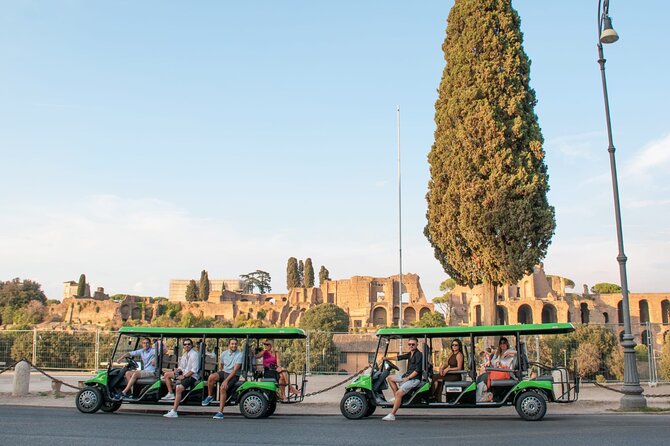
If Rome is your first big city of the trip, you usually need one thing fast: orientation. This golf cart tour is basically that, delivered with constant visual context. From your seat you can track where you are relative to major monuments, and you still get photo moments instead of only hearing history through a bus window.
The small cart format also changes how you experience the streets. You feel the motion, you see details at curb level, and you get those classic Rome viewpoints that would otherwise require a lot of uphill walking and waiting. Plus, the cart is a practical way to beat the “I’m on vacation but my legs are done” problem.
More old streets covered by golf cart:

Meeting point and the route style that saves your energy
The tour starts at Largo Gaetana Agnesi, Roma and ends at Piazza Campo de’ Fiori. That matters because it nudges you toward a handy end point for an evening meal and post-tour strolling.
Expect an easygoing pace with frequent “stop and look” moments. You are not signing up for a marathon of long museum corridors. Instead, you’re doing short sightseeing bursts, then moving on while the guide strings the sights together with stories about emperors, early Rome, and how ordinary life used to work around these monuments.
Also, you’ll ride with a mobile ticket. That’s one less paper thing to manage in the chaos of central Rome.
Colosseum photos first, then the gladiator stories
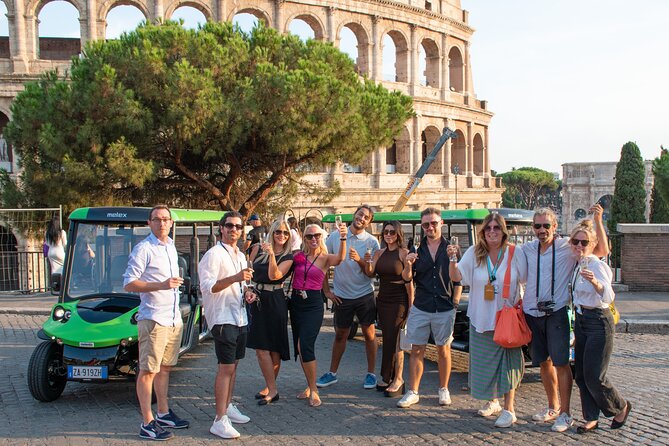
The tour kicks off with the Colosseum. You get close enough for a memorable photo, plus a quick history-focused moment that turns the building from a postcard into a scene. The guide shares legend-level context about gladiators and the arena, and you’ll leave with more clarity than you’d get from just looking at stone.
Here’s the value: a short, guided primer at the start. When you see the Colosseum later in your trip on your own, it’s no longer just big and ancient. It becomes the kind of place your brain can place into time.
There is also a useful practical note. The stop is short, so it’s ideal if you want the feel of the Colosseum without committing to a long, deeper visit right away. If you do plan to go inside later, this gives you the setup.
From early Rome into Circo Massimo’s racing-track feeling
After the Colosseum, you ride past the birthplace of Rome, with panoramic views and a mini lesson that includes emperors’ palaces and fun anecdotes about Rome’s earliest days. This is the portion that helps you connect the dots, because it shows how the city’s story moves forward rather than treating each monument like an isolated stop.
Then comes Circo Massimo, the ancient chariot racing track. You get a chance for a focused look at the space where those races would have felt like pure adrenaline. The guide helps you spot where key areas like a finish line once stood, and you also get a fun photo stop.
A detail I like here is the playful instruction tied to a fountain moment. It keeps the tour from becoming only talking and looking. It also gives you something light to do with your hands and your camera, which is perfect when you’ve been walking all over Rome before the tour.
Introductions we still owe you around Rome
- Vatican: Museums & Sistine Chapel Entrance Ticket
★ 4.5 · 144,003 reviews - Vatican Museums & Sistine Chapel Tour with Optional Basilica
★ 4.3 · 67,413 reviews - Colosseum, Roman Forum & Palatine Guided Tour
★ 4.7 · 63,148 reviews - Vatican Museums, Sistine Chapel & St Peter’s Basilica Guided Tour
★ 4.5 · 39,149 reviews
A Roman theater close-up, plus the Pantheon’s rain-proof trick
Next up is a historic Roman theater with a close-up view and architecture talk. You pause for photos in front of its impressive arches, and the guide explains the practical reason for something you might notice and never question. One of the memorable angles here is the explanation for why the building has windows. It’s the kind of detail that makes you look twice later when you spot similar features across the city.
Then you roll into the Pantheon. You’ll see one of Rome’s best-preserved ancient buildings from the outside, including the famous oculus. You get another quick photo moment, plus the big teaching moment is delivered in a different way: you won’t have time to go inside, but your guide shares a private video explaining how the Pantheon can stay mostly dry due to a “fireplace effect” the Romans used.
That design is actually smart for this kind of tour. Pantheon time inside can turn into a line, crowds, and schedule chaos. This approach keeps you on track and still gives you the key concept, so the Pantheon feels explained, not mysterious and distant.
Trevi Fountain: the coin moment, the photo help, and traffic reality
Trevi Fountain is next, and yes, you can make a wish and toss a coin. This stop is built for the full sensory payoff: the bright landmark, the classic tradition, and the chance to get a photo that looks like the one in your memory.
What makes this more useful than a simple stop-and-go is the guide’s photography eye. You get help aiming for better angles and more interesting frames, not just a quick point-and-shoot routine. The guide’s “hawk-like” attention to photo timing is part of the tour’s personality.
One consideration is traffic. The guide notes that the special Trevi photo moment depends on traffic conditions. In practice, that means you should keep your expectations flexible. If Rome is moving slowly that day, you might just get fewer attempts at “perfect shots,” not a cancellation of the stop itself.
Spanish Steps and people-watching, with stories that connect pop culture
At the Spanish Steps, you get about 15 minutes to climb a few steps or simply watch the scene from the right angle. People-watching is a real part of this stop, and the guide adds context so it’s more than just watching people move through a famous spot.
I like that the stories come with mix-and-match sources, including Hollywood films, Roman history, and local life. That blend matters because it connects the landmark to what you’re actually seeing around you. You’ll also get a group photo moment, which is useful if you don’t want to keep trading phones with strangers during your trip.
A practical tip for this section: wear shoes you can walk in. Even if the tour minimizes walking, the Spanish Steps can still wear you out if you’re forcing it in slick sandals.
Piazza Navona fountains, street energy, and a food tip you can use
Then the route takes you to Piazza Navona, where you’ll see the elegance of Bernini’s fountains and get a look at the square’s performance energy. Street performers tend to cluster here, so you can get spontaneous entertainment between planned stops.
The guide often points out where the river gods are, so you know exactly what you’re photographing rather than hoping you caught the right sculpture. And since you end near Campo de’ Fiori and the middle of town, the guide can recommend a good spot for an authentic Italian lunch or dinner right in the square’s heart.
Even if you don’t follow the exact recommendation, the “where to eat from a local perspective” habit helps you make better choices later.
The panoramic garden finish: slow down for your last photos
The last stretch ends at a panoramic garden above the bustle of the city. This is a nice payoff moment because you finally get space and a calmer feel after all the iconic stone and crowds you’ve been seeing.
You can take final photos, catch your breath, and look back over Rome with your earlier orientation pieces now in place. It’s also a gentle way to end a tour without immediately pushing you into your next agenda.
What you pay for, and why it can still be good value
The price is $163.33 per person for about 2 hours 30 minutes. That’s not a bargain, but it can be good value if your goal is to make Rome efficient without turning the day into a sprint.
Here’s what you’re really buying:
- Time savings from less walking between top sights
- A guide-driven story line across multiple monuments
- A small group (max 7) that makes the experience feel personal and manageable
- External landmark viewing that still covers a lot of ground
- Bottled water to keep you comfortable in the heat
Also, tips are not included, so factor that in. If you appreciate guides who answer questions and shape your photos, budgeting for tipping helps you avoid that last-minute stress.
In short, you’re paying for comfort, guidance, and a “see the important stuff” overview, without locking yourself into a full day of museum lines and long interior visits.
Who this tour suits best in real life
This is a strong fit if:
- You want a first-day overview so your self-guided exploring later makes sense.
- Your feet need a break, or you want to reduce heat fatigue.
- You’re traveling with a mix of ages and you don’t want to split the group.
- You care about photos and want help getting them.
It can also be a great choice if you want to hit the big name monuments but still keep the experience relaxed. A lot of the “best moments” here are outside viewing plus story time, which keeps it flexible.
Booking check: questions to ask yourself before you go
Before you book, ask: do you want a quick, guided pass at the top landmarks, or do you want full interior time? The tour is clearly set up for outside viewing, and the Pantheon stop is specifically not an inside visit.
Also think about your photo expectations. The tour is designed to help you take good pictures, but Rome traffic can affect how long you can linger at the most famous spots. If you’re the type who needs 30-plus takes for the same frame, you may feel a little limited.
Should you book the Golf Cart Tour Rome?
Yes, if you want an efficient, guided way to understand central Rome, especially if you’re tight on time or don’t want to grind through long walks between monuments. The small group size, the wraparound cart views, and the guide-led photo moments at places like Trevi Fountain and the Spanish Steps are the big wins.
I’d skip it or pair it with other plans if you’re hoping for lots of interior time, because the stops are mostly external and the Pantheon is outside only with an explanatory video instead. If you go in knowing that, this tour hits the sweet spot: seeing a lot, learning the key stories, and saving your energy for the rest of your Rome days.
FAQ
How long is the Golf Cart Tour Rome?
It lasts about 2 hours 30 minutes.
What group size should I expect?
The tour has a maximum of 7 travelers.
Is the tour offered in English?
Yes, it is offered in English.
Do we go inside the Pantheon?
No. You won’t have time to go inside, but the guide will show you a private video explaining the phenomenon behind how it stays dry, thanks to a fireplace effect.
Are tips included in the price?
No. Tips are not included.
Can the Trevi Fountain photo stop be affected by traffic?
Yes. The special Trevi Fountain photo moments are possible only when traffic allows.
Where does the tour start and end?
It starts at Largo Gaetana Agnesi, Roma and ends at Piazza Campo de’ Fiori, Roma.
Is there free cancellation?
Yes. You can cancel for a full refund up to 24 hours in advance of the experience start time.
Just introduced: the newest Rome write-ups
- Excavation Tour to the Tomb of St. Peter’s & St. Peter’s Basilica★ 4.0 · 183 reviews
- Imperial Rome and External Colosseum Tour★ 5.0 · 183 reviews
- Rome: Rooftop Cooking Class with Wine Tasting near Vatican★ 5.0 · 184 reviews
- Rome to Civitavecchia Cruise Port Transfer★ 5.0 · 184 reviews
- Ancient Rome and Colosseum Private Tour with Underground Chambers and Arena★ 4.5 · 184 reviews
- Rome: Vatican Museums & Sistine Chapel Skip-the-Line Ticket★ 4.1 · 185 reviews
- Borghese Gallery Max 6 People Tour: Baroque & Renaissance in Rome★ 5.0 · 185 reviews
Golf Cart City Tours, compared.
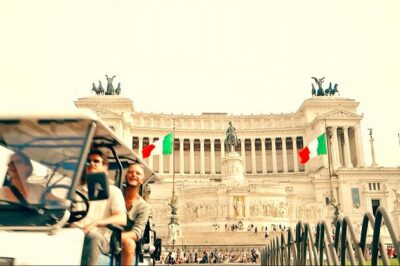
Rome by Golf Cart Private Tour: Beyond the Landmarks
Read our review →
Rome on a Golf Cart Semi-Private Tour Max 6 with Private Option
Read our review →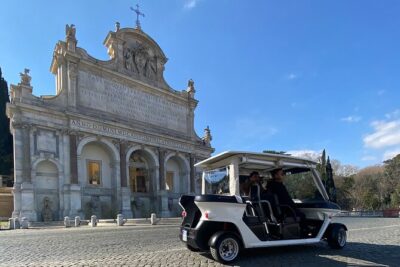
Rome Highlights by Golf Cart Private Tour
Read our review →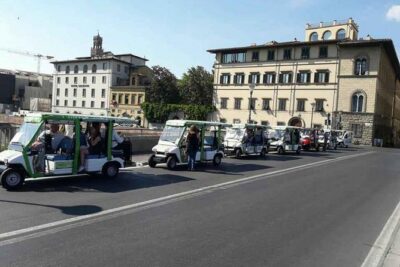
Golf Cart Tour to Fiesole Roman Theatre and Museum
Read our review →
Eco-Friendly Golf Cart City Tour with Audio Guide
Read our review →
Rome Highlights City Tour by Golf Cart with Gelato
Read our review →
Golf Cart Small-Group Guided Tour: Rome City Highlights
Read our review →
Browse the lists this tour appears in