

Reviewed · MUSEUMS
Guided tour of the salt pans of Trapani and the Salt Museum
Salt in Sicily sounds ordinary. The walk makes it art.
I loved how the guided route threads through the Riserva Naturale Saline di Trapani e Paceco salt pans, with sea, clay, tanks, and birds all mixed into one working landscape. I also loved the Museo del Sale, where you see the old mill and learn how a family kept this craft going for generations. One thing to plan for, though, is the location: you will likely need a car or a taxi to reach the meeting point from central Trapani.
This tour is priced low and runs about 1 hour 15 minutes, with ticketed access included for both the salt reserve walk and the museum visit. It is a private tour, so you are not stuck listening to a large crowd, but you still share the spaces with how the site is set up. My main consideration is comfort and timing, because good weather matters for the outdoor part.
If you like hands-on learning and you appreciate a place that still works, this is a great fit. I think you will come away with a new respect for something as basic as salt, and you will know exactly how it gets made.
In This Review
- Key highlights worth your time
- Why Trapani’s salt pans feel more real than a typical “tour”
- Meeting in Paceco: the one logistics thing to get right
- Riserva Naturale Saline di Trapani e Paceco: your guided walk through working water
- How sea water turns into salt: the short lesson that actually makes sense
- Museo del Sale and the 1400s mill: where work becomes history
- The tasting and tool details that make it stick
- Timing tips: go for sunset light and cooler pacing
- English-guided experience: what to expect from the guides
- Price and value: why $21.77 can work well here
- Who should book this salt pan and museum tour
- Should you book it?
Key highlights worth your time
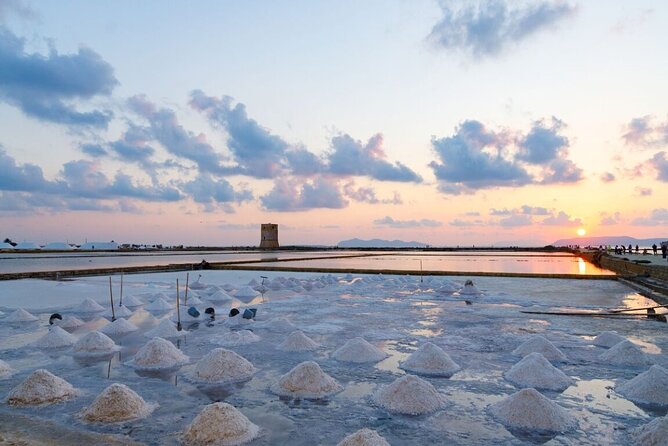
- WWF reserve walk through Riserva Naturale Saline di Trapani e Paceco, with protected plants and birds
- Step by step salt production using sea water to form salt in the tanks
- Perimeter walk to mirror-like water, where the sea reflects the sky
- Salt Museum in a historic baglio plus an ancient mill from the 1400s
- A small tasting chance during the visit, so it stays more than lecture mode
- English guided tour and a private group format, so you can ask questions
Why Trapani’s salt pans feel more real than a typical “tour”
Trapani salt pans are not staged. They are working. That changes everything. You can watch how the process actually fits the place, not just the other way around.
On this tour, you get a guided walk that focuses on what you are seeing, not what you wish you were seeing. You also get a museum stop that explains the human side, including the work it took and the family stories that kept the operation going.
I love that salt here is not treated like a souvenir. It is treated like an everyday product with an honest backstory. And the colors really are something, from white salt to gray clay to the blue of the sea.
More museum halls from Turin to Palermo:



Meeting in Paceco: the one logistics thing to get right
The tour meets at Via Salina Chiusa, 1, 91027 Paceco TP. That is not central Trapani. In plain terms, plan transportation ahead of time.
One review noted the drive from Trapani downtown is about 15 minutes. That matters because if you are relying on buses, you may end up stuck with no easy public option. You will want a plan for getting there and back, even if it is just booking a taxi in advance.
If you are traveling without a car, I suggest you budget a little extra and confirm your return time. The good news: the tour ends back at the meeting point, so you are not left searching around an unfamiliar rural area.
Riserva Naturale Saline di Trapani e Paceco: your guided walk through working water
The first and longer part of the tour takes you into the Riserva Naturale Saline di Trapani e Paceco. This is a relaxing walk, but it is also educational. You will move along the perimeter of the salt pans, noticing how the different surfaces and colors show you what stage the salt is in.
Expect a changing view as you go. There are infinite shades of white from the salt itself, and you will also notice gray clay and the pink tones of the tanks. Then, as the route brings you toward the banks, the water can act like a mirror, reflecting sky tones back at you.
This setting is part of a reserve with protected plants and birds. That is why the walk feels calmer than an industrial yard tour. You are not rushing past machinery. You are walking through an ecosystem that happens to produce a major commodity.
You also get a key hands-on moment. You can collect salt with your hands and follow the step by step process of how sea water becomes salt in the tanks. That kind of direct interaction helps the explanation stick, especially if you are the type who learns by doing, not just by listening.
How sea water turns into salt: the short lesson that actually makes sense
Salt-making is often described in big, vague steps. Here, the guide keeps it practical. You will see the route that follows the perimeter and the way water moves through the system.
A big idea you will leave with is that salt production is timed. It depends on conditions and on controlling water as it passes through different stages. That is why a place like this matters, with the sea nearby and the evaporation cycle built into the site.
As you walk, you are essentially reading a map with your eyes. The guide points out how the physical setup corresponds to production. You might notice that certain areas look more “active” while others look more settled. That is your clue that the process is underway, not just a single static picture.
A practical bonus: because you get the guided explanation right next to the exact spot where it applies, you are less likely to get lost in salt science. If you want, you can ask questions as you go, and the guide can point you back to the tanks and the steps you just heard about.
Introductions we still owe you around Sicily
- Catania: Mount Etna Morning or Sunset Day Trip with Tasting
★ 4.8 · 4,028 reviews - Mount Etna: Guided Volcano Summit Hiking Tour with Cable Car
★ 4.7 · 3,784 reviews - Palermo: NO Mafia Walking Tour
★ 4.8 · 2,431 reviews - Palermo: Hop-on Hop-off Bus Tour 24-hour Ticket
★ 3.9 · 2,410 reviews
Museo del Sale and the 1400s mill: where work becomes history
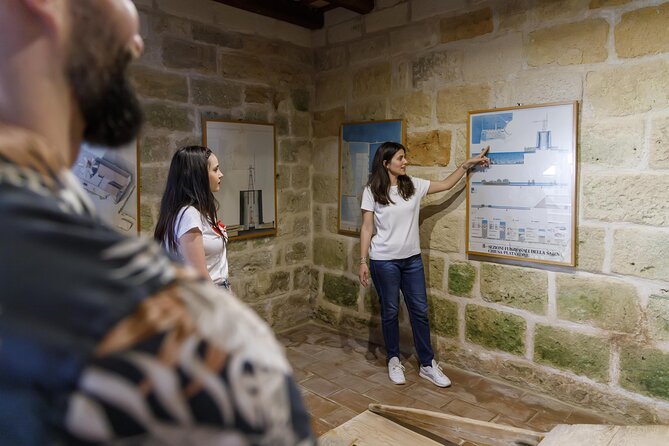
After the outdoor walk, you shift into the Museo del Sale. This part focuses on history and culture, not just the mechanics of production.
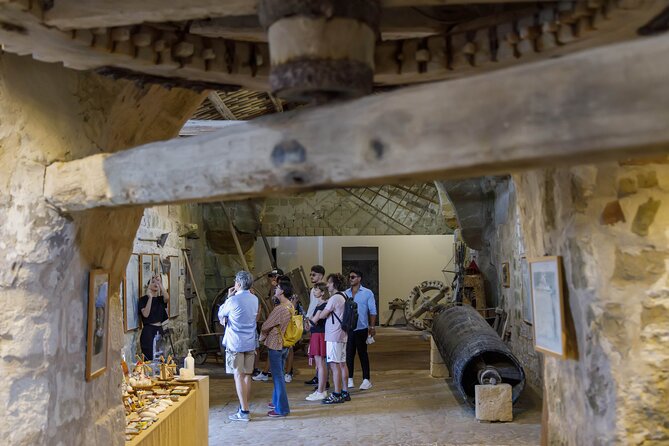
The museum is housed inside an ancient baglio, which helps the story feel rooted in place. Inside, the guided visit connects the salt process to the people who worked it, including the family who ran the salt pans across generations.
You also get to see an ancient mill dating to the 1400s. That is a tangible reminder that even before modern technology, salt production relied on repeatable tools and labor that had to be maintained. It gives you a fuller sense of what it meant to live and work around these pans.
Some parts of the museum can feel busy depending on how the site schedules groups. If you are sensitive to sound and crowding, it may help to pay close attention early in the visit, when you can best catch what the second guide is saying.
Still, the museum is the part that turns the walk into meaning. Outdoors you learn what salt production looks like. Indoors you learn why it mattered enough for families to protect and preserve their methods.
The tasting and tool details that make it stick

A strong theme from the experience is that it goes beyond watching. You get small moments that add texture, like the chance to collect salt during the walk and the opportunity to taste salt during the museum portion.
That taste moment sounds small, but it changes the whole experience. When you physically connect what you see to what you might use at home, your brain tags the story. You stop thinking of salt as a generic seasoning and start thinking of salt as a product made through time and weather and careful work.
Tool details also help. Several reviews highlight that the museum preserves tools from the past salt-panning work. Seeing period tools is one of those simple tricks museums do well, because it makes the past feel less like a textbook and more like a workshop.
If you like your tours to include more than photos, this is a good match. You get the scenic walk, then you get the explain-it-right museum section.
Timing tips: go for sunset light and cooler pacing
If you can choose your start time, aim for an evening slot. Multiple reviews talk about visiting around sunset, when the light makes the salt pans feel especially picturesque.
That light matters for two reasons. First, it improves photos and helps you spot details in the tanks and salt surfaces. Second, it often makes the walk feel more comfortable, because you are not dealing with the harshest daytime conditions.
Even if the tour start time is fixed by your schedule, you can still plan your day around it. Pair the tour with a slower afternoon in Trapani so you are not rushing through everything. After the walk, take your time during the museum visit so you can really follow the story.
English-guided experience: what to expect from the guides
The tour is offered in English. In a couple of examples, the experience included two guides handling different segments, and English ability varied between them. One guide was noted as having excellent English, while another had a stronger Italian accent.
What does that mean for you? Expect clear guidance overall, and do not be shy about asking for clarification if you miss a point. If you are traveling with someone who wants 100 percent smooth English, you might consider choosing a time known for English availability.
Also, the pace helps. The outdoor part is about seeing and following along with a route, so even if a sentence is missed, the visuals carry you. Inside, the museum setup gives you time to listen and look.
Price and value: why $21.77 can work well here
At about $21.77 per person, this tour is priced like an excellent add-on, not a luxury excursion. The key value point is that it includes admission tickets for both the salt reserve walk and the salt museum.
That is important because you are not paying only for a guide. You are paying for guided access to two parts of a single experience: the working salt pans and the indoor museum with the old mill.
Duration is also reasonable. You get enough time to walk, learn the process, and still visit the museum without turning the day into a marathon. It is the kind of tour you can slot into a day in Trapani without burning half your vacation.
If you are on a budget, this is one of those experiences that punches above its price tag because it is both educational and scenic. If you are not on a budget, it still works because it feels authentic and still-connected to production.
Who should book this salt pan and museum tour
This is ideal if you like:
- Hands-on, real-world learning
- Nature and wildlife areas that are protected
- A practical explanation of how sea salt is made
- A historic site that shows tools and labor, not just theory
It is also a good pick for most travelers, since participation is described as broadly possible and service animals are allowed.
It may be less ideal if you:
- Hate outdoor walks in real conditions, since the experience needs good weather
- Are arriving without transport and do not want to plan around getting to Paceco
- Prefer very quiet museum time, because crowding can make hearing harder at times
Should you book it?
I think you should book this tour if you want a short, well-paced mix of salt-making process and museum history, without a long travel day or a giant tour group. The value is strong because admission is included and the experience stays focused on what salt pans actually are.
If you are going, do one thing to improve your trip: plan your transportation to the meeting point in Paceco. Get that right, and you will enjoy a guided walk that teaches you something you will use at home, plus a museum stop that makes the whole story feel human.
Just introduced: the newest Sicily write-ups
- Etna Tour – HalfDay Small Group & licensed Tour Guide★ 5.0 · 185 reviews
- Naxos: Taormina Boat Tour with Snorkeling and Prosecco★ 4.9 · 185 reviews
- Etna Special Dawn Excursion★ 5.0 · 185 reviews
- Sicilian Cooking Class in Taormina★ 5.0 · 186 reviews
- Private tour of Etna and Winery Visit with Food and Wine Tasting from Taormina★ 5.0 · 188 reviews
- five sense outdoor experience★ 5.0 · 189 reviews
- Half-Day Pizza Making Class in Taormina★ 5.0 · 192 reviews
Museums, compared.

Vatican: Museums & Sistine Chapel Entrance Ticket
Read our review →
Vatican Museums & Sistine Chapel Tour with Optional Basilica
Read our review →
Vatican Museums, Sistine Chapel & St Peter’s Basilica Guided Tour
Read our review →
Skip-The-Line Uffizi Gallery Timed Entry Ticket
Read our review →
Vatican Museums, Sistine Chapel & Basilica Tour
Read our review →
Vatican Museums & Sistine Chapel Skip-the-Line Entry Ticket
Read our review →Vatican Museums, Sistine Chapel & Basilica Tour
Read our review →
Vatican Museums & Sistine Chapel Guided Tour
Read our review →Browse the lists this tour appears in