
Reviewed · MOUNT ETNA EXCURSIONS
Mount Etna: Ascent to 2800m by 4×4
Mount Etna feels like another planet once you start climbing. This 4×4 outing gets you close to Etna’s real drama, then tops it off with short walks and big views.
I love the combo of practical effort and high payoff: you reach the Pizzi Deneri area around 2810m, then get two chances to step out and see crater terrain up close. One thing to consider is the altitude and exposed terrain, so bring proper hiking shoes and expect it to run cold up high, sometimes even with snow.
In This Review
- Quick hits
- From Piano Provenzana to Pizzi Deneri: why the 4×4 matters
- The main climb: views from 2810m, then up to the 2865m area
- What the crater-edge viewpoint teaches you (and what to watch for)
- The volcanologist guide: the story you remember later
- Valle del Bove and the coastline: the best panoramas come with a cost
- Down to 2200m: the 2002 eruption crater edge walk
- How effort and timing really work in 2.5 hours
- Price and value: where the $100 goes
- Who should book this Etna 4×4 ascent
- My booking call: should you go?
- FAQ
- How long is the Mount Etna 4×4 ascent tour?
- Where do I meet for the tour?
- How high do you go during the tour?
- Is there hiking, and how long is it?
- What do you see related to the 2002 eruption?
- What languages are the live guides?
- What should I bring?
- Is the tour wheelchair accessible?
- Who should not book this tour?
- What are the cancellation and pay-later options?
Quick hits
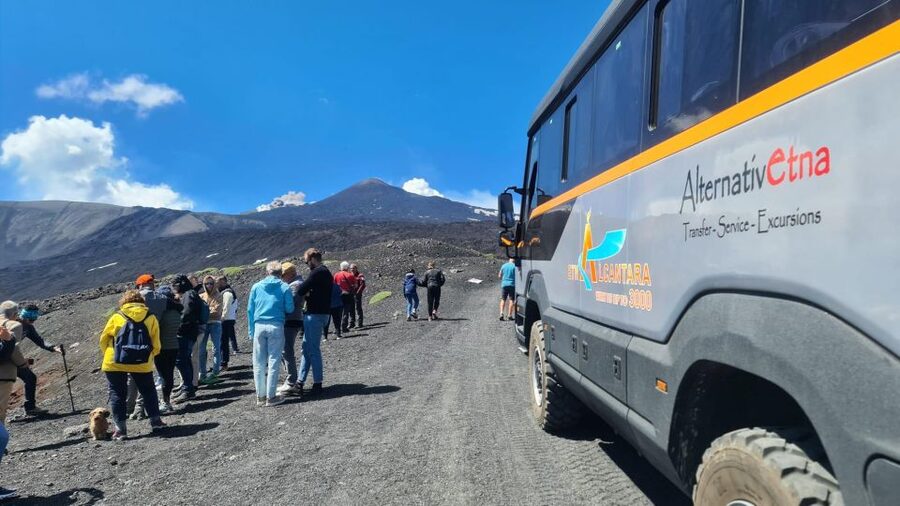
- 4×4 access to about 2800m, with stops that let you soak up crater views without a long grind
- Licensed volcanological guide who explains what you are seeing in clear, repeatable terms
- Short hike up toward 2865m (it can vary with activity), with Valle del Bove in sight
- A second ~20 minute crater-edge walk to the 2002 eruption remains
- Plan for cold weather at altitude, even in warmer months
From Piano Provenzana to Pizzi Deneri: why the 4×4 matters
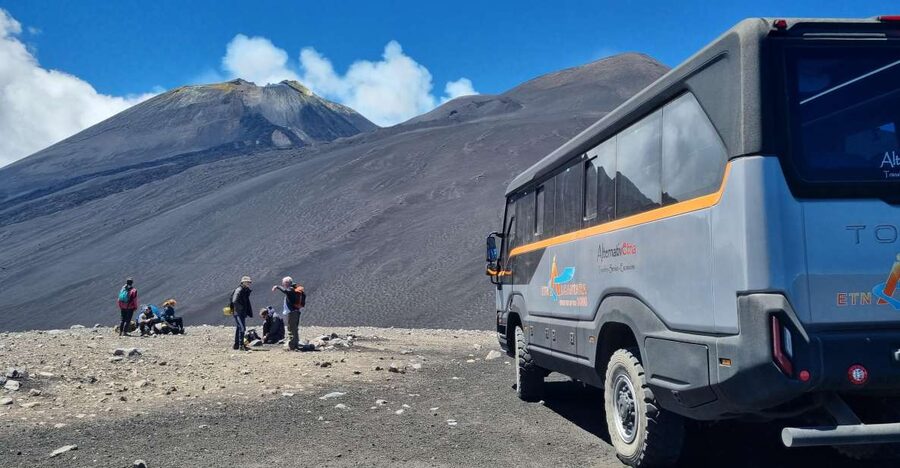
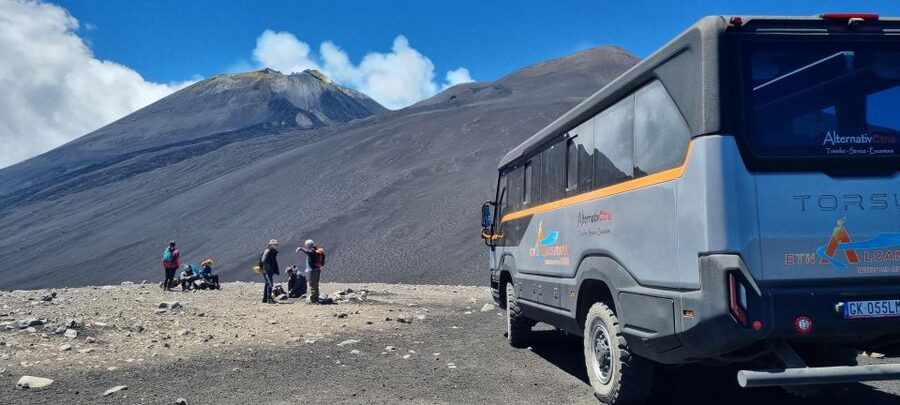
Your adventure starts at Piano Provenzana on the north side of Mount Etna. From there, you board a comfortable 4×4 bus and head up an unpaved road toward the astrophysical observatory area known as Pizzi Deneri at about 2810m.
This is a smart choice if you want Etna’s scale without turning the day into a full endurance test. The 4×4 format also means more viewpoints with less time wasted commuting on foot. Reviews consistently call the ride itself cool and adventurous, and I can see why: the roads feel remote, the scenery changes fast, and you’re getting altitude without spending hours hiking uphill.
Key thing to know: unpaved road travel can feel bumpy. If your back, heart, or blood pressure is a concern, this tour may not be the best fit for you, even though it is wheelchair accessible.
Etna again, by a different flank:

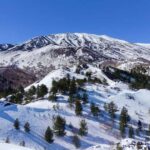
The main climb: views from 2810m, then up to the 2865m area
After meeting at the Alternativetna office, you’ll start climbing and make your way to the Pizzi Deneri area. From up there, you get those otherworldly, moon-like scenes that make Etna famous: older craters, scattered volcanic surfaces, and sweeping lines of sight that reach toward the sea.
Then you shift from bus riding to your first short hike. At around 2805m, you’ll walk up toward about 2865m, though the exact height can vary depending on volcano conditions and what is safe at the time. This part matters because it gives you a real feeling for elevation, not just a viewpoint from a window.
From that higher vantage, you’ll look down at Valle del Bove beneath the northeast crater. In plain terms, that means you can start mapping Etna’s structure in your head: where the craters sit, how the valleys drop away, and why this mountain looks the way it does.
What the crater-edge viewpoint teaches you (and what to watch for)
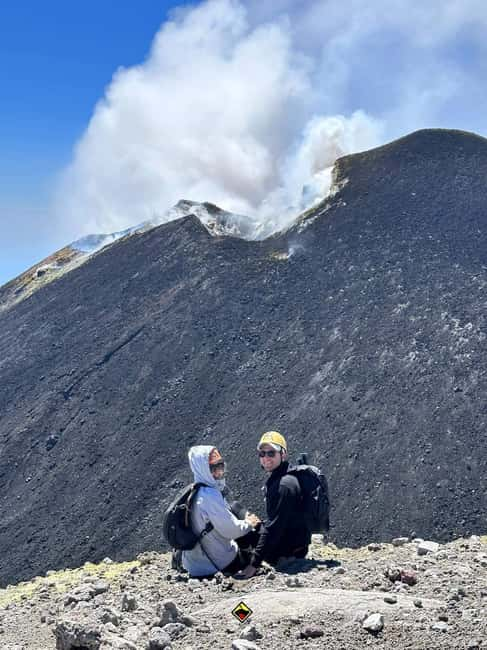
This tour is built around moments where you can see the volcano’s geometry clearly. One of the big payoffs here is getting close enough to understand why crater rims feel intense even when the hike is short.
The short trek is not described as a long slog, and many people find it manageable. Still, you should treat the terrain as real, uneven, and exposed. If you are sensitive to heights or you don’t feel steady on your feet, this is where you slow down, keep your focus, and follow your guide’s cues.
Also, plan for weather. One review mentioned snow starting while they were up there, which is a great reminder that altitude weather can swing quickly. Bring the hiking pants you were told to pack, plus sunglasses. If you forget them, you’ll feel it fast up at high elevation.
The volcanologist guide: the story you remember later
What makes this trip worth it is that the landscape gets explained in a way you can actually use. Your guide is a licensed volcanological guide, and the goal is to turn what you see into something you understand, not just a list of facts.
In reviews, guides like Giuseppe and Flavio are praised for being clear in English and patient when people ask questions. Another guide, Sandi (spelling may vary), gets credit for answering questions and connecting the mountain’s features to what is happening. That kind of Q and A is where the tour stops being sightseeing and becomes learning you can carry with you.
You’ll also get context about the activity and the meaning of what you’re looking at, including areas linked to eruptions. That matters because Etna is constantly changing. When you learn what you’re seeing, you notice details you would otherwise miss: ash marks, crater edges, and how older and newer surfaces contrast.
Introductions we still owe you around Catania
- Catania: Etna Sunset Tour with Pickup and Drop-off
★ 4.8 · 1,348 reviews - Mt. Etna and Taormina village full day tour from Catania
★ 5.0 · 1,155 reviews - From Catania: Mount Etna Sunset Tour with Tasting and Cave
★ 4.7 · 1,119 reviews - Catania: Etna Morning Excursion with Tasting and Pickup
★ 4.8 · 820 reviews
Valle del Bove and the coastline: the best panoramas come with a cost
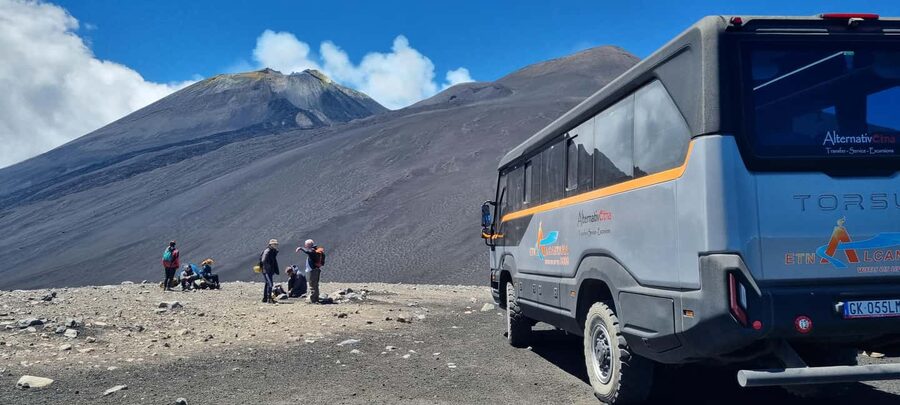
The high point of the first phase is a viewpoint with sweeping vistas. You’re not just looking at crater ground, you’re also taking in broad views toward the Sicilian coastline, which helps you understand the setting: Etna is massive, but it sits close enough to the rest of the island that you can visually connect volcano and sea.
The “cost” is time and conditions. You are up high for enough time to enjoy it, but not so long that you can ignore temperature or wind. If you run cold easily, dress like you will be outside for a while, not like you’re taking a quick photo stop.
This is also where it helps to be alert about safety. One review raised the idea that younger children might be too close to crater edges, and that makes sense as a practical caution. If you’re traveling with kids, I’d treat this as a place where attention must stay locked on footing and boundaries.
Down to 2200m: the 2002 eruption crater edge walk
After the high viewpoint, you head back onto the bus and descend to about 2200m. Then comes the second walking segment: a short trek of around 20 minutes to reach the edge of a crater left over from the eruption in 2002.
This part hits differently than the first hike. The earlier phase gives you a big-picture view of Etna’s structure and valleys. The 2002 crater edge walk brings you to a more focused moment, where you can see marks of an actual event and understand how quickly the mountain can redraw itself.
And yes, this is one of those places where weather and cloud cover can change the mood fast. One review mentioned walking out among craters with clouds around, which sounds dramatic because Etna already looks dramatic. When visibility drops, you end up appreciating texture and scale even more.
Follow the guide’s instructions closely near the crater edge. You’re there for the view, but the view is tied to careful movement.
How effort and timing really work in 2.5 hours
The tour runs about 2.5 hours total, and that timing is a big part of the value. You get a compact dose of vertical gain and short hikes, without committing to a half-day or full-day hike with hours of walking.
In terms of effort, the walking described is short but real. You’re trekking up from roughly 2805m toward about 2865m, then later doing an additional walk of about 20 minutes to the 2002 crater edge. Most people find this “not tiring,” but that depends on how you handle cold, uneven ground, and altitude.
Also remember: you are traveling by 4×4 bus for the long segments. That’s a plus when compared with tours that force you to hoof it uphill continuously. It’s also why this option often appeals to people who want a strong Etna experience but don’t want to spend the day exhausted.
Not suitable for certain folks, too. The tour data flags pregnant women, people with back problems, heart problems, high blood pressure, and babies under 1 year, and also notes no one over 95 years. If any of that applies, respect it. Etna is spectacular, but your health comes first.
Price and value: where the $100 goes
The price is listed at $100 per person for this 2.5-hour experience. On paper, that can sound steep until you break down what you’re paying for.
You are getting:
- round-trip transportation by 4×4 bus up and down the volcano area
- a licensed volcanological guide who explains what you’re seeing
- short hikes to meaningful viewpoints, including the area tied to the 2002 eruption
The value is in time saved and access gained. If you tried to replicate this on your own, you’d spend time figuring out routes, dealing with road conditions, and then paying for a guide or losing the geology context that makes the crater terrain click. Here, you get both access and interpretation, in a tight timeframe.
Who should book this Etna 4×4 ascent
This tour fits best if you want Etna up close but still want a manageable schedule. I’d especially recommend it if:
- you want high-altitude views without hours of hiking
- you like learning from a guide who can answer questions on the spot
- you want a close look at crater terrain and specifically the 2002 eruption remains
I’d think twice if you:
- have mobility limitations that make short uneven hikes hard, even if you can ride in a vehicle
- are traveling with someone who gets anxious around crater edges
- have any of the health conditions listed as not suitable (back, heart, high blood pressure, and pregnancy)
On the upside, there is wheelchair accessibility noted. That doesn’t remove the fact that the route includes walking segments, but it signals the operator has planned for access as much as possible within the terrain reality of Etna.
My booking call: should you go?
If you are choosing between a long hike and a quick Etna fix, I’d book this one. It delivers real altitude, a guided explanation, and two different crater experiences in just 2.5 hours.
I’d also go if you care about doing it thoughtfully, not just collecting photos. The guide-led geology is the difference between seeing lava fields and understanding what formed them.
Only skip it if the health or mobility restrictions apply to you, or if cold exposure and exposed terrain would make the experience stressful instead of exciting. Etna rewards the prepared traveler, and this tour is one of the more efficient ways to meet it face to face.
FAQ
How long is the Mount Etna 4×4 ascent tour?
The duration is listed as 2.5 hours.
Where do I meet for the tour?
You meet at the Alternativetna office.
How high do you go during the tour?
The 4×4 takes you up to the Pizzi Deneri area at about 2810m, and you also hike from around 2805m up to about 2865m (depending on volcanic activity).
Is there hiking, and how long is it?
Yes. You’ll do a short trek after reaching around 2805m, and later you’ll do about a 20 minute trek after descending to about 2200m.
What do you see related to the 2002 eruption?
You visit the edge of the crater left over from the volcanic eruption in 2002.
What languages are the live guides?
The live tour guide is available in English and Italian.
What should I bring?
Bring sunglasses, hiking shoes, a daypack, and hiking pants.
Is the tour wheelchair accessible?
Yes, it is listed as wheelchair accessible.
Who should not book this tour?
It is listed as not suitable for pregnant women, people with back problems, people with heart problems, people with high blood pressure, babies under 1 year, and people over 95 years.
What are the cancellation and pay-later options?
Free cancellation is offered up to 24 hours in advance for a full refund, and there is a reserve now, pay later option that lets you book without paying today.
Just introduced: the newest Catania write-ups
- Catania: Pistachio Ravioli, Pasta Home Cooking Class w/ Wine★ 4.7 · 204 reviews
- Catania: Gulf Scuba Diving Tour with Marine Biologist★ 4.9 · 212 reviews
- From Catania: Neapolis of Syracuse, Ortygia, and Noto Tour★ 4.7 · 234 reviews
- Mount Etna: Return Funivia dell’Etna Cable Car Ticket★ 4.0 · 240 reviews
- Etna Morning Jeep Tour★ 4.5 · 241 reviews
- Mount Etna: North Upper Craters Guided Tour by 4×4 with Trek★ 4.6 · 243 reviews
- From Catania: Day Trip to Mount Etna and Taormina★ 4.9 · 244 reviews
Mount Etna Excursions, compared.

Mount Etna Morning or Sunset Day Trip with Tasting
Read our review →
Mount Etna: Guided Volcano Summit Hiking Tour with Cable Car
Read our review →
Sunset Jeep Tour of Mount Etna and Lava Flow Caves
Read our review →
Mount Etna: Trek to 3000m with cable car and jeep
Read our review →
Mount Etna: Summit Crater Trek with Cable Car
Read our review →
Etna and Alcantara Gorges Full-Day Tour with Lunch
Read our review →
Mount Etna: Roundtrip Cable Car and 4×4 Bus Ticket
Read our review →
Etna Volcano: South Side Guided Summit Hike
Read our review →Browse the lists this tour appears in