

Reviewed · POMPEII & VESUVIUS TOURS
Pompeii: Entry Ticket with Optional Audio Guide
Walk among Pompeii ruins.
This self-guided Pompeii entry feels like time travel, with you moving through streets preserved in volcanic ash at your own pace. I especially like how the setup helps you get in quickly using a phone voucher and how the audio guide turns the site into a story you can follow without a group pace. The one thing to watch: the audio guide may cover buildings or areas that are not always accessible the day you visit, so you might hear explanations without seeing every interior.
Pompeii is big, and planning matters.
I like that you can choose between Pompei Express (ancient city only) and Pompei+ (ancient city plus suburban villas), so you don’t overpay for what you won’t actually cover. A good consideration is timing, because Pompei+ has a later cutoff than some areas, so you’ll want to start early and pace your day.
In This Review
- Key highlights worth knowing
- Pompeii Entry Options: Pompei Express vs Pompei+ Villas
- How the Phone Voucher and Porta Marina Superiore Pickup Really Works
- Using the Audio Guide Without Getting Frustrated
- Your Self-Guided Walk Through Pompeii’s Streets and Public Life
- Villa of the Mysteries and the Suburban Stops on Pompei+
- Time, Crowds, and What a One-Day Valid Ticket Means on Foot
- Price and Value: Is $26 Worth It for Audio and Entrance?
- Who This Ticket Suits Best, and Who Might Prefer a Live Guide
- Tips That Save Steps (and Help You Hit the Best Scenes)
- Should You Book This Pompeii Entry Ticket With Optional Audio Guide?
- FAQ
- What is included with the reserved Pompeii entry ticket?
- What is the difference between Pompei Express and Pompei+?
- How long is the ticket valid?
- Where do I pick up the audio guide?
- Do I get headphones with the audio guide?
- Do Bluetooth headphones work with the audio guide?
- Is a deposit or ID required for the audio guide?
- What time is the last entry for Pompei+?
- Is this activity wheelchair accessible?
- Do EU citizens under 18 have free entrance?
Key highlights worth knowing

- Two ticket options: Pompei Express focuses on the ancient city, Pompei+ adds the Villa of the Mysteries and other suburban stops.
- Porta Marina Superiore audio desk: your audio pickup and return happen at the official desk there.
- Audio guide helps you navigate: many people find it works like a practical orientation tool, not just narration.
- Headphones rules: Bluetooth headphones don’t work with the guide device, and you’ll need to follow the audio desk instructions closely.
- Pompeii is spread out: you’ll walk a lot, and the best results come from wearing good shoes and building a route.
Pompeii Entry Options: Pompei Express vs Pompei+ Villas

This ticket is built for a one-day visit, and the big decision is which zone you want to see.
With Pompei Express, you get the ancient city of Pompeii only. That means you can explore the classic core of the site, but you will not include the suburban villas such as the Villa of the Mysteries.
With Pompei+, you get the ancient city plus suburban villas: the Villa of the Mysteries, Villa of Diomedes, and Villa Regina in Boscoreale with Antiquarium. If you want Pompeii as more than one dense ruin area, Pompei+ is the smarter choice. It also helps if you love Roman domestic life, because the villas show off a different side of wealth and everyday living compared with public streets and temples.
One practical timing note: Pompei+ has a last entry time. In winter it’s 3:30 p.m., and in summer it’s 5:30 p.m. That cutoff can shape your whole day, so if you choose Pompei+, don’t plan a slow morning.
More of Pompeii and the volcano that buried it:



How the Phone Voucher and Porta Marina Superiore Pickup Really Works
The biggest reason this ticket feels efficient is the flow on arrival. You get your voucher on your phone, and then you show it at the entry point. That alone cuts down on the chaos of standing in the wrong line.
But the audio guide adds a second step. If you select the audio guide, you pick up and return it only at the official audio guide desk in Porta Marina Superiore. The desk is near the ticket office inside the site area. So your rhythm is basically: enter, head to Porta Marina Superiore desk to collect the audio, then start walking.
A tip that can save time: some people find the signposting around entrances confusing and end up in the slower queue at the first gate they see. If you’re trying to get in fast, follow the route that takes you to the entrance with the shorter line rather than committing to the first opening.
Also, keep a valid passport or ID card with you. The ID is needed for the deposit process for renting the audio device.
Using the Audio Guide Without Getting Frustrated

The audio guide is what turns Pompeii from ruins into context. You get a digital audio guide available in English, German, French, Italian, and Spanish. If you choose the physical option, you’ll also collect a device on-site.
Before you go, learn the headphone rule. Bluetooth headphones don’t work with the audio guide device. Bring wired headphones that are compatible with the rental setup, and you’ll avoid that frustrating moment of realizing your earbuds are the wrong type.
Expect one more small learning curve. Even with a good map experience, the audio device can feel confusing at first, especially in a huge site with multiple entrances and stairways. What helps is simple: start your day by picking an anchor route (like beginning toward the amphitheater area or toward the Forum side) rather than wandering randomly right away.
Also, note that the audio guide device uses an ID deposit. That means you should keep your ID ready to hand over without digging through your bag at the desk.
Finally, don’t judge the whole experience if one section feels off. Some people report that the audio description doesn’t always perfectly match what they’re viewing inside certain structures. That doesn’t ruin Pompeii, but it does mean you should stay flexible and read the room as you walk.
Your Self-Guided Walk Through Pompeii’s Streets and Public Life

Pompeii works best when you treat it like a walking loop, not a checklist. The site is large, and even if you’re efficient, you’ll still move through temples, theaters, villas, baths, and public buildings at a human pace.
Start with the emotion factor. On the morning of August 24, AD 79, Vesuvius erupted, and the city was buried under volcanic ash. As you walk streets preserved by that ash, the scale hits you in small moments. A doorway here. A worn stair there. Then suddenly the ancient city feels close enough to imagine lunch in the market.
Here are the highlights that make a self-guided route shine:
- Market area scenes: You’ll get the feeling of daily life, not just sightseeing.
- Public baths with mosaics: These are visually rewarding and great for stopping, zooming in on floors, and slowing down.
- House of the Faun: A strong example of residential grandeur and Hellenistic influence inside Roman life.
- Amphitheater: When you stand where spectators once sat, it’s easy to picture an audience and the noise of the crowd.
Roman Pompeii also includes religious and civic spaces. You can walk to temples associated with Venus, Apollo, and Jupiter, and the symbolism lands better when you hear short audio context while you stand in place.
The amphitheater and major streets are also good “navigation anchors.” If your audio timing feels slightly off, you can reset your bearings by moving toward an anchor feature rather than chasing a specific audio track number.
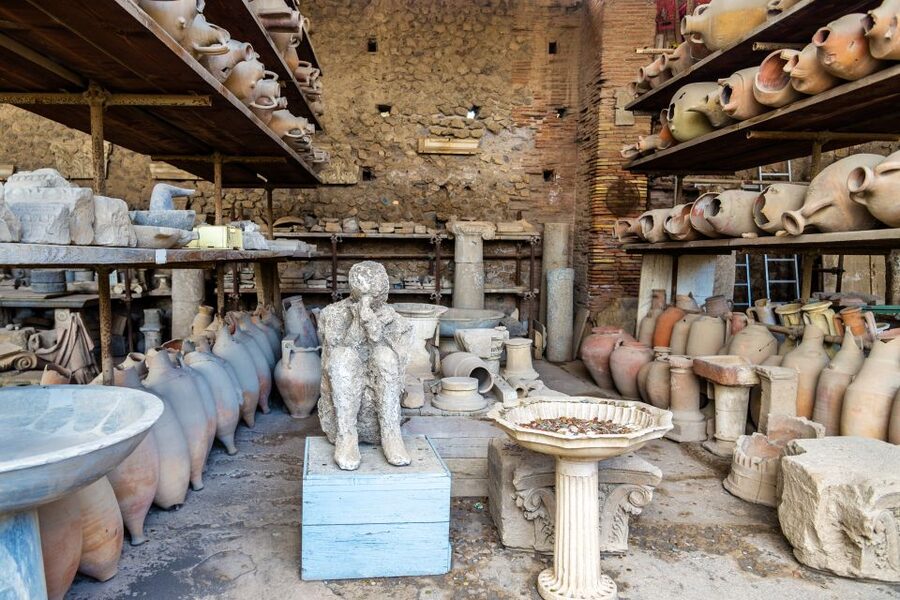
And yes, plan for the eerie part too. Preserved remains, including the famous “petrified bodies,” are typically at the farther end of the site, so build in time and energy to reach them rather than expecting a quick stop near the gate.
Introductions we still owe you around Naples
- Pompeii: Skip-the-Line Entrance Ticket with Audio Guide
★ 4.0 · 2,509 reviews - Pompeii: Skip-the-Line Entry Ticket with Audio Guide or Tour
★ 4.1 · 1,364 reviews - Herculaneum: Skip-the-Line Entry Ticket with Audio Guide
★ 4.3 · 870 reviews - Naples: National Archaeological Museum Ticket & Audio App
★ 4.4 · 617 reviews
Villa of the Mysteries and the Suburban Stops on Pompei+

If you choose Pompei+, you’re adding an extra layer of Pompeii. The ancient city is dramatic, but the suburban villas show how status and daily routine played out beyond the urban core.
The star addition is the Villa of the Mysteries. The reason it matters is the frescoed interiors and decorative program. When you see this kind of artwork in the rooms where it was meant to be seen, the experience becomes more personal. You start thinking like a Roman homeowner, not just a museum viewer.
Pompei+ also includes the Villa of Diomedes and Villa Regina in Boscoreale with Antiquarium. These stops break up the heavy concentration of city buildings and help you understand why Romans built elaborate homes outside the center.
One consideration: some interiors may not be open on every visit. That means your audio narrative might mention spaces you cannot fully view that day. It’s still usually worth it, because even looking through the building structure and imagining the rooms helps. But if you’re the kind of person who hates any gaps between what you expect and what you see, keep your expectations flexible.
If you’re short on time, decide early what you care about. If frescoes and elite domestic spaces pull you in, Pompei+ is a strong match. If you mainly want major street scenes, temples, baths, and the amphitheater, Pompei Express can be enough.
Time, Crowds, and What a One-Day Valid Ticket Means on Foot

This ticket is valid for one day, and starting times vary based on availability. That’s useful because you can time your visit for cooler weather and lighter crowds.
I recommend arriving early in your chosen time slot. Pompeii has lots to see, and you don’t want to rush the moments that matter. A good pace is slow enough to enjoy mosaics and street details, but structured enough that you still reach the far highlights like the remains toward the end.
Pompeii is walk-heavy. Think comfortable shoes, water, and a realistic attitude toward distance. There are toilets throughout the site, and maps help you “strike off” where you’ve been, which also makes pacing less stressful.
Crowds are real here, even on days that aren’t peak. One easy win: book in advance. When you do, you avoid a big chunk of the bottleneck for people who show up without a reservation.
If you’re visiting with kids, plan a route with built-in breaks. The site can feel like a lot if you keep moving with no pauses, but it becomes easier when you time stops around visually clear highlights like mosaics, courtyards, and the amphitheater.
Price and Value: Is $26 Worth It for Audio and Entrance?

At about $26 per person, you’re paying for reserved entry plus the option of an audio guide. That can be strong value, especially when you consider how much Pompeii is about interpretation, not just walking through empty stone.
Here’s how I judge the value:
- If you like self-guided exploring, the reserved ticket cuts friction. You spend energy on the ruins, not on ticket lines.
- If you want context without paying for a live guide, the audio is the best middle ground. It gives you story and orientation while you move freely.
- If you care about the villas, Pompei+ can be the bigger value within the options, because you’re getting additional sites that are otherwise easy to miss when you only plan the central core.
Where the value can wobble is with audio-guide expectations. If you show up hoping every structure will be open and explained perfectly with your exact viewing angle, you might feel let down. Still, the overall payoff is excellent for most visitors because Pompeii is so visually and historically compelling that even partial access remains meaningful.
If you’re on a strict budget, Pompei Express plus a great route can still deliver a fantastic day. If you’re willing to pay a little more for completeness, Pompei+ adds more variety and more ways to understand Roman daily life.
Who This Ticket Suits Best, and Who Might Prefer a Live Guide
This entry ticket plus audio guide is best for people who like control. You can stop when something grabs your attention, skip what doesn’t, and pace your walking based on your stamina.
It’s a great fit if:
- you want to explore at your own pace instead of following a group
- you enjoy architecture, mosaics, and street-level “how did they live” details
- you’re comfortable using a map and figuring out your route through a large site
A live guide might be better if:
- you hate any uncertainty about where to stand for the best view inside buildings
- you want highly specific explanations tied to every room you enter
Even with audio, Pompeii demands basic route thinking. If you treat it like a guided museum with no plan, you may waste time wandering and miss some of the clearest highlights.
That said, the audio guide and map style navigation can reduce aimless wandering more than you’d expect.
Tips That Save Steps (and Help You Hit the Best Scenes)

Small choices can make Pompeii feel smooth instead of chaotic.
- Use luggage storage if you have bags. It keeps you from dragging extra weight all day.
- Start with a plan for your “must see” list: amphitheater, baths mosaics, and at least a couple of temples are a solid foundation.
- If you’re doing Pompei+, budget real time for the suburban villas. Don’t treat them like quick add-ons.
- Expect the petrified bodies area toward the farther end, and plan energy for that stretch.
- Bring wired headphones, and don’t rely on Bluetooth.
- Wear shoes that handle uneven stone and lots of stairs.
Finally, if your voucher or device process feels unclear, slow down and go to the correct desks. The experience works well when you use the official audio desk at Porta Marina Superiore rather than improvising.
Should You Book This Pompeii Entry Ticket With Optional Audio Guide?
I think you should book this if you want a flexible Pompeii day with less friction and more self-directed meaning. The reserved entry helps you get in without wasting time, and the audio guide is a big upgrade for understanding what you’re looking at. For many people, it’s the difference between seeing ruins and actually following how Romans lived.
Choose Pompei Express if you want the core city highlights, temples, baths, amphitheater, and the main street scenes without extra suburban logistics. Choose Pompei+ if you want the Villa of the Mysteries plus other elite suburban sites, and you’re okay with a fuller day shaped by the Pompei+ last entry cutoff.
Skip this option and look at a live guided tour instead only if you need a constant human guide to tell you exactly where to stand and what to ignore, or if you know you will be upset by the occasional closed interior or mismatch between audio narration and visible access.
If you want Pompeii your way, this is a smart, value-driven path.
FAQ
What is included with the reserved Pompeii entry ticket?
The ticket includes reserved entry. If you select the audio option, you also get an audio guide (physical if chosen, plus a digital audio guide is available).
What is the difference between Pompei Express and Pompei+?
Pompei Express includes only the ancient city of Pompeii. Pompei+ includes the ancient city plus suburban villas, including the Villa of the Mysteries, Villa of Diomedes, and Villa Regina in Boscoreale with Antiquarium.
How long is the ticket valid?
The ticket is valid for 1 day. You can check availability for starting times.
Where do I pick up the audio guide?
Audio guides can be picked up and returned at the park’s official audio guide desk in Porta Marina Superiore.
Do I get headphones with the audio guide?
No. Headphones are not included.
Do Bluetooth headphones work with the audio guide?
No. Bluetooth headphones don’t work with the audio guide device.
Is a deposit or ID required for the audio guide?
Yes. A valid ID is required as a deposit to rent the audio guide device.
What time is the last entry for Pompei+?
Last entry time for Pompei+ is 3:30 p.m. in winter (November 1 to March 31) and 5:30 p.m. in summer (April 1 to October 31).
Is this activity wheelchair accessible?
Yes, the experience is wheelchair accessible.
Do EU citizens under 18 have free entrance?
Entrance fees are free for Pompeii for EU citizens under 18 years of age, as well as for disabled citizens and their relatives.
More Self-Guided Tours in Naples
- Pompeii: Skip-the-Line Entry Ticket with Digital Guide App
★ 4.1 · 770 reviews - Ercolano: Herculaneum Entry Ticket with Optional Audio Guide
★ 4.1 · 581 reviews - Rome: Colosseum & Forum with Audio Guide App -Optional Arena
★ 4.2 · 24,770 reviews - Rome: Pantheon Fast-Track Ticket and Official Audio Guide
★ 4.3 · 21,008 reviews
Just introduced: the newest Naples write-ups
- Capri Boat Tour from Naples – Small Group, Swim & Relax★ 5.0 · 341 reviews
- Pompeii Guided Tour from Naples with Skip-the-Line Entry★ 5.0 · 343 reviews
- Procida Island Tour by Boat 2h 15m with Swimming and Underwater Photos★ 5.0 · 344 reviews
- From Naples: Caserta Palace Ticket and Train with Audioguide★ 4.3 · 348 reviews
- Naples Shore Excursion: Private Tour to Sorrento, Positano, and Amalfi★ 4.5 · 352 reviews
- From Naples: Capri Boat Day Trip with Drinks★ 4.7 · 354 reviews
- From Naples: Sorrento, Positano and Amalfi Tour★ 4.6 · 361 reviews
Pompeii & Vesuvius Tours, compared.

Entry Ticket and Guided Tour with an Archaeologist
Read our review →



Pompeii Small Group Tour with an Archaeologist
Read our review →
Pompeii, Amalfi Coast and Positano Day Trip from Rome
Read our review →
Pompeii and Mount Vesuvius Day Trip from Rome with Pizza Lunch
Read our review →Browse the lists this tour appears in