
Reviewed · POMPEII & VESUVIUS TOURS
Pompeii: Small Group Tour with an Archaeologist
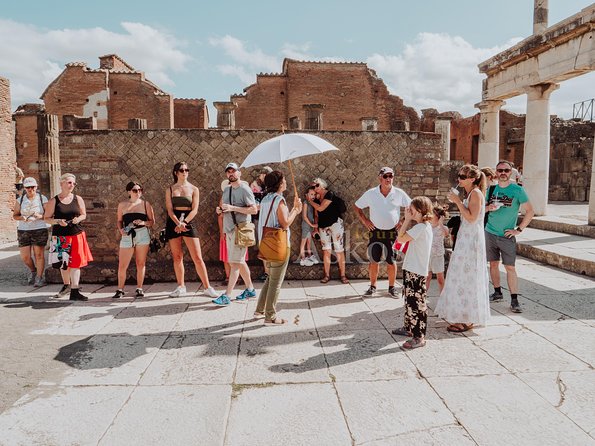
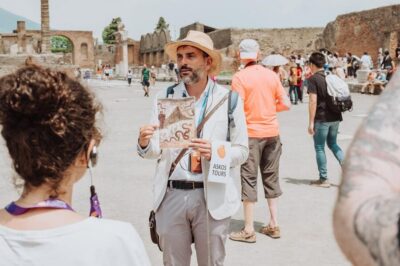
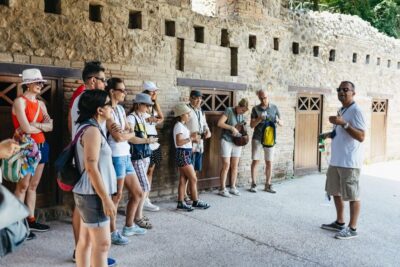
Pompeii hits different when you have an archaeologist talking beside you. I like how this tour gets you into the UNESCO site with a guided, expert-led route that makes the streets and buildings feel real, not just photographed. I also love that you are given headsets (for groups of 16 or more) and then free time afterward to keep wandering where your curiosity pulls you. One thing to consider up front: the walking involves uneven ground, steps, and ramps, so it is not a good fit for wheelchair users or people with mobility impairments.
Choose the pacing you want. The 2-hour option focuses on the core highlights, while the 3-hour tour adds a special visit to the Villa of the Mysteries, famous for its frescoes. Guides can vary by language, so if you have a language must, double-check the options when you book.
In This Review
- Key things to know before you go
- Why this Pompeii tour feels worth the money
- Starting at Porta Marina Superiore, not the middle of nowhere
- The Forum and Foro Civile di Pompei: where the city ran
- Basilica, temples, and the Roman rhythm of work and worship
- Forum Baths and Temple areas: learning through everyday architecture
- Great Theater of Pompeii and House of Menander: spectacle plus street-level life
- House of the Faun, House of the Vettii, and why mosaics grab you
- Lupanar: the brothel stop you should not skip
- House of the Vettii details, plus plaster casts of the eruption
- The 3-hour option and the Villa of the Mysteries frescos
- How much you will actually see, and how to use your free time afterward
- Price and value: is $40 a fair deal?
- Small group or private: which format fits your style
- Practical expectations: what to bring, what to avoid, and what to plan for
- Should you book this Pompeii archaeologist tour?
Key things to know before you go
- Archaeologist-led orientation: you get the who, what, and why behind the big sights, not just labels on walls
- Skip-the-line entry + headsets: easier start and clearer listening, especially if you are in a larger group
- Start at Porta Marina Superiore: an actual city gate that sets the tone for walking Roman streets
- The Forum and civic center focus: you see how daily life, business, and politics were arranged
- The brothel details are handled thoughtfully: you will hear how the Lupanar got its name and see its stone beds and art
- 3-hour option means Villa of the Mysteries: frescos get their own time, not just a quick stop
Why this Pompeii tour feels worth the money
At Pompeii, it is easy to get overwhelmed. The site is huge, and the ruins look similar if you are not sure what you are looking at. That is exactly where a trained archaeologist guide pays off. Instead of treating Pompeii like a checklist, the tour helps you read the city: entrances, street layout, building functions, and the kinds of everyday objects Romans used.
I also like the value math here. You are paying for a guided, time-managed walk through a major UNESCO site, plus your entry ticket is included, plus the guide provides context you would not reliably get by walking around on your own. Then you get more time after the tour to keep exploring without the pressure of staying with the group.
Finally, the tour is designed to help you see more by keeping your route moving. Many people try to do Pompeii solo and end up looping back or missing key areas because they did not know where to start. This approach gives you a strong foundation so the rest of your day makes sense.
More of Pompeii and the volcano that buried it:

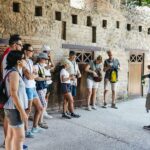
Starting at Porta Marina Superiore, not the middle of nowhere
You enter Pompeii through Porta Marina Superiore, one of the city’s seven gates. Starting at a gate is more than a cool detail. It helps you understand scale and location fast. From there, the tour moves along main streets so you can picture how people would have arrived, passed through, and then dispersed toward public buildings and homes.
You should expect some “site reality” right away: Pompeii is outdoors, and you will be walking uneven surfaces with steps and ramps in the mix. If you are planning for comfort, pack light. The site does not allow luggage or large bags, and mobility scooters are not allowed. The tour also mentions a free cloakroom service near the Porta Marina Superiore entrance, subject to availability, which is useful if you are carrying a jacket or extra layer.
If you arrive earlier than your meeting time, you can usually get oriented around the entrance area. Just know the meeting point can vary based on the option you book, so go by what you were given when you confirmed.
The Forum and Foro Civile di Pompei: where the city ran
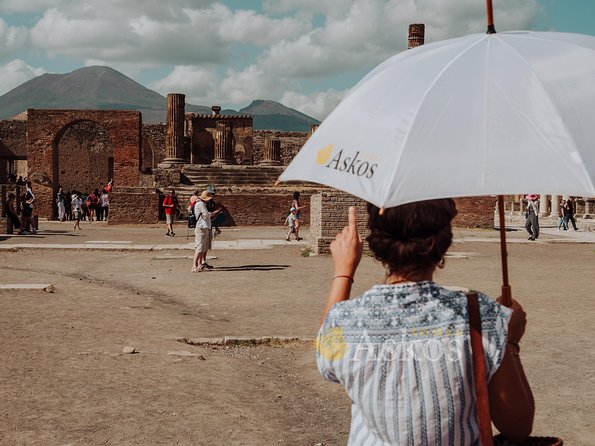
One of my favorite parts of this experience is the way it pulls you into the Forum, the old heart of Pompeii and the center of public life. You will not just see impressive ruins. You will learn how the Forum functioned as a meeting ground for politics, commerce, and everyday encounters.
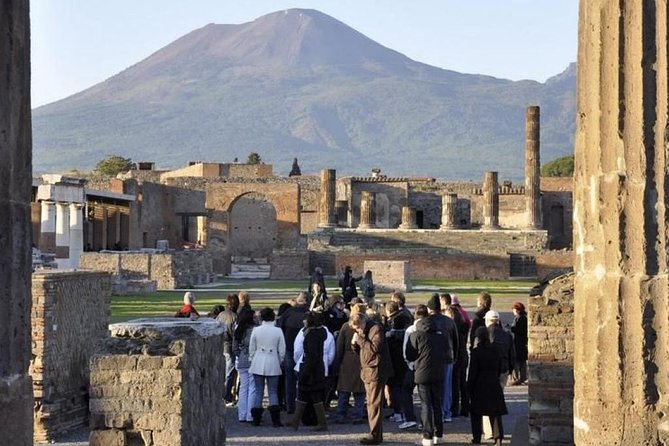
From the Forum area you also get one of those Pompeii perspective moments: Mount Vesuvius is there, visible above the city. That view matters because it ties the place to the story you cannot escape. The city was preserved by volcanic ash after the eruption in 79 AD, and having the mountain in your line of sight makes the history feel less abstract.
As you walk, the guide’s job is to point out details you might otherwise miss. The tour description highlights listening to anecdotes about people who lived in Pompeii, and that kind of human framing helps you connect buildings to behavior. A civic space only feels “important” when you understand what it was used for.
Basilica, temples, and the Roman rhythm of work and worship
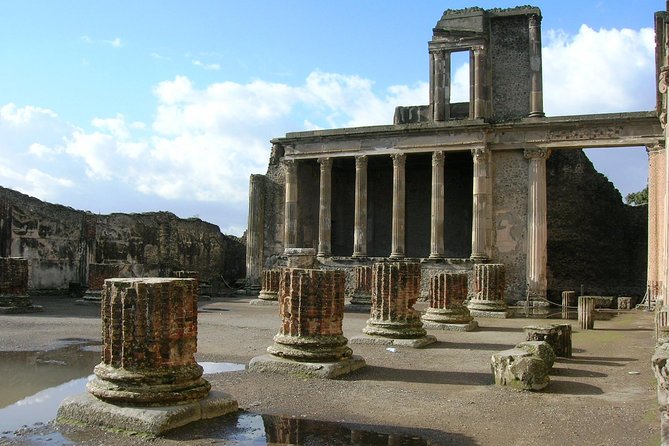
After the Forum, you move through major structures tied to daily systems: the Basilica, temples, and other public areas.
- Basilica: you are told it served as a business and legal center. In practice, that means it is the kind of place where disputes were handled and transactions happened.
- Temple of Apollo and Temple of Jupiter: temples are where public religion met civic identity. You see these spaces as more than decorative ruins. They were part of how Romans organized meaning in the city.
This is where a strong guide can change your whole experience. The tour format is built around showing how different buildings represent different roles. The Basilica is not just “a big room,” it is a working hub. A temple is not just “a holy site,” it is a landmark that shaped the city’s public mindset.
Introductions we still owe you around Naples
- Naples: Naples Underground Entry Ticket and Guided Tour
★ 4.4 · 21,781 reviews - From Naples: Sorrento, Positano and Amalfi Full-Day Tour
★ 4.6 · 10,988 reviews - From Naples: Sorrento, Positano & Amalfi Coast – Small Group Tour
★ 5.0 · 8,643 reviews - Naples: Catacombs of San Gennaro Entry Ticket & Guided Tour
★ 4.6 · 7,941 reviews
Forum Baths and Temple areas: learning through everyday architecture
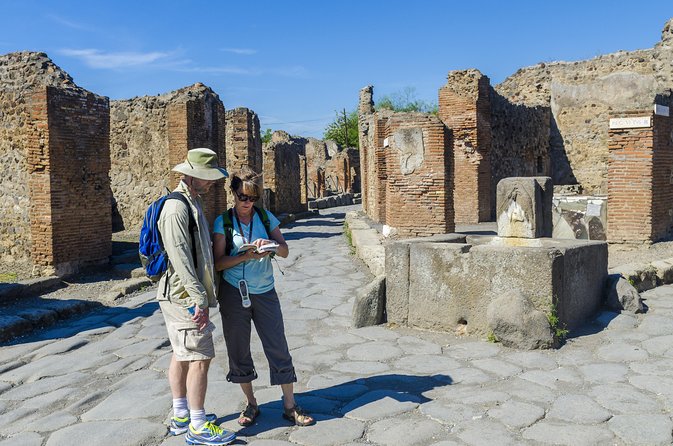
Pompeii is famous for drama, but the Baths and the surrounding public areas bring you back to normal life. The tour includes the Forum Baths, which helps you understand how Romans cared for hygiene, leisure, and socializing. Even if you are not an architecture person, watching how the city is laid out around public use makes it easier to picture a day in Pompeii.
This section also helps you understand why the tour avoids only the flashiest stops. Public buildings are the glue of the city. When you understand the glue, you start seeing how everything connected. You stop treating the ruins as separate “attractions” and start reading them as a functioning city grid.
Great Theater of Pompeii and House of Menander: spectacle plus street-level life
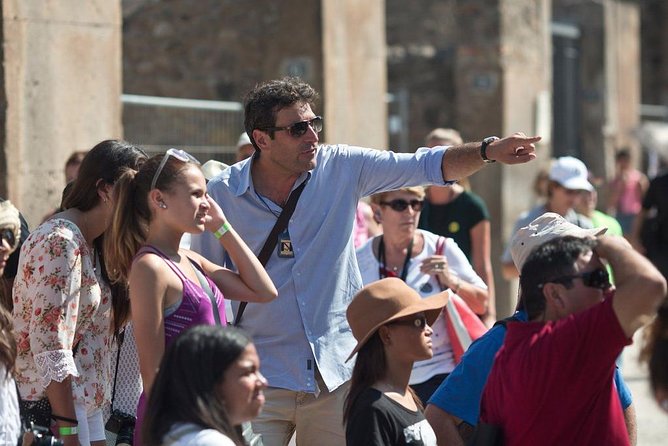
Next you get a dose of performance and culture at the Great Theater, a highlight for good reason. It gives you a sense of communal entertainment. Roman theatres were not just about shows, they were about gathering, status, and shared public experiences.
Then you shift toward more domestic views with stops like the House of Menander and other notable homes later in the route. Even when you are touring quickly, the guide typically helps you distinguish between what is likely commercial and what is likely residential based on architectural cues. That matters because Pompeii has a “mixed city” feel. Shops and daily services were woven into the urban fabric.
House of the Faun, House of the Vettii, and why mosaics grab you
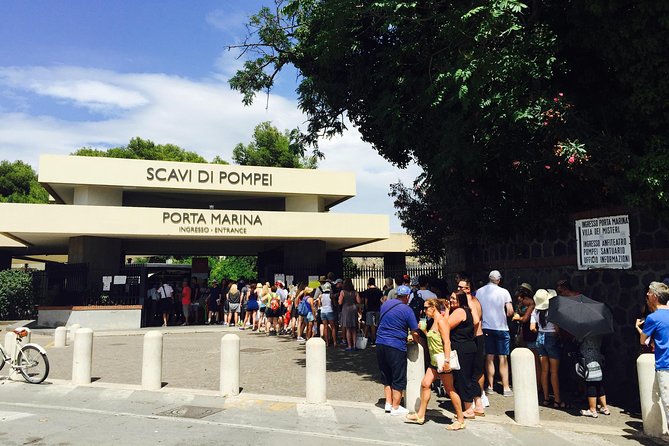
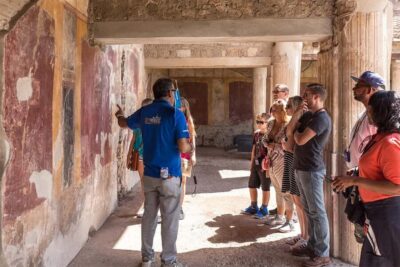
The tour includes famous residences such as the House of the Faun and the House of the Vettii. These are stops where you will likely want to slow down, because the visual details can be hard to appreciate without context.
Two things the tour emphasizes are preserved artwork and the way you can see frescoes, mosaics, and preserved decoration up close. That is the kind of access that turns ruins from gray stone into a lived-in environment.
Here is the practical payoff: once you understand what kind of house you are in and what the decoration likely communicated, the art becomes a language. It suggests wealth, taste, and identity. You will not just admire it, you will start trying to “read” it.
Lupanar: the brothel stop you should not skip
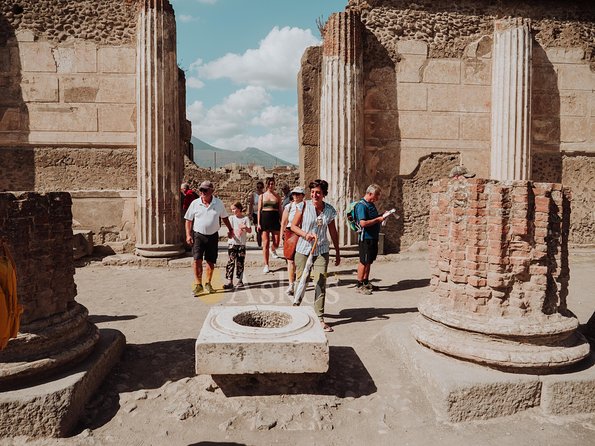
One of the more memorable inclusions is the Lupanar, Pompeii’s brothel. The tour explains how the famous name came to be and shows preserved stone beds and frescoes. It is not a graphic or sensational stop, but it is adult in topic, and the guide’s tone matters.
If you are traveling with a group that includes kids, this is one to plan around. The tour description and notes indicate adult themes exist due to certain locations and graffiti, and the guide handles it with sensitivity. Still, it is smart to know you are going to pass through a part of Pompeii that was linked to sex work and sexual messaging.
What I like about the way this tour includes the Lupanar is that it positions the site as social history. You come away with a better understanding of how Romans lived, including the realities most visitors do not want to think about when they just want photos.
House of the Vettii details, plus plaster casts of the eruption
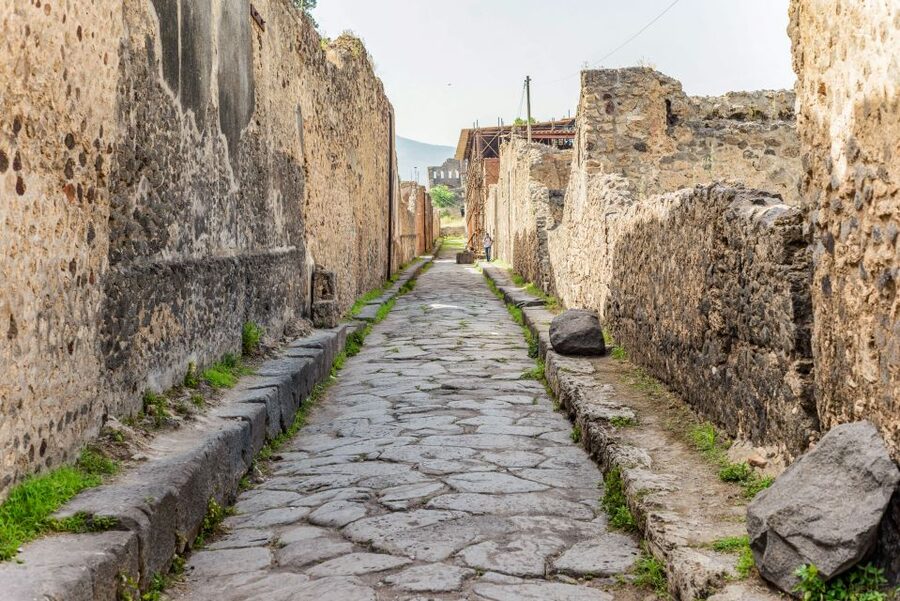
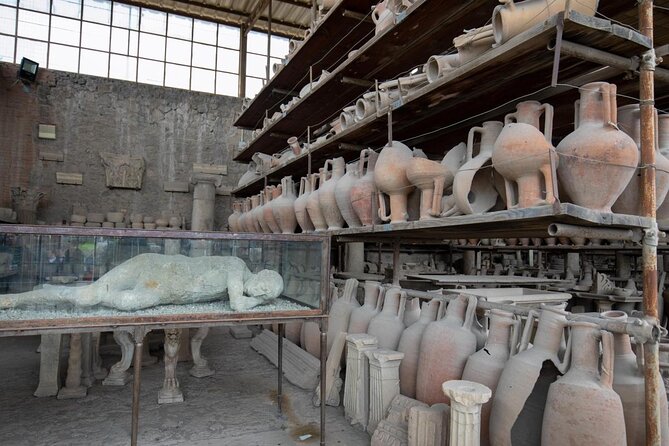
Another element worth calling out is the chance to see plaster casts related to the people trapped during the eruption. The general idea is clear: you peek at casts of those who were in the city at the time of the eruption, and it gives the event a face.
A practical note: you may see these casts displayed in sealed glass cases rather than as part of open plaster scenes in rooms. That matters because it changes how you view them. Plan to treat this as a quiet, reflective moment where you are absorbing the human cost, not a photo-shoot stop.
The 3-hour option and the Villa of the Mysteries frescos
If you choose the 3-hour experience, the big add-on is the Villa of the Mysteries, visited for its famous frescoes. This is one of those Pompeii moments where the guide’s pacing helps. Instead of skimming, you get time to understand what you are looking at and why the imagery has drawn so much attention.
Frescoes are fragile, and Pompeii’s preservation is complicated. Your guide’s job is to point out what to focus on before you get lost in visual detail. Expect a richer story arc here than in the 2-hour route, because the tour is designed to give this stop breathing room.
If you are the type who loves art, symbols, and narrative scenes, the 3-hour tour is the one I would pick.
How much you will actually see, and how to use your free time afterward
The tour runs 2 to 3 hours depending on the option. Then you get freedom to explore the archaeological site on your own afterward.
That timing is more useful than it sounds. Pompeii is too large to see everything in one day. The guided part gives you a working mental map. After that, you can choose what to revisit or where to branch off.
Also, the tour may avoid or modify some parts of the route due to overcrowding or temporary closures. So your post-tour freedom matters even more. If a certain area is packed or limited, you still have multiple ways to keep exploring without feeling like you failed to do the “right” thing.
If your schedule is tight, do this tour early enough that you still have time to roam. Some Pompeii areas close before the day is done, so you want your own time to come after you finish with your archaeologist guide.
Price and value: is $40 a fair deal?
At about $40 per person, the value is all about what you get for that money. You are getting:
- entry ticket included
- a guided route with an archaeologist (2 or 3 hours)
- headsets for groups of 16 or more
- a structured visit to major highlights plus time afterward to explore
If you plan to walk Pompeii solo, you can buy admission and wander. But you will likely miss how buildings relate to each other and what small details mean. In a place where everything is old and everything is stone, context is the difference between seeing and understanding.
Also, the tour helps you start at Porta Marina Superiore and then move through the civic and residential heart of the site. That saves you time and reduces guesswork. For most visitors, that is exactly what you want to spend your time on.
Small group or private: which format fits your style
You can pick either a small-group experience or a private group. The private option is great if you want more flexibility in your pace, more room for questions, or you are traveling with people who prefer less crowd energy.
One important practical detail: shared group and private options do not always offer the same languages. So if you care about French, Spanish, German, Portuguese, English, or Italian, check your language match while booking. It can affect your overall experience as much as the route length does.
Practical expectations: what to bring, what to avoid, and what to plan for
This tour expects you to travel light and move on foot. Bring an ID card or passport (a copy is accepted). Avoid luggage and large bags since those are not allowed. Smoking is not allowed on site, and dogs larger than 10 kg cannot enter.
In terms of comfort, plan for sun and walking. You will be outside for most of the tour, and the site includes steps and ramps. If you are sensitive to heat, consider arriving ready to rest when the guide pauses.
Finally, remember that your route can shift slightly because of overcrowding or temporary closures. That is normal for Pompeii on busy days.
Should you book this Pompeii archaeologist tour?
Yes, if you want Pompeii to make sense fast. I think this is one of the best ways to understand what you are looking at without wasting your limited time. The mix of big civic spaces like the Forum and Basilica, plus standout ruins like the Great Theater and major homes, gives you a balanced Pompeii snapshot. Add the plaster casts and the option for the Villa of the Mysteries, and you get the kind of emotional and artistic range that makes Pompeii unforgettable.
Book the 3-hour version if frescos and symbol-rich sites matter to you. Pick the 2-hour option if you want a strong intro and still plan to spend extra time wandering afterward.
One final “yes, but” note: if mobility is an issue, this is probably not your best match due to steps, ramps, and uneven walking. If that describes you, look for an alternative that can support your needs.
If you want Pompeii to feel like a real city, not a pile of ruins, this is a smart way to start your day.
Just introduced: the newest Naples write-ups
- Capri Boat Tour from Naples – Small Group, Swim & Relax★ 5.0 · 341 reviews
- Pompeii Guided Tour from Naples with Skip-the-Line Entry★ 5.0 · 343 reviews
- Procida Island Tour by Boat 2h 15m with Swimming and Underwater Photos★ 5.0 · 344 reviews
- From Naples: Caserta Palace Ticket and Train with Audioguide★ 4.3 · 348 reviews
- Naples Shore Excursion: Private Tour to Sorrento, Positano, and Amalfi★ 4.5 · 352 reviews
- From Naples: Capri Boat Day Trip with Drinks★ 4.7 · 354 reviews
- From Naples: Sorrento, Positano and Amalfi Tour★ 4.6 · 361 reviews
Pompeii & Vesuvius Tours, compared.
Entry Ticket and Guided Tour with an Archaeologist
Read our review →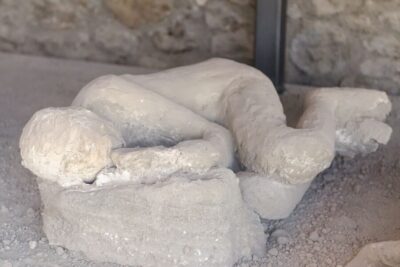

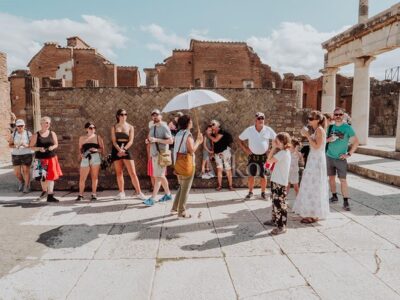
Pompeii Small Group Tour with an Archaeologist
Read our review →
Pompeii, Amalfi Coast and Positano Day Trip from Rome
Read our review →
Pompeii and Mount Vesuvius Day Trip from Rome with Pizza Lunch
Read our review →Browse the lists this tour appears in