
Reviewed · POMPEII & VESUVIUS TOURS
Pompeii Private Tour with an Archaeologist Guide
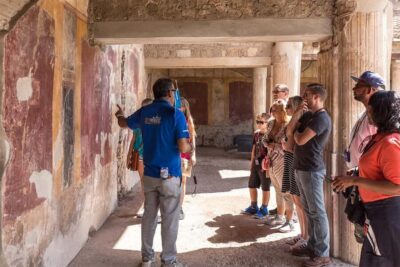
Pompeii clicks when you have a real archaeologist. This private Pompeii tour by Askos Tours is built for people who want the why behind the ruins, not just the where, with English guidance and time for lots of questions. I like the tight structure that still lets you go at your own pace, plus the way the route covers big “must-see” areas like the Forum and Stabian Baths without turning your visit into a mad dash.
One thing to plan for: the Pompeii entrance ticket is not included in the price, so you should budget extra for park admission. Also, the tour is about 2 hours, which is perfect for orientation and highlights, but it will not cover every corner of the site.
In This Review
- Quick hits before you go
- Why a private archaeologist guide changes Pompeii
- Meeting at Porta Marina Superiore, then setting the pace
- The 2-hour route starts strong: Vettii, Lupanar, and Vetutius Placidus
- Houses and theatres: where Roman entertainment and status show up
- Stabian Baths and the Forum area: public life in stone
- Markets and grain storage: Macellum and the Granaries
- Price and tickets: what you’re paying for at $178.45
- Who this private Pompeii tour fits best
- Practical tips to make your tour smoother
- Should you book this Pompeii private tour?
- FAQ
- Is Pompeii entrance admission included in the tour price?
- How long is the Pompeii private tour?
- Where do we meet the archaeologist guide?
- Is this tour private or shared with other groups?
- What language is the tour offered in?
- Can I get a full refund if I cancel?
Quick hits before you go
- Archaeologist-led, private pacing: only your group gets the guide’s time, so you can ask questions as you walk.
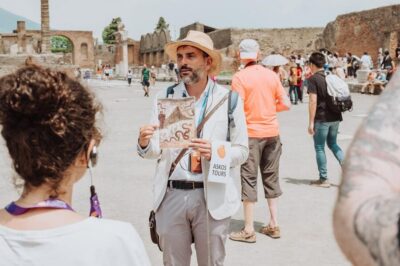
- A sign-based meet-up at Porta Marina Superiore: the guide meets you at the main entrance holding an Askos Tours sign.
- A highlight-focused route: Vettii, Lupanar, major houses, theatres, Stabian Baths, the Forum area, baths, and markets.
- Short, efficient stops: many sights are around 5 to 10 minutes, which keeps momentum and helps with crowds.
- Crowd-aware guidance: multiple guides are described as able to navigate busier areas smoothly.
- Comfort basics matter: closed shoes help a lot on uneven stone, especially in heat.
Why a private archaeologist guide changes Pompeii
Pompeii is enormous, and it can feel like a pile of walls until someone connects the dots. The biggest payoff of this tour is the human part: you’re not sharing your guide with other people, so you can slow down when something catches your eye and speed up when you want to move on.
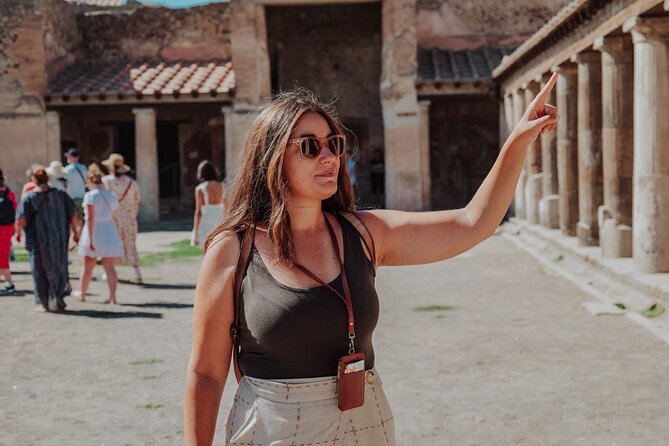
I also like that the guide isn’t just a storyteller, but an archaeologist. Guides with backgrounds in excavation or architecture show up in the experience, and that technical lens tends to turn vague impressions into clear explanations. You’ll get context for what you’re looking at, plus practical ways to read the layout of the city, streets, and public spaces.
The tour is designed for real questions. If you want to know how daily life worked, what public buildings suggest, or how different parts of town fit together, this format gives you the time to ask, then keep walking without feeling rushed.
More Private Tours in Naples

Meeting at Porta Marina Superiore, then setting the pace
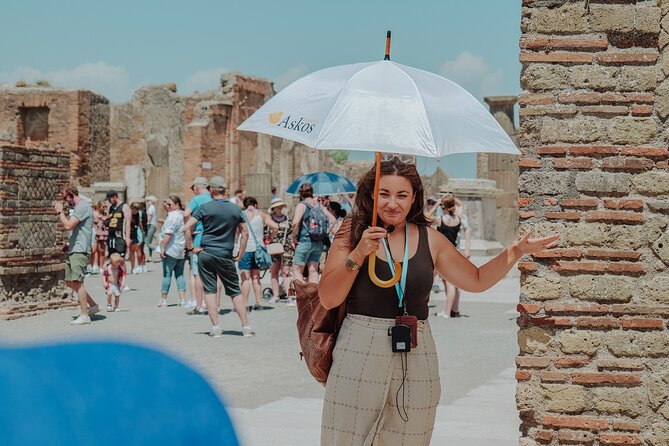
Your day starts with a clear, findable meeting point. You meet the guide at the archaeological site entrance called Porta Marina Superiore, and the guide is holding a sign with Askos Tours on it. That small detail saves stress, especially when Pompeii’s entrances and entrances nearby all look similar once you’re there.
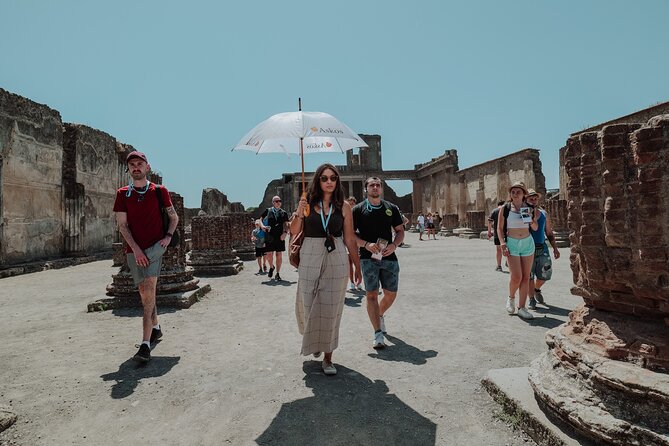
You’ll spend roughly two hours inside the ruins with the guide, but the pacing is built for how Pompeii actually feels in real life. Many stops are kept to about 5 to 10 minutes. That matters because the site is a mix of long walking stretches and dense clusters of ruins. Short, focused visits help you see the highlights before the day starts to drag.
Another practical plus: the tour ends back at the Via Villa dei Misteri, 1 area, and the guide can help with useful information on getting back to your accommodation or the closest train station. That’s the kind of help that makes a tight schedule easier, especially if you’re combining Pompeii with the Amalfi Coast.
The 2-hour route starts strong: Vettii, Lupanar, and Vetutius Placidus
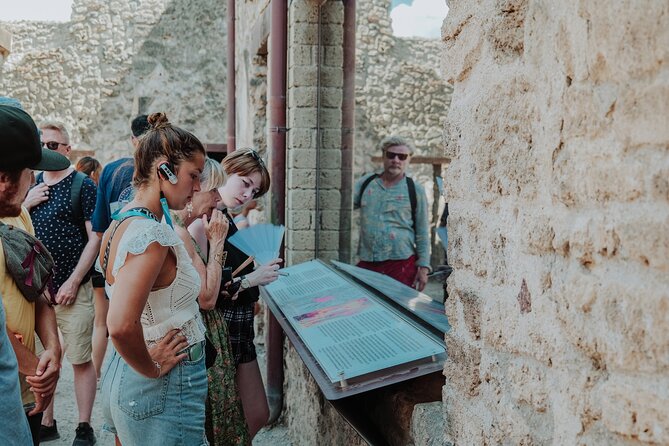
The itinerary begins at the park entrance, then quickly moves into houses and smaller, high-interest stops. You’ll start with the Casa dei Vettii. A house like this is a great early stop because it frames Pompeii as a lived-in city. You can get the “how people organized their homes” feeling first, then use that mental model as you move toward public buildings.
Next is the Lupanar. This stop helps balance the day. Pompeii isn’t only temples and big forums, it also includes places that reveal the social side of city life. A good archaeologist guide turns a name on a map into something you can understand in context.
You then hit the House and Thermopolium of Vetutius Placidus, including the termopolium. Thermopolia were part of everyday consumption culture, so even without getting lost in technical detail, this is where Pompeii starts feeling less like a museum and more like a city. It’s also a strong point for guided questions, since a guide can explain what the building type suggests about habits and routines.
The tradeoff is time. These first stops are intentionally brief, so if you are the type who wants to stare at every painted wall for 20 minutes, you may wish you had more hours. For most people, though, this is a smart opening because it gives you orientation fast.
Houses and theatres: where Roman entertainment and status show up
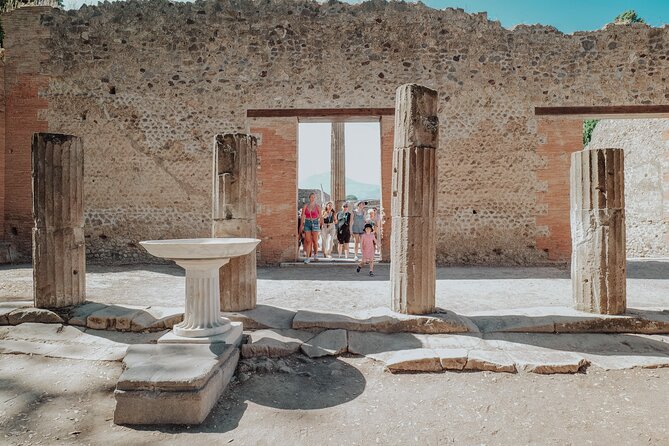
After the early house stops, the route shifts into cultural landmarks and another layer of Pompeii’s social structure.
You’ll visit the Teatro Grande, the main theatre space on the route. The value here is not just seeing ruins that used to host events. It’s learning how the city was designed to support public gatherings. Once you’ve seen a theatre and a few key civic spaces later, the layout tends to make more sense as a whole.
You’ll also visit the House of Faun. Houses like this are useful because they give you a contrast with earlier domestic stops. Even if you’re not chasing details, the guided explanation helps you understand how different homes represented different kinds of wealth and lifestyle.
Then the route continues with the House of Menander. Menander is also a cue for the guide to talk about how art, names, and household identity show up in the ruins. The guide can tie these homes back to the bigger city story so you don’t leave with a list of stops only.
This part of the tour often clicks for families too. Several guides in the experience are described as able to keep kids engaged while still giving adults real information. Even if your group is older, you’ll likely appreciate the mix of big spaces and human-scale rooms.
More of Pompeii and the volcano that buried it:
- Pompeii Small Group Tour with an Archaeologist
★ 5.0 · 6,593 reviews - Discover the Ancient Ruins of Pompeii: Day Trip from Rome
★ 3.5 · 2,247 reviews - Pompeii and Herculaneum Small Group Tour with an Archaeologist
★ 5.0 · 1,350 reviews - Skip the Line Guided Tour of Pompeii led by an Archaeologist
★ 5.0 · 703 reviews
Stabian Baths and the Forum area: public life in stone
Now comes the big highlight zone. You’ll see the Stabian Baths, also called Terme Stabiane. Baths are one of the most effective places to understand Pompeii because they’re built for community. You don’t have to know every term to notice the logic of a shared public space, and that’s exactly the sort of place where an archaeologist guide can explain how the building functioned for daily routines.
After that, you walk through Via dell’Abbondanza. This is one of the best “feel the city” moments of the day. A street walk helps you imagine movement, commerce, and how people would have experienced Pompeii as you traveled from one area to another.
You’ll then see the Forum Baths, plus the Baths of the Forum. Public baths and the Forum cluster together well in your mental map. By the time you reach these stops, the tour stops feeling like disconnected ruins and starts feeling like a city with neighborhoods and shared spaces.
From there, you reach the Foro de Pompeya, the main Forum area. The Forum is where you get the civic heartbeat of Pompeii. Even with short stop times, this is the place you’ll want to ask your best questions. A strong guide will connect what you saw in homes and streets to what you now see in civic space.
Markets and grain storage: Macellum and the Granaries
The tour doesn’t treat Pompeii as only politics and architecture. It includes places tied to daily needs, which is where a guide’s interpretation really matters.
You’ll see the Macellum, the market stop on the route. Markets are a smart highlight because they turn “ancient city” into “everyday city.” If your interest leans toward food, habits, and how people spent time, this stop gives you a natural topic for Q&A.
You’ll also see the Granaries of the Forum. Grain storage helps explain why cities could operate at scale. The tour route places this stop near the Forum area for a reason. Together, market plus storage plus civic space helps you understand how supply, distribution, and public life were linked.
Finally, you finish the Forum area loop with additional Forum views and structure. It’s a good ending because the Forum zone is easier to orient around than scattered sections of Pompeii. You leave with a clearer “big picture,” not just snapshots.
Price and tickets: what you’re paying for at $178.45
At $178.45 per person for a roughly 2-hour private tour, you’re buying something that’s hard to replicate on your own: a focused archaeologist-led walking route plus your group’s attention, not a group lecture.
You do need to factor in one major cost: Pompeii entrance ticket is not included. That means your final day budget is the tour price plus the park admission you pay on site. In the experience, extra entrance cost is a point that comes up, so I recommend you assume you’ll pay for admission separately when you book and plan your total spend.
Why is that worth it? Because the tour is built around highlights and smart pacing. If you’ve got limited time, the alternative is spending hours trying to choose what to see, then paying for a guide anyway later. Here, you get an organized route, a guide who can explain what you’re seeing, and the chance to avoid common confusion about where to go next.
The best way to think about value is this: if Pompeii is one of your only major stops on the trip, paying for a guide often saves time and reduces decision fatigue. If you’re planning a long self-guided visit over a full day, you might get less “value per hour,” because you can cover more ground alone.
Who this private Pompeii tour fits best
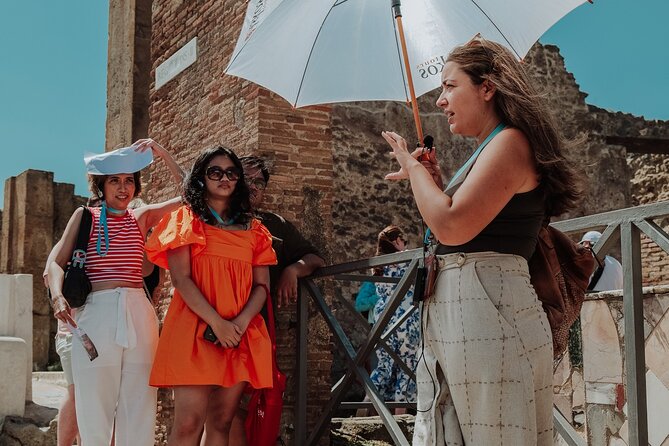
This is a great fit when you want Pompeii to feel personal. If you like asking questions, you want clear explanations, or you feel overwhelmed by the size of the site, the private format helps.
It’s also a strong choice in hot weather. Multiple guides in the experience are described as making the day work by guiding your route and managing the sun and crowds. A private guide can keep your time efficient, which matters when you’re walking on stone and trying to stay comfortable.
Families often do well here too. One family described how the guide kept kids engaged, while still delivering real history and daily-life context. If you have teens who want facts, not just ruins, this kind of guided Q&A tends to land well.
You should consider skipping or pairing the tour with extra time if you’re the type who wants to linger. People sometimes wish they had more hours because Pompeii is enormous. In that case, treat this tour as your orientation, then plan extra self-guided time after, or pick a longer guided option if available.
Practical tips to make your tour smoother
Pompeii is walk-heavy. Wear closed shoes, not flip flops, because it can be difficult to walk on the ruins’ surfaces. If you’re sensitive to heat, plan for sun protection too, since the sites you visit include open street sections like Via dell’Abbondanza and large public spaces.
Bring a small notebook or notes app. When a guide connects a stop to daily life and Roman routines, you’ll likely want to remember key points later when you’re back in town.
Also, don’t be shy about pacing. The whole point of a private tour is that the guide can adjust as your group needs it. If your group moves slower, ask. If you want to focus on fewer spots longer, ask that too.
Finally, set your ticket expectations. Since Pompeii entrance tickets are not included, you’ll want to have that budget ready before you meet your guide.
Should you book this Pompeii private tour?
Book it if you want a high-confidence, highlights-first Pompeii visit with archaeologist guidance, especially if you’re short on time or worried you’ll miss key context. This tour is also a smart pick if your group includes kids or teens, or if you want a crowd-aware route that keeps things moving.
Consider passing or adding extra time if you want to fully roam and linger for hours. The route is efficient, not exhaustive, and the biggest cost consideration is the separate entrance ticket you’ll pay for the park.
If you’d like Pompeii to feel understandable fast, this is one of the better ways to do it. You’ll leave with a clearer sense of how houses, public baths, streets, theatres, and the Forum area connect into one city story, and you’ll have the right person to ask why it all worked the way it did.
FAQ
Is Pompeii entrance admission included in the tour price?
No. The Pompeii entrance ticket is not included. You will need to pay the park admission separately.
How long is the Pompeii private tour?
The tour lasts about 2 hours.
Where do we meet the archaeologist guide?
Meet the guide at the main entrance of the archaeological site called Porta Marina Superiore. The guide will be holding a sign with Askos Tours on it.
Is this tour private or shared with other groups?
It’s private. Only your group participates.
What language is the tour offered in?
The tour is offered in English.
Can I get a full refund if I cancel?
Yes, you can cancel for a full refund if you cancel at least 24 hours before the experience’s start time.
Just introduced: the newest Pompeii write-ups
- Mount Vesuvius Tour from Pompeii Led by an Expert Guide★ 5.0 · 185 reviews
- Stories of Pompeii: Small Group tour with archeology expert guide★ 5.0 · 191 reviews
- Pompeii: 2 Hour Private Tour with an Archeologist Guide★ 5.0 · 214 reviews
- Pompeii and Mount Vesuvius Small Group Tour★ 4.5 · 233 reviews
- Pompeii Guided Group Tour with Entry Ticket and Archaeologist★ 4.5 · 269 reviews
- Pompeii: Guided Small Group Tour Max 6 People with Private Option★ 5.0 · 269 reviews
- Private Day Tour to Vesuvius, Herculaneum & Pompeii with Pick Up★ 5.0 · 279 reviews
Pompeii & Vesuvius Tours, compared.
Entry Ticket and Guided Tour with an Archaeologist
Read our review →

Pompeii Small Group Tour with an Archaeologist
Read our review →
Pompeii, Amalfi Coast and Positano Day Trip from Rome
Read our review →Browse the lists this tour appears in