
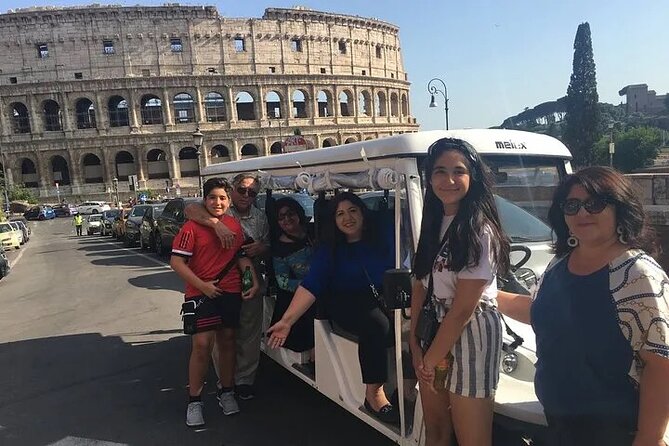
Reviewed · CITY TOURS
Rome Golf Cart Tour: Highlights of the Eternal City
In three hours, Rome feels close and manageable. This private Rome golf cart tour is built for an easy first contact with the city, with time-efficient stops and routes that favor calmer streets over gridlock. The experience is also relaxed because you start with pickup from your central hotel, so you spend less time figuring out transit and more time looking out at Rome.
I especially like how the cart format lets you see big-ticket sights and lesser-known corners back-to-back. You still get the Rome drama at places like the Pantheon and Piazza Navona, but you’re not doing nonstop “wear down your feet” walking. One more plus is the flexibility, with numerous departure times so you can fit this into your day without forcing your whole itinerary around Rome crowds.
The one thing to consider is that the quality of the tour can hinge on the guide. In the positive reviews, guides like Francesco, Pietro, and Yvonna set a high bar with stories and photo help. But at least one review complained the guide did not stay engaged, so if you want lots of narration and active picture-taking, be ready to choose your moment and set expectations.
In This Review
- Key things I’d bank on before you go
- A private Rome golf cart loop that saves your legs
- Price and what you really get in 3 hours
- Meeting point and pickup, so you start the day calmly
- How the route works, and why the short stops feel strategic
- Pantheon (about 15 minutes): Rome at its most iconic
- Piazza Navona (about 15 minutes): Baroque Rome in a public square
- Trevi Fountain (about 10 minutes): the classic photo stop, done efficiently
- Spanish Steps (about 5 minutes): a quick viewpoint moment
- Campo de’ Fiori (about 5 minutes): an earthy, lived-in square
- Villa Borghese, Palatine Hill, and Aventine Hill: ancient Rome and a green break
- Circo Massimo (about 5 minutes): the ancient stadium feel
- Piazza del Popolo (about 5 minutes): a northern gate viewpoint
- Chiesa di Sant’Ignazio di Loyola (about 5 minutes): Jesuit details in plain sight
- Why golf carts work so well in Rome
- Guide quality is the swing factor, so choose smartly
- When this tour is the right choice, and when it is not
- A practical packing and planning checklist for a smooth ride
- Should you book this Rome golf cart tour?
- FAQ
- How long is the Rome golf cart tour?
- What is the price per person?
- Is hotel pickup included?
- Is this a private tour or shared group?
- What language is the tour offered in?
- Where does the tour start and end?
- Are entry tickets included?
- Which stops are included on the route?
- What is the cancellation policy?
- Is the tour suitable for most people, and are service animals allowed?
Key things I’d bank on before you go
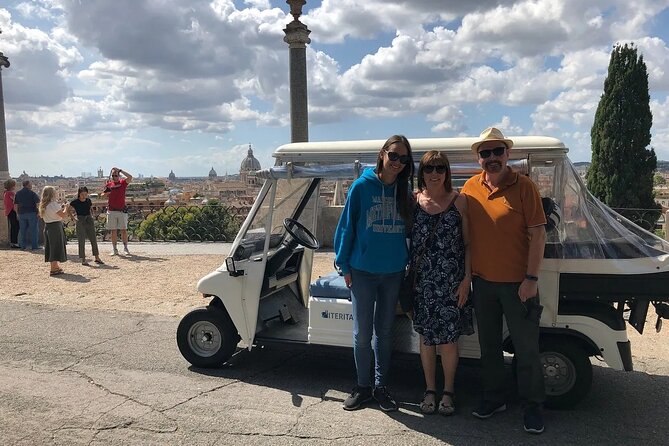
- Private group means your pace is your pace (your group only, not a shared cattle line)
- Backstreets instead of main roads so the ride feels smoother and more local
- A stop-by-stop “greatest hits” circuit that covers Pantheon, Navona, Trevi, Spanish Steps, and more
- Short sight windows that work for first-time orientation when you want value per hour
- English-speaking drivers plus frequent praise for guides like Francesco and Pietro
- Comfort over long walks especially helpful if you want to tour without exhausting stairs and cobblestones
A private Rome golf cart loop that saves your legs
Rome is a city that can be both thrilling and punishing on foot. This tour cuts the walking load by putting you in a golf cart or eFiat, then moving you between landmarks on tighter timing. The result is that you can see more of the Eternal City without feeling like every block is a test of endurance.
Because it’s private, the experience tends to feel less rushed than group tours. You’ll still have set stop times, but you’re not sharing your cart with strangers who booked this as a race to the next photo. That matters when you’re traveling with family, when your schedule is tight, or when you simply want Rome to feel fun instead of frantic.
More old streets covered by golf cart:

Price and what you really get in 3 hours
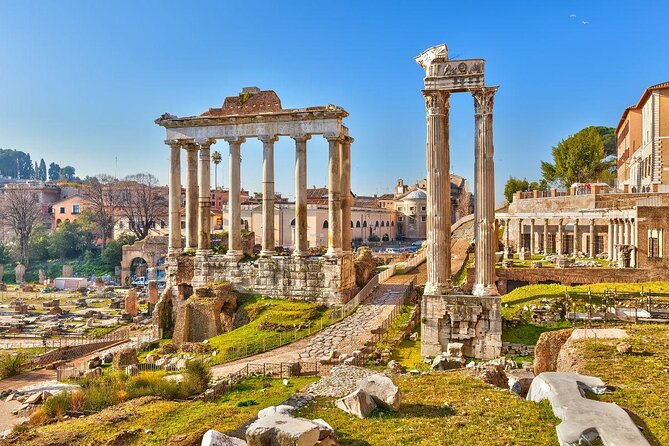
The price is $163.26 per person for about 3 hours. On the surface, that can sound steep if you’re thinking only about transportation. But here’s the practical value equation I see: you’re paying for (1) a guided orientation to multiple top sights, (2) a vehicle that reduces transit time inside central Rome, and (3) pickup offered for a private experience.
Most of the big names on your list are clustered in ways that are easy to miss if you’re trying to plan solo. With this format, you’re not just “going to places,” you’re also getting guided routing, photo stops, and context that helps your brain connect what you see to what it means.
That said, you should go in with the right expectation: this is not a slow museum day. The stops are short, like 10 to 15 minutes at the major highlights, and even quicker at some viewpoints and churches. If you want deep time inside every site, you’ll want to pair this with a separate longer visit later.
Meeting point and pickup, so you start the day calmly
You’ll start at Pic Nic – Just Amir srl, Piazzale delle Canestre, SNC, 00197 Roma RM, Italy. The tour ends back at the meeting point, so think of it like a loop that brings you back to where you started.
The best part is pickup: you’ll be picked up from your central Rome hotel for a private experience. If your hotel is not in central Rome, the operator says to contact them, and they might arrange a private car. In other words, don’t assume “no pickup” if you’re staying farther out. Ask early, since it can change how smooth your morning or afternoon feels.
Also, keep an eye on your timing. The tour duration is only about three hours, so being late can shrink the sightseeing time fast.
How the route works, and why the short stops feel strategic
This tour is structured as a sequence of quick landmark hits. That’s actually a smart use of time in Rome, where walking between major sights can eat up your day even if you’re moving fast.
You’ll get a mix of:
- Monumental “wow” stops (Pantheon, Trevi, Navona)
- Classic photo viewpoints (Spanish Steps, Piazza del Popolo)
- Ancient Roman anchors (Circo Massimo, Palatine Hill, Aventine Hill)
- A couple of churches that add variety beyond the usual open-air crowd
The cart also helps with Rome’s cobblestones. One review notes the ride can be bumpy on stone streets, but it still felt wonderfully interesting. If you’re sensitive to rough surfaces, it’s worth keeping your expectations realistic, and holding on while turning corners.
Introductions we still owe you around Rome
- Vatican: Museums & Sistine Chapel Entrance Ticket
★ 4.5 · 144,003 reviews - Vatican Museums & Sistine Chapel Tour with Optional Basilica
★ 4.3 · 67,413 reviews - Colosseum, Roman Forum & Palatine Guided Tour
★ 4.7 · 63,148 reviews - Vatican Museums, Sistine Chapel & St Peter’s Basilica Guided Tour
★ 4.5 · 39,149 reviews
Pantheon (about 15 minutes): Rome at its most iconic
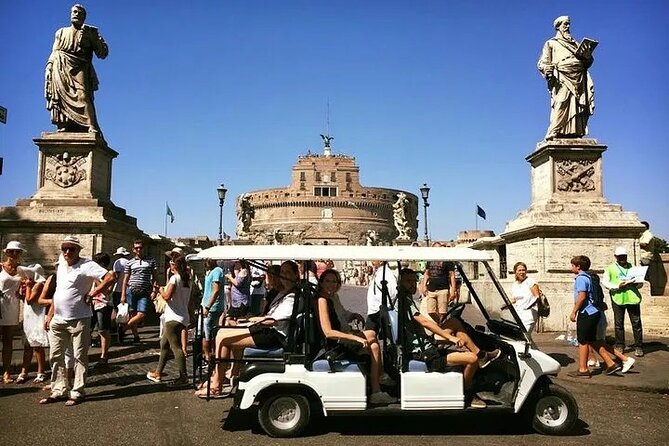
Your tour starts at the Pantheon, first built as a Roman temple and later functioning as a Catholic church since 609 AD. The spot is famous for more reasons than just its look: it’s a masterclass in scale and design, and it’s one of those places where the architecture seems to explain itself once you’re standing there.
With about 15 minutes, you’re not going to “do everything,” but you can do the core experience: admire the exterior and then step in long enough to feel the space. Even if you’ve seen photos, being there in person changes the story. It’s one of the best early stops because it sets the tone for the rest of the day.
Piazza Navona (about 15 minutes): Baroque Rome in a public square
Next is Piazza Navona, built on older Roman stadium remains. This is where Rome turns into theatre. The square is known for its Baroque character, and you can take in the fountains and the lively geometry of the place while your cart repositions you for the next stop.
Because your time here is around 15 minutes, I suggest using it to slow down just a bit. Sit for a minute, watch the street life, and look up at the building fronts. It’s a fast stop, but it’s a memorable one.
Trevi Fountain (about 10 minutes): the classic photo stop, done efficiently
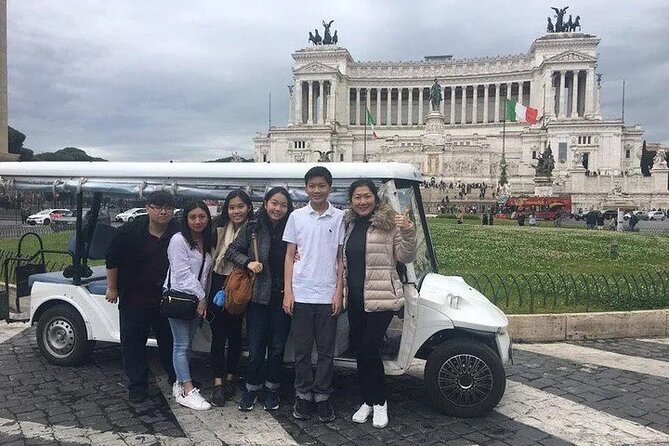
Then it’s Trevi Fountain, one of the city’s most recognizable 18th-century fountains, designed by Nicola Salvi and completed by others. This stop is only 10 minutes, which is just enough for the key photo moments and a quick walk around the fountain edge.
Important practical tip: Trevi can be crowded, and your time window is short. Focus on your “must shot,” and then look for small details around the fountain rather than trying to circle it endlessly. Ten minutes passes quickly in Rome, so decide what you want from the stop before you arrive.
Spanish Steps (about 5 minutes): a quick viewpoint moment
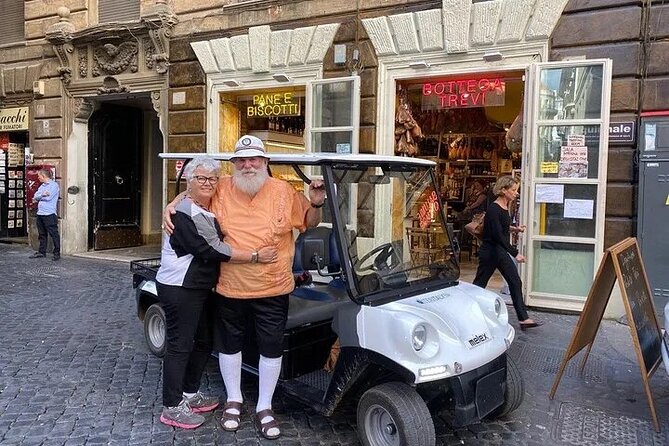
After Trevi, you’ll hit the Spanish Steps, a steep staircase connecting Piazza di Spagna and Piazza Trinità dei Monti. Your stop is about 5 minutes, which means you’re mostly capturing the sight lines and snapping a few photos rather than spending time meandering.
If stairs are not your thing, this is still worth it, because the steps act like a classic stage. Even a short glance from the right angle gives you the Rome postcard view without a long climb.
Campo de’ Fiori (about 5 minutes): an earthy, lived-in square
Next is Campo de’ Fiori, known for its color, sounds, and street energy. In the center is the statue of philosopher Giordano Bruno, burned alive there. This is one of those stops that can feel more “real Rome” than a polished monument.
Your time is around 5 minutes, so treat it as a pulse check. Look at the square’s rhythm and the way people use it. If you want a longer visit, save that for later, because the short stop keeps you moving through the bigger highlights.
Villa Borghese, Palatine Hill, and Aventine Hill: ancient Rome and a green break
The route also includes a stop at Villa Borghese, listed as a large public park area with buildings and attractions. Villa Borghese offers a change of pace from heavy stone and crowds, and it can help your day feel less like a nonstop sprint.
You also pass through Palatine Hill, described as the centermost among Rome’s seven hills and called the first nucleus of the Roman Empire. If you’ve ever looked at photos of Palatine from afar, this is where you start to understand the scale. Even if your stop is short, seeing the hill area helps connect the legend of ancient Rome to real geography.
Finally, the Aventine Hill appears on the route, another one of the seven hills. It belongs to the modern Ripa ward. This stop is valuable because it widens your sense of where ancient power sat across the city, not just in one famous spot.
Circo Massimo (about 5 minutes): the ancient stadium feel
The tour includes Circo Massimo, the ancient chariot-racing stadium and mass entertainment venue. It’s described as the first and largest stadium in ancient Rome and later Empire. With about 5 minutes, you’re not doing a full archaeology session, but you can still grasp the size and why crowds cared so much.
I like this stop because it reminds you Rome wasn’t only about temples and politics. It was about spectacle too.
Piazza del Popolo (about 5 minutes): a northern gate viewpoint
Then you’ll reach Piazza del Popolo, meaning People’s Square, located inside the northern gate of the city (once called Porta Flaminia). With about 5 minutes, it’s a quick “Rome’s layout” stop.
This is also a good punctuation point. After seeing fountains, churches, and ancient sites, you get one more major public space that helps you orient the direction of the city.
Chiesa di Sant’Ignazio di Loyola (about 5 minutes): Jesuit details in plain sight
The route includes Chiesa di Sant’Ignazio di Loyola, a Jesuit church. The information you get points to design influences involving Jesuit mathematician Orazio Grassi and plans by Carlo Maderno and others, plus a connection to nearby church design in terms of pilasters and columns.
This stop can be a nice change if you’ve been outside all morning. It’s also a reminder that Rome’s major stories are told in stone, sculpture, and architecture, not only in famous open-air squares.
Your stop time here is about 5 minutes, so take in the key facade elements and any interior moments your driver can guide you toward.
Why golf carts work so well in Rome
Walking in Rome is beautiful, but it can be slow and tiring. A golf cart tour is different in three ways that matter:
- You keep momentum. Rome spacing between sights is part of the charm, but it also costs hours when you’re trying to hit multiple top monuments.
- You skip some of the friction. This route is set up to use quieter backstreets, helping you avoid some of the traffic grind.
- You get a guided “big picture.” You’re not just seeing landmarks as isolated postcards. You’re learning how they connect.
One review even highlighted how great this was on a first trip, calling it a way to get familiar with the Eternal City fast. That’s exactly what I’d use it for, especially if you’re only in Rome for a few days.
Guide quality is the swing factor, so choose smartly
The standout praise in the feedback centers on guides who actively explain what you’re seeing and help you enjoy the ride. Names that came up repeatedly include Francesco, Pietro, Yvonna (Ivanna/Ivanna spelling varies in reviews), Hadi, Claudio, Mario, Alexxis, Sabrina, and Alessi.
In the best versions of this tour, the guide does two jobs well:
- Shares clear context, tying the monument to its place in Rome
- Helps you enjoy the moment, including picture breaks and practical tips
There was also one negative note about a guide who talked less and seemed distracted. You can’t control everything, but you can control your expectations. If you care about narration, decide before the tour starts that you’ll ask questions and request photo help. Many guides welcome that energy.
When this tour is the right choice, and when it is not
This is a strong fit if:
- It’s your first time in Rome
- You want an overview without long hikes
- You’re traveling with kids or anyone who tires quickly
- You want to see several major sights in one day without logistics stress
It may not be the best fit if:
- You prefer slow museum time at each stop
- You want to spend 30 to 60 minutes inside every site
- You’re the type who hates short, “look and move on” sightseeing
The stops are designed to be quick. If you’re okay with that rhythm, the cart format can feel like a cheat code.
A practical packing and planning checklist for a smooth ride
- Wear comfortable shoes, even if you will walk less. Some stops include uneven stone and quick transitions.
- Bring sunscreen and water. Even a cart day gets time outdoors.
- If rain threatens, keep your schedule flexible. One review specifically noted the day being rainy, and the tour still went well.
- Have your camera ready early. With limited stop times like 5 minutes at some locations, delays hurt.
- If you want a lunch recommendation, ask. One guide, Francesco, was praised for recommending an amazing lunch spot.
Should you book this Rome golf cart tour?
If you’re trying to get your bearings in Rome fast, I think this is a great “first day” type of experience. The private setup, English-speaking driver, hotel pickup for central stays, and the backstreet routing add up to real convenience, not just novelty.
The key is to go in for what it is: a 3-hour highlight circuit with short stops at places like the Pantheon, Piazza Navona, Trevi Fountain, Spanish Steps, Campo de’ Fiori, and ancient anchors like Circo Massimo plus Palatine and Aventine Hill areas. If that matches your style, you’ll likely have a very satisfying overview.
If you’re the type who needs long time at each monument, plan on coming back later for a deeper visit. Treat this as the map-maker, not the whole guidebook.
FAQ
How long is the Rome golf cart tour?
The tour lasts about 3 hours.
What is the price per person?
The price is listed as $163.26 per person.
Is hotel pickup included?
Pickup is offered, and the tour includes free hotel pickup if it is a private experience.
Is this a private tour or shared group?
This is a private tour/activity, meaning only your group participates.
What language is the tour offered in?
The driver speaks English.
Where does the tour start and end?
The tour starts at Pic Nic – Just Amir srl (Piazzale delle Canestre, SNC, 00197 Roma RM) and ends back at the meeting point.
Are entry tickets included?
Entry tickets are not included, and lunch is not included.
Which stops are included on the route?
Stops listed include the Pantheon, Piazza Navona, Trevi Fountain, Spanish Steps, Campo de’ Fiori, Villa Borghese, Palatine Hill, Circo Massimo, Aventine Hill, Piazza del Popolo, and Chiesa di Sant’Ignazio di Loyola.
What is the cancellation policy?
You can cancel for a full refund up to 24 hours in advance. If you cancel less than 24 hours before the start time, the amount paid is not refunded. There is also a minimum number of travelers requirement.
Is the tour suitable for most people, and are service animals allowed?
Most travelers can participate, and service animals are allowed.
Just introduced: the newest Rome write-ups
- Rome Fiumicino Airport Transfer in Luxury Private Transportation★ 4.5 · 339 reviews
- Vatican: Pope Francis Tomb and Papal Basilicas Tour★ 4.7 · 340 reviews
- From Rome: Sorrento, Positano & Amalfi Coast Day Trip★ 4.5 · 340 reviews
- Rome: Guided Colosseum Underground Tour★ 4.8 · 342 reviews
- Colosseum Arena Floor, Roman Forum & Palatine Hill Guided Group Tour★ 5.0 · 343 reviews
- Rome: Small Group Rome’s Dark Side – Ghosts & Legends Tour★ 4.9 · 343 reviews
- Rome: City Highlights Electric Bike Tour★ 4.9 · 343 reviews
City Tours, compared.
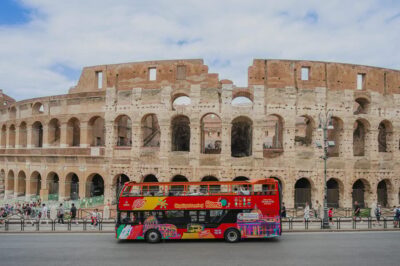
City Sightseeing Hop-on Hop-off Bus with Audioguide
Read our review →
City Sightseeing Hop-On Hop-Off Bus with Audio Guide
Read our review →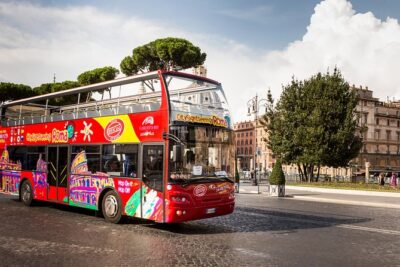
City Sightseeing Rome Hop-On Hop-Off Bus Tour
Read our review →

Fettuccine Pasta Cooking Class in Rome’s City Center
Read our review →
Vatican City: Vatican Museums & Sistine Chapel Entry Ticket
Read our review →

City Sightseeing Florence Hop-On Hop-Off Bus Tour
Read our review →Browse the lists this tour appears in