
Reviewed · WALKING TOURS
Syracuse: Ortigia and Neapolis Guided Walking Tour
Ancient Syracuse feels oddly personal on foot. This guided walking tour connects the Greek ruins of Neapolis with the lime-white drama of Ortigia, all in one smooth 3-hour loop. I love how the sites are explained in real order, not as random photo stops, and how the guide’s narration makes you notice details you would miss alone. One thing to plan for, though, is that monument entrance fees are not included, so you’ll pay those on top.
The best part is the combination of big-ticket landmarks and small, vivid moments. I especially like the way the Temple of Athena and the Cathedral of Syracuse are treated as one story, and I also love the Neapolis highlights like the Greek Theater view and the Ear of Dionysos. The only drawback is that with a walking tour, comfortable shoes and a bit of heat management matter, since Ortigia streets and the archaeological park require steady footwork.
In This Review
- Key Points You’ll Care About
- Neapolis to Ortigia: Why This Route Works
- Starting at the Neapolis Ticket Office (and What to Look For)
- Stop 1: Getting Oriented in Neapolis
- Temple of Athena: The 30-Minute Photo Stop That Means Something
- Cathedral of Syracuse: Where Pagan Stone Meets Christian Worship
- Walking Through the Labyrinth Streets of Ortigia
- Neapolis Archaeological Park: Theaters, Views, and Cave Legends
- Paradise Latomia and the Ear of Dionysos
- Greek Theater and the View Over the Ionian Sea
- Two Ancient Theaters and Roman-era layers
- What a Great Guide Changes (Marcelo, Anna, Giuseppe, Laura)
- Headsets, Small Groups, and Why the Tour Price Can Make Sense
- Timing and Flow: How 3 Hours Usually Feels
- What to Bring and How to Dress for Ortigia Streets
- Who This Tour Is Best For
- Should You Book This Syracuse: Ortigia and Neapolis Walking Tour?
- FAQ
- How long is the Syracuse, Ortigia and Neapolis guided walking tour?
- Where does the tour start and end?
- What is included in the tour price?
- Are entrance fees to monuments included?
- What languages are offered?
- Is the tour wheelchair accessible and family-friendly?
Key Points You’ll Care About
- Small-group feel with a licensed guide and headsets, so you can actually hear the stories on busy streets and windy viewpoints.
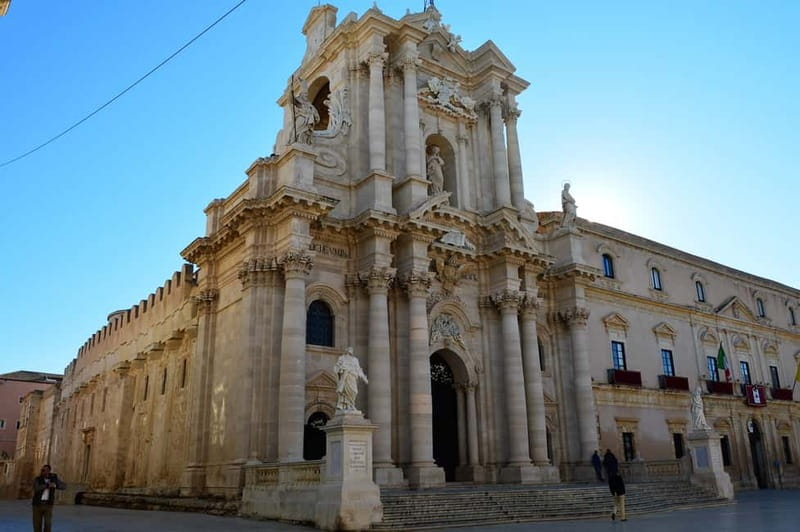
- Temple of Athena to Cathedral connection, where you see how pagan and Christian layers overlap in one spot.
- Neapolis Archaeological Park stops include the two ancient theaters and major cave sights like Paradise Latomia and the Ear of Dionysos.
- Ortigia walking time is built for wandering, with time to take photos and soak up the maze of ancient streets.
- What you pay on site: skip-the-line help is included, but entrance fees are still your responsibility.
Neapolis to Ortigia: Why This Route Works
Syracuse can feel huge in your head, even though it’s very walkable once you know where to look. This tour is built around two zones that explain the city’s identity fast: Neapolis for the monumental Greek era, and Ortigia for the layered showpiece island that sits like the historic heart.
What makes the route satisfying is the pacing. You start with Neapolis context, then move toward Ortigia, so by the time you’re looking at the Cathedral area and the older streets, the architecture isn’t just pretty. It’s evidence of power, belief, and reuse over centuries.
And yes, it’s also practical. You get headsets to hear your guide clearly, which matters outdoors, near stone walls, and around crowds. For a 3-hour experience, that little upgrade saves effort you’d otherwise spend trying to hear over other conversations.
More Walking Tours in Sicily



Starting at the Neapolis Ticket Office (and What to Look For)
Your tour begins at the Biglietteria Parco Archeologico Neapolis, on Via Luigi Bernabò Brea, Siracusa. Your guide meets you at the ticket office with a sign for the local partner, which helps you avoid the classic scenario of standing around with other people looking lost.
The tour listing also references multiple start possibilities in the Neapolis area, including a spot near Tempio di Apollo. In practice, your guide’s sign is the thing to trust. If you want a simple plan, arrive a few minutes early, scan for the name sign, and you’re set.
This is also where you should mentally switch from casual sightseeing to listening. The sites here are dense, and the guide does a lot of work turning stones into a timeline.
Stop 1: Getting Oriented in Neapolis
Before you hit the big monuments, you get the initial bearings in Neapolis, the ancient quarter known for Greek-era architecture. Neapolis is not just a museum-like scatter of ruins. It’s a system: roads, religious spaces, theaters, and viewpoint locations that were built to impress people who lived here.
This kind of setup matters because you’ll soon be asked to read the city in layers. When the guide connects Greek origins to later Roman use, you start noticing why specific buildings sit where they do and how sightlines were designed.
Temple of Athena: The 30-Minute Photo Stop That Means Something
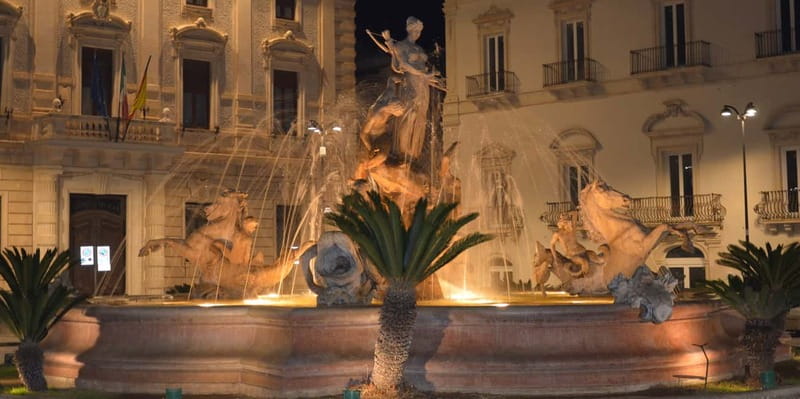
The itinerary centers a major moment on the Temple of Athena. You’ll have time for photos, plus a guided visit and explanation that lasts about 30 minutes.
This stop is more than a facade moment. It sets up one of the tour’s core ideas: Syracuse keeps recycling its own sacred spaces. You’ll see how religious identity shifts without erasing the physical presence of earlier power.
And that pays off in the next big visual you’ll recognize immediately once you’re there: the Cathedral of Syracuse, which incorporates the Temple of Athena. When your guide walks you through this overlap, it stops feeling like a fun fact and starts feeling like a theme.
More Italy at street level:
- Palermo No Mafia walking tour: discover the Anti-mafia culture in Sicily
★ 5.0 · 1,011 reviews - Catania: Heart of the City Guided Walking Tour
★ 4.6 · 708 reviews - Catania: City Highlights Walking Tour
★ 4.7 · 666 reviews - Palermo: Private Custom Walking Tour with Local Guide
★ 4.7 · 661 reviews
Cathedral of Syracuse: Where Pagan Stone Meets Christian Worship

One of the highlights you’ll be able to appreciate on this walk is the Cathedral of Syracuse, discussed through its mix of architectural influences. Your guide explains how the Cathedral works as a living structure, built with the past in mind rather than treating it as something to bury.
This part is especially enjoyable if you like buildings that tell a story in physical form. Instead of learning history only from texts, you’re seeing it in stone decisions: what gets kept, what gets adapted, and what gets rebranded.
Practical note: this is an area where you should pause often. Your guide will point out features you’ll want to look at twice, once from a distance and once close enough to see the details.
Walking Through the Labyrinth Streets of Ortigia
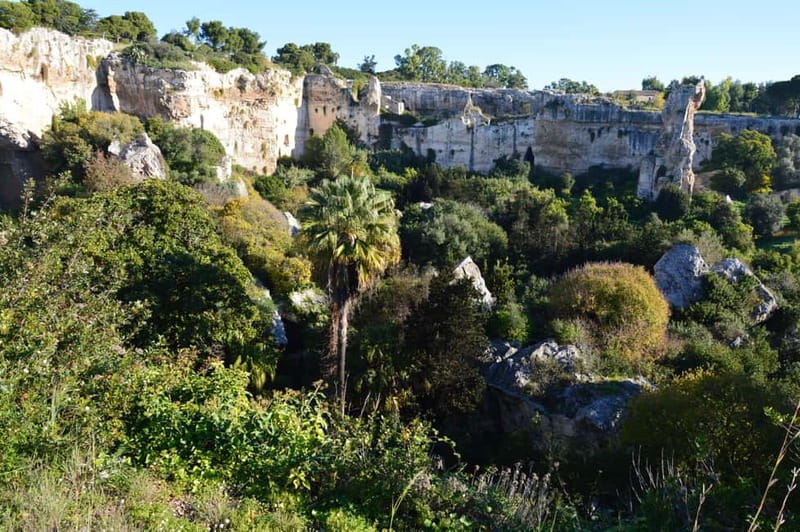
After the Neapolis focus, the tour shifts toward Ortigia, the lime-white island that feels like Syracuse’s signature setting. This is the part where walking matters. Ortigia’s appeal is partly its atmosphere, and partly how the streets and structures help you understand how the city functioned in daily life.
Your guide leads you through the maze-like streets, which helps you avoid wandering aimlessly. You’ll be able to ask questions as you go, and it’s easier to connect the dots between what you just learned in Neapolis and what you’re seeing in Ortigia.
If you’re traveling with kids, this portion tends to land well because it’s visually rich and story-driven. The guide also involves children and parents, which helps keep the pace from turning into a grown-up-only lecture.
Neapolis Archaeological Park: Theaters, Views, and Cave Legends
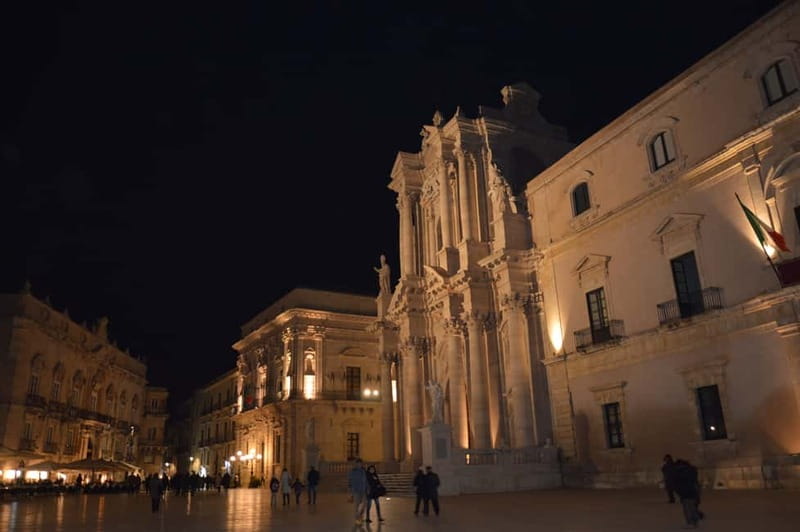
This tour spends serious time in the Neapolis Archaeological Park, and that’s a big part of the value. It’s not just a quick photo sweep. You’ll see major structures and viewpoints that explain why Syracuse mattered in the ancient Mediterranean.
Paradise Latomia and the Ear of Dionysos
Two stops are specifically called out for the park: Paradise Latomia and the Ear of Dionysos. These are the kinds of places where you learn something fast, not slowly. A cave or rocky space becomes a clue about how people used the natural and man-made environment for culture and legend.
Your guide explains early Greek history through religious architecture and the idea of Syracuse as a capital with Mediterranean reach. That background makes these stops feel connected, not random.
Greek Theater and the View Over the Ionian Sea
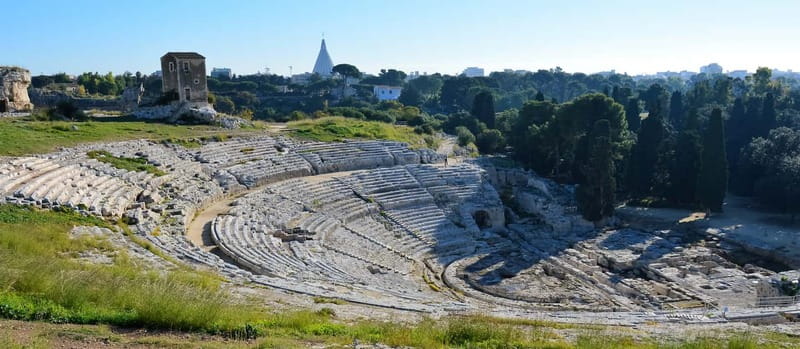
The tour also includes the Greek Theater area, where you can appreciate views toward the Ionian Sea from a key viewpoint. Your guide ties the viewpoint to the building’s purpose, so it’s not just a scenic break.
And yes, it’s also a place where listening helps. Your guide points out how the theater fits into the city’s larger design. Once you hear that, the seating and the scale start making sense, even if you’ve never studied ancient architecture.
Two Ancient Theaters and Roman-era layers
The highlights list mentions seeing two ancient theaters, and the broader description also references Roman use in the mix. If you’re the type who likes to see how one empire inherits the stage built by another, you’ll appreciate that layered focus.
What a Great Guide Changes (Marcelo, Anna, Giuseppe, Laura)

The reviews are loud about one thing: the guides. Names you may recognize include Marcelo, Anna, Giuseppe, Laura, and Rosanna. The common thread across excellent ratings is delivery, not just facts.
Here’s what that means for you:
- You’ll likely get clear explanations of Greek origins and how later periods shaped what you see.
- You should expect stories and quick context that make sites feel like they belonged to real people, not just a textbook diagram.
- You can ask questions without feeling rushed, especially on a private group setup.
One review notes a guide kept a strong pace and even extended time on a private outing, and another mentions a guide stayed upbeat when rain interrupted the Ortigia portion. That’s a sign of good tour craft: adapting without turning the experience into chaos.
Headsets, Small Groups, and Why the Tour Price Can Make Sense

The price is $317.20 per group, for up to 5 people. That’s not cheap, but it can be fair value if you do the math like a realist.
If you’re a group of 5, you’re paying about $63 per person for a licensed guide, headsets, and a structured route through two major areas. If you’re fewer people, the per-person rate rises, so it’s best when you travel with friends or family who like history and guided walking.
A key detail: entrance fees are not included. One review specifically mentioned archaeological park admission around 13 euros per person, so plan for that extra cost. The good news is that the tour includes help to skip the ticket line, which saves time once you arrive.
For context, skip-the-line doesn’t replace the admission fee. It just reduces waiting. If you’re the type who hates queues, that part is genuinely useful.
Timing and Flow: How 3 Hours Usually Feels
The tour is listed as about 3 hours, but starting times depend on availability. In that window, you’ll cover Neapolis highlights, including the Temple of Athena stop, and then head into Ortigia for the street-walking portion.
A smart way to think about the time is this: the itinerary is “tight enough” that you’ll see a lot, but “loose enough” that you can pause for photos and questions. Private group tours often feel more humane than big bus crowds, because your guide can answer what matters to your group.
One thing to watch is weather. If rain shows up, the architecture still matters, and good guides keep the story going. Still, bring a hat and some water because the day can turn hot quickly, and Ortigia involves walking between sights.
What to Bring and How to Dress for Ortigia Streets
This tour is very practical, and the best preparation is simple:
- Wear comfortable shoes that handle uneven ground and museum-like stone paths.
- Bring a hat and a bottle of water, especially if you travel in warmer months.
- Leave room in your plan for lingering, because the guide will point out details worth stopping for.
Also, if you’re taking photos, you’ll want to keep your hands free. You’ll do photo stops at major sites like the Temple of Athena area, and Ortigia is full of corners where the best shots take a second.
Who This Tour Is Best For
This guided walk is a strong match if you want:
- A guided route through Syracuse, Neapolis, and Ortigia in a short time.
- Clear storytelling about how Greek, Roman, and later layers show up in buildings.
- A format that works for families, including children of all ages.
It’s also a good choice if you like architecture and want the Cathedral and Temple of Athena connection explained in plain language. And it’s a solid pick for first-time Syracuse visits because it gives you a map of meaning, not just a list of stops.
If you’re the type who prefers to wander without structure, you might find the itinerary a bit directive. But most people who book this tour do it because they want the city explained while they’re standing in front of the evidence.
Should You Book This Syracuse: Ortigia and Neapolis Walking Tour?
I’d book it if you’re traveling as a small group, you care about understanding the big structures instead of only seeing them, and you want a guide who can connect the Cathedral, the Temple of Athena, and the Neapolis park sites into one storyline.
I’d think twice if you’re planning a very tight budget, because entrance fees are on you. You’ll also want to be honest with yourself about walking. The payoff is strong, but this is not a sit-and-smile tour.
Overall, this is the kind of experience where the guide can turn stone and sea views into a coherent story. If that’s your travel style, you’ll likely feel like you got your money’s worth.
FAQ
How long is the Syracuse, Ortigia and Neapolis guided walking tour?
The tour is about 3 hours, with starting times depending on availability.
Where does the tour start and end?
It starts at the Biglietteria Parco Archeologico Neapolis on Via Luigi Bernabò Brea, Siracusa, and it ends back at the meeting point.
What is included in the tour price?
You get a licensed live guide and headsets to help you hear the guide better during the tour. Ticket line skipping is also included.
Are entrance fees to monuments included?
No. Entrance fees to monuments are not included in the tour price.
What languages are offered?
The live tour guide is available in English, French, Italian, Russian, Spanish, and German.
Is the tour wheelchair accessible and family-friendly?
Yes, it is wheelchair accessible, and it can accommodate children of all ages. The guide includes both parents and children during the tour.
Just introduced: the newest Sicily write-ups
- Etna Tour – HalfDay Small Group & licensed Tour Guide★ 5.0 · 185 reviews
- Naxos: Taormina Boat Tour with Snorkeling and Prosecco★ 4.9 · 185 reviews
- Etna Special Dawn Excursion★ 5.0 · 185 reviews
- Sicilian Cooking Class in Taormina★ 5.0 · 186 reviews
- Guided tour of the salt pans of Trapani and the Salt Museum★ 5.0 · 188 reviews
- Private tour of Etna and Winery Visit with Food and Wine Tasting from Taormina★ 5.0 · 188 reviews
- five sense outdoor experience★ 5.0 · 189 reviews
Walking Tours, compared.

Guided Walking Tour & Last Supper Visit with Ticket
Read our review →

Rialto Bridge & Offbeat Unusual Venice Walking Tour
Read our review →
Private 3 hrs Venice Tour: St Mark’s, Walking tour & Boat tour
Read our review →

Skip the line: Uffizi and Accademia Small Group Walking Tour
Read our review →Browse the lists this tour appears in