
Reviewed · MOUNT ETNA EXCURSIONS
Etna: Craters of the 2002 Eruption Trekking Experience
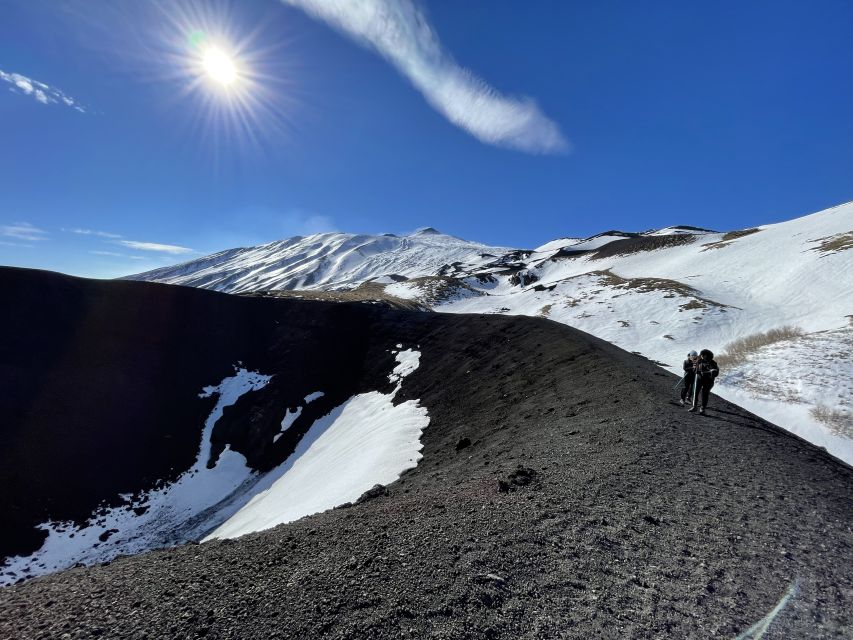
One walk here and Etna feels personal. This north-side trek takes you from forest paths to the 2002 eruption craters, with guides like Daniele or Vincenzo explaining what you are seeing. I love the mix of close-up volcanic features, lava streams and eruptive fractures, plus the dramatic views that stretch toward the Calabrian Coast. The main thing to consider is the conditions, volcanic soil can be uneven, and the summit edge can feel exposed if wind or heights make you uneasy.
You get an organized route, but it does not feel like a cattle line. You are walking toward Piano Provenzana, stopping at key evidence like the burned-out Hotel dell Betulle, and then working your way up toward the summit craters. For the best experience, bring solid hiking shoes and expect short climbs, some dizziness can happen near the crater edges, and the route can change if Etna decides to act up.
In This Review
- Key Things That Make This Etna Trek Worth Your Time
- Why This 2002 Etna Craters Walk Feels Different Than Typical Sightseeing
- Getting To Chiosco Bar Mareneve So You Do Not Lose Time
- The 3-Hour Etna Route, Step by Step (And What Each Part Teaches You)
- Piano Provenzana Road, Forest Walking, And First Views of Lava Reality
- Hotel dell Betulle, Hornitos, and the Evidence Etna Left on the North Side
- Summit Crater Edge Moments, Wind, and Coming Back Down Through Sand
- What To Bring (So You Can Walk Comfortably and Stay Covered)
- Guide Quality Makes or Breaks Etna, And This One Usually Delivers
- Price and Value: Is $41 a Good Deal for Etna’s 2002 Evidence?
- Who Should Book This Etna Trek (And Who Should Skip It)
- Should You Book This Etna 2002 Craters Trek?
- FAQ
- FAQ
- How long is the Etna Craters of the 2002 Eruption trek?
- Where do I meet for the tour?
- Is transport from my accommodation included?
- What is included in the ticket price?
- What extra costs should I plan for?
- Are trekking sticks provided?
- What should I bring for the hike?
- What footwear is required and what is not allowed?
- Is the trek suitable for kids?
- What if there is snow?
- What is the cancellation policy?
Key Things That Make This Etna Trek Worth Your Time
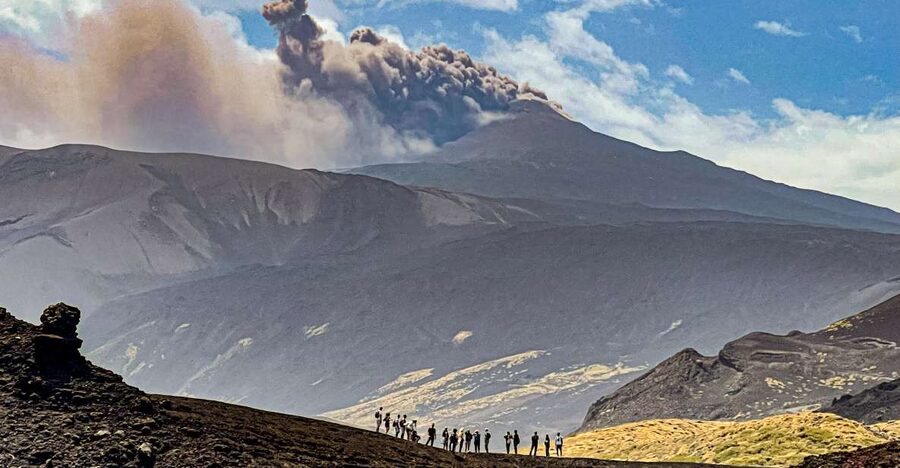
- 2002 eruption craters and the eruptive theater up close, not from a distance
- Hotel dell Betulle ruins as a rare, visible relic from the 2002 lava flow
- Hornitos and cinder cone walking, which turns the geology into a readable trail
- Calabrian Coast viewpoints that reward the effort, especially on clear days
- Guides who mix science with humor, with many stops for explanation and photos or videos
- Small-group feel away from the biggest crowds, even though it is still a guided excursion
Why This 2002 Etna Craters Walk Feels Different Than Typical Sightseeing
This trek is built around one of Etna’s most recent major chapters, the 2002 eruption. Instead of giving you a quick overview from a lookout, you get to walk through the same kind of terrain where the volcano’s power is still written into the ground.
The north side adds its own personality. You are moving through forest sections, then transitioning into lava traces, eruptive fractures, and the edges of massive crater formations that destroyed Piano Provenzana. And once you reach the summit area, the view is not just pretty. It helps you understand the volcano as a system, a place where the land forms, breaks, and reshapes over and over.
I also like that the route is educational but not stiff. The best guides on this walk do two things well: they explain clearly, and they keep you moving with humor and pacing. If you are the type who wants meaning, not just photos, this trip hits that target.
Possible drawback, you are close to crater edges and walking on volcanic soil that can be inconsistent. If you hate heights or you get dizzy easily, you will want to think hard before booking.
Etna again, by a different flank:
Getting To Chiosco Bar Mareneve So You Do Not Lose Time
This tour starts at the Chiosco Bar Mareneve. Do not show up at the Chiosco Bar Etna Nord, it is in the lower parking lot, and the instructions are specific that Mareneve is the correct one.
You’ll find Mareneve near the chairlift used by skiers in winter. It is the second house of the four present in that parking lot. Arriving early matters because you will want a quick check of shoes, water, and any rentals before the group heads out.
One more practical note: parking is 3 euros, and it is paid after the excursion. Transport from your accommodation is not included, so if you are not driving yourself, plan your ride in advance.
The trek has a minimum of 4 participants, so if you are booking around a tight schedule, it helps to check availability and starting times.
The 3-Hour Etna Route, Step by Step (And What Each Part Teaches You)
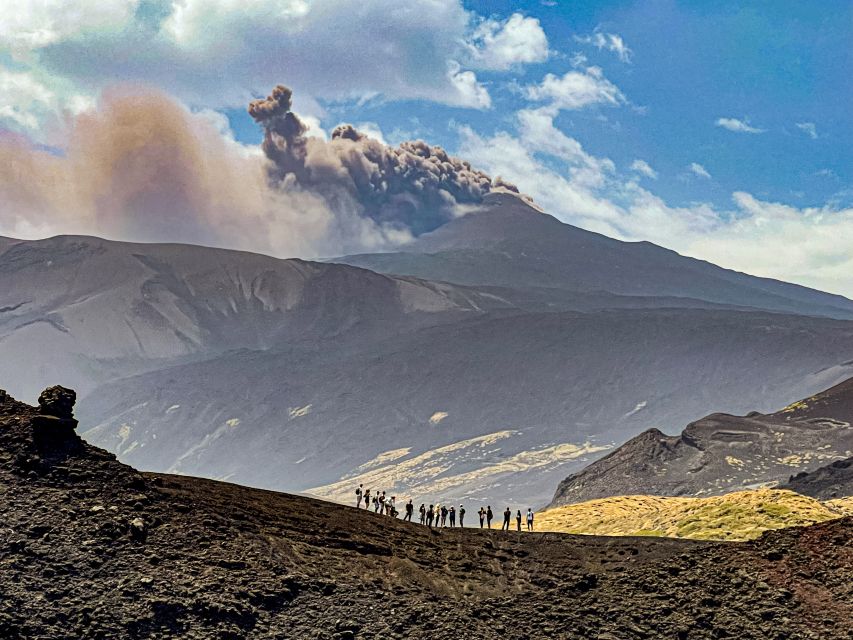
This is a guided trek with a total duration of about 3 hours, with the exact pacing depending on the group and the conditions. Expect a route that includes an ascent, walking along crater edges, and a descent back to the meeting point.
Here is the flow, and why it works:
- Start along the dirt road from Piano Provenzana toward the summit craters
You build altitude and you see the terrain start changing in front of you.
- Stop at the ruins of the Hotel dell Betulle
This is the only visible structure left from the 2002 lava flow.
- Study several volcanic morphologies linked to eruptions over time
You are not just seeing one moment. You are seeing evidence from a series of eruptions that shaped the north side.
- Focus on flank eruption evidence, including the one that threatened Linguaglossa
You learn how side eruptions can matter for real communities.
- Walk past hornitos and up along cinder cones
This is where the terrain becomes a map of small volcanic features.
- Reach the summit area, look over the crater edge, then go down through a sandy channel
The descent route is part of the experience, it is practical and it keeps the walking route coherent.
The route can vary at the guide’s discretion if environmental, climatic, or volcanic conditions change. That is part of respecting Etna. You are not on a theme-park loop, you are on a living mountain.
Piano Provenzana Road, Forest Walking, And First Views of Lava Reality
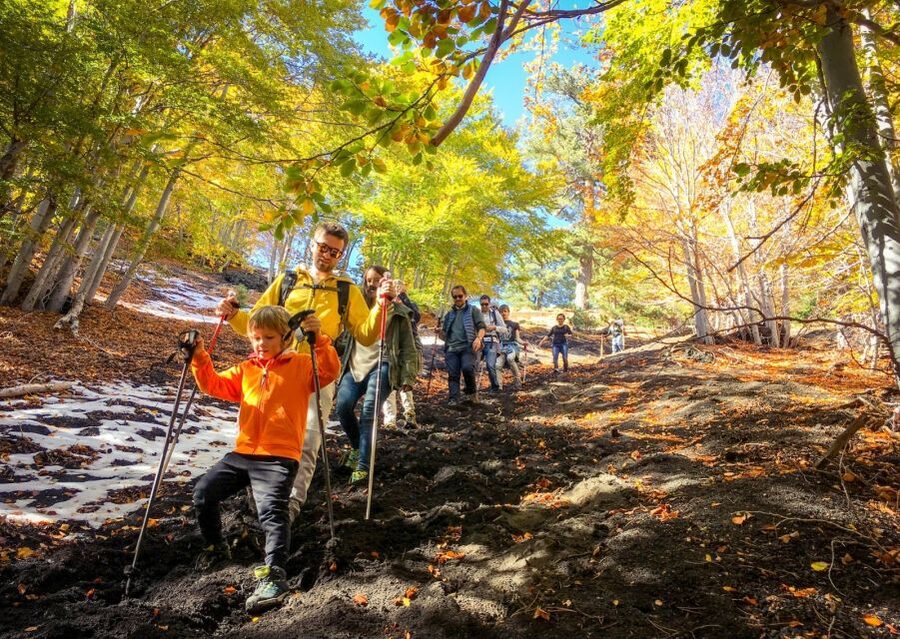
You start on the dirt road connecting toward the summit craters. The early part of the walk matters because it shifts your perspective. You are not only looking at “volcano stuff,” you are understanding how the ground changes as you move upward.
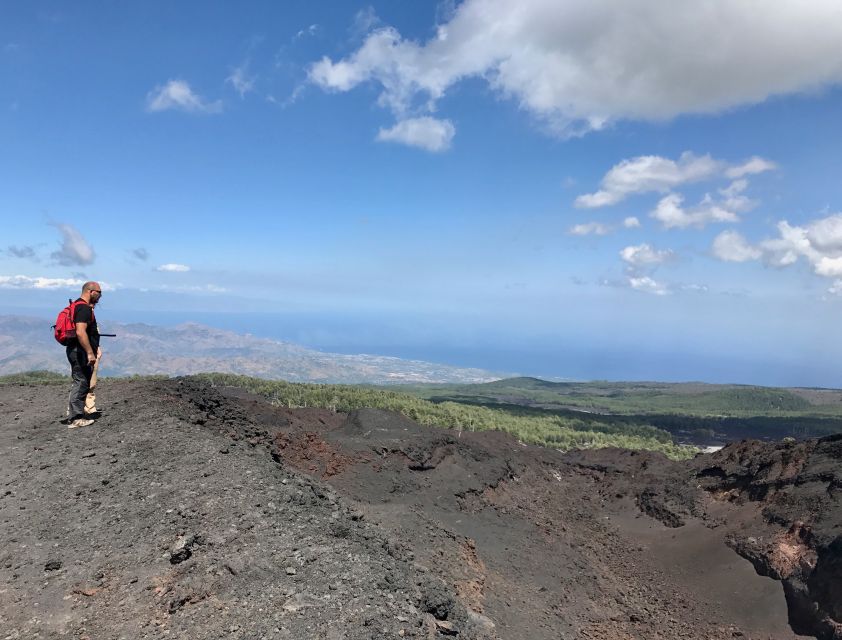
The trek includes forest walking, which makes the transition feel dramatic. You go from cooler, vegetated ground to areas where lava has cooled into new rock textures. Even before you see the biggest crater formations, you can spot clues such as lava streams and eruptive fractures. These are the kinds of features that help you read what happened, even if you do not speak geology.
And then there are the views. When the weather cooperates, the higher points open up sightlines toward the Calabrian Coast. This is where you often feel the scale of Etna. You can see why eruptions have always been more than a local story.
One caution, keep your footing even when the terrain looks simple. Volcanic soil can be unstable, and your pace should match the ground, not your ego.
More Italian ridgeways and mule tracks:
- Mount Etna: Trek to 3000m with cable car and jeep
★ 4.7 · 1,978 reviews - Mount Etna: Summit Crater Trek with Cable Car
★ 4.8 · 1,875 reviews - Etna Volcano: South Side Guided Summit Hike
★ 4.7 · 1,545 reviews - Stromboli: Sunset Trekking at Sciara del Fuoco
★ 4.6 · 1,372 reviews
Hotel dell Betulle, Hornitos, and the Evidence Etna Left on the North Side
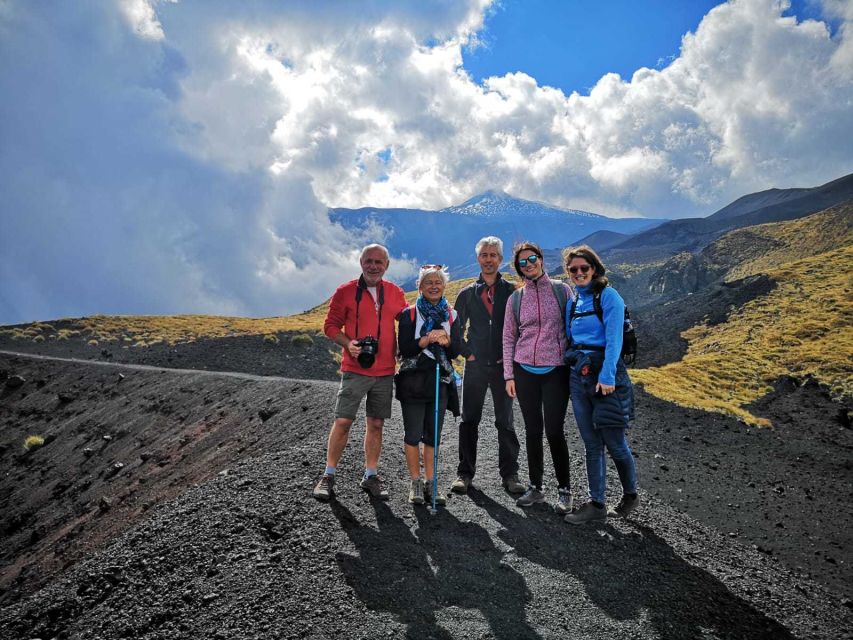
The highlight stop for many people is the ruins of the Hotel dell Betulle. It is singled out because it is the only visible structure from the 2002 lava flow. That gives the whole walk emotional weight. You are staring at survival and loss, with a volcano that did not care about human plans.
From there, you move into the more technical but still approachable part of the trek. You visit volcanic morphologies tied to eruptions that happened across different times on the north side. The last of the flank eruptions is especially emphasized, including the one that threatened Linguaglossa. If you care about the practical side of natural hazards, this context helps you understand why people take Etna monitoring seriously.
Then come the hornitos. The term points to small volcanic vents, and seeing them in the field helps you connect the name to the shapes on the ground. From there you go up along cinder cones, where you can physically feel the terrain build up in layers. It is one of those moments where you stop treating geology as an abstract subject.
Expect pauses here. Guides often use photos or short personal materials from the eruption to make the evidence easier to visualize, and it really helps you connect the talk to the exact spot you are standing.
Summit Crater Edge Moments, Wind, and Coming Back Down Through Sand
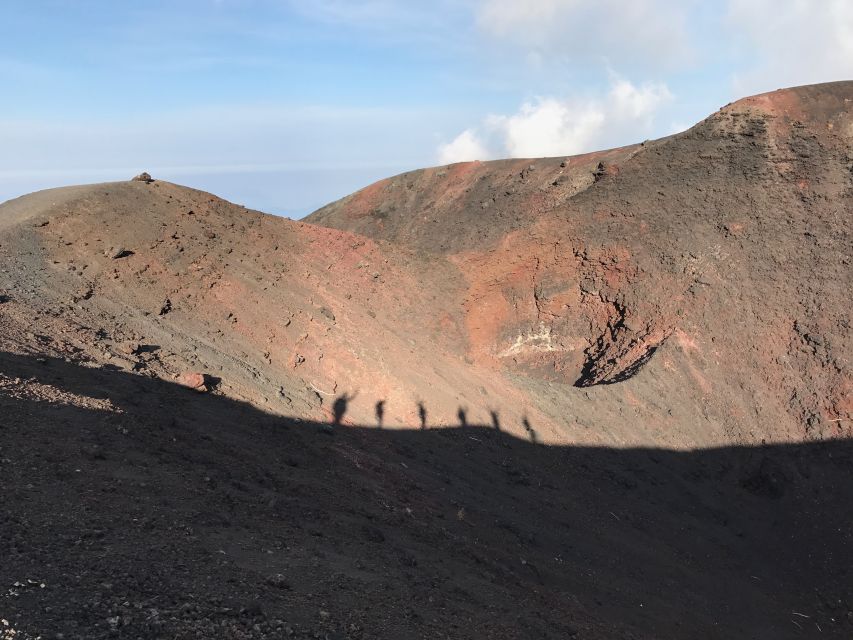
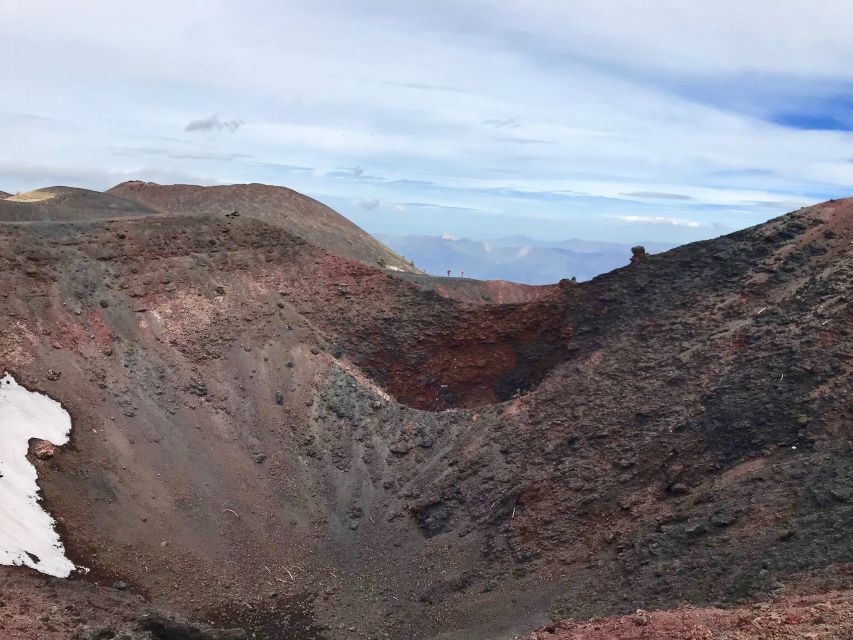
The summit section is where the trek earns its wow factor. You get to look over the edge of the craters. It is dramatic, and it is also educational, because you can see how the terrain folds inward and why the “crater theater” feeling is so strong.
This is also where you need to listen to your body. The route can cause dizziness for people sensitive to it, since it includes walking along crater edges. It is not recommended for anyone afraid of heights or with vertigo. If you are unsure, take that seriously. You are better off skipping than forcing it.
Wind is another real variable. Some guides and groups have dealt with windy conditions, so bring a windbreaker if you have one. Even in pleasant weather, the summit can be harsher than lower slopes.
On the way back, the tour includes going down inside a sandy channel to return toward the starting point. This part can feel unusual, but it is part of the design: it keeps the descent controlled and it helps you keep moving without retracing every step in the same way.
What To Bring (So You Can Walk Comfortably and Stay Covered)
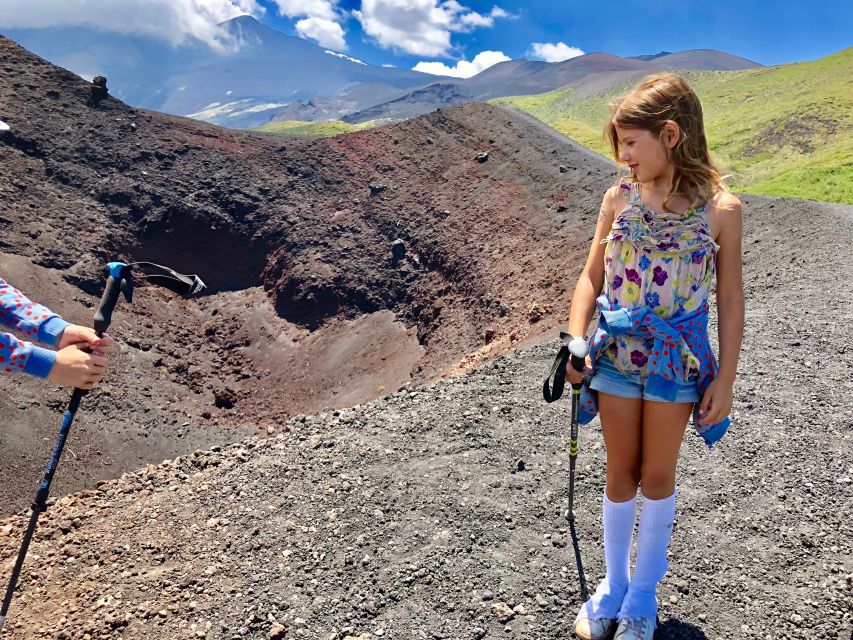
If you want a smooth experience, treat gear as part of the trip, not an afterthought. This trek is reserved for hikers with medium training, and safety depends on your shoes and footing.
Here is what I suggest you pack:
- Hiking shoes with good grip (required)
- Water and snacks
- Sunscreen and sunglasses
- Windbreaker and a jacket
- A daypack
- Comfortable clothing that matches the season
What you might need on-site:
- Trekking shoes rental: about 5 euros per pair at authorized rentals
- If there is snow (winter months December, January, February, March), snowshoes are rented on-site for 12 euros per person
Important rule: without adequate shoes, you are not covered by insurance. So if your footwear is borderline, upgrade it before you join the group.
Also, do not plan on bringing everything. The tour is strict about what is allowed:
- No high-heeled shoes
- No sandals or flip flops
- No baby strollers
- No luggage or large bags
- No skirts, slippers
If you are doing this in cooler seasons, gloves and hats are not included, so bring them if you tend to feel cold.
Guide Quality Makes or Breaks Etna, And This One Usually Delivers
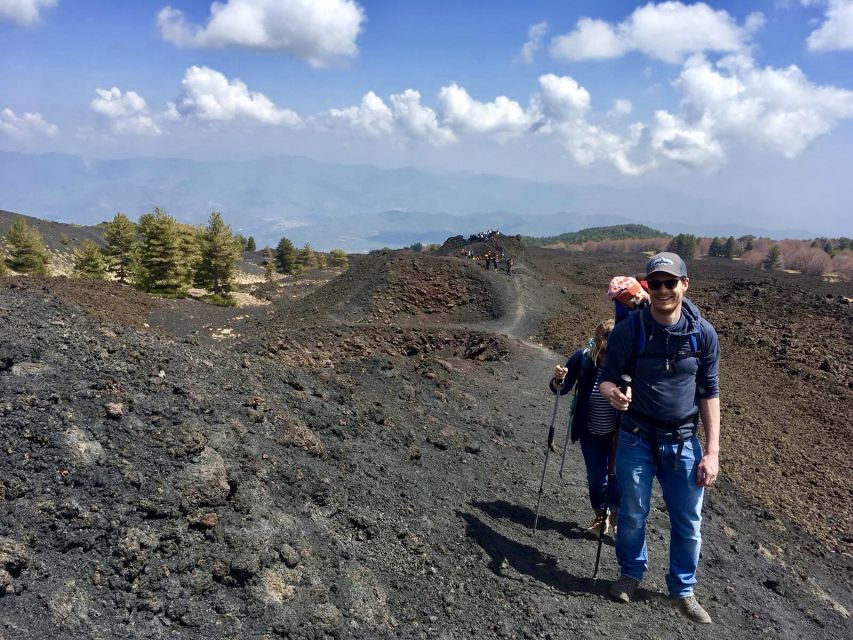
This is guided by an official Volcano Guide. Languages offered are Italian, French, and English, and you should be able to follow the story clearly whichever language you choose.
What stands out is the guide style. Many people highlight guides who are not only strong on the science, but also fun on the walk. Expect a teaching approach that includes frequent explanation stops, and it can include showing photos or personal eruption visuals on the way.
I also like that the guides help you feel safe. The terrain can be tricky, so having someone who watches footing and keeps the pace steady matters. If you are in your late 60s or you just do not want a hardcore hike, the pacing and rest stops can be the difference between pushing through and actually enjoying the experience.
One more practical point, guides can adjust the route if environmental, climatic, or volcanic conditions change. That is not a failure, it is how a responsible volcano trek operates.
Price and Value: Is $41 a Good Deal for Etna’s 2002 Evidence?
At $41 per person, you are paying for a short, high-impact experience with two big inclusions: an official volcano guide and insurance in case of accidents.
What you should factor in as extra costs:
- Parking ticket is 3 euros for the whole day, paid after the excursion
- Trekking shoes rental is 5 euros per pair
- Snowshoes rental (if needed in winter) is 12 euros per person
- Trekking sticks are not included
- Bottled water and snacks are not included
- Windbreaker, gloves, and hats are not included
Transport from your accommodation is also not included.
So is it good value? For me, yes, because you are not just getting viewpoints. You are getting access to a structured route that goes to specific volcanic evidence, including the Hotel dell Betulle ruins and the crater edge. You are paying for interpretation, safety guidance, and the ability to walk in the right places without guessing.
If you already have proper hiking shoes, pack water and snacks, and you do not need rentals, the trip stays close to its headline price. If you need both shoes and winter gear rentals, your total cost climbs, but you are still buying a guided experience that is built for this environment.
Who Should Book This Etna Trek (And Who Should Skip It)
This tour is a good fit if you:
- Want a guided Etna north-side trek focused on the 2002 eruption
- Enjoy learning outdoors, not just taking photos
- Are okay with medium-level hiking on volcanic terrain
- Prefer a route that feels less crowded than the biggest day-trip hotspots
It may be harder for you if you:
- Do not participate in regular physical activity
- Get dizzy easily, because walking along crater edges can trigger it
- Have vertigo or are afraid of heights
- Have back problems, mobility impairments, heart problems, respiratory issues, or epilepsy
- Are pregnant
It is also not suitable for children under 6 years.
If you are flexible and follow the guide’s safety approach, you can still have a meaningful experience even at a slower pace. The walk is short at 3 hours, and the route includes explanation pauses, so it is designed for learning as you go.
Should You Book This Etna 2002 Craters Trek?
Book it if you want Etna’s most powerful recent chapter explained by someone who can point at what caused it, not just describe it. The combination of forest walking, lava evidence, hornitos, cinder cones, and that crater-edge view gives you a full experience in a half-day window. If the idea of walking close to crater terrain excites you, this is a strong choice.
Skip it or choose another option if you know you cannot handle heights, vertigo, or dizziness, or if you cannot wear proper hiking shoes. This trek depends on secure footing and steady nerves.
If you do book, your biggest unlock is preparation. Bring the right shoes, bring water and snacks, and take wind seriously with a windbreaker. Show up at Chiosco Bar Mareneve and you will save yourself stress before the walk even starts.
FAQ
FAQ
How long is the Etna Craters of the 2002 Eruption trek?
The duration is 3 hours.
Where do I meet for the tour?
Meet at Chiosco Bar Mareneve. Do not use Chiosco Bar Etna Nord, which is in the lower parking lot.
Is transport from my accommodation included?
No, transport service from your accommodation is not included.
What is included in the ticket price?
You get an official Volcano Guide and insurance in case of accidents.
What extra costs should I plan for?
Parking costs 3 euros for the whole day, and it is paid after the excursion. Trekking shoe rentals cost 5 euros per pair. Snowshoes, if needed in winter months, cost 12 euros per person.
Are trekking sticks provided?
No, trekking sticks are not included.
What should I bring for the hike?
Bring a windbreaker, sunglasses, snacks, hiking shoes, sunscreen, water, a jacket, comfortable clothes, weather-appropriate clothing, and a daypack.
What footwear is required and what is not allowed?
Wear hiking shoes. High-heeled shoes, sandals or flip flops, and slippers are not allowed.
Is the trek suitable for kids?
It is not suitable for children under 6 years. Baby strollers are not allowed.
What if there is snow?
If there is snow, snowshoes are recommended and can be rented on-site for 12 euros per person.
What is the cancellation policy?
You can cancel up to 24 hours in advance for a full refund.
Just introduced: the newest Sicily write-ups
- Etna Tour – HalfDay Small Group & licensed Tour Guide★ 5.0 · 185 reviews
- Naxos: Taormina Boat Tour with Snorkeling and Prosecco★ 4.9 · 185 reviews
- Etna Special Dawn Excursion★ 5.0 · 185 reviews
- Sicilian Cooking Class in Taormina★ 5.0 · 186 reviews
- Guided tour of the salt pans of Trapani and the Salt Museum★ 5.0 · 188 reviews
- Private tour of Etna and Winery Visit with Food and Wine Tasting from Taormina★ 5.0 · 188 reviews
- five sense outdoor experience★ 5.0 · 189 reviews
Mount Etna Excursions, compared.
Mount Etna Morning or Sunset Day Trip with Tasting
Read our review →
Mount Etna: Guided Volcano Summit Hiking Tour with Cable Car
Read our review →
Sunset Jeep Tour of Mount Etna and Lava Flow Caves
Read our review →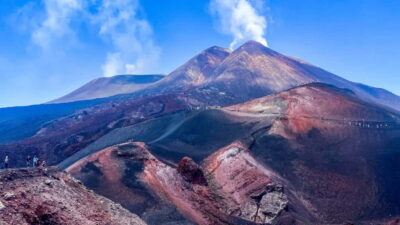
Mount Etna: Trek to 3000m with cable car and jeep
Read our review →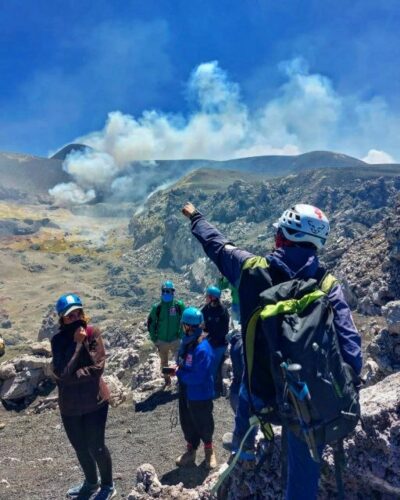
Mount Etna: Summit Crater Trek with Cable Car
Read our review →
Etna and Alcantara Gorges Full-Day Tour with Lunch
Read our review →
Mount Etna: Roundtrip Cable Car and 4×4 Bus Ticket
Read our review →
Etna Volcano: South Side Guided Summit Hike
Read our review →Browse the lists this tour appears in