
Reviewed · MOUNT ETNA EXCURSIONS
Etna – Trekking to the summit craters (only guide service) experienced hikers
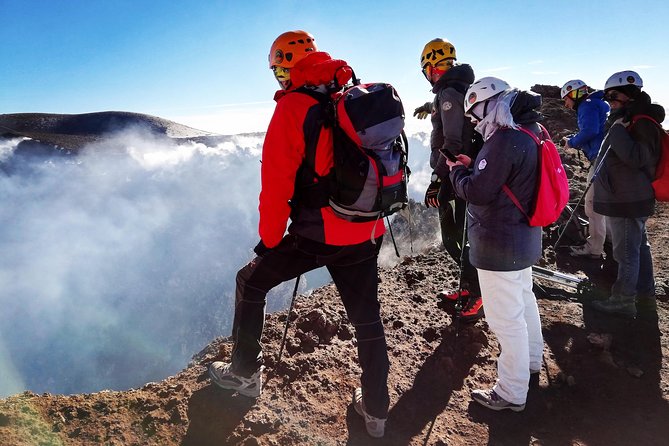
Summit Etna feels like another planet. This Etna Nord trek takes you from Piano Provenzana up to the crater rim area, with volcanology guides adjusting the route based on what the volcano is doing that day. I love how the start point is on the quieter north side, with plenty of authentic volcanic terrain right at the meeting area. I also like the way guides such as Nikos and Paolo keep the hike moving with clear explanations and frequent checks that everyone is okay.
The second big win for me is the pacing and small-group feel. You ride up in authorized 4×4 vehicles along a panoramic track, then hike with the guides the entire way, so you are not guessing where to go or what matters. Because activity varies, they aim for the safest crater edges while still getting you close enough to really feel the place.
The main drawback to plan for is that this is not a stroll. The hike includes a steep, high-altitude feel and then a long descent on loose scoria and sandy sections, with about 1,500 m of negative gain overall, so you want good knees and sturdy boots.
In This Review
- Key things to know before you go
- Why the north side hike beats the usual Etna day trip
- Piano Provenzana: meeting in the 2002 lava zone
- The authorized 4×4 ride: getting higher without wasting your legs
- The summit craters hike: what you walk and why the route can change
- Stop-by-stop itinerary flow, with the real-world timing
- The descent is the test: how to prep your body and your footwear
- Gear, included extras, and the real cost of doing Etna right
- Weather, volcanic activity, and why you should expect route changes
- Who should book this, and who should skip it
- Should you book this Etna summit craters hike?
- FAQ
- What time does the Etna Nord summit crater hike start?
- How long is the trek to the summit craters?
- What is included in the price?
- What extra costs should I budget for?
- What altitude will I reach?
- What happens if conditions change due to volcanic or weather activity?
- Can I cancel if the weather is bad?
Key things to know before you go
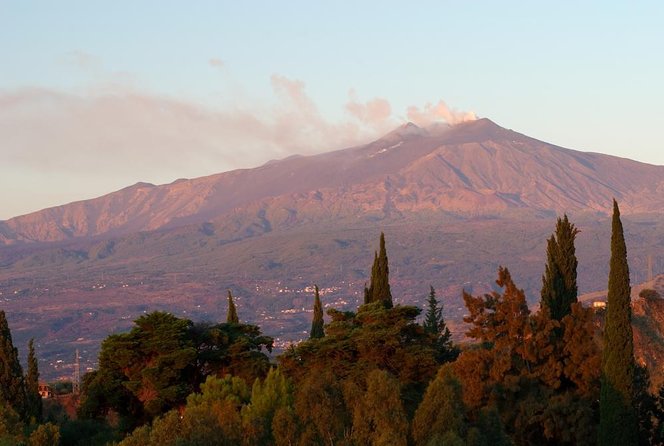
- Piano Provenzana starts you in the north Etna area shaped by the 2002 lava flow
- Guided crater route changes daily to match gas, heat, and fractures for safety
- 4×4 to altitude gets you up to around 2,960 m before the walking begins
- Real summit views over the north coast, seas, and islands on clear days
- Long descent can feel harder than the climb, with loose, unstable footing
- Gear is included, but bring your game plan for cold, wind, and sand in your shoes
Why the north side hike beats the usual Etna day trip
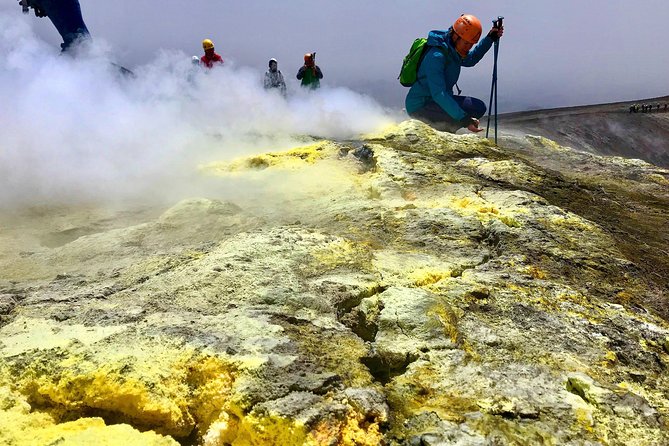
Etna on the south side can be busy. This route focuses on the north slope from Piano Provenzana, which is generally less crowded and gives you a more “live volcano” feeling. You are not just watching from a viewpoint, you are walking on the ground the volcano built, passing lava fields, fractures, and lateral crater areas along the way up.
You also get a better sense of scale. From the upper track and the crater rims, you can look out across northern Sicily and, in rare clear conditions, toward multiple coastal regions and even island and mountain ranges that help you understand what Etna dominates. It is one of those experiences where the views are gorgeous, but the real payoff is the geology under your feet.
Etna again, by a different flank:
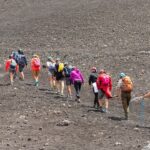
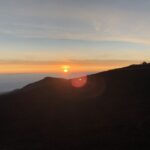
Piano Provenzana: meeting in the 2002 lava zone
Your day starts at CHIOSCO BAR MARENEVE DI FERRARO, Etna Nord, Piano Provenzana. Guides meet you at 7:45 am, and you depart shortly after, typically 8:00 to 8:15 am. If you are early, you will have time to use restrooms, grab coffee or tea, and possibly a pastry at the on-site café options.
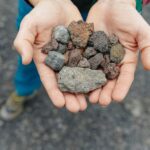
What I like about Piano Provenzana is that it is easy to reach by car because the access road is drivable. In winter, you should carry snow chains or use winter tires. The area itself was destroyed by the October 27, 2002 eruption, so the volcanic landscape around you has an extra layer of meaning. You are not traveling to a “theme park” version of Etna, you are meeting the volcano where it re-wrote the terrain.
One practical thing: this tour expects you to be ready for cold and wind at altitude. Even if Catania feels mild, Piano Provenzana and the summit area can be colder, and you will want your layers and wind protection.
The authorized 4×4 ride: getting higher without wasting your legs
Before the hiking starts, you leave by authorized 4×4 vehicles. The drive climbs from roughly 1,800 m up to about 2,960 m, crossing lava fields and areas linked to eruptive activity such as fractures and lateral crater zones. The route is on an unpaved, panoramic track about 9.5 km long, and you get stops along the way with guides explaining what you are seeing.
This is not just “transport.” It is a setup for a better hike. You arrive at the crater area with less fatigue than if you had walked the whole climb from town, and that matters because your hike is long enough already.
It is also the part of the day where the north Etna character shows up fast. You move from forest zones into a higher, more stark high-altitude feel, and the views can stretch over the coast and seas when the weather cooperates. If conditions are clear, it feels like you are gaining height through multiple worlds.
The summit craters hike: what you walk and why the route can change
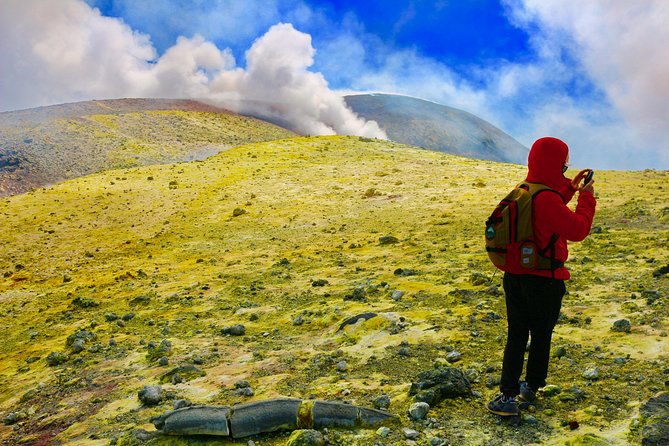
From around 2,960 m, the guided trek begins. The walk covers about 5 km with roughly 550 m of ascent toward the summit crater area. You are aiming for the crater edges, not a scenic overlook from a safe distance. The guides guide you toward the most active yet secure area of the summit, based on daily conditions.
You may see four main craters named for this route: North-East, Voragine, Bocca Nuova, and South-East. Which edges you reach can vary because Etna’s behavior changes. If there is gas, heat, or unstable fractures, the guides choose the safest alternative that still gives you close access to the action.
Altitude is a major factor here. You may range roughly from 2,960 m up to about 3,323 m. That is high enough that you should take the pace seriously, even if you feel fit. Mild altitude effects are possible, and guides typically manage the effort with breaks and steady movement.
What you are walking on is part of the challenge. The route goes over soft scoria and sandy gullies in volcanic terrain. Later, it can include crossings over ski-slope areas, where the ground can be rougher and stony. This is why footwear matters so much. You want grip and ankle protection because the surface can shift under your feet.
More Italian ridgeways and mule tracks:
- Mount Etna: Trek to 3000m with cable car and jeep
★ 4.7 · 1,978 reviews - Mount Etna: Summit Crater Trek with Cable Car
★ 4.8 · 1,875 reviews - Etna Volcano: South Side Guided Summit Hike
★ 4.7 · 1,545 reviews - Stromboli: Sunset Trekking at Sciara del Fuoco
★ 4.6 · 1,372 reviews
Stop-by-stop itinerary flow, with the real-world timing
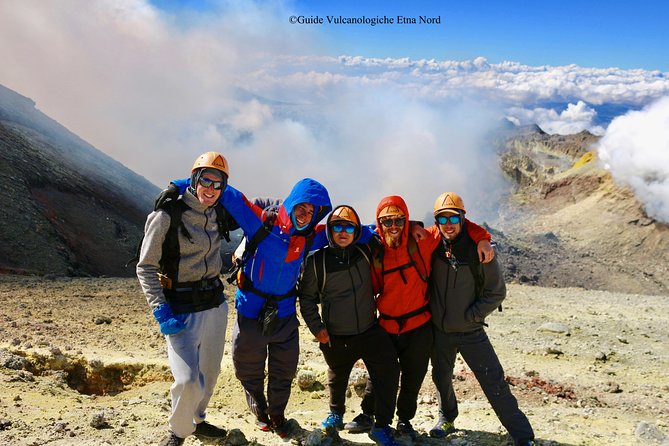
Here is how the day usually plays out in a way that matches the logic of the route.
Stop 1, Piano Provenzana
- You arrive at the meeting area, use restrooms, and have a chance for coffee or a quick breakfast snack.
- You get a briefing. The guide team provides what you need for the trek, including trekking poles, helmets, warm jacket, extra socks, and a backpack.
- If you are worried about gear, this is where you can get squared away before the altitude and wind do their thing.
Stop 2, Itinerario Crateri Sommitali
- This is where you meet the guides again in practice and follow the plan for the day.
- You depart early, usually morning on this north route, and ride the authorized 4×4 track along the wild north slope.
- You climb toward the start altitude of the walk while crossing volcanic features, including lateral crater areas and deep fracture zones.
Stop 3, Mount Etna summit craters area
- The hike begins at about 2,960 m and aims toward crater rims after an ascent on foot.
- You stay with the guide team throughout, and the crater choice can adjust daily based on safety conditions.
- Expect a full crater experience, not just one photo spot, because you are walking edges.
Stop 4, back to Piano Provenzana
- The tour ends back at the meeting point area.
- The return is a long descent. You go from the crater area around 3,300 m down toward 1,800 m, roughly 7 km on foot with about 1,500 m of negative gain overall.
- Many people find this part tougher than the climb because loose volcanic material can make your quads and calves work overtime.
In terms of duration, the tour runs about 5 hours 30 minutes on paper, but you should budget closer to 6 hours when conditions change. One clear theme from the field is that snow, wind, gas, or a route adjustment can stretch the day.
The descent is the test: how to prep your body and your footwear
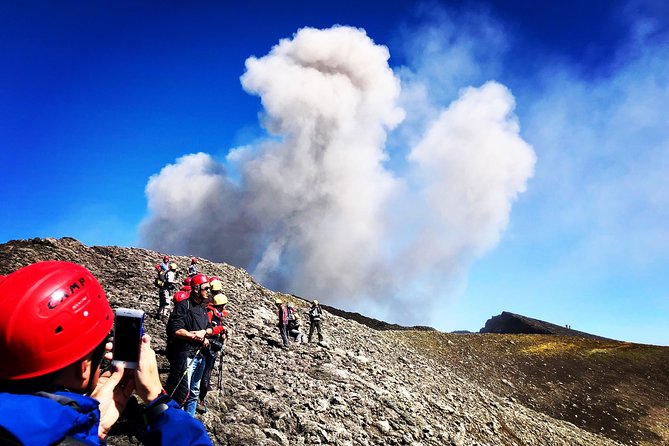
The climb gets attention, but the descent decides whether your day feels fun or brutal. You descend on loose scoria and sandy sections, where slipping is a real risk if your shoes are not up to it. That is why the tour provides trekking shoes, but you should still think like this is a real hike, not a casual walk.
A smart approach:
- Wear sturdy boots and plan for sand and grit. Loose volcanic stones can get into your shoes.
- Use long socks that cover your ankles and help prevent hot spots.
- Bring a wind layer. Even when the sky is clear, wind at altitude can be sharp.
- Pace yourself on the way down. Your legs will feel it, especially if your knees are not used to downhill on unstable surfaces.
If you are the kind of hiker who warms up quickly and enjoys steep zigzags, you will probably handle this well. If you hate descents, treat this as a conditioning day, not a victory lap.
Gear, included extras, and the real cost of doing Etna right
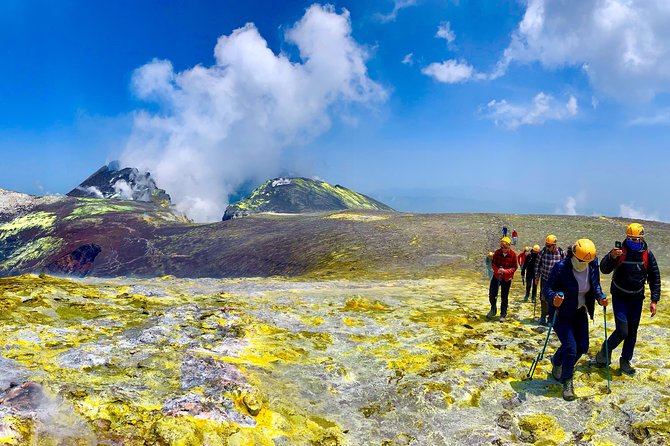
The tour price is $139.13 per person and it includes a licensed volcano guide, plus trekking poles, trekking shoes, helmets, a warm jacket, extra socks, and an extra backpack. You also get insurance in case of accidents and entry/admission to Mount Etna.
That is good value if you travel light. Getting the right footwear, helmet, and warm layer from the start saves you from hunting gear in Sicily. It also helps because the terrain can be unstable, and the tour explicitly warns that without adequate shoes, you may not be covered by insurance.
Now for the costs that can catch you by surprise:
- Parking at the start area is a separate fee: €5 for the entire day on weekdays and €8 on Sundays and public holidays.
- There is an off-road vehicle supplement mentioned for certain segments: €50 per person for an off-road vehicle one way from 1800 m up to 2825 m paid on the spot.
- If you choose to return by bus from 2,850 m to 1,800 m, the cost is €70 instead of €50. (So pay attention to how you plan to get back down.)
Put simply, the base tour fee is only part of the bill. Still, when you compare it to the cost of organizing transport, gear rentals, and a guided crater experience on active terrain, this can still feel like a solid deal, especially with the guide team staying with you for both the drive and the walk.
Weather, volcanic activity, and why you should expect route changes
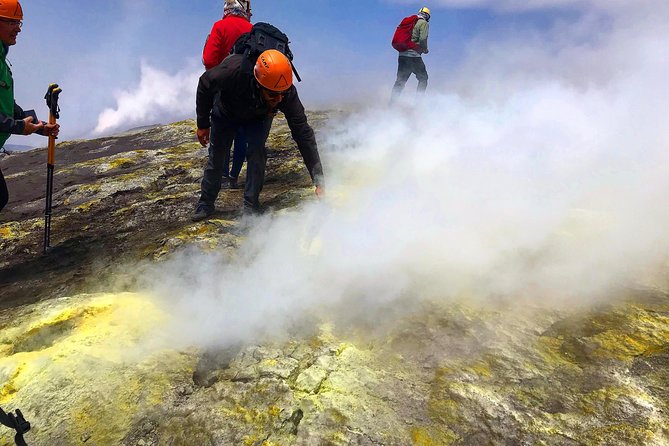
Etna is active. This matters in the real world, not just on postcards. Your excursion can be changed at the discretion of the guides, or interrupted if environmental, climatic, or volcanic conditions make the situation unsafe.
The important detail is how they frame it: they follow the limits set by the authorities, and they stop where it is still safe to reach for the safety of the whole group. That is not “bad luck,” it is how the day stays responsible on an active volcano.
You should also expect that cold and wind can shape comfort level, even when hiking conditions are otherwise possible. If your plan is to stand outside at 3,000 m without layers, you will learn that fast. Pack for wind and cold, and expect the crater area to feel intense in the best and most basic sense.
Who should book this, and who should skip it
This tour is for experienced hikers with a strong fitness level. It is not aimed at casual walkers, because you are dealing with steep footing, altitude, and a long negative gain descent.
It also has clear limits:
- Not suitable for children under 12.
- Pregnant women who have passed the third month are not allowed.
- People with breathing conditions or hypertension should avoid it.
- If you are sensitive to dizziness, know that walking along crater edges can trigger dizziness for susceptible individuals.
The tour caps the group size at 12 travelers, which supports a more personal feel than mass-market Etna groups.
If you like geology and want a close, guided crater experience with real volcanic features, this fits well. If you want a light hike and lots of time hanging out, look for a shorter Etna option instead.
Should you book this Etna summit craters hike?
Book it if you want the full Etna feel on the north side, with a guide team that handles both safety and the science talk, and if you are ready for a real hike plus a tough descent. The mix of authorized 4×4 access, a guided crater-edge route that can adjust daily, and the included gear makes it a strong value for people who want to do it properly.
Skip it if you have fragile knees, struggle with downhill on loose ground, or you are not comfortable at altitude. Also skip if cold wind makes you miserable quickly, because the higher you go, the less comfort is guaranteed.
One last practical tip: this is the kind of excursion that often gets booked ahead. On average, it is reserved about 40 days in advance, so if your travel dates are set, consider booking early and then adjusting your day around weather windows.
FAQ
What time does the Etna Nord summit crater hike start?
You meet at 7:45 am at the CHIOSCO BAR MARENEVE DI FERRARO, Etna nord, Piano Provenzana. The departure is typically between 8:00 am and 8:15 am.
How long is the trek to the summit craters?
The tour runs about 5 hours 30 minutes on average. Expect around 6 hours in many conditions because the day includes the drive up, the summit hike, and a long descent.
What is included in the price?
Included are a licensed volcano guide, trekking poles, trekking shoes, helmets, a warm jacket, extra socks, extra backpack, insurance for accidents, and entry to Mount Etna.
What extra costs should I budget for?
Parking costs are separate. There may also be an off-road vehicle supplement one way from 1,800 m to 2,825 m for €50 per person paid on the spot. If you return by bus from 2,850 m to 1,800 m, the cost is €70 instead of €50.
What altitude will I reach?
The hike starts around 2,960 m and can reach up to roughly 3,323 m at the summit crater area. The return descent goes down toward about 1,800 m.
What happens if conditions change due to volcanic or weather activity?
The route can vary at the guides’ discretion, and the activity can be interrupted or stopped for safety if environmental, climatic, or volcanic conditions make it unsafe for the group.
Can I cancel if the weather is bad?
Yes. You can cancel up to 24 hours in advance for a full refund. The experience also requires good weather, and if it is canceled due to poor weather, you will be offered a different date or a full refund.
Just introduced: the newest Sicily write-ups
- Etna Tour – HalfDay Small Group & licensed Tour Guide★ 5.0 · 185 reviews
- Naxos: Taormina Boat Tour with Snorkeling and Prosecco★ 4.9 · 185 reviews
- Etna Special Dawn Excursion★ 5.0 · 185 reviews
- Sicilian Cooking Class in Taormina★ 5.0 · 186 reviews
- Guided tour of the salt pans of Trapani and the Salt Museum★ 5.0 · 188 reviews
- Private tour of Etna and Winery Visit with Food and Wine Tasting from Taormina★ 5.0 · 188 reviews
- five sense outdoor experience★ 5.0 · 189 reviews
Mount Etna Excursions, compared.
Mount Etna Morning or Sunset Day Trip with Tasting
Read our review →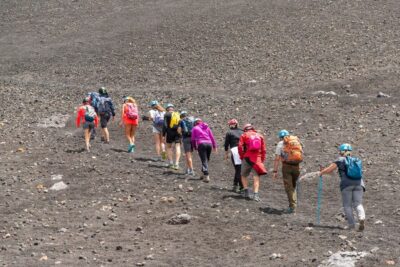
Mount Etna: Guided Volcano Summit Hiking Tour with Cable Car
Read our review →
Sunset Jeep Tour of Mount Etna and Lava Flow Caves
Read our review →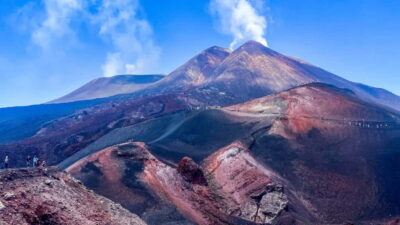
Mount Etna: Trek to 3000m with cable car and jeep
Read our review →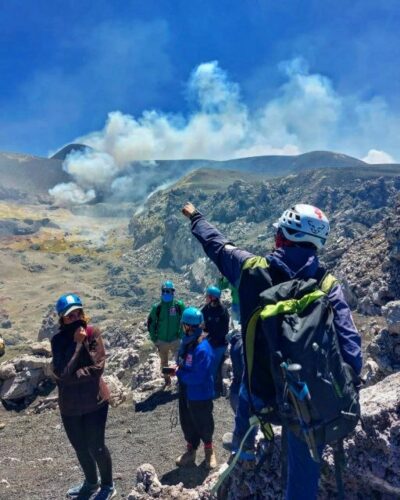
Mount Etna: Summit Crater Trek with Cable Car
Read our review →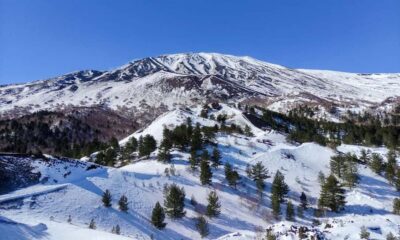
Etna and Alcantara Gorges Full-Day Tour with Lunch
Read our review →
Mount Etna: Roundtrip Cable Car and 4×4 Bus Ticket
Read our review →
Etna Volcano: South Side Guided Summit Hike
Read our review →Browse the lists this tour appears in