
Reviewed · MOUNT ETNA EXCURSIONS
Etna Volcano: South Side Guided Summit Hike
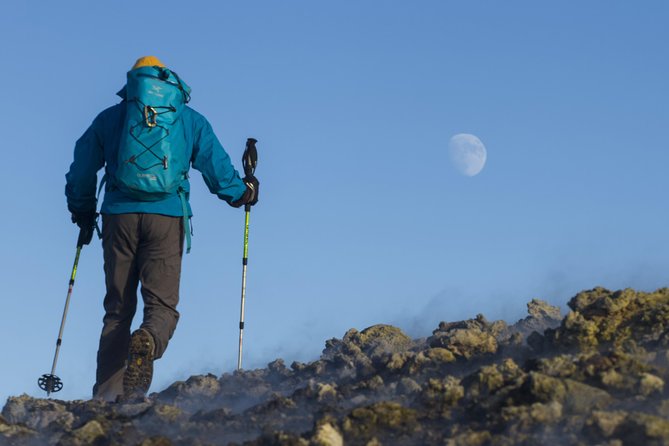
Mount Etna feels like walking on another planet. This guided South Side hike takes you up toward the summit craters with a volcanologist guide and the kind of views you do not get from the road. You also get real hiking on uneven, volcanic ground, not just a scenic stroll.
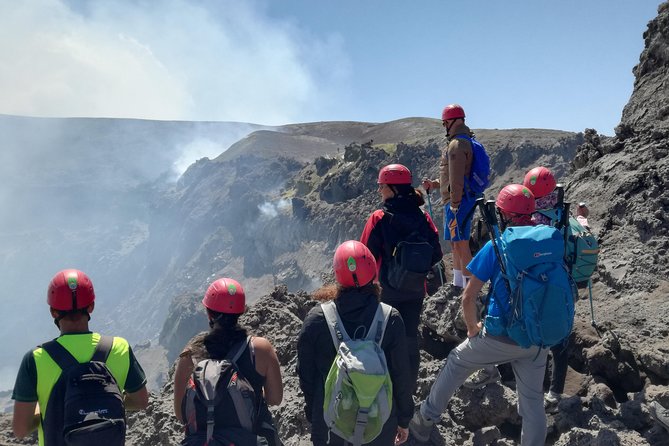
I love how much of the experience is built around safety and geology, with volcanologist guidance up close to active features, plus solid group gear like helmet, boots, and trekking sticks. I also love the pacing: breaks built in, time to stop and photo the crater rim views, and a route that mixes summit area walking with a descent that still stays interesting.
One consideration: because this is an active volcano, access can change. If gas or vapor makes conditions unsafe, you might not get to the exact highest point, but you should still see plenty of craters, lava textures, and volcanic features along the way.
In This Review
- Key Highlights You Should Care About
- Why This South Side Etna Hike Feels More Real Than a Road Trip
- Price and Logistics: What Your Money Actually Buys
- Meeting at Piazzale Rifugio Sapienza, Then Up Toward 2,800 to 2,900 Meters
- Itinerario Crateri Sommitali: Central Crater Rim, Northeast Crater, and Southeast Views
- A realistic note about the summit
- Valle del Bove: More Terrain, More Atmosphere, More Walking
- Mount Etna Craters and the Active Ground You Can Actually See
- Descent to Barbagallo Craters and a Lava Flow Channel
- Timing, Distance, and Fitness: Know What Medium-High Really Means
- What to Pack for Etna Wind, Cold, and Volcanic Ground
- Group Size and Hearing Your Guide
- Who This Tour Fits Best, and Who Might Want Another Etna Option
- Should You Book This South Side Guided Summit Hike?
- FAQ
- How long does the Etna South guided summit hike take?
- What time does the tour start?
- Where do you meet and where does it end?
- Is the tour in English?
- What is included in the price?
- Do I need to pay extra for the cable car or 4×4 bus?
- What should I bring for the hike?
- What fitness level do I need?
- What happens if weather or conditions are unsafe?
- What is the cancellation policy?
Key Highlights You Should Care About
- Volcanologist-led crater walking aimed at the summit area, not just a viewpoint stop
- Provided safety gear (helmet, boots, trekking poles) to make the climb more manageable
- Ride up to about 2,800 to 2,900 meters by cable car or 4×4 bus, then you hike the rest
- Central, Northeast, and Southeast Craters explained from the crater rim area
- Descent route includes Barbagallo craters and crossing a lava flow channel
- Wind and cold at altitude can hit fast, so you need to dress for it
Why This South Side Etna Hike Feels More Real Than a Road Trip
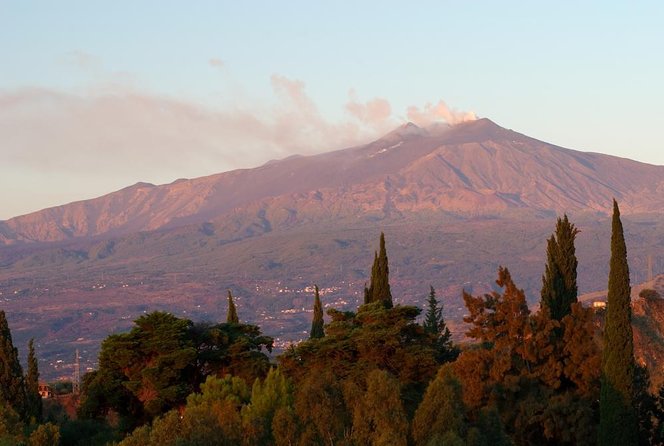
If you’ve seen Etna from a distance, you know it looks dramatic. What this hike adds is the sense of being inside the volcano’s story, step by step. You move across dark, lunar-looking ground, then reach a crater rim area where the guide can point out what you’re seeing and what it means.
The South Side route also keeps things active. You don’t just arrive, look, and leave. You walk for hours on uneven volcanic terrain, with breaks so you can catch your breath and your photos.
And yes, it is an active volcano. That changes the vibe. Your guide is constantly thinking about conditions, wind, and gas, which is exactly what you want when you’re this close.
Etna again, by a different flank:
Price and Logistics: What Your Money Actually Buys
The tour price is $78.64 per person and it runs about 6 hours. That base price is for the guided hike experience with volcanological guidance plus core equipment.
Here’s what you should expect to pay separately, based on the tour details:
- Cable car and 4×4 jeep tickets are not included, and they cost €65 per person paid locally.
- You’ll also want to budget for food and water. Bottled water and snacks are not included.
So does it feel like good value? For me, it mostly does because the cost buys more than a guide. You get:
- Insurance and volcanological guidance
- Helmet, trekking boots, and trekking sticks provided
- A route that is built around summit crater walking, not only low-altitude viewpoints
- A small group size (max 20), which matters when the terrain is noisy and the guide needs time to manage everyone
If you were doing this independently, you’d still need gear, reliable access to the Sapienza area, and a way to understand what you’re seeing while staying safe around active features. Paying for a volcanologist guide is what turns the hike from scary into meaningful.
Meeting at Piazzale Rifugio Sapienza, Then Up Toward 2,800 to 2,900 Meters
You start at Piazzale Rifugio Sapienza (Etna South) near Nicolosi. The tour starts at 8:00 am, and it ends back at the same meeting point.
From there, the plan is to get you up to roughly 2,800 meters by:
- Cable car, or
- A 4×4 jeep bus option (both require the separate €65 per person ticket)
This part is more than just transportation. It also helps you “earn” your altitude. Once you begin walking, the air gets sharper, the wind can take over, and your body starts paying attention. You’ll be thankful the climb is staged with a ride first, then a hike.
What I found practical in real terms is that you arrive early enough to get daylight and workable conditions. And because Etna weather can change quickly, starting at 8 am also gives the guide flexibility.
Itinerario Crateri Sommitali: Central Crater Rim, Northeast Crater, and Southeast Views
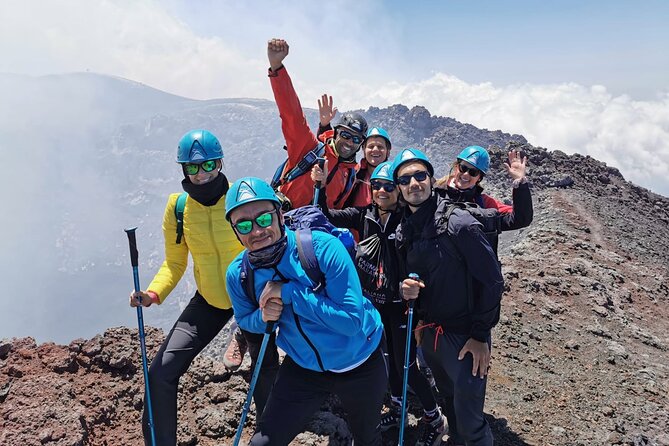
This is the main event. After reaching the high starting altitude (about 2,800 meters), you walk for about two hours through lava flows and lunar-looking terrain. The goal is the summit crater area.
What makes this section special is the way you walk the rim of the Central Crater, then face the Northeast Crater, with the Southeast Crater nearby and explained as the site behind the most recent impressive eruptions.
Your guide is a volcanologist, and the “why” matters here. You’re not just seeing holes in the ground and steaming rocks. The guide helps you understand the active environment:
- Gas emissions in the area
- Volcanic bombs
- Sparkling colors on the ground, linked to sublimation of elements, especially sulfur
That sulfur note is more than a chemistry detail. It gives your brain something to latch onto as you’re walking on black material that looks uniform until the guide points out why it isn’t.
More Italian ridgeways and mule tracks:
- Catania: Etna Nature Tour with Hiking, Cave Visit, & Tasting
★ 4.7 · 502 reviews - Mount Etna: North Upper Craters Guided Tour by 4×4 with Trek
★ 4.6 · 243 reviews - Cinque Terre Day Trip with Optional Hiking or Pisa
★ 5.0 · 8,486 reviews - Florence: Cinque Terre Day Trip with Optional Hike
★ 4.8 · 4,178 reviews
A realistic note about the summit
Because Etna is active, conditions can force route changes. On some days, gas or vapor can be too strong for the safest access to certain points. If that happens, you should still get an excellent view of volcanic features from nearby areas. The key is that your guide is adapting to keep you safe while still delivering the crater experience.
Valle del Bove: More Terrain, More Atmosphere, More Walking
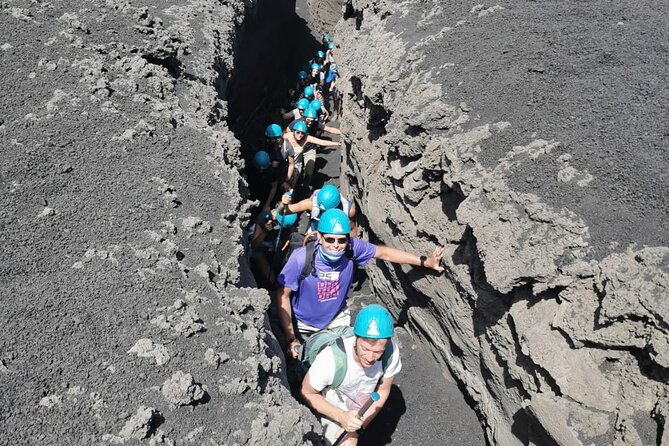
After the summit-crater approach, the itinerary moves into Valle del Bove. The tour description frames this as part of the guided walking day, so you can expect more time on volcanic terrain rather than easy ground.
This section is where the hike stops feeling like a single highlight and starts feeling like a full volcanic trek. You’ll likely notice:
- Uneven ground underfoot
- Wind exposure as you move between areas
- More chances to rest and take photos between stretches
The drawback is also obvious here: if you come in thinking this is a gentle hike, Valle del Bove is where that assumption breaks. You need good shoes and you need to be comfortable walking on rocky, loose, possibly slippery volcanic surfaces.
Mount Etna Craters and the Active Ground You Can Actually See
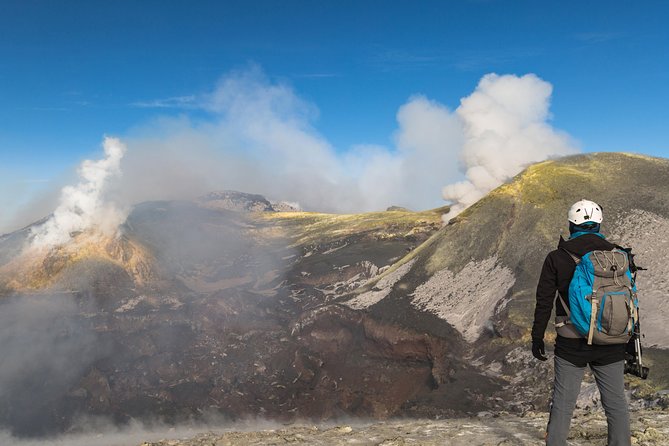
When the tour talks about the summit area, it is not trying to sell you a postcard version of Etna. You’re seeing active geology up close, including features like bombs and gas behavior.
The guide’s job is to explain what you’re looking at and keep the group moving safely. In past experiences, guides such as Antonio, Max, Massimo, Simon, and Philippo have been singled out for professional, engaging explanations and for actively monitoring danger around the crater area.
You will also spend time on the kind of terrain that makes you slow down naturally. That’s not a bad thing. Moving slowly helps you take in details like:
- Where gases are coming from
- How the ground changes in texture
- How older lava flows sit alongside newer activity
And you do get built-in breaks. You’ll want them. This is the kind of hike where your legs work hard, but your attention works harder.
Descent to Barbagallo Craters and a Lava Flow Channel
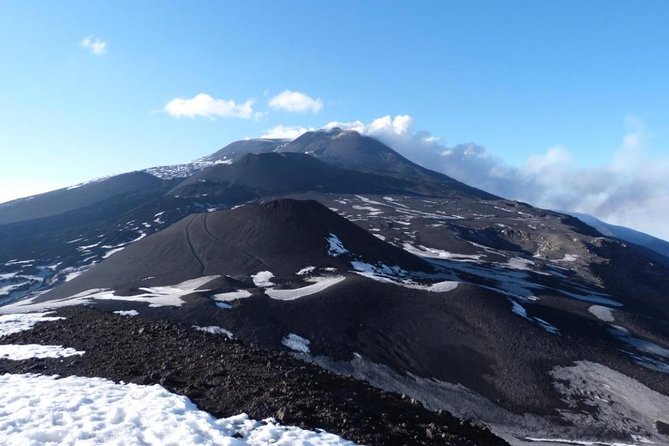
The descent is part of what people remember most, because you often keep seeing new volcanic features rather than walking straight back to base.
In the tour plan, the descent includes:
- A visit to Barbagallo craters
- Crossing a lava flow channel
Crossing channels and uneven descents can be tricky, especially when the soil is slippery or loose. This is where trekking poles earn their keep. If you’re sensitive to footing, bring your energy down smoothly and let the guide know early if you’re slower.
Also, don’t underestimate how cold it can get. At altitude, wind can chill you fast, even if lower down it felt mild.
Timing, Distance, and Fitness: Know What Medium-High Really Means
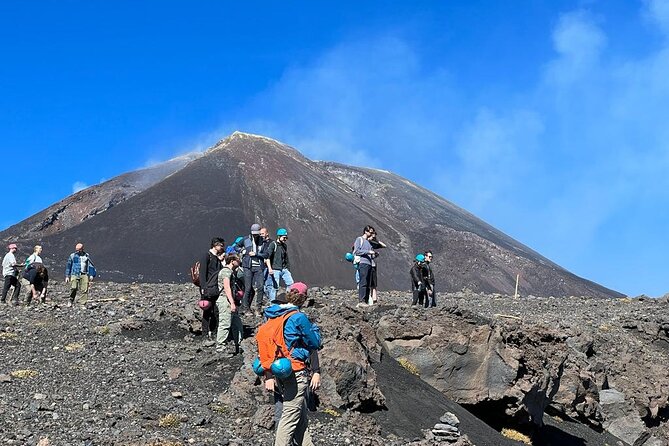
The tour is described as medium-high difficulty, and it also says you should be in perfect physical conditions. In plain language: expect a strenuous climb, then a more technical descent.
From the experience itself, you should be prepared for roughly 8 to 10 kilometers on foot. The terrain is uneven, and you’re walking on volcanic ground that can be loose and slippery in places.
You’ll also hit the max altitude near 3,000 meters. That’s not guaranteed to feel like a problem for everyone, but altitude plus wind can make breathing and stamina feel harder than you expect.
Good news: the pace includes stops and frequent breaks. Bad news: you still need stamina for a real hike.
What to Pack for Etna Wind, Cold, and Volcanic Ground
Even if you get provided gear, you should plan like you’re dressing for a mountain, not a walk. The tour description indicates helmet, boots, trekking poles, windbreakers, and gloves are provided, but it also notes that a wind jacket is not included. So think “bring your own wind protection,” just in case you want something better fitting or warmer.
Based on practical advice that comes up repeatedly with this kind of trek, here’s what helps:
- A wind jacket (layering matters fast up there)
- A hat for sun and wind
- Gloves (even if provided, you might want a backup pair)
- A neck scarf or neck sock if wind bites hard
- Long pants and tall socks for comfort on uneven volcanic ground
- Good hiking shoes with grip
- Trekking poles (they’re provided, but if you personally rely on poles, you’ll appreciate that they support balance)
- Dark-colored clothing can be a comfort choice on bright days
Also bring a plan for food. Bottled water and snacks are not included. Many people recommend carrying more than you think you’ll need, and there’s often an opportunity to eat at the Refugio before you start, or to take a lunch break near the upper part of the hike.
Group Size and Hearing Your Guide
This is a maximum of 20 travelers, which is pretty manageable. Still, if your group stretches out on the trail, you might need to move toward the front to hear the guide’s explanations about gases, craters, and active terrain.
The guide’s job is safety plus education, and both depend on attention. If you want the most out of the volcanology talk, position yourself where you can actually hear without having to crane your neck for every stop.
Who This Tour Fits Best, and Who Might Want Another Etna Option
This hike is best for you if:
- You can handle a medium-high, physically demanding hike
- You’re okay walking on uneven, rocky, possibly slippery volcanic ground
- You want the crater experience explained by a volcanologist guide
- You like a full half day outdoors, not just a quick sight stop
You might reconsider if:
- You want a low-effort walk with minimal terrain stress
- You’re very uncomfortable in wind and cold at altitude
- You have concerns about heights on crater rim paths and steep, exposed feeling areas
One more practical point. If you tend to get cold easily, do not rely on hope that it will be mild at 2,800 to 3,000 meters. Wind is part of the job at Etna.
Should You Book This South Side Guided Summit Hike?
I’d book it if you want Etna as an experience, not just a view. The value is strong because you get serious guidance from volcanologists, core equipment like boots and a helmet, and a crater-focused route that includes real summit-area walking and a meaningful descent with additional crater stops.
Skip this hike only if you know you cannot handle medium-high effort, or if you’re hoping for a fully guaranteed, all-days summit access with zero changes. With active volcano conditions, route details can shift, and the guide will prioritize safety first.
If you show up ready for wind, layers, solid shoes, and a few tough stretches on volcanic ground, this is the kind of day that gives you a whole new understanding of Etna.
FAQ
How long does the Etna South guided summit hike take?
It runs about 6 hours (approx.).
What time does the tour start?
The start time is 8:00 am.
Where do you meet and where does it end?
You meet at Piazzale Rifugio Sapienza, 95030 Nicolosi CT, Italy. The tour ends back at the same meeting point.
Is the tour in English?
Yes, it is offered in English.
What is included in the price?
The included items are a helmet, trekking boots, insurance, volcanological guides, and trekking sticks.
Do I need to pay extra for the cable car or 4×4 bus?
Yes. Cable car and 4×4 jeep tickets are not included and cost €65 per person, paid locally.
What should I bring for the hike?
Bottled water and snacks are not included, and a wind jacket is not included. The tour says windbreakers and gloves are provided, but bringing your own warm, wind-ready layers is smart.
What fitness level do I need?
The tour says you should have a moderate physical fitness level, but also notes the level is medium-high and that people have to be in perfect physical conditions.
What happens if weather or conditions are unsafe?
This experience requires good weather. If it is canceled due to poor weather, you will be offered a different date or a full refund. The itinerary can also vary because Etna is active.
What is the cancellation policy?
You can cancel for a full refund up to 24 hours in advance of the experience’s start time. If you cancel less than 24 hours before, the amount paid is not refunded.
Just introduced: the newest Catania write-ups
- Catania: Pistachio Ravioli, Pasta Home Cooking Class w/ Wine★ 4.7 · 204 reviews
- Catania: Gulf Scuba Diving Tour with Marine Biologist★ 4.9 · 212 reviews
- From Catania: Neapolis of Syracuse, Ortygia, and Noto Tour★ 4.7 · 234 reviews
- Mount Etna: Return Funivia dell’Etna Cable Car Ticket★ 4.0 · 240 reviews
- Etna Morning Jeep Tour★ 4.5 · 241 reviews
- Mount Etna: Ascent to 2800m by 4×4★ 4.8 · 241 reviews
- Mount Etna: North Upper Craters Guided Tour by 4×4 with Trek★ 4.6 · 243 reviews
Mount Etna Excursions, compared.
Mount Etna Morning or Sunset Day Trip with Tasting
Read our review →
Mount Etna: Guided Volcano Summit Hiking Tour with Cable Car
Read our review →
Sunset Jeep Tour of Mount Etna and Lava Flow Caves
Read our review →
Mount Etna: Trek to 3000m with cable car and jeep
Read our review →
Mount Etna: Summit Crater Trek with Cable Car
Read our review →
Etna and Alcantara Gorges Full-Day Tour with Lunch
Read our review →
Mount Etna: Roundtrip Cable Car and 4×4 Bus Ticket
Read our review →
Etna Volcano: South Side Guided Summit Hike
Read our review →Browse the lists this tour appears in