

Reviewed · POMPEII & VESUVIUS TOURS
From Naples: Pompeii & Herculaneum with Archaeologist Guide
Two Roman cities, one day, and real context. This Pompeii and Herculaneum excursion is built around an expert archaeologist guide plus a small group (up to 20), so you get explanations that fit the pace. I especially like the skip-the-line setup, because it turns those long entrance queues into actual time walking among Roman streets, mosaics, and frescoes.
The big payoff is seeing the two sites together, after Herculaneum’s 20-meter mud burial and then Pompeii’s volcanic ash story from Mount Vesuvius. One consideration: this is a walking and stair-filled day, and it is not recommended if you have limited mobility.
In This Review
- Key points before you go
- Why Pompeii and Herculaneum Together Actually Makes Sense
- Naples Pickup, Minibus Comfort, and the Pace You’ll Feel
- Herculaneum: 20 Meters of Mud and Why It Looks Like Time Stopped
- Herculaneum Highlights You’ll Want to See Up Close
- Pompeii After Lunch: A Guided 2-Hour Walk Through Streets and Big Public Rooms
- Pompeii Must-See Stops on This Tour Route
- Skip-the-Line Tickets and Small-Group Size: The Real Value
- Price, What’s Included, and How to Think About Value
- What It Feels Like in Real Life: Crowd Flow, Weather, and Comfort
- Who Should Book This Tour, and Who Should Rethink It
- Should You Book This Pompeii and Herculaneum Tour?
- FAQ
- How long is the Pompeii and Herculaneum tour from Naples?
- Where do I meet for the tour in Naples?
- Are skip-the-line tickets included?
- Is lunch included in the price?
- Is this tour suitable for wheelchair users or limited mobility?
- Is luggage allowed on the tour?
Key points before you go
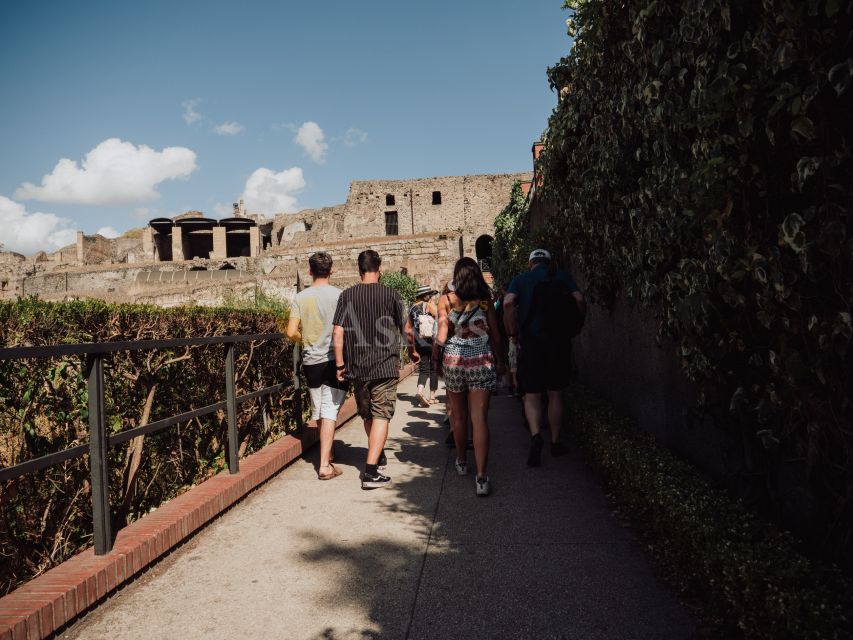
- Archaeologist-led viewing: You do not just look, you learn what you are seeing and why it matters.
- Skip-the-line tickets that save time: More time inside the ruins, less time waiting at entrances.
- Small group size (up to 20): Easier questions, a less chaotic feel than the huge coach crowd.
- Herculaneum’s preservation is the star: Carbonized wood, intact paintings, and mosaics stay visible.
- Pompeii highlights in one focused walk: Expect major public buildings and standout houses without trying to do everything.
- Modern minibus from Naples Central Station area: Comfortable travel with a professional English-speaking driver.
Why Pompeii and Herculaneum Together Actually Makes Sense
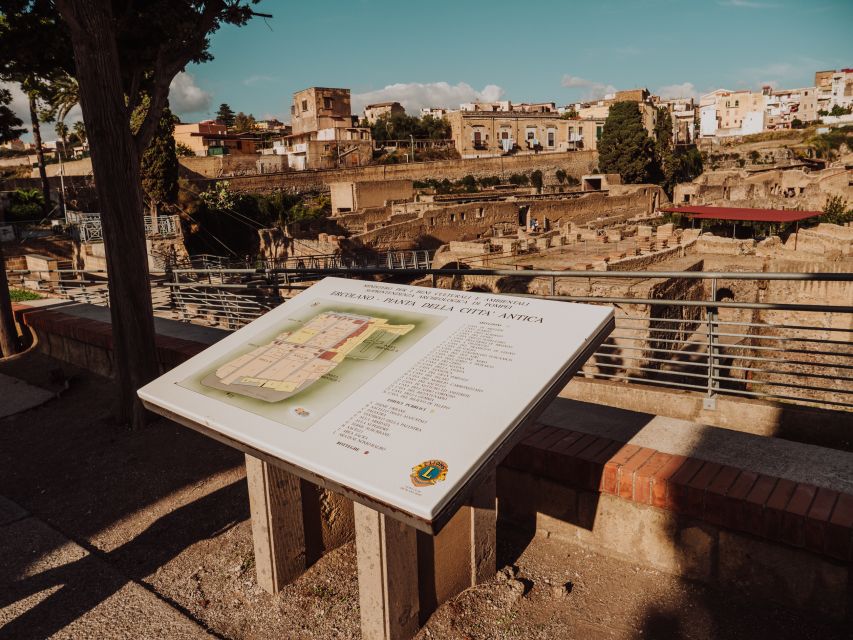
Pompeii and Herculaneum share the same disaster, Mount Vesuvius in 79 AD. But the cities feel completely different because one was buried in ash and the other was entombed by a landslide that turned into deep mud. When you see them back-to-back, the story clicks faster. You start noticing how Roman life looked in different settings, and how preservation changed what survives today.
I like this pairing because it avoids a common mistake: trying to “collect” Roman ruins one by one. Here, you get a guided comparison. Herculaneum shows what life looked like under heavy, sealing mud, while Pompeii shows a broader urban layout, with famous public spaces and homes that reveal how people used their days.
The tour also keeps your time realistic. You are there for a full day, not multiple days of logistics. Still, the itinerary leaves enough time to walk key areas at a comfortable rhythm with your guide calling out details.
More of Pompeii and the volcano that buried it:


Naples Pickup, Minibus Comfort, and the Pace You’ll Feel
You meet at the Starhotel Terminus entrance, right opposite the station. Look for the guide holding an ASKOS TOURS sign. After pickup, you transfer by modern minibus, with a professional English-speaking driver handling the driving.
This matters more than it sounds. Pompeii days can turn into a stress test, especially if you are stuck with slow connections or late check-in chaos. A direct minibus transfer helps you arrive ready to walk.
The pacing is structured around guided time in both sites and a lunch break in Pompeii. For most people, the rhythm works because the guides are managing two things at once: crowd flow and the story of what you are seeing. In reviews, guides like Raphael and Michele were called out for moving the group efficiently through busy areas while still explaining the key spots.
If you hate running late, this tour style is a good match. The driver will wait for up to 5 minutes if you are late, so aim to be outside and ready a bit early.
Herculaneum: 20 Meters of Mud and Why It Looks Like Time Stopped
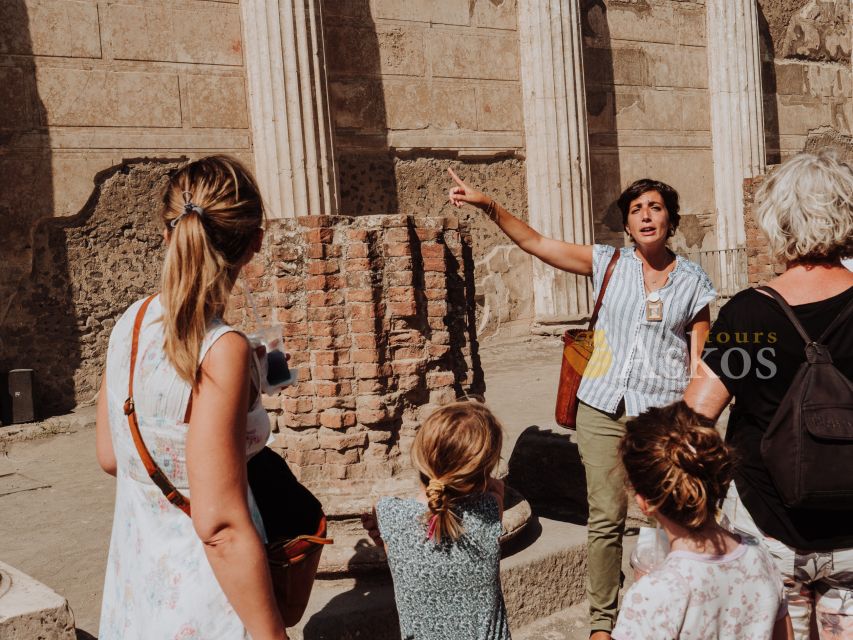
Herculaneum is the site where your eyes start believing the impossible. The archaeological area was buried under about 20 meters of deep mud after the disaster. That kind of burial is brutal, but it is also the reason you can still see objects and artwork in a way that feels almost intimate.
When you arrive, you enter with skip-the-line tickets and then get a guided walk through the main highlights. You cover a lot without feeling like you are sprinting. Expect time to focus on the details that Herculaneum does best, not just the biggest names.
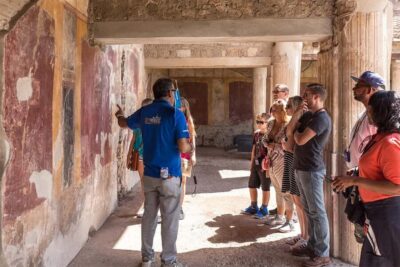
You can see examples of preservation that rarely show up elsewhere in this region. The tour includes carbonized wooden objects, intact paintings, and mosaics that are still preserved. These are not random curiosities. They are your proof that this was a daily city with real homes, real décor, and real objects that survived long enough for archaeologists to rescue the evidence.
This is also where the guide’s style really matters. In reviews, multiple archaeologists and highly praised guides mentioned specifics and small details, like how Roman spaces functioned for daily routines. That kind of “how it worked” explanation helps Herculaneum feel less like a museum and more like a neighborhood that froze mid-life.
Herculaneum Highlights You’ll Want to See Up Close
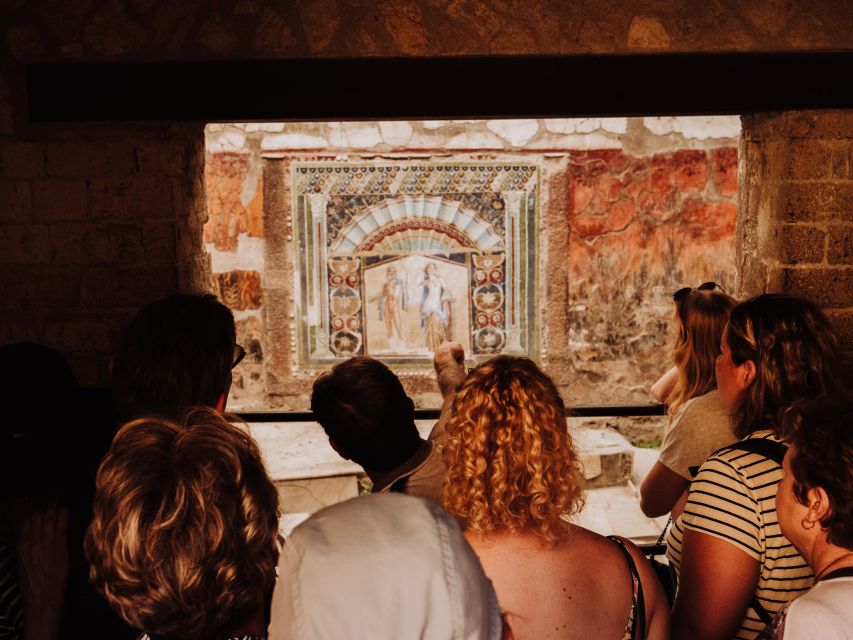
The tour’s Herculaneum portion is guided and typically about 2 hours. You focus on major stops that teach the big picture and still leave room for you to look.
Here are the highlights you’ll encounter:
- Temple of the Augustali: A key religious stop that helps explain local cult practice and public space.
- The beach area where more than 300 skeletons were found: This is one of the most sobering parts of the day. It connects the physical evidence to the human reality of the eruption.
- Thermal Baths: Roman baths show you daily hygiene, social life, and how warm-water spaces were laid out.
- Forum: The civic heartbeat of the city, where public life and community interaction would have played out.
- Samnite House: A home that helps you understand domestic scale and how people arranged rooms.
- Gymnasium: Another window into how Romans viewed exercise, education, and social gathering.
- House of the Dears: A notable residence stop, included because it helps you see how decoration and household identity were expressed.
One practical note for this portion: even when you are not doing long distances, Herculaneum involves uneven ground and steps. If you feel uneasy on stairs or steep grades, bring a raincoat and plan for slower movement. The tour is specifically not recommended for limited mobility.
Introductions we still owe you around Naples
- Naples: Naples Underground Entry Ticket and Guided Tour
★ 4.4 · 21,781 reviews - From Naples: Pompeii Ruins & Mount Vesuvius Day Tour
★ 4.3 · 11,459 reviews - From Naples: Sorrento, Positano and Amalfi Full-Day Tour
★ 4.6 · 10,988 reviews - From Naples: Sorrento, Positano & Amalfi Coast – Small Group Tour
★ 5.0 · 8,643 reviews
Pompeii After Lunch: A Guided 2-Hour Walk Through Streets and Big Public Rooms
After Herculaneum, you transfer to Pompeii. There is a break that includes time for lunch, roughly 40 minutes. Since meals are not included, you will need to plan food yourself.
This is where I’d give you a real-world money tip. One common advice I picked up is to bring a snack if you want to control lunch costs, because food options near entry points can be expensive. You have limited time, so pre-planning keeps you from losing your whole break standing in line or hunting for a decent option.
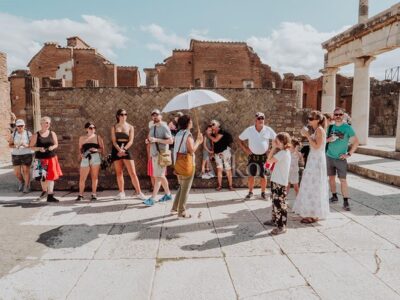
Once you are back inside Pompeii, you get another guided segment with skip-the-line entry. Pompeii is bigger and more open than Herculaneum, and it can feel overwhelming if you are on your own. A guided route helps you hit the key public buildings, notable homes, and “wow” stops without wandering.
This portion is designed as about a 2-hour walk covering the most important areas. That limited time is also a benefit, because you get focused highlights rather than a half-day of rushing.
As you walk, you get the core explanation again, how the city was buried by volcanic ash from Mount Vesuvius in 79 AD. The guide ties the sites together so you understand what is preserved and what is reconstructed, and how Romans lived day to day in streets, marketplaces, and houses.
Pompeii Must-See Stops on This Tour Route
You will cover a list of standout Pompeii stops that most first-time visitors hope to see. Key highlights include:
- Marina Gate: Useful for orienting yourself in the city and understanding arrival routes.
- Basilica: A major civic building, often discussed because it reflects how public life and commerce were organized.
- Forum: Pompeii’s central stage for business, administration, and community.
- Forum Baths: You see how bathing spaces supported social routines.
- Lupanar (brothel): One of Pompeii’s most discussed sites, and the guide can help you interpret it in context rather than sensational headlines.
- Bakery: A practical stop that anchors the city in daily food production.
- House of Faun: A famous household highlight, often included to show how elite homes looked and felt.
- Termopolium Capuano: A reminder that not everyone had a grand kitchen at home. People ate and drank in street-side venues.
- House of Tragic Poet: Another residence stop designed to show household art and layout.
- Plaster casts: These help you visualize the scale of the remains and the human figures preserved in the ash.
You’ll leave Pompeii with a strong sense of the city’s layout and public priorities. Even if you already know the basic story of Pompeii, the guided explanations help you notice how the town functioned, and why certain buildings matter.
Skip-the-Line Tickets and Small-Group Size: The Real Value
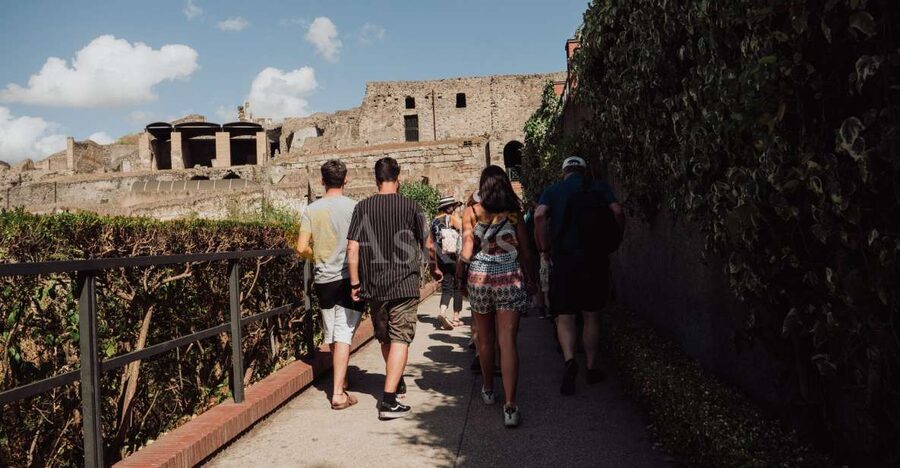
Pompeii and Herculaneum can be crowded, and crowds change your experience. A long queue is time you can never get back. This is why I pay for skip-the-line access on this exact type of day trip. You are not just buying convenience. You are protecting your walking time inside the ruins.
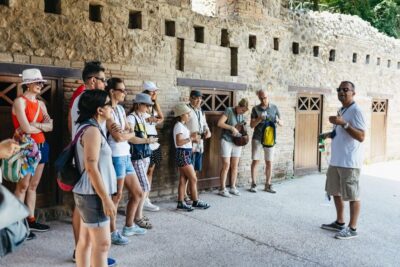
The small-group size also helps you. With up to 20 people, you are more likely to hear your guide clearly and get questions answered without a constant shuffle. In reviews, people praised guides like Roberta and Gennaro for their group management and explanations, and one archaeologist mentioned the use of headsets to help the group follow along in busy areas. Even if your day uses different tools, the point stays the same: smaller groups are easier to teach well.
The minibus transfer is also part of that value. You avoid the fatigue that comes from piecing together buses, timing gaps, and train station confusion.
Price, What’s Included, and How to Think About Value
The price is about $168.79 per person for this 7-hour day trip. That sounds like a chunk until you break down what you actually get.
Included items:
- Shared minibus transportation
- Pompei Express entrance ticket
- Herculaneum entrance ticket (listed as €16 each)
- Archaeologist guide
- Tolls and parking expenses
Not included:
- Meals
When you compare this to the cost of buying tickets and trying to self-navigate with limited time, the value becomes clearer. Pompeii and Herculaneum are not small. A 7-hour total window means you do not have time to “figure it out” while also standing in lines.
The meals gap is the only real catch. You will need to budget for lunch, and because Pompeii includes a short break, you will likely spend whatever is available and convenient. If you want to control costs, pack a snack or plan a simple meal option before you arrive.
What It Feels Like in Real Life: Crowd Flow, Weather, and Comfort
This tour runs rain or shine, so bring a raincoat if the forecast looks moody. The sites are outdoors, and umbrellas can be awkward on stairways and uneven ground.
Wear shoes you trust. Pompeii involves walking through streets and public spaces on uneven surfaces, and Herculaneum adds more steps and grades. The tour is not recommended for people with limited mobility, and one of the best practical pieces of advice is to self-check your comfort with stairs before booking.
Also, plan around the luggage rule. Luggage or large bags are not allowed, so travel light. Bring your passport or ID card, and for baby travelers, baby seats are available on request.
Your driver waits up to 5 minutes if you are late. That is fair, but it is also not a lot of buffer, so treat the meeting point like you would a train.
Who Should Book This Tour, and Who Should Rethink It
This day trip is a strong fit if you want:
- A guided interpretation of Pompeii and Herculaneum, not just sightseeing photos
- A small-group experience limited to about 20 people
- Skip-the-line access to protect your time
- An archaeologist-led approach, where the guide connects objects and buildings to Roman daily life
It may not be your best choice if you:
- Have mobility limits and struggle with stairs and steep grades
- Need a long sit-down lunch break
- Prefer to wander freely without a timed route
If you already visited Pompeii once, you may still like this trip for Herculaneum’s preservation and for the comparison, especially the mud burial versus ash burial storyline. If it is your first time, the highlights list hits the most important stops without dragging you into endless side streets.
Should You Book This Pompeii and Herculaneum Tour?
My take: if you have limited time in Naples and want the two most powerful Roman ruins sites in one go, this is a solid booking. The combination of an archaeologist guide, skip-the-line entry, and a planned route through both cities makes the day feel efficient without turning it into a rush.
Book it when you can comfortably handle a stair-heavy, outdoors day. If you can do that, you will get a lot more than “seeing ruins.” You’ll understand the disaster, see why Herculaneum preserves so much, and walk through Pompeii’s public and domestic spaces with a guide explaining what you are looking at.
FAQ
How long is the Pompeii and Herculaneum tour from Naples?
The tour duration is 7 hours.
Where do I meet for the tour in Naples?
Meet at the Starhotel Terminus entrance, located opposite the station. Look for the guide holding an ASKOS TOURS sign.
Are skip-the-line tickets included?
Yes. Skip-the-line entry is included for both sites, with the Pompei Express entrance ticket for Pompeii and an included Herculaneum entrance ticket.
Is lunch included in the price?
No. Meals are not included. There is a lunch break in Pompeii during the day.
Is this tour suitable for wheelchair users or limited mobility?
No. The tour is not suitable for wheelchair users and is not recommended for people with limited mobility due to stairways and grades.
Is luggage allowed on the tour?
No. Luggage or large bags are not allowed.
Just introduced: the newest Naples write-ups
- Capri Boat Tour from Naples – Small Group, Swim & Relax★ 5.0 · 341 reviews
- Pompeii Guided Tour from Naples with Skip-the-Line Entry★ 5.0 · 343 reviews
- Procida Island Tour by Boat 2h 15m with Swimming and Underwater Photos★ 5.0 · 344 reviews
- From Naples: Caserta Palace Ticket and Train with Audioguide★ 4.3 · 348 reviews
- Naples Shore Excursion: Private Tour to Sorrento, Positano, and Amalfi★ 4.5 · 352 reviews
- From Naples: Capri Boat Day Trip with Drinks★ 4.7 · 354 reviews
- From Naples: Sorrento, Positano and Amalfi Tour★ 4.6 · 361 reviews
Pompeii & Vesuvius Tours, compared.
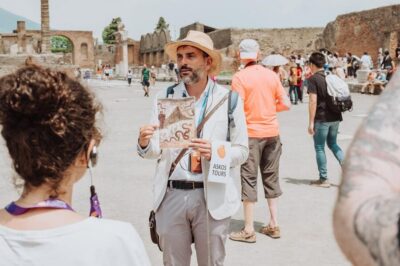
Entry Ticket and Guided Tour with an Archaeologist
Read our review →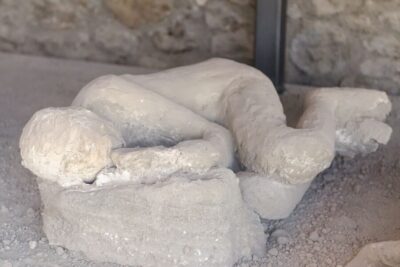

Pompeii Small Group Tour with an Archaeologist
Read our review →
Pompeii, Amalfi Coast and Positano Day Trip from Rome
Read our review →Browse the lists this tour appears in