
Reviewed · POMPEII & VESUVIUS TOURS
Pompeii Small Group Tour with an Archaeologist
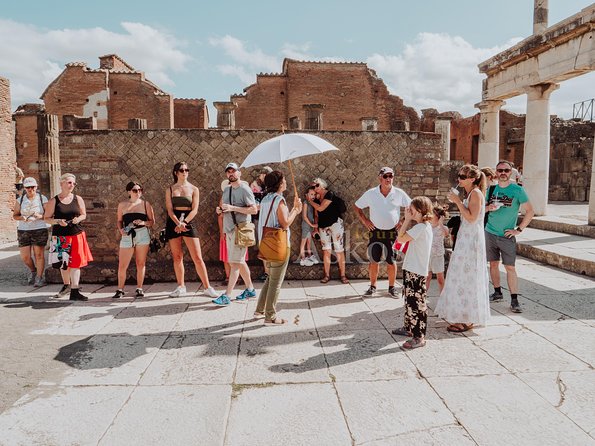
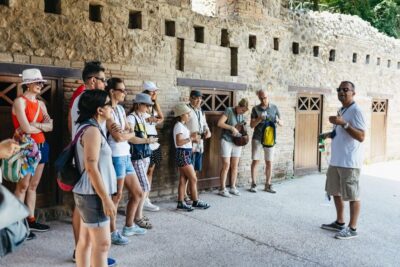
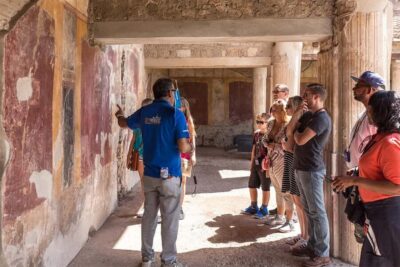
Pompeii hits harder with the right guide. This Pompeii small group tour with an archaeologist gets you past the main friction, with a skip-the-line Pompeii Express ticket and a route that explains what you are actually looking at. You also get the comfort of a small group, capped at 20 people per guide, so questions do not get swallowed up.
I especially like the way the tour uses standout stops to tell a full story, from civic life at the Basilica and Forum to the eruption’s human toll through the plaster casts. You should also appreciate the practical pacing, with short stops that keep the site moving instead of turning into a long lecture.
One possible drawback: two hours is fast for a huge, uneven park. You will see major highlights, but you will not cover all of Pompeii, and the walking is not the kind you do in flip-flops.
In This Review
- Key highlights you should care about
- Porta Marina Superiore start, then straight into the ruins
- The 2-hour route that keeps Pompeii from feeling overwhelming
- Basilica and Forum: where the city’s daily life comes into focus
- Granaries of the Forum and the plaster casts that hit emotionally
- Walking the main street with mosaics and frescoes in your path
- House of Menander: architecture and decoration you can actually understand
- Stabian Baths: why the oldest thermal complex matters
- Lupanar brothel ruins: controversial, but historically important
- House of the Faun and the Theater Grande finale
- Who this tour fits best
- Guides, storytelling, and the practical difference between “a guide” and an archaeologist
- Price value: why a low per-person cost can still feel worth it
- What to wear, bring, and plan so the 2 hours feel easy
- Small group size: great for questions, but expect some waiting
- Quick practical notes on animals and kids
- Should you book this Pompeii archaeologist small group tour?
- FAQ
- Where does the tour start?
- How long is the Pompeii tour?
- Is the tour in English?
- Does it include tickets and skip-the-line entry?
- How big is the group?
- Do we get headsets?
- What should I bring or wear?
- Is it suitable for people with mobility issues?
- What is the cancellation policy?
Key highlights you should care about
- Licensed archaeologist background, not just a storyteller with a script
- Skip-the-line Pompeii Express entry, starting at Porta Marina Superiore
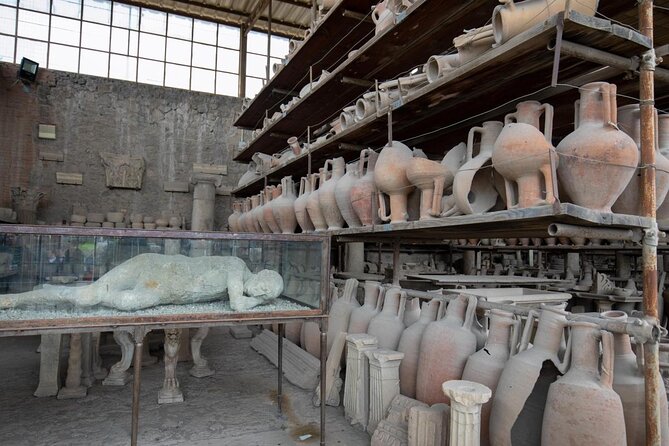
- Plaster casts in the Granaries of the Forum, including victims and even a dog and a tree
- Signature buildings and rooms, from the House of Menander to the Stabian Baths
- The Lupanar brothel ruins, plus the House of the Faun and the big theater
- Headsets for groups of 16+, so you can hear explanations without craning your neck
Porta Marina Superiore start, then straight into the ruins

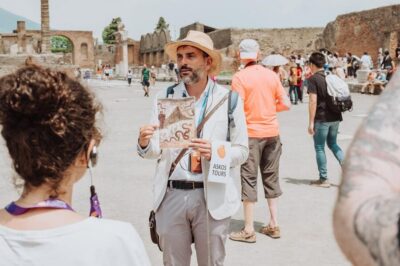
The tour meets at Porta Marina Superiore, with the guide holding an Askos Tours sign. Your entrance ticket is the Pompeii Express type, which helps you avoid wasting time on the kind of queues that can eat up your day.
From the start, the goal is clarity. You are guided into the archaeological park with a plan, so you are not wandering in circles trying to match a map to real streets and stones. You also finish inside the ruins, which is nice because it makes it easy to keep exploring after the tour, instead of crossing the park just to exit.
More of Pompeii and the volcano that buried it:

The 2-hour route that keeps Pompeii from feeling overwhelming
This is roughly a 2-hour walking tour, built around a chain of stops that work well for first-timers. You cover a “greatest hits” path without pretending you can see everything in one go.
The timing matters, because Pompeii is large and the ground is uneven. The tour’s short, focused visits mean you spend your energy on interpretation, not on trying to figure out what matters. Still, if you are sensitive to stairs, ramps, or rocky footing, note the tour is not recommended for mobility issues, and mobility scooters are not allowed.
Basilica and Forum: where the city’s daily life comes into focus
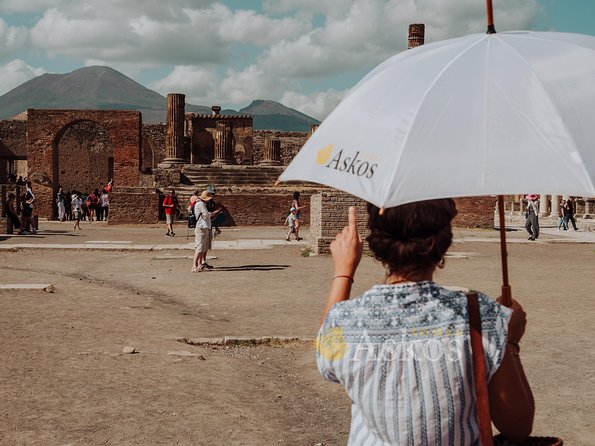
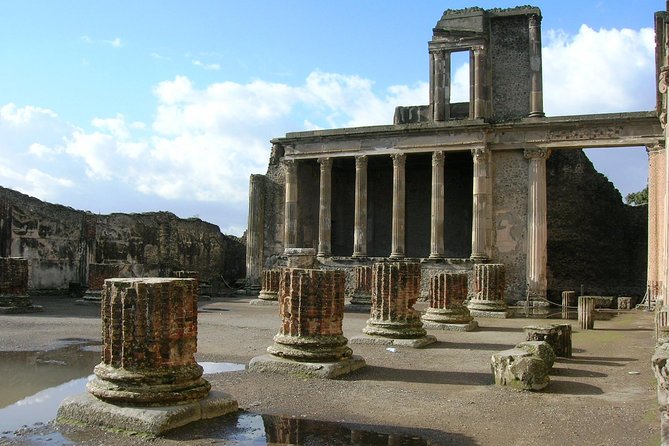
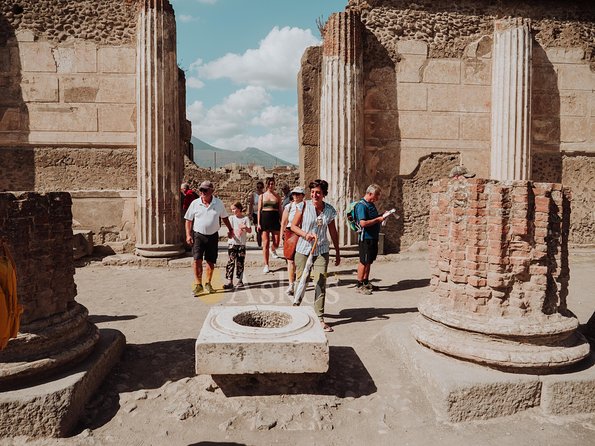
You begin with the Basilica, described as an open portico that gave shelter for merchants and other activities. Standing there, you get a feel for how public spaces worked. It is not just ruins, it is a functional setting where people would have met, traded, and stayed out of bad weather.
Next you look at the Forum, Pompeii’s main square. This stop is brief, but it is the right kind of brief, because the guide connects the layout to what people did there. You leave understanding that the city was organized, and that civic life was a big deal, not a background detail.
Granaries of the Forum and the plaster casts that hit emotionally
One of the most memorable parts is the Granaries of the Forum. This is where you pause and really contemplate. You see marble tables and features connected to fountains at house entrances, and you also encounter the famous plaster casts of victims of the eruption.
What makes this stop feel especially vivid is the inclusion of casts beyond just humans, including a dog and a tree. Even if you know the headline story of Pompeii, these specific details help you grasp that the disaster captured ordinary life, not just dramatic moments.
Practical note: this area involves looking up and around while staying aware of footing. Bring a little patience for the emotional weight and the physical reality of an outdoor ruin.
Introductions we still owe you around Pompeii
- Pompeii Ticket + Tour with Optional Tasting Experience at Pompeii
★ 5.0 · 663 reviews - Pompeii private tour with an Official Guide
★ 5.0 · 631 reviews - Pompeii Private Tour with an Archaeologist and Skip The Line – 3 hours
★ 5.0 · 564 reviews - Pompeii Skip-the-line Tour with Archaeologist Guide
★ 5.0 · 559 reviews
Walking the main street with mosaics and frescoes in your path
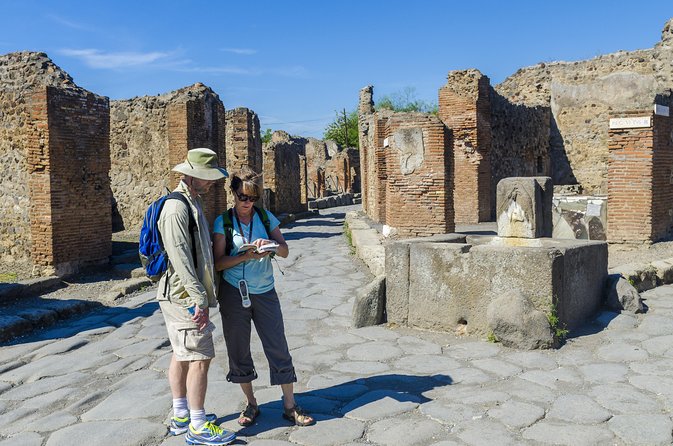
After the Forum-side stops, you continue along the main street of Pompeii. This is one of those “you feel like you are walking where they walked” sections, especially when the guide points out small visual clues like painted surfaces and mosaic details.
The tour’s value here is direction. Pompeii can be visually busy, and without guidance you can miss what is actually distinctive. With the guide, you know what to look for, not just what happens to be nearby.
House of Menander: architecture and decoration you can actually understand
The House of Menander is often a crowd favorite for good reason, and this stop is planned for that. It is described as one of the richest and most magnificent houses in Pompeii, with standout architecture, decoration, and preserved contents.
In a group tour, this kind of house can either feel like a quick photo stop or like a real lesson. Here, the tour structure is built so you get the significance, not only the visuals. You get to connect the decorative choices to status and everyday life.
If you like to slow down with details, you may still want extra time after the tour, because the house categories in Pompeii are where your “aha” moments can keep multiplying once you are back on your own.
Stabian Baths: why the oldest thermal complex matters

Next comes the Stabian Baths (Terme Stabiane). This is a vast thermal complex and, as noted on the tour, it represents the oldest thermal area in the city.
Bathrooms in ancient cities are more than comfort. They are social space, routine, and public infrastructure all at once. In this stop, you get a sense of why the Romans invested so much energy in bathing culture, and how that shows up in the layout of rooms and circulation.
This also works well for photo timing, because bath complexes give you angles that feel different from temples and houses. If the day is hot, the bath stop can provide a mental reset from the most exposed outdoor segments, even though you still need good walking shoes.
Lupanar brothel ruins: controversial, but historically important
You then visit the Lupanar, the most famous brothel ruins in Pompeii. This is one of those stops that can be awkward without context, and it is exactly where an archaeologist guide earns their keep.
A good guide does not sensationalize. They explain what the space was, how it fit into the neighborhood, and what the preserved elements indicate about daily life. This tour includes time here that is long enough to make the stop meaningful without turning it into an uncomfortable slog.
If you are traveling with teens or you want a clear educational framing, this is a stop where the structure of the tour helps you stay grounded in the historical side.
House of the Faun and the Theater Grande finale
The House of the Faun is next, one of Pompeii’s largest and most impressive private residences. This is a useful counterpoint after the Lupanar stop, because it shifts you from commercial or public life back to elite domestic space.
After that, you pause for a look at the so-called Teatro Piccolo, a smaller theater. Then you end at Teatro Grande, described as the city’s most important theater.
This theater ending is smart for first-timers. By the time you reach the big stage, you have already seen civic spaces and domestic life, so the theater feels less random. You start to understand Pompeii as a full city, not just a set of ruins.
Who this tour fits best
This tour is a strong match if you want:
- A high-signal overview in a short time window
- Interpretation from someone with an archaeological background
- A plan for seeing several top sites without spending hours mapping your own route
- A group size that stays manageable, with a max of 20
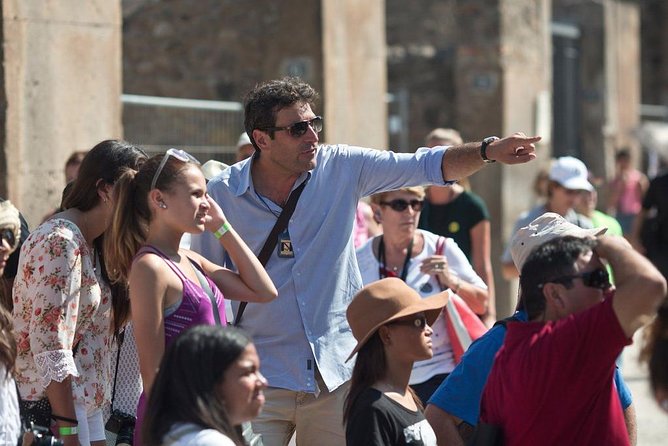
It is especially good for couples, first-timers, and families with older kids who can handle 2 hours of uneven outdoor walking. One theme from guide experiences you can expect from the tour style is that the guide works to keep the group engaged, including questions and pacing decisions.
Guides, storytelling, and the practical difference between “a guide” and an archaeologist
The strongest praise across the guide experiences is about the person on the other end of the headset. Names that have shown up include Alessandra, Teresa, Paolo, Alfredo, Amadeo, Antonio, and Vincenzo. The common thread is clear explanations and strong pacing, with guides making Pompeii feel human, not just technical.
You also get headsets for groups of 16 or more, which matters in a place where wind, crowd noise, and uneven audio can make it hard to hear anything at all. If you are the type who likes details, this is one of the small add-ons that can quietly make the whole tour better.
Price value: why a low per-person cost can still feel worth it
At $35.67 per person for about 2 hours, this is positioned like an efficient “don’t miss Pompeii” option. The big value driver is not the price by itself. It is the combination of:
- Skip-the-line Pompeii Express ticket
- Licensed guide with archaeological background
- A route that hits major sites, not only the ones that are easiest to reach
If you are already spending your time in Pompeii, paying for guidance is usually cheaper than paying with your time. The park is too big and too confusing to “figure out” in the way your brain wants to.
That said, remember the tour is short. If your goal is deep time in one specific house or you want to wander off-script, you may want to pair this with extra self-guided time afterward.
What to wear, bring, and plan so the 2 hours feel easy
Pompeii is exposed in many areas, and the tour involves uneven ground. Bring:
- Comfortable shoes you trust on irregular surfaces
- Sunglasses and sunscreen in summer
- A small bottle of water
- A mindset that you might need to slow down on steeper or rough sections
Also, plan to arrive a bit early at the meeting point area. I would rather you have 10 minutes of breathing room than show up as the group is already moving inside the ruins. When the schedule slips, the tour cannot always stretch the route.
Small group size: great for questions, but expect some waiting
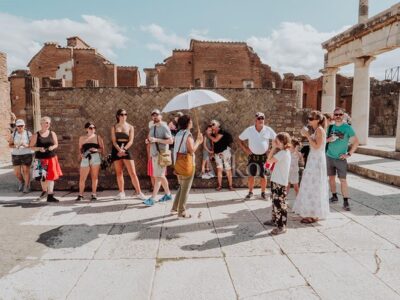
With a max of 20 travelers, you should get a more personal pace than the giant-bus style tours. Still, any small group tour involves small pauses, because people move at different speeds, and Pompeii is not uniform terrain.
One practical tip: if you want the most out of each stop, keep your group close. The less time spent herding and repositioning, the more time you get for the parts of the ruins you care about.
Quick practical notes on animals and kids
If you are traveling with kids, the tour says children must be accompanied by an adult. For travelers under 18, bring an ID card or passport.
Service animals are allowed. Small dogs can also be permitted if they meet the stated limits (10 kg max weight and 40 cm max height) and you keep them on a leash and follow the entry rules about handling inside buildings.
If anyone in your group has mobility challenges, it is best to ask about a suitable private alternative, since this tour is not recommended for mobility issues due to steps, ramps, and steep climbs.
Should you book this Pompeii archaeologist small group tour?
Book it if you want an efficient, well-guided introduction that connects the big sights to how Pompeii worked and what the eruption preserved. The skip-the-line entry, the archaeology-trained guide, and the smart stop order make it easier to get meaning out of your time.
Skip it, or plan differently, if you want to wander at your own pace for most of the day, or if you know you struggle with uneven, outdoor walking. In that case, you might prefer a longer format or a private setup.
If you do book, I suggest this simple plan: take the tour for structure and context, then stay in the park afterward with the confidence to move toward the sites that genuinely pull you back in.
FAQ
Where does the tour start?
You meet at the Porta Marina Superiore entrance inside Pompeii. The guide will be holding an Askos Tours sign.
How long is the Pompeii tour?
It is about 2 hours.
Is the tour in English?
Yes, the tour is offered in English.
Does it include tickets and skip-the-line entry?
Yes. It includes the Pompeii Express entrance ticket, and you head in with skip-the-line access.
How big is the group?
The tour has a maximum of 20 travelers per guide.
Do we get headsets?
Headsets are provided for groups of 16 or more.
What should I bring or wear?
Wear comfortable shoes, and bring sunglasses and sunscreen in summer. Bring a small bottle of water as well.
Is it suitable for people with mobility issues?
It is not recommended for travelers with mobility issues or impairments because of steps, ramps, and steep climbs. Mobility scooters are not allowed.
What is the cancellation policy?
Free cancellation is available up to 24 hours in advance for a full refund.
Just introduced: the newest Pompeii write-ups
- PompeiI Exclusive Tour with your Archaeologist in a Small Group★ 4.5 · 363 reviews
- Complete Pompeii Skip the Line Tour with Archaeologist Guide★ 4.5 · 379 reviews
- Pompeii 2h Small-Group Tour with Expert Archaeologist★ 5.0 · 385 reviews
- Pompeii Private Tour with an Archaeologist and Skip The Line★ 5.0 · 391 reviews
- Pompeii Guided Tour & Horse Riding on Vesuvius with Lunch★ 5.0 · 419 reviews
- Visit in Pompeii – Pompeii Private Tour with Ada★ 5.0 · 436 reviews
- Sharing Tour of Pompeii★ 5.0 · 487 reviews
Pompeii & Vesuvius Tours, compared.
Entry Ticket and Guided Tour with an Archaeologist
Read our review →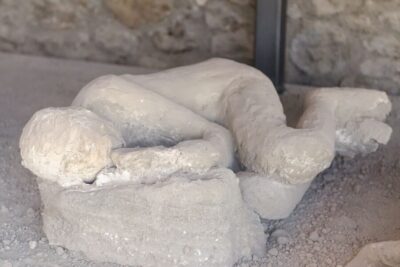

Pompeii, Amalfi Coast and Positano Day Trip from Rome
Read our review →
Pompeii and Mount Vesuvius Day Trip from Rome with Pizza Lunch
Read our review →Browse the lists this tour appears in