
Reviewed · POMPEII & VESUVIUS TOURS
From Naples: Ruins of Pompeii
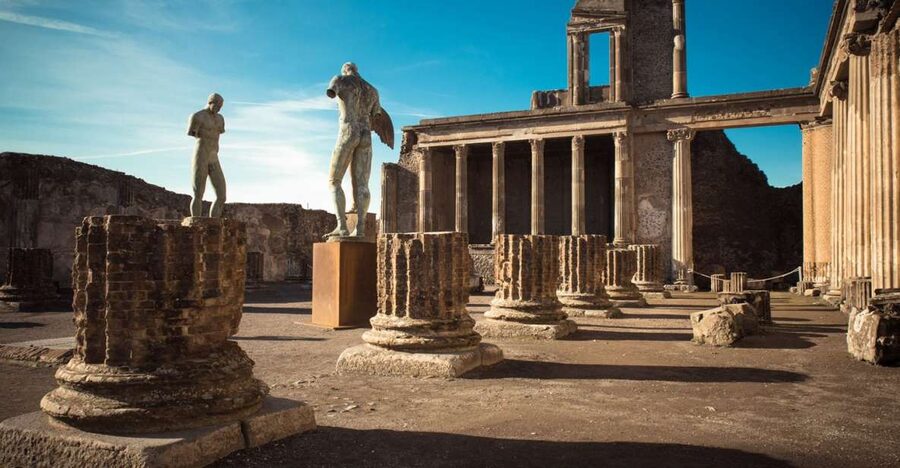
Pompeii turns travel into a time machine. This guided run from Naples focuses on the core sights of Ancient Rome in a tight 3 to 4 hour window, with help along the way so you do not waste your day figuring things out. You will see the streets and buildings buried by Vesuvius in 79 AD, and you will walk away with a clear sense of how people actually lived.
I especially like how the tour hits Pompeii’s most recognizable “wow” stops. The Roman theater is part of the route, and the walk also includes the preserved commercial streets with bakeries and pizzerias, plus major public spaces like the forum and bath houses.
One drawback to plan for: Pompeii is a lot of walking on uneven ancient ground, and the tour is not suitable for wheelchairs or people with mobility impairments. Also, luggage or large bags are not allowed, so pack light.
In This Review
- Key Highlights at a Glance
- A Fast, Low-Stress Trip from Naples to Pompeii
- Timing and Pace: What 3 to 4 Hours Really Means
- Entering Pompeii: A Guided Route Through the City’s Daily Life
- Pompeii’s Roman Theater: How Entertainment Worked
- Shops, Bakeries, and the Street-Level Feel of Ancient Rome
- Forum and Bath Houses: Public Life You Can Read in Stone
- The House of the Richest Man in Pompeii
- Necropolis and the City’s Edges: A Different Kind of Emotion
- Cameos and Corals Workshop Stop (If Time Allows)
- Languages, Guides, and What You Should Listen For
- Logistics: Tickets, Shoes, Bags, and the Reality of Naples Traffic
- Price and Value: Is $59 Good for This Pompeii Route?
- Who This Tour Fits Best (and Who Should Skip It)
- Should You Book This Pompeii Day Trip?
- FAQ
- How long is the Pompeii tour from Naples?
- Where is the pickup in Naples?
- Is Pompeii entry ticket included?
- What languages are available for the tour?
- Is lunch included?
- Is this tour wheelchair accessible?
Key Highlights at a Glance
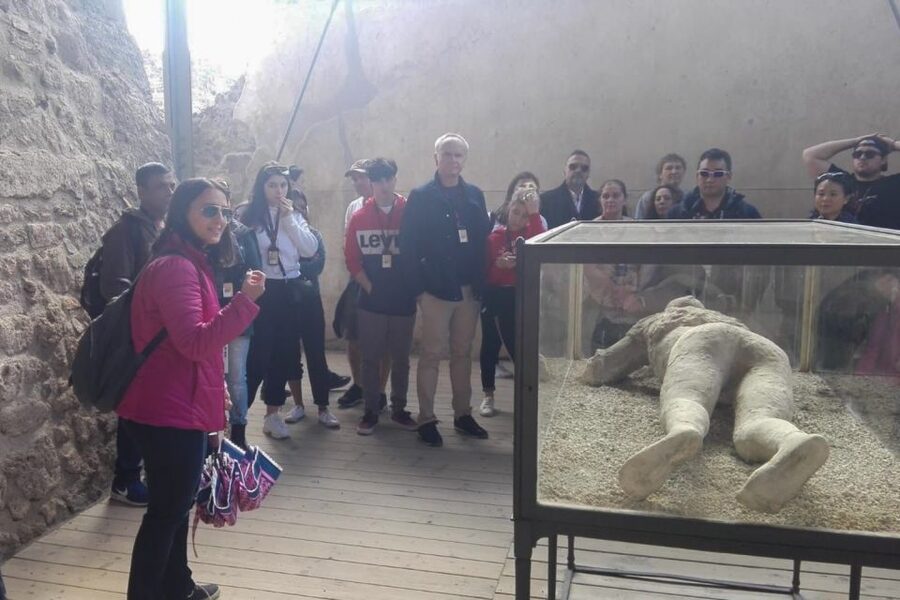
- Roman theater stop, one of Pompeii’s best ways to understand public life
- Daily-life storytelling, focused on what people did week to week in 1st-century AD
- Big-name ruins in limited time, including forum and necropolis areas
- House of the richest man in Pompeii, a strong look at wealth and space
- Optional cameo and coral factory, if time permits
- Small group feel, with guides who manage the crowd and pace
A Fast, Low-Stress Trip from Naples to Pompeii
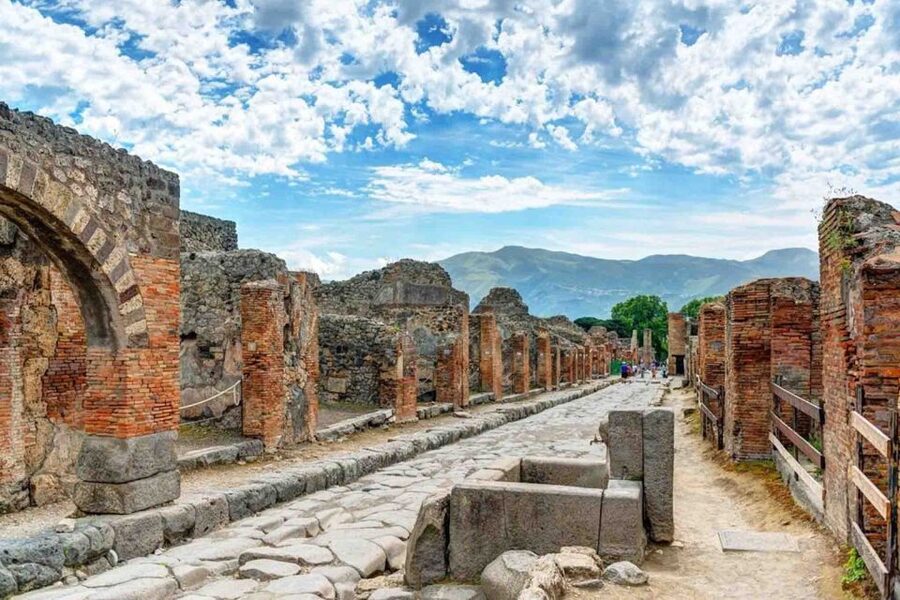
If you are short on time in Naples, this is a practical way to reach Pompeii without dealing with traffic stress or complicated connections. The schedule is built around round-trip transportation, with a bus or coach ride timed at about 20 minutes each way. Real life can stretch travel time, and one booking noted it took longer than expected due to the Naples ride, but you still come away with a day that feels controlled.
The morning starts with pickup from multiple Naples meeting points, including hotels like the Royal Continental Hotel and NH Napoli Panorama, plus central stops such as Molo Beverello-Ontano and Starhotel Terminus. You do need to confirm your exact pickup time after booking, and the driver waits up to 5 minutes if you are running late.
The vibe is friendly and organized. On the bus, you get multilingual commentary, and once you arrive at the archaeological site, you are guided through the walking portion. Depending on the season and group size, you may have a live guide or an audio guide, but the goal stays the same: keep you moving and explain what you are seeing.
More of Pompeii and the volcano that buried it:


Timing and Pace: What 3 to 4 Hours Really Means
The total duration runs about 3 to 4 hours. Inside that, Pompeii itself gets around 2 hours of guided walking. That is plenty to see the biggest public and residential highlights, but it is not a “cover everything” day.
Here is how to think about it: Pompeii is huge, and trying to sprint your way through it alone turns into random photo stops. This tour does the opposite. It chooses a route that focuses on the city’s key structures and everyday spaces, so you understand the layout without needing a map and a PhD.
You will also get a pause to buy essentials if you want. One traveler mentioned free, clean bathrooms and a short window to grab what they needed before heading back. Still, do not plan on a long lunch break since lunch is not included.
Entering Pompeii: A Guided Route Through the City’s Daily Life
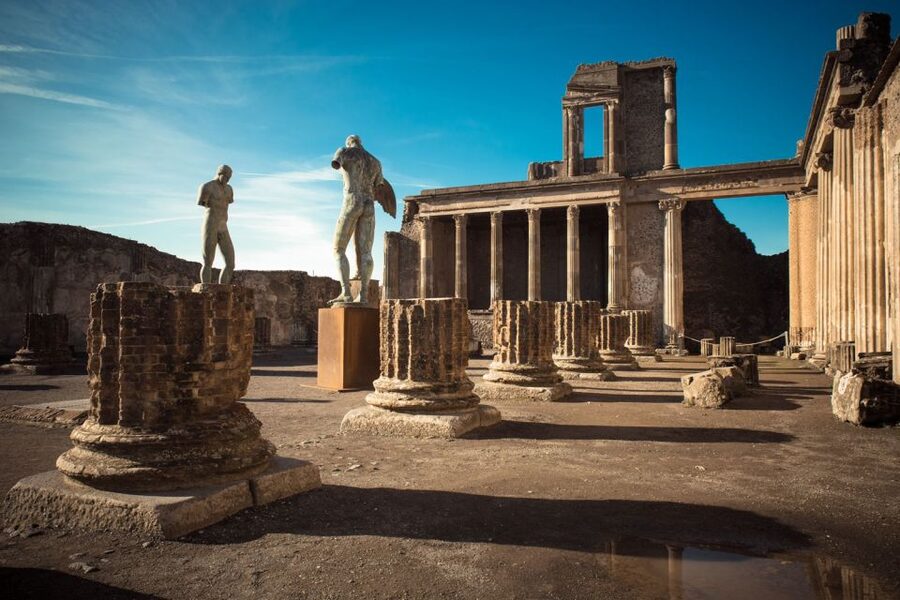
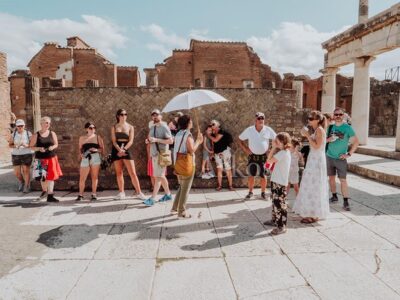
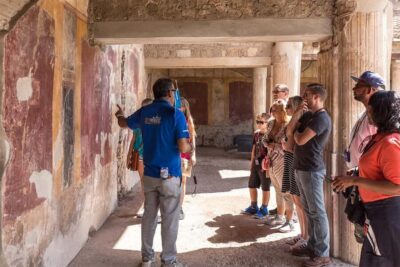
When you step into the Pompeii Archaeological Site, the tour framing matters. You get the big historical baseline that Pompeii was buried after the eruption of Vesuvius in 79 AD, and then the guide uses the ruins to explain daily life rather than just listing facts.
Expect stops that connect to how the Romans actually lived:
- where people gathered and judged social life,
- where commerce happened,
- how entertainment and public buildings worked,
- and how wealth showed up in private homes.
Because this is a guided route, you will not just stare at stone walls. You will learn what to look for, like how spaces were designed for crowd movement, how shops lined up along streets, and what certain buildings suggest about status.
If it is hot, you will appreciate the pacing. One guide was specifically praised for staying mindful of temperatures and finding shade when possible. That kind of practical approach can make the difference between enjoying Pompeii and feeling exhausted halfway through.
Pompeii’s Roman Theater: How Entertainment Worked
One of the tour’s standout stops is the ancient Roman theater. Even if you do not know much Roman entertainment, a theater is a great way to grasp the city’s public rhythm. It explains where people went for shows, how crowds gathered, and how architecture supported visibility.
The theater also acts like a mental landmark. After you see it, the rest of Pompeii starts to make more sense. You begin to connect public buildings and pathways as part of one system, not separate ruins.
If you like “learning by looking,” this stop is a winner. It turns Pompeii from a pile of stones into an actual city plan you can follow.
Introductions we still owe you around Naples
- Naples: Naples Underground Entry Ticket and Guided Tour
★ 4.4 · 21,781 reviews - From Naples: Pompeii Ruins & Mount Vesuvius Day Tour
★ 4.3 · 11,459 reviews - From Naples: Sorrento, Positano and Amalfi Full-Day Tour
★ 4.6 · 10,988 reviews - From Naples: Sorrento, Positano & Amalfi Coast – Small Group Tour
★ 5.0 · 8,643 reviews
Shops, Bakeries, and the Street-Level Feel of Ancient Rome
Pompeii is famous for its preserved atmosphere at street level, and this tour leans into that. You walk through commercial areas tied to ancient shopping streets, including preserved bakeries and pizzerias.
Even though you are looking at ruins, you can sense how commerce worked from the arrangement of spaces. Shops were part of the city’s daily tempo, and seeing these areas as part of a route helps you avoid getting stuck in one corner while missing the bigger story.
This is also where the guide’s narration matters. One of the praised guides, Salvatore, was noted for bringing the city to life with explanations of what daily life looked like before the eruption. That approach helps you connect what you see to the human routine behind it.
Forum and Bath Houses: Public Life You Can Read in Stone
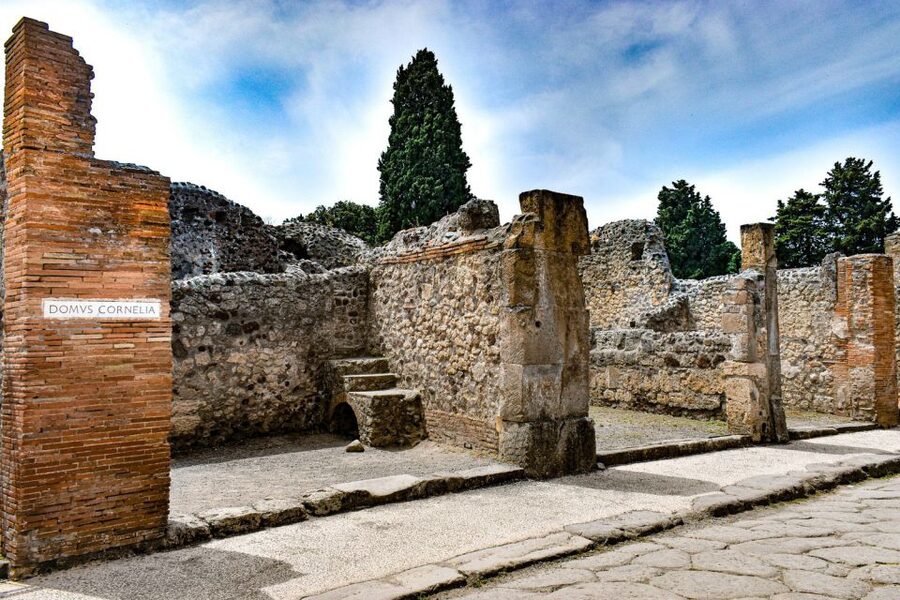
You do not have to be an archaeology expert to enjoy the forum and bath areas on this kind of itinerary. The forum gives you a sense of civic life, where people would have gathered for public matters and social interaction. The bath houses show another key Roman habit, public bathing as both routine and social culture.
On a smaller walking tour like this, these sites are crucial because they provide the “why did people build this?” answers. A guide helps you see patterns like where people likely passed through, how facilities were organized for groups, and why certain parts of the city mattered more than others.
The route also includes the necropolis area, which adds another layer. It is a reminder that Pompeii was not only a place of daily activity. People also planned for death, family memory, and long-term identity in the city’s outskirts.
The House of the Richest Man in Pompeii
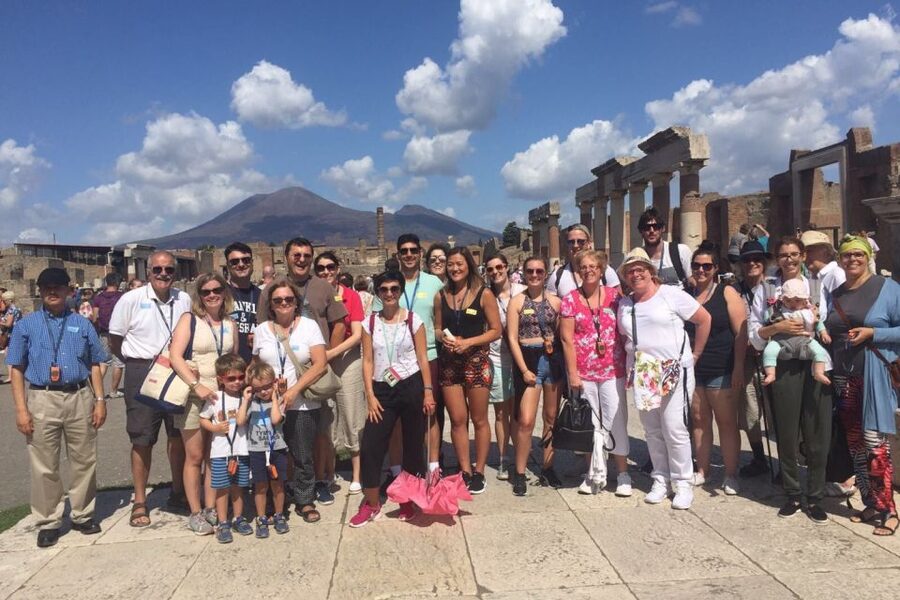
One of the biggest “wow” stops is the house of the richest man in Pompeii. It gives you a clear contrast to the street-level commercial areas and the public buildings.
This is where you start to see the rules of Roman wealth. Bigger homes were not only about comfort, they also reflected power. You will likely notice differences in space, layout, and the way rooms connect. Even at a glance, it is a strong lesson in how status shaped architecture.
This stop is also psychologically useful. If Pompeii starts to feel like a blur of walls and corners, a major residence gives you a structured view of private life versus public space.
Necropolis and the City’s Edges: A Different Kind of Emotion
The necropolis stop is not always the headline for Pompeii, but it works well inside this 2-hour walking plan. Including it helps you understand that the city functioned as a whole community, not just a sightseeing list.
Out on the edges, the atmosphere changes. You feel Pompeii as a living place that also had grief and remembrance built into it. A well-paced guide can help you look past the obvious and pay attention to how the area communicates purpose.
If you want Pompeii to feel human, this kind of stop matters.
Cameos and Corals Workshop Stop (If Time Allows)
There is an optional stop along the way at a local factory where you can learn more about the process of cameos and corals craft. These are jewel items made out of corals and seashells, and the tour notes that this stop depends on time.
If you love hands-on crafts, this is a fun contrast to ruins. It also makes the day feel more connected to modern Campania. Even if you skip it, the Pompeii walking portion still stays the main event.
If you are the type who likes to leave with something tangible, this might be a good moment to browse rather than just buy souvenirs later.
Languages, Guides, and What You Should Listen For
The tour provides multiple language options. On the day, live guide languages include English, Italian, and Spanish. If you are offered audio in your language, options listed include French, Chinese, German, Japanese, Russian, and Portuguese.
In practice, guide quality is the key. Fabio, an archaeologist, was praised for being excellent. Anita was praised for kindness and practicality in hot weather. Maria was praised for keeping everyone together under crowd conditions. There are also positive notes about audio guides being witty and knowledgeable, plus multiple staff members named as friendly and efficient.
So when you join, do one small thing that pays off: listen for how the guide tells you what to look at. Pompeii is the kind of place where the right explanation can turn a confusing section into a clear story.
Logistics: Tickets, Shoes, Bags, and the Reality of Naples Traffic
A few practical items will make your day smoother:
- Bring comfortable shoes. Pompeii ground is uneven and old stone can be slippery.
- Pack a sun hat and sunscreen, especially in summer.
- Leave extra baggage at home. The tour specifies that luggage or large bags are not allowed.
Ticket inclusion depends on your option. The tour lists Pompeii entry ticket as included if that option is selected, so double-check your chosen format before you go.
Also remember that pickup runs early and across multiple meeting points. One traveler said everything was punctually handled at their stop, and another noted a bit of confusion when the group arrived late at the start. The best move is simple, arrive on time and make the pickup point easy to find.
Price and Value: Is $59 Good for This Pompeii Route?
At $59 per person, the value is mostly about what you do not have to manage yourself.
You get:
- round-trip transportation from Naples,
- multilingual commentary,
- a guided Pompeii walking tour (about 2 hours),
- and a guide or audio guide depending on the day.
Lunch is not included, and Pompeii entry depends on the selected option. Still, compared with trying to piece together transport and a guided explanation on your own, this price tends to make sense if you want structure and less stress.
The big value question is this: do you want the highlights route, or do you want a long self-paced day? If you want a concentrated hits-and-story itinerary, $59 can feel fair. If you want to wander every lane and stay hours beyond 2 hours on site, you might prefer a different style of visit.
One traveler also commented that the 2 hours inside Pompeii felt like enough unless you have an academic interest. That comment matches the tour’s design.
Who This Tour Fits Best (and Who Should Skip It)
This works best for:
- first-timers who want the main Pompeii sights with clear explanations,
- couples and solo travelers who want an easy plan from Naples,
- people who prefer not to drive or navigate transport in busy Naples traffic,
- families with older kids who can handle 2 hours of walking.
It is not a good fit if you need wheelchair access or have mobility limitations, since it is not suitable for wheelchairs and the route involves walking on uneven terrain.
Should You Book This Pompeii Day Trip?
I think you should book this tour if you want Pompeii without the planning headache. The structure is strong: transportation from Naples plus a focused 2-hour guided route that hits major highlights like the Roman theater, forum, bath houses, necropolis, and the house of the richest man in Pompeii.
You might skip it if you want a slow, deep exploration of every corner, or if walking is a problem for you. And if you are traveling with lots of luggage, plan to travel light because large bags are not allowed.
If your goal is simple, see the right sights, learn what you are looking at, and get back to Naples without turning the day into a logistical project, this is a solid choice.
FAQ
How long is the Pompeii tour from Naples?
The total experience runs about 3 to 4 hours. The guided walking time at Pompeii is about 2 hours.
Where is the pickup in Naples?
Pickup is available from selected meeting points in Naples, with options including hotels such as Royal Continental Hotel and NH Napoli Panorama, plus central stops like Molo Beverello-Ontano and Starhotel Terminus. You should contact the provider after booking to confirm your pickup time and exact location.
Is Pompeii entry ticket included?
A Pompeii entry ticket is included if you select that option. Make sure to check the inclusions for the specific option you choose.
What languages are available for the tour?
Live guide languages listed are English, Italian, and Spanish. An optional audio guide is available in several other languages, including French, Chinese, German, Japanese, Russian, and Portuguese.
Is lunch included?
No. Lunch is not included.
Is this tour wheelchair accessible?
No. The tour is not suitable for people with mobility impairments or wheelchair users.
Just introduced: the newest Naples write-ups
- Pompeii Private Tour with an Archaeologist Guide★ 5.0 · 184 reviews
- Mount Vesuvius Tour from Pompeii Led by an Expert Guide★ 5.0 · 185 reviews
- Form Naples, Premium Tour of Sorrento, Positano, Amalfi★ 5.0 · 186 reviews
- Culinary Secrets of Backstreet Naples with Culinary Backstreets★ 5.0 · 186 reviews
- Pompeii and Mount Vesuvius excursion from Naples★ 4.6 · 188 reviews
- Naples: Pompeii Archaeology Park Tour & Skip-the-Line Entry★ 4.8 · 190 reviews
- Stories of Pompeii: Small Group tour with archeology expert guide★ 5.0 · 191 reviews
Pompeii & Vesuvius Tours, compared.

Entry Ticket and Guided Tour with an Archaeologist
Read our review →


Pompeii Small Group Tour with an Archaeologist
Read our review →
Pompeii, Amalfi Coast and Positano Day Trip from Rome
Read our review →Browse the lists this tour appears in