
Reviewed · POMPEII & VESUVIUS TOURS
Herculaneum: Skip-the-Line Guided Tour with Archaeologist
Roman streets, preserved like yesterday. With a skip-the-line entry and an archaeologist guide, Herculaneum turns Vesuvius into a story you can walk through.
I particularly love the archaeology-first guiding style, the way it connects buildings to real daily life, and I love the fast, well-paced route that hits the most important rooms without wasting time in line. Guides such as Luciano Leone, Yolanta, Diego, and Gerardo are repeatedly praised for making the site feel clear, human, and surprisingly easy to follow.
One caution: the ruins are exposed and the ground can be uneven. Bring closed shoes and sun protection, and expect rain or shine, because the tour keeps moving.
In This Review
- Key highlights you will feel during the tour
- Herculaneum feels different because it is a port city, not just ruins
- Meeting at Via dei Papiri Ercolanesi, then getting inside quickly
- Two hours, stop by stop: how the route is built for maximum meaning
- Casa dei Cervi: a strong early stop for household life
- House of Neptune and Amphitrite: the art you can still almost feel
- House of Skeletons: where the human story lands hardest
- Casa dell’Albergo and Casa del Salone Nero: status, function, and design
- Sacellum of the Augustales: a religious layer you might miss alone
- How the tour helps you understand Herculaneum’s preservation
- Practical tips so you do not waste time or energy
- Price and value: what you are really paying for
- Who this Herculaneum archaeologist tour is best for
- Should you book this skip-the-line Herculaneum tour?
- FAQ
- How long is the Herculaneum skip-the-line guided tour?
- Where do I meet the tour, and how do I find the guide?
- What is included in the price?
- What languages are available?
- Is the tour suitable for wheelchair users or people with mobility impairments?
- What should I bring, and is luggage allowed?
Key highlights you will feel during the tour

- Skip-the-line access that saves you from the entrance squeeze and gets you into Herculaneum faster
- Archaeologist guide focus, with clear explanations and (with some guides like Luciano Leone) visual props such as photo overlays and printed reference images
- How Herculaneum differs from Pompeii, especially in the preservation of waterlogged spaces and surviving materials
- Big-hitter houses in a short route, including the House of Neptune and Amphitrite plus stops tied to religion and public life
- Headsets for better listening, helpful in groups that can be around 15 to 20, though audio may drop if you stand farther back
Herculaneum feels different because it is a port city, not just ruins
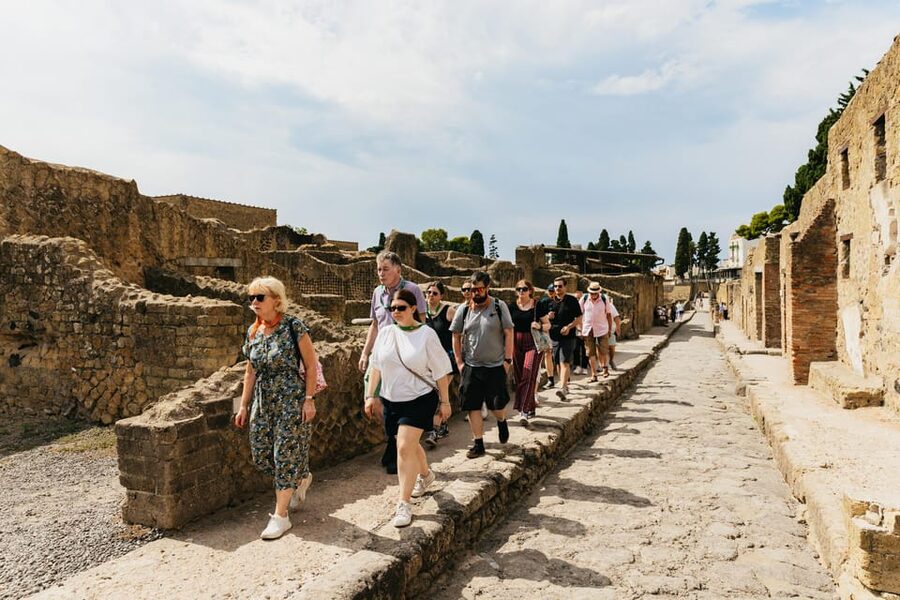
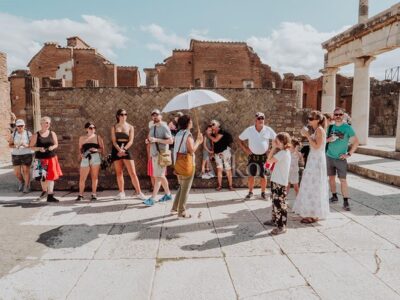
Herculaneum is the Roman city people rave about for a reason. It is compact enough to truly grasp in a couple hours, but what you see feels deeply real, because it preserves everyday spaces in a way that is not the same as Pompeii.
On this tour, you get the story of a former port town, home to wealthier merchants and nobility, whose lives ended fast when Mount Vesuvius erupted nearly 2,000 years ago. The guide helps you connect the buildings to that social world, from domestic rooms to public spaces and religious corners.
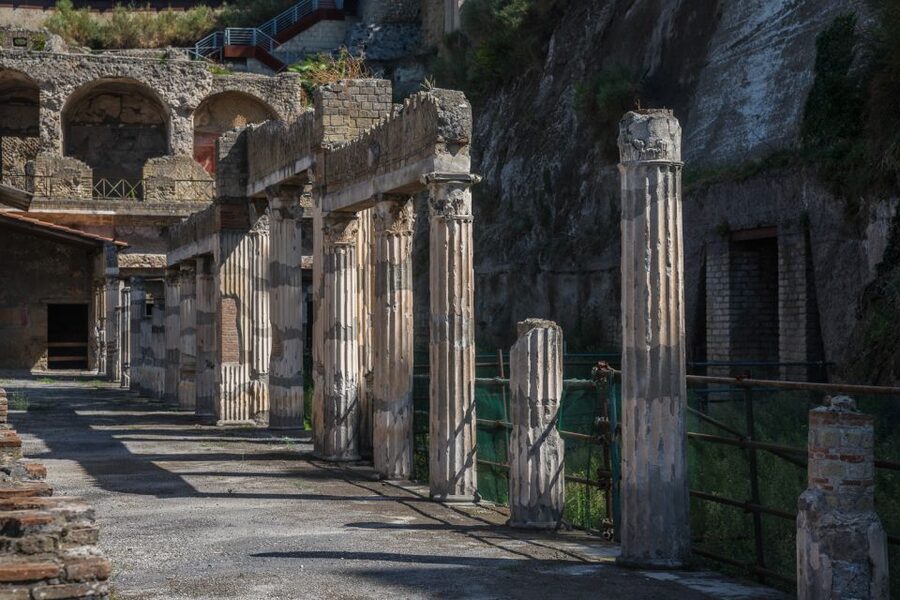
And then there is the water side of the tragedy, which is hard to forget. The waterfront area includes the remains of more than 300 people who died trying to escape by taking to the ocean. That moment adds weight to everything you have just seen, especially the houses and the public routes that led people toward safety.
More of Pompeii and the volcano that buried it:


Meeting at Via dei Papiri Ercolanesi, then getting inside quickly
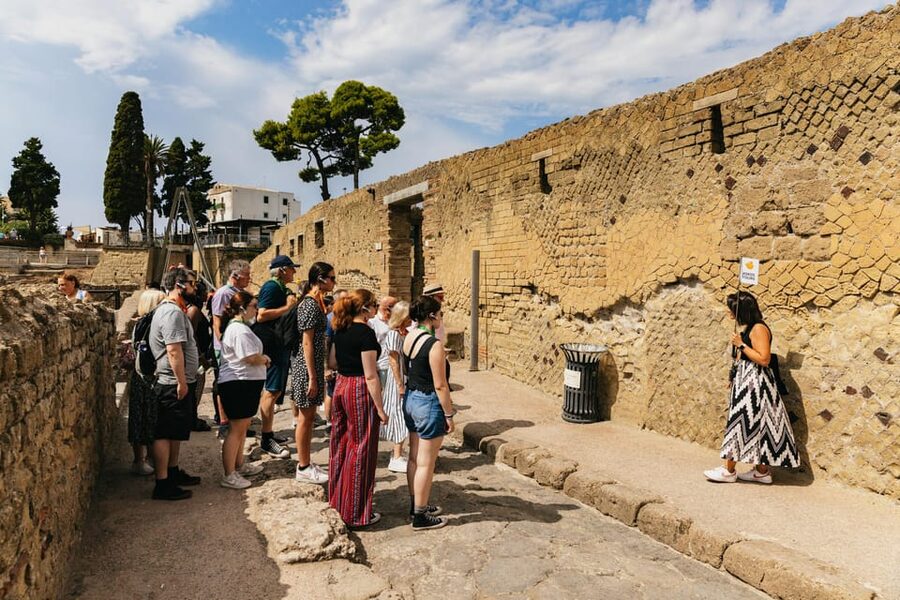
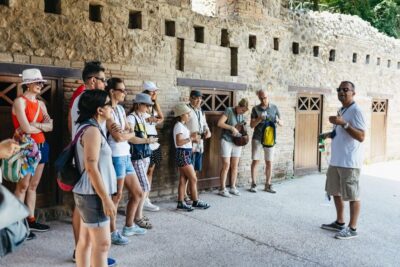
You meet at the Herculaneum ruins ticket office in Via dei Papiri Ercolanesi. Your guide holds an Askos Tours sign, so you can spot the group fast and get rolling without wandering.
The biggest practical win here is the skip-the-line access. Herculaneum can have lines, and losing even 20 minutes on a short, two-hour tour is painful. With this setup, you start seeing the site sooner and you spend your energy where it matters, inside the archaeology.
You also get headsets, which is a big deal in outdoor ruins where it is easy to lose the guide’s voice. The headset system generally works well, but if you like perfect audio, do what the better-positioned people do and stay closer to the front half of the group.
Two hours, stop by stop: how the route is built for maximum meaning
This is a two-hour guided walk through key parts of Herculaneum. It is not a slow stroll. The pace is designed so you leave with a clear map of what you saw, why it mattered, and how it connects to the eruption.
You start with the main Archaeological Site of Herculaneum, where the guide sets the scene: what life looked like before Vesuvius, what materials survived, and what changed when the eruption buried the city. Many guides also compare Herculaneum and Pompeii directly, which is honestly one of the smartest uses of your time because it keeps your brain from lumping all “Vesuvius ruins” into one bucket.
Casa dei Cervi: a strong early stop for household life
One of the first house visits is Casa dei Cervi. This is the kind of stop that helps you shift from simply admiring ruins to imagining daily routines. You see how rooms were organized, how families used space, and how the city’s status differences showed up in the quality and layout of domestic buildings.
Even if you are not a Roman history person, a good archaeologist guide will make household architecture feel logical. You start noticing patterns, like where people likely gathered, how circulation worked, and what kinds of spaces belonged to everyday living versus more formal entertaining.
Introductions we still owe you around Naples
- Naples: Naples Underground Entry Ticket and Guided Tour
★ 4.4 · 21,781 reviews - From Naples: Pompeii Ruins & Mount Vesuvius Day Tour
★ 4.3 · 11,459 reviews - From Naples: Sorrento, Positano and Amalfi Full-Day Tour
★ 4.6 · 10,988 reviews - From Naples: Sorrento, Positano & Amalfi Coast – Small Group Tour
★ 5.0 · 8,643 reviews
House of Neptune and Amphitrite: the art you can still almost feel
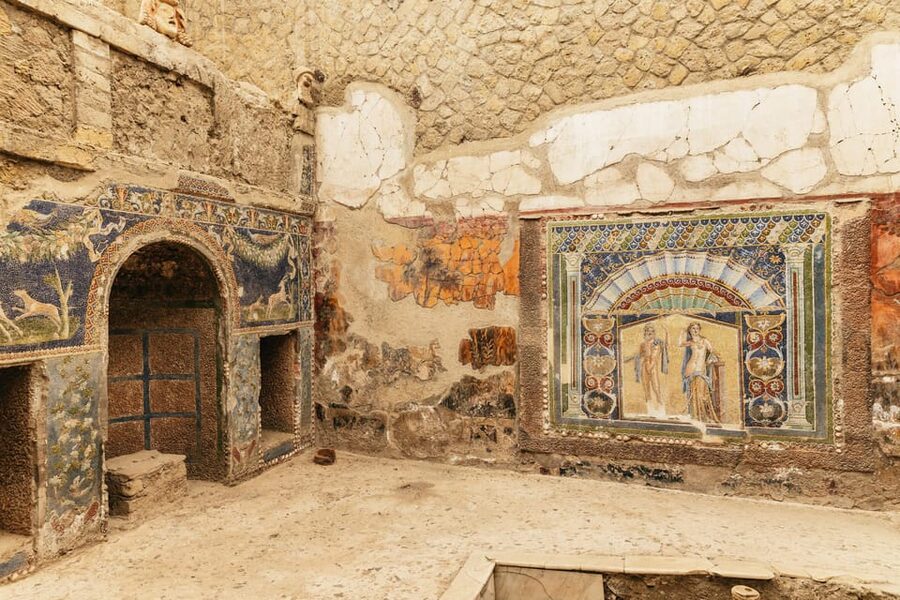
Next comes Casa di Nettuno ed Anfitrite, the House of Neptune and Amphitrite. This is one of those stops that turns the city from “ancient place” into “ancient home.”
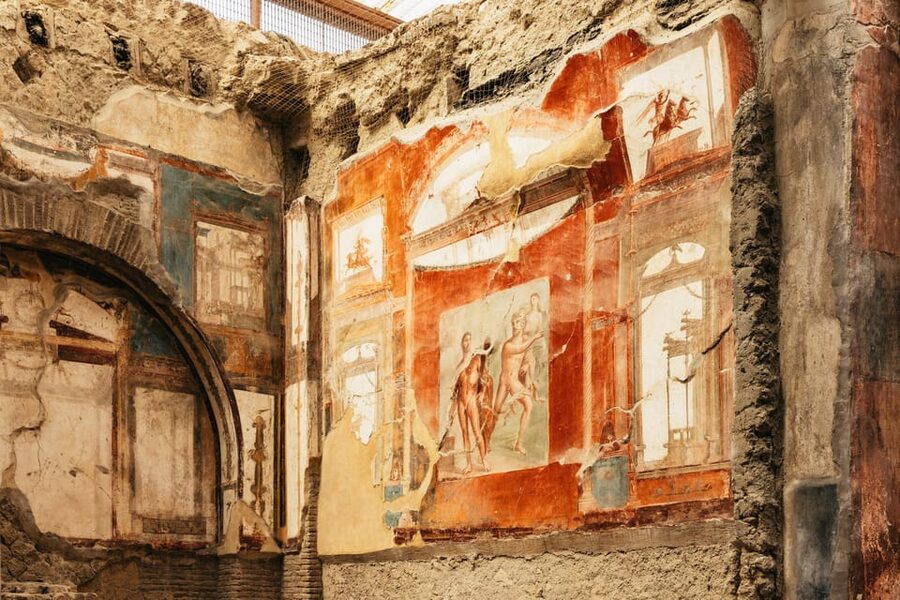
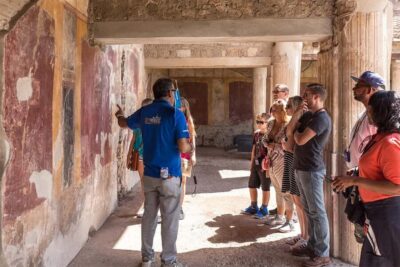
What makes it special is the way you can still see decorations and cultural signals that suggest wealth and taste. The tour highlights well-preserved artifacts, including painting and mosaic decoration. You may also hear how preservation at Herculaneum was affected by the specific nature of the event, which helps explain why certain materials survived better than you might expect.
You are also likely to hear the guide connect the imagery to Roman life and belief, so it does not feel like random decoration. It becomes a window into what residents wanted to represent, inside their own walls.
House of Skeletons: where the human story lands hardest
Then you reach the stop that hits you emotionally: the House of Skeletons. Even when you have read the eruption story before, this part of the tour tends to make it real.
The guide uses the site to explain what happened as people tried to escape. You are not just looking at a grim display. You are seeing how catastrophe played out in a street-and-house world, where decisions mattered and time ran out.
If you want context, stay close and listen closely here. The best tours at Herculaneum are the ones where you hear how the eruption trapped movement and why some areas became dead ends. That kind of explanation is often what separates a rushed visit from a memorable one.
Casa dell’Albergo and Casa del Salone Nero: status, function, and design
After the darker moments, the tour moves back into a clearer view of the city’s structure and class. Two stops mentioned in the tour include Casa dell’Albergo, Herculaneum and Casa del Salone Nero.
Casa dell’Albergo can help you understand how houses served more than one purpose, because the layout often suggests spaces used for social life and hosting. Casa del Salone Nero, the Black Hall house, is a chance to see how design and decoration communicated importance, even after disaster.
This is where Herculaneum’s reputation for preservation really helps you. You may be able to visually connect the materials you see, such as stone, marble elements, and ceramics, with the way Roman interiors were arranged. And in a spot like this, carbonized remnants, including wood and preserved wall surfaces, can give you an eerie sense of what was happening in the last moments.
Sacellum of the Augustales: a religious layer you might miss alone
The tour includes Sacellum of The Augustales. This is an essential stop if you want the site to make sense beyond households.
Religious spaces help you see how civic life and status were connected. The Augustales are part of that story, tied to the community’s worship and public identity. With a strong guide, this section becomes clear quickly because the guide explains what the group meant and how people interacted with these spaces.
If you visit on your own, it is easy to walk past religious buildings without grasping why they mattered. In a two-hour format, having a guide point out what to look for saves you from guessing.
How the tour helps you understand Herculaneum’s preservation
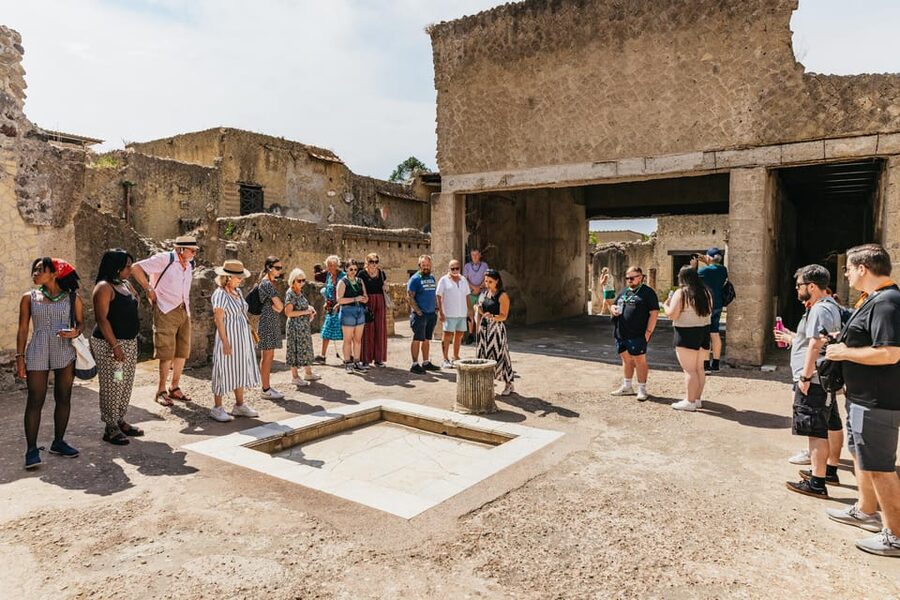
One of the most praised aspects of this tour is the way guides turn preservation into meaning. The site does not just show ruins. It shows remnants: well-preserved ceramics, paintings, and mosaics, plus the evidence of carbonized wood. That mix can be confusing if you do not know what you are seeing.
A guide like Luciano Leone is often singled out for using visuals, such as photos and overlay images, to show what the city looked like before it was destroyed and then how it appeared after burial. That sort of teaching tool helps your eyes do better work.
Here is the practical takeaway: when your guide points out an artwork or a material, stop and look longer than you think you need to. Herculaneum rewards that. Even if you only spend a few extra seconds at each highlighted area, your memory will hold onto the details.
Practical tips so you do not waste time or energy
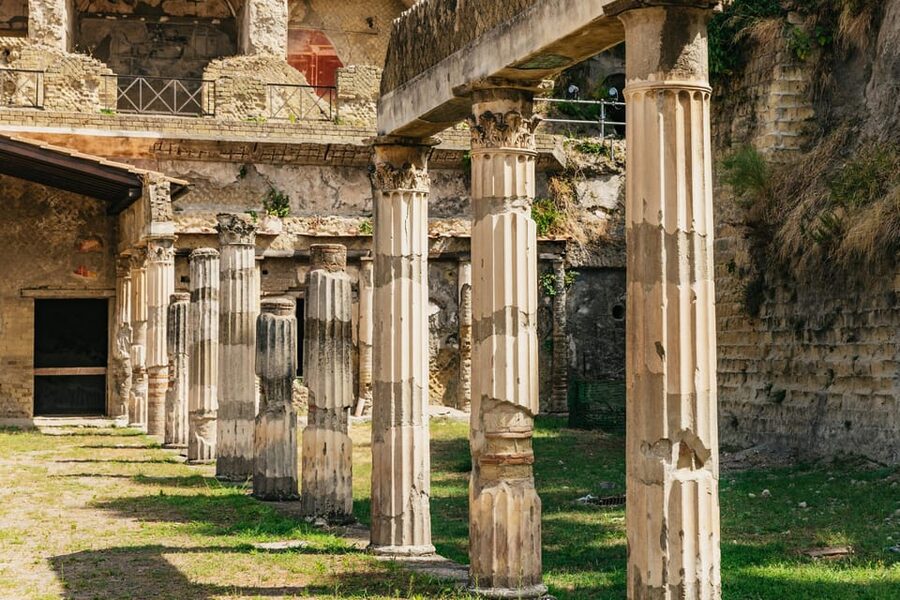
This site is vast and exposed, so you will feel the weather. The tour takes place rain or shine, so bring a raincoat if needed. Closed-toe shoes matter because the ground in ruins can be awkward underfoot, and sandals can become a problem fast.
Bring sunscreen and, if you are sensitive to sun, a hat. You are outside for much of the experience, and the sun can feel intense even when the breeze is mild.
Also plan around the rules: luggage or large bags are not allowed. If you tend to travel with extra gear, travel light for this one.
Finally, think about when you book. Herculaneum shuts down in the afternoon, and if you select a late tour time, you may not have much room to wander quietly afterward. If you want time for your own pace, consider a morning slot.
Price and value: what you are really paying for
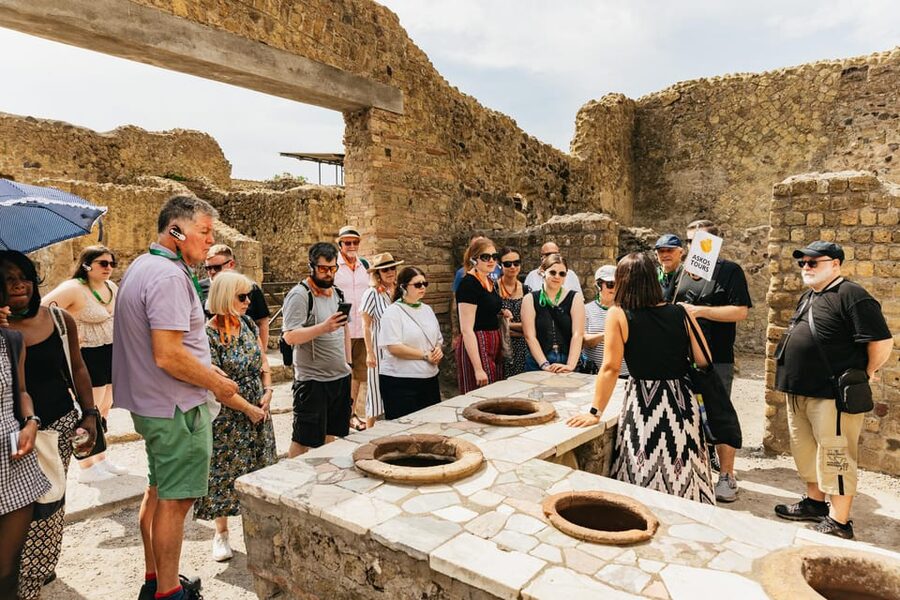
At $53 per person, this tour costs more than a basic ticket, but it is not just paying for a guide. It is paying for three things you cannot easily DIY:
1) Skip-the-line entry, which protects your short visit from delays
2) An archaeologist-led explanation, which helps you interpret houses, religious spaces, and public areas
3) A structured route plus headsets, so you cover major highlights without losing the thread
Admission fees to Herculaneum are included in the tour price. For context, the site ticket is listed as 16.00 euros for adults, and 2.00 euros for EU citizens aged 18 to 25. Since admission is already bundled here, the comparison to buying on your own comes down to whether you want a guide to turn ruins into a story.
In my mind, that is where the value lands. If you love history but hate reading plaques, this is a strong match. If you prefer total freedom with no schedule, you might enjoy a self-guided ticket more.
Who this Herculaneum archaeologist tour is best for
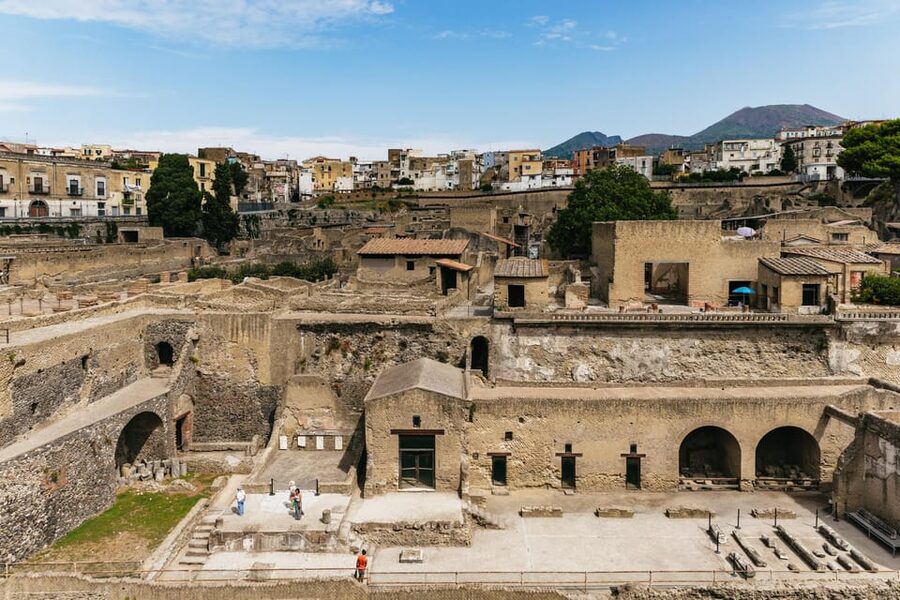
This tour is a good fit if you want clarity. You will learn about the city’s nobility and merchants, the eruption timeline, and what to look for in ceramics, paintings, mosaics, and the evidence of carbonized materials.
It is also a strong pick if you are doing Pompeii too. Many people prefer Herculaneum because it can feel more tranquil, and a comparison helps you understand why the two sites often get grouped together even though they feel different in the details.
The only clear mismatch is mobility. The tour is not suitable for people with mobility impairments or wheelchair users. And because you are walking through a site that is exposed and uneven, it is not the time for flip-flops and big bags.
Should you book this skip-the-line Herculaneum tour?
Book it if you want the most out of a two-hour window and you like your history told by people who can explain what you are actually standing in front of. The skip-the-line setup, headsets, and archaeologist-led storytelling make it feel efficient without feeling rushed.
Skip it only if your goal is slow wandering and you are happy interpreting everything yourself. If that sounds like you, you might prefer a self-guided visit.
If you are undecided between Herculaneum and Pompeii, or you plan to do both, this tour is one of the easiest ways to understand what makes Herculaneum distinctive before you move on.
FAQ
How long is the Herculaneum skip-the-line guided tour?
The duration is 2 hours.
Where do I meet the tour, and how do I find the guide?
Meet at the ticket office of the Herculaneum Ruins. Your guide will be holding an Askos Tours sign.
What is included in the price?
The tour includes a guided tour of Herculaneum, admission fees to Herculaneum, an archaeologist guide, and headsets.
What languages are available?
The live tour guide is available in English, Italian, German, Spanish, and French.
Is the tour suitable for wheelchair users or people with mobility impairments?
No. The tour is not suitable for people with mobility impairments, and it is also not suitable for wheelchair users.
What should I bring, and is luggage allowed?
Bring a passport or ID card, comfortable shoes, and sunscreen. Luggage or large bags are not allowed. Closed-toe shoes are recommended because the ruins can be difficult to walk on with open shoes or sandals.
Just introduced: the newest Naples write-ups
- Capri Boat Tour from Naples – Small Group, Swim & Relax★ 5.0 · 341 reviews
- Pompeii Guided Tour from Naples with Skip-the-Line Entry★ 5.0 · 343 reviews
- Procida Island Tour by Boat 2h 15m with Swimming and Underwater Photos★ 5.0 · 344 reviews
- From Naples: Caserta Palace Ticket and Train with Audioguide★ 4.3 · 348 reviews
- Naples Shore Excursion: Private Tour to Sorrento, Positano, and Amalfi★ 4.5 · 352 reviews
- From Naples: Capri Boat Day Trip with Drinks★ 4.7 · 354 reviews
- From Naples: Sorrento, Positano and Amalfi Tour★ 4.6 · 361 reviews
Pompeii & Vesuvius Tours, compared.
Entry Ticket and Guided Tour with an Archaeologist
Read our review →

Pompeii Small Group Tour with an Archaeologist
Read our review →
Pompeii, Amalfi Coast and Positano Day Trip from Rome
Read our review →Browse the lists this tour appears in