
Reviewed · POMPEII & VESUVIUS TOURS
Herculaneum: Tickets & Tour with a Local Archaeologist
Few ruins feel this human. Herculaneum, buried by Vesuvius in 79 AD, is one of the most exceptionally preserved ancient cities, and this tour pairs that rare site with a licensed expert archaeologist. I love how the skip-the-line entry and focused guide time help you actually make sense of what you’re seeing, not just walk around and guess.
The main drawback to plan for is the on-site walking. Even though the tour is only 2 hours, it’s a real archaeological site with uneven ground and stairs, and it’s not suitable for wheelchair users.
In This Review
- Quick hits: What makes this Herculaneum archaeologist tour special
- Herculaneum, Campania: Why this site hits differently
- Entering through Biglietteria Ercolano and getting your timing right
- Casa dei Cervi: The House of the Deer and the joy of domestic detail
- Casa di Nettuno ed Anfitrite: Reading myth through wall and floor art
- Sacellum of the Augustales: A smaller stop with big interpretive value
- House of Skeletons: Where the tragedy becomes real
- Casa dell’Albergo and the feel of an ancient town
- Final site time: Public baths, water systems, and a photo stop that actually helps
- Price and what you really get for $58 in 2 hours
- Guide quality: What the best sessions have in common
- What to bring and how to pace yourself during the walk
- Who should book this Herculaneum archaeologist tour
- Should you book this Herculaneum tour with a local archaeologist?
- FAQ
- Where is the meeting point?
- How early should I arrive?
- How long is the tour?
- Does the tour include skip-the-line tickets?
- Will I get help hearing the guide?
- What languages are available?
- What should I bring?
- Is this tour suitable for wheelchair users?
- Is free cancellation available?
Quick hits: What makes this Herculaneum archaeologist tour special
- Licensed archaeologist guidance that turns fragile details into understandable stories
- Skip-the-line tickets so you start seeing real artifacts sooner
- 2-hour structure that covers major highlights without turning into a marathon
- House-to-house walking through preserved streets, villas, and rooms with frescoes and mosaics
- Skeletons and the eruption aftermath presented with real care, not shock value
- Headsets for larger groups if the group grows beyond 11 people
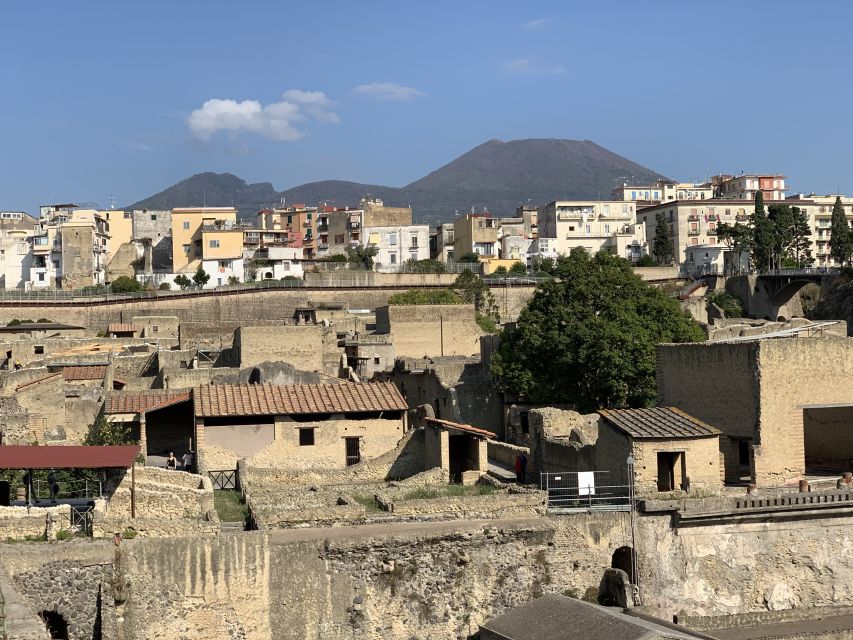
Herculaneum, Campania: Why this site hits differently
Pompeii gets most of the attention, but Herculaneum is a different kind of wow. It was a thriving Roman seaside town that got buried under volcanic material when Mount Vesuvius erupted in 79 AD. The crucial part is how the burial happened. Instead of only stone walls, you get an unusual survival of everyday stuff.
That means you can walk through places where you can still picture daily life. Think original cobbled streets, residences with upper floors preserved, and rooms decorated with frescoes and mosaics that still hold their color and pattern. The result feels less like staring at rubble and more like reading an ancient snapshot.
I also like that the tour keeps the human scale front and center. The guide does not treat the eruption like a distant headline. You’ll see places that connect directly to the final moments of people who were there, including skeletons preserved where they fell. In the best guides, that solemn material gets handled with respect, which you’ll feel in how the visit is paced.
And yes, it’s UNESCO World Heritage. But you don’t need that label to get it. The site’s preservation does the convincing.
More of Pompeii and the volcano that buried it:

Entering through Biglietteria Ercolano and getting your timing right
You’ll meet at Biglietteria Ercolano. Plan to arrive about 10 minutes early so you can check in and get ready to go right when the tour begins.
This matters more than it sounds. Because the tour is only 2 hours, you want zero dead time. The value here is not that you get “a lot of time.” It’s that you get the right amount of time in the right spots, with enough explanation to connect the dots.
Also, you’re starting at the ticket office, which keeps things straightforward. You’re not waiting around for pickups. The tour is set up as an on-site experience where your guide leads the tempo.
If you tend to struggle with noise, it’s worth knowing that your experience will depend on the group and the moment. One review noted that it could get loud at times, and that a repeat was needed to catch everything. Headsets are included if the group exceeds 11 people, which helps. Still, I recommend bringing a little patience into the mix.
Casa dei Cervi: The House of the Deer and the joy of domestic detail
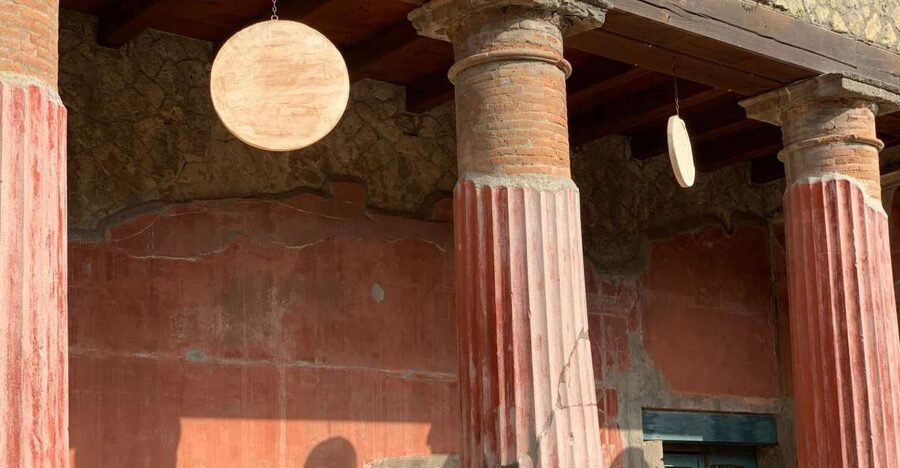
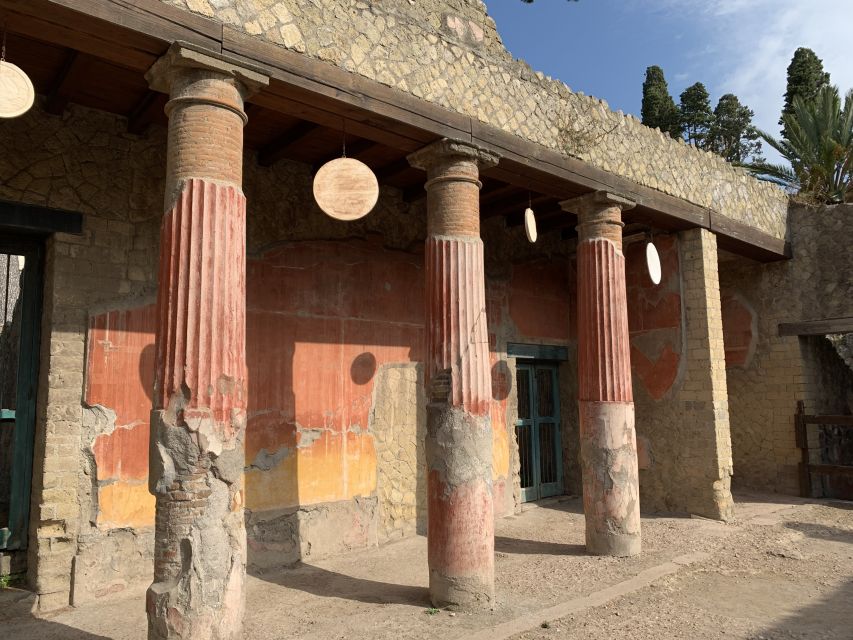
Your tour starts with Casa dei Cervi. The name translates to the House of the Deer, and it’s one of those stops where the guide’s interpretation makes a huge difference.
Here’s what you should watch for. This is a preserved villa setting, so the goal is to understand how households were arranged and lived in. When you see the house sections your guide points out, you’ll start noticing how people moved through spaces and how decoration signaled status and taste.
The payoff is not just aesthetic. You start building mental models fast:
- What this room likely meant in everyday life
- How upper floors and preserved structure affect your sense of scale
- Why certain decorative elements stand out more when you know what to look for
A well-run archaeologist-led tour can do something simple and powerful, it helps you see the place as a lived environment rather than a museum display.
Casa di Nettuno ed Anfitrite: Reading myth through wall and floor art
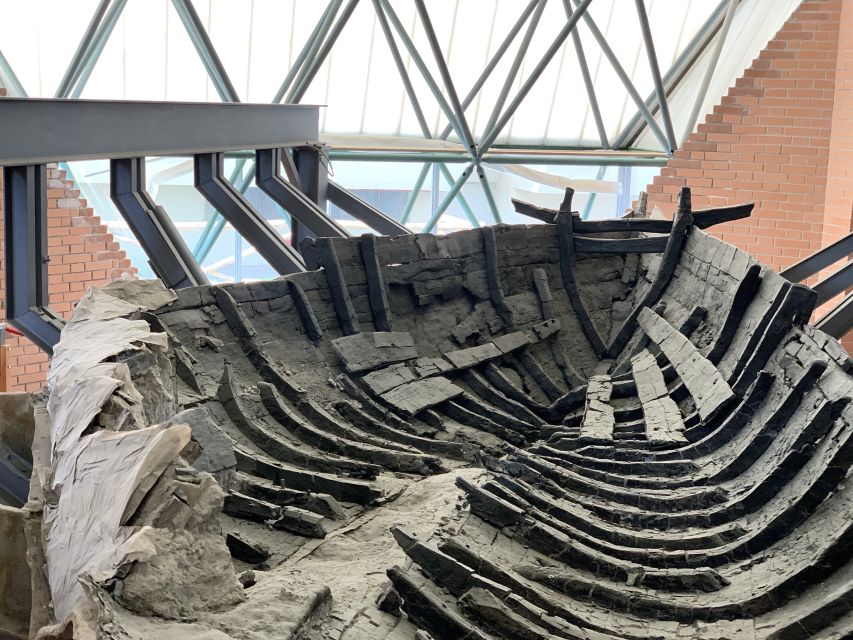
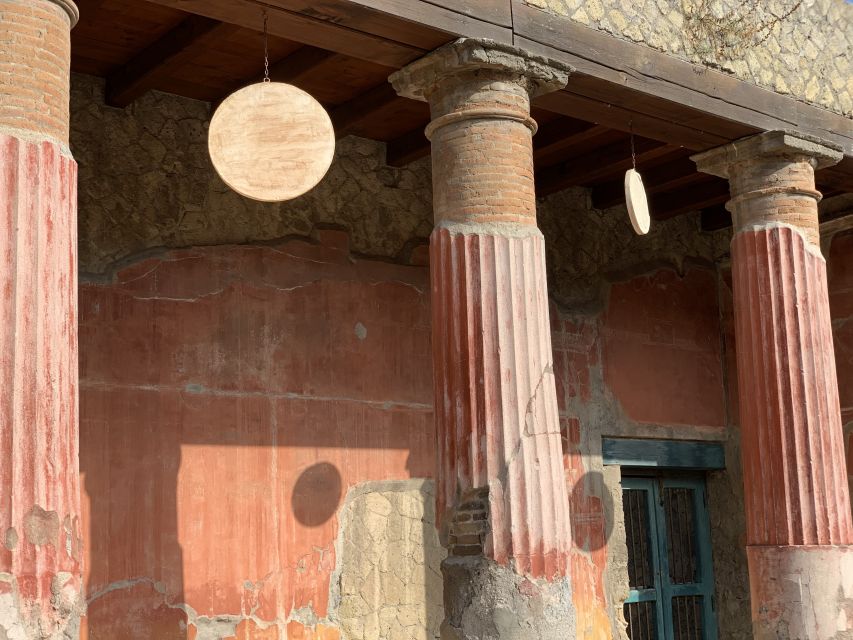
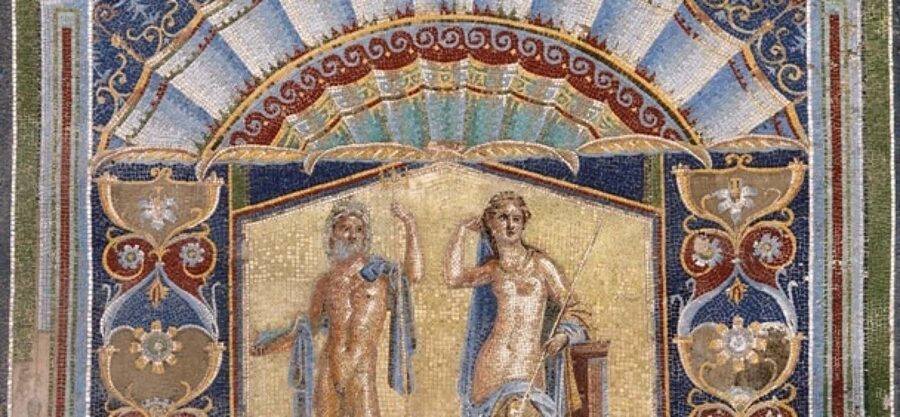
Next you’ll visit Casa di Nettuno ed Anfitrite. Neptune and Amphitrite are a pair tied to the sea and to Roman imagination, and this stop is part of what makes Herculaneum so satisfying: private homes weren’t blank. They were decorated and themed.
You’ll see rooms with frescoes and mosaics, and your guide should help you connect those visuals to the household setting. Even if you are not a classics expert, you can still follow along because the tour is built to explain what these elements do, and why they were chosen for that space.
If you care about art, this is a strong place to slow down in your head. Herculaneum’s preservation lets you see the surfaces clearly, which makes comparisons easier. If you’re also visiting Pompeii around the same time, this is often the moment where you feel the contrast in preservation and intimacy.
One practical note: the tour is tight. You won’t get unlimited time in each room, so focus on your guide’s top cues and let the explanations guide your attention.
Introductions we still owe you around Naples
- Naples: Naples Underground Entry Ticket and Guided Tour
★ 4.4 · 21,781 reviews - From Naples: Pompeii Ruins & Mount Vesuvius Day Tour
★ 4.3 · 11,459 reviews - From Naples: Sorrento, Positano and Amalfi Full-Day Tour
★ 4.6 · 10,988 reviews - From Naples: Sorrento, Positano & Amalfi Coast – Small Group Tour
★ 5.0 · 8,643 reviews
Sacellum of the Augustales: A smaller stop with big interpretive value
You’ll then go to the Sacellum of the Augustales. Even though the word sacellum suggests a shrine, don’t treat this as a quick bathroom-stop moment. Shrines and small religious spaces can tell you a lot about how communities organized belief and status.
What makes this stop work is the way the archaeologist points out details you might miss on your own. In a larger unguided visit, you might see the structure and move on. With an expert, you learn how to read the cues in the space: what it signals, how it fits into local life, and why it matters within the bigger city layout.
This is also where the guide’s storytelling style shows up. Several guides praised in reviews for being friendly, engaging, and good at explaining how people lived and how the eruption ended that life. This is the kind of stop where that skill pays off.
House of Skeletons: Where the tragedy becomes real
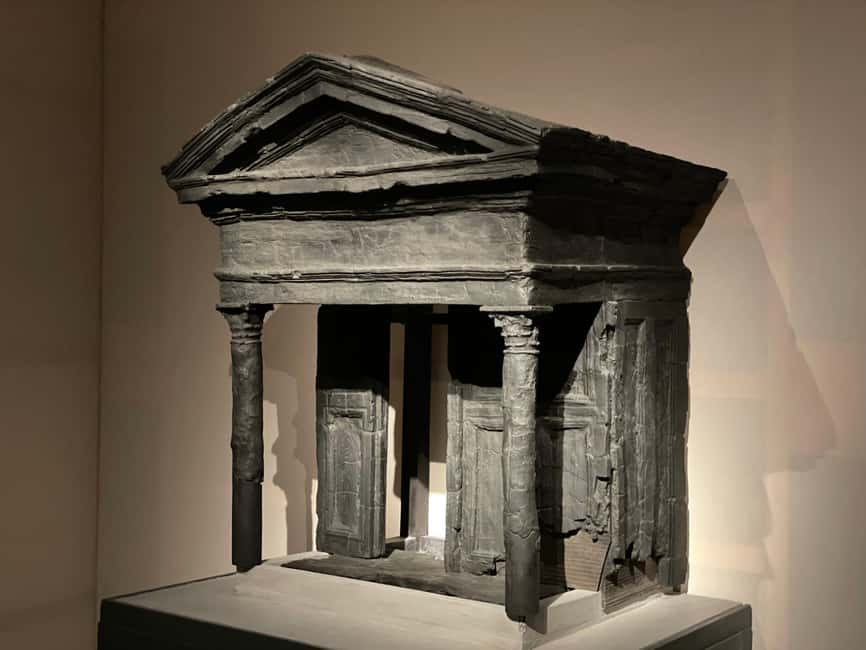
The most powerful stop is the House of Skeletons. This is where the tour’s promise turns from wow-factor to emotional gravity.
You’ll learn about the eruption’s impact through physical evidence preserved by the conditions of burial. The skeletons were found where victims fell, and that stillness is hard to replicate any other way. It’s not dramatic entertainment, it’s evidence of human presence and human loss.
More than one review made a point about the contrast with other sites where crowds can turn serious material into a selfie backdrop. Here, the atmosphere is more controlled by the guided pace, especially if you catch the tour at a quieter time of day.
If you are visiting with kids, teens, or family, this stop is also where your guide’s tone becomes essential. You want an archaeologist who can explain without sensationalizing. From the feedback on guides like Carlo and Raffaele Romano, you can expect an approach that balances clarity with respect, and keeps the focus on what the artifacts can tell us.
Casa dell’Albergo and the feel of an ancient town
After the skeleton material, the tour continues with Casa dell’Albergo, Herculaneum. This stop helps shift you from the immediate tragedy back to the lived city.
The value here is contrast. You’ve just seen the end. Now you get to see more of the normal. A villa and its built environment help you understand how people worked, hosted, and traveled through daily routines.
Your guide should connect the architecture back to the broader city. That includes the preserved sense of streets and the way neighborhoods functioned.
This is also a place to remember Herculaneum is smaller and more walkable than Pompeii. That doesn’t mean it’s easy. It means the city feels like one connected environment instead of scattered “must-see” fragments.
Final site time: Public baths, water systems, and a photo stop that actually helps
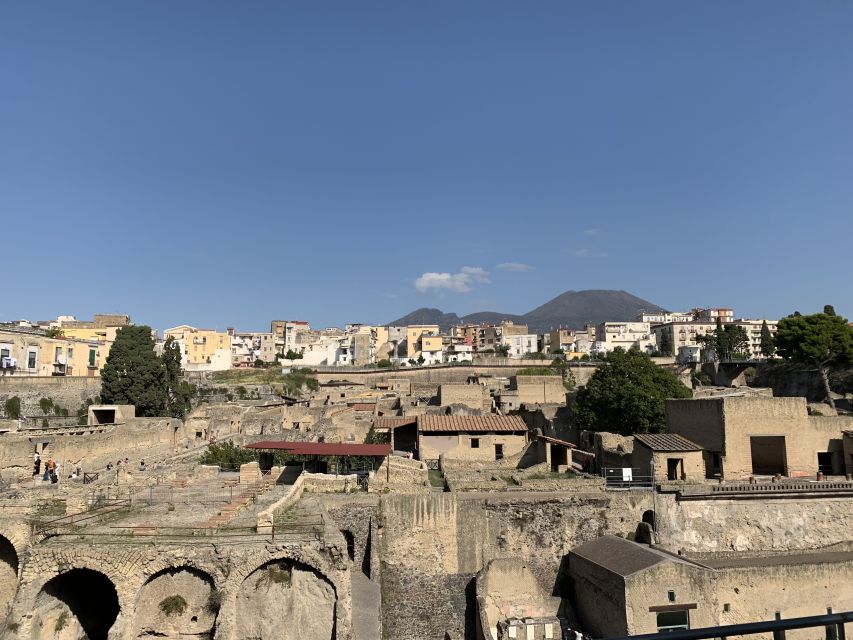
The tour culminates with an archaeological site visit and guided tour, plus a photo stop. This is the portion where you should expect wider context.
The best part is that you’re not only looking at houses. You’ll also focus on public life. The tour includes stops connected to grand public baths and the engineering of ancient water systems. That’s key. Roman daily life wasn’t just private decoration. It was infrastructure, shared spaces, and routines that held the city together.
I like that the tour explicitly helps you imagine what it was like to hear conversation and activity in places that once served as shops and taverns. Even if you cannot smell or hear anything now, your guide should give enough context that your brain fills in the blanks responsibly.
If you want photos that feel worth it, use the photo stop strategically. Pick angles where your guide has pointed out the best details. With preservation, small differences in vantage point make a big difference in how much you capture.
Price and what you really get for $58 in 2 hours
At $58 per person for a 2-hour guided visit, the value is not just skip-the-line access. The real cost saver is interpretation.
Herculaneum is the kind of place where details matter, but many of those details are hard to spot or understand without guidance. The tour is designed around that reality. You get:
- Skip-the-line entrance tickets
- A licensed guide
- Headsets when groups exceed 11 people
- A route that hits multiple preserved houses and key site areas quickly
That combination matters because the site’s preservation can tempt people to treat it like a normal photo stop. The archaeologist-guided format redirects your attention to what makes this place rare, like how the conditions preserved not only stone, but also wooden doors, beds, furniture, carbonized food, and even the skeletons.
As for crowd control, you might notice from the reviews that smaller groups often make a better experience. Some reviews mentioned a small group of eight and praised how the guide kept it engaging and paced. The headset policy is a thoughtful add-on because it helps regardless of your language comfort.
Guide quality: What the best sessions have in common
A huge number of reviews called out how much the guide makes the difference here. Names that came up include Enrica, Carlo, Giovanni, Livio, Ornella, and several guides with the kind of credentials you want for archaeology, including Dr Rafaelle Romano and Raffaele described as PhD-trained.
What they were praised for was not just facts. It was delivery:
- Explaining details in a way you can actually follow
- Keeping the tour lively without losing seriousness
- Answering questions
- Making comparisons to Pompeii in a way that clarified the contrast
One useful takeaway from the feedback is that the guide often handles pace by repeating key points when needed. That’s a small but practical service, especially if your group has mixed language levels or mixed listening comfort.
Also, if English is your main language, reviews specifically mentioned guides with exceptional English. If you are choosing Spanish, Italian, or French, expect the same structure, just in your language.
What to bring and how to pace yourself during the walk
You’ll want to pack light but smart:
- Passport or ID card
- Water
That’s it for essentials. Still, I’d treat this like an outdoor ruins walk. Wear comfortable shoes. Plan your energy for uneven ground and steps.
Also, don’t assume this is a stroller-friendly stroll. The tour states it is not suitable for wheelchair users and that electric wheelchairs are not allowed. If that affects you, you’ll need a different plan.
For most people, the 2-hour duration is a sweet spot. It’s long enough for meaning. It’s short enough that you can still enjoy Naples or a museum stop afterward.
If you are the type who gets distracted by details, you may want to let the guide set your order of priorities. The most satisfying part is how each stop builds on the last.
And if you like quieter visits, consider a time of day when crowds are lower. One review mentioned a 4 pm tour with hardly anyone on site, and that meant they could hear the guide clearly.
Who should book this Herculaneum archaeologist tour
Book this tour if you want:
- Skip-the-line entry and a time-efficient route
- A real archaeologist-led experience, not just a general guide
- A close look at preserved villas, including fresco and mosaic rooms
- A guided approach to the eruption’s human evidence, including skeletons
You’ll probably love it if you also plan to visit Pompeii later or earlier. The tour helps you understand why Herculaneum feels more intimate and preserved, instead of turning the day into a blur of stones.
It may not be your best choice if:
- You need a fully accessible route
- You want totally self-paced wandering with no structured stops
- You get frustrated if you can’t hear clearly in busier moments
Should you book this Herculaneum tour with a local archaeologist?
Yes, I’d book it if you care about seeing Herculaneum in a way that makes sense. The price is fair for what you get: skip-the-line access plus a guide who can explain why the preservation matters, and show you details you would likely miss on your own.
If you are choosing between a quick ticket-only visit and this guided format, go guided. Herculaneum is exactly the place where expert interpretation turns preserved rooms, streets, and tragic evidence into a story you can follow.
Just plan for the walking, bring water, and arrive on time at Biglietteria Ercolano. Then let the archaeologist do what they do best, making a buried ancient city feel suddenly present.
FAQ
Where is the meeting point?
You meet at Biglietteria Ercolano.
How early should I arrive?
Please arrive at the ticket office 10 minutes before the tour starts.
How long is the tour?
The duration is 2 hours.
Does the tour include skip-the-line tickets?
Yes. You get skip-the-line entrance tickets.
Will I get help hearing the guide?
If the group exceeds 11 people, you’ll receive a headset.
What languages are available?
The live tour guide is available in Spanish, English, Italian, and French.
What should I bring?
Bring passport or ID card and water.
Is this tour suitable for wheelchair users?
No. It is not suitable for wheelchair users, and electric wheelchairs are not allowed.
Is free cancellation available?
Yes. You can cancel up to 24 hours in advance for a full refund.
Just introduced: the newest Naples write-ups
- Pompeii Private Tour with an Archaeologist Guide★ 5.0 · 184 reviews
- Mount Vesuvius Tour from Pompeii Led by an Expert Guide★ 5.0 · 185 reviews
- Culinary Secrets of Backstreet Naples with Culinary Backstreets★ 5.0 · 186 reviews
- Form Naples, Premium Tour of Sorrento, Positano, Amalfi★ 5.0 · 186 reviews
- Pompeii and Mount Vesuvius excursion from Naples★ 4.6 · 188 reviews
- Naples: Pompeii Archaeology Park Tour & Skip-the-Line Entry★ 4.8 · 190 reviews
- Stories of Pompeii: Small Group tour with archeology expert guide★ 5.0 · 191 reviews
Pompeii & Vesuvius Tours, compared.
Entry Ticket and Guided Tour with an Archaeologist
Read our review →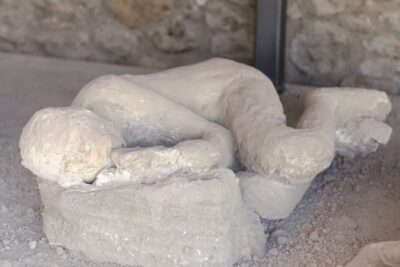

Pompeii Small Group Tour with an Archaeologist
Read our review →
Pompeii, Amalfi Coast and Positano Day Trip from Rome
Read our review →Browse the lists this tour appears in