

Reviewed · NAPLES TOURS
Paestum: Small-Group Tour with an Archaeologist and Tickets
Paestum can feel like a time machine on foot. This small-group walk through Paestum is led by an archaeologist, and I like how the guide explains what you are seeing as you move, from the three Greek temples to the later Roman city. I especially appreciate the museum focus on the Tomb of the Diver, because it turns a famous object into an actual story you can picture. The main drawback is simple: it is only 2 hours, so expect a steady pace, not a slow wander.
I also like that skip-the-line entry is built in. That matters here, because waiting in line eats into the same short time you want for temples, walls, and museum highlights. In other words, the tour is designed to keep you walking and learning, not standing around.
One more practical note before you commit. You will need comfortable shoes and you should plan on a lot of standing and walking, and it is not suitable for wheelchair users or people with mobility impairments. On the bright side, English and several other languages are offered, and for larger groups the tour provides disposable earphones so you can actually hear the guide.
In This Review
- Key Things That Make This Paestum Tour Worth Your Time
- Why Paestum’s Temples Feel Different From the Usual Stops
- Meeting at Basilica Paleocristiana dell’Annunziata (Via Magna Graecia)
- Inside the Archaeological Park: A Guided Walk Through Temples and City Walls
- Temple of Neptune to the Temple of Ceres: What to Look For
- The Roman Layer: Comitium, Amphitheater, and Civic Life
- National Archaeological Museum of Paestum: The Tomb of the Diver Moment
- Timing, Heat, and How to Keep Your Feet Happy
- Languages, Earphones, and the Small-Group Difference
- Guides You Might Meet, and Why Their Role Changes the Site
- Value for $47: What You Get for the Money
- Who This Tour Fits Best, and Who Should Choose Another Plan
- Should You Book This Paestum Tour?
- FAQ
- How long is the Paestum small-group tour?
- What is included in the tour price?
- Is transportation included?
- What do you see at the Archaeological Park of Paestum?
- How long is the museum visit, and what is the highlight?
- What languages are available for the live guide?
- Where is the meeting point?
- Is this tour suitable for wheelchair users or people with mobility impairments?
- Do you provide anything to help with hearing the guide?
Key Things That Make This Paestum Tour Worth Your Time
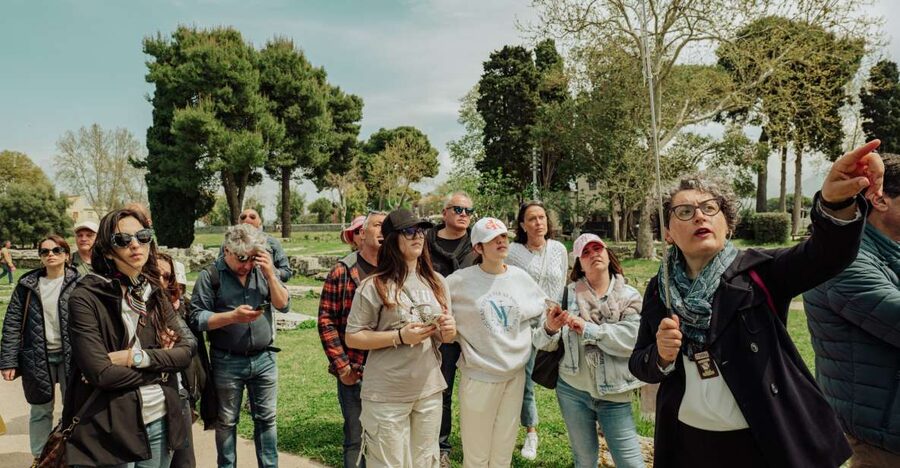
- Archaeologist-led guidance that connects temple architecture to the people who built it
- Fast entry thanks to included Paestum tickets, so you lose less time to queues
- Three standing Greek temples that are unusually well preserved in a single site
- Museum time focused on the Tomb of the Diver, not a rushed grab-bag
- Small-group pace, with earphones available if the group grows
- A clear mix of Greek and Roman remains, including walls, forum areas, and an amphitheater
Why Paestum’s Temples Feel Different From the Usual Stops
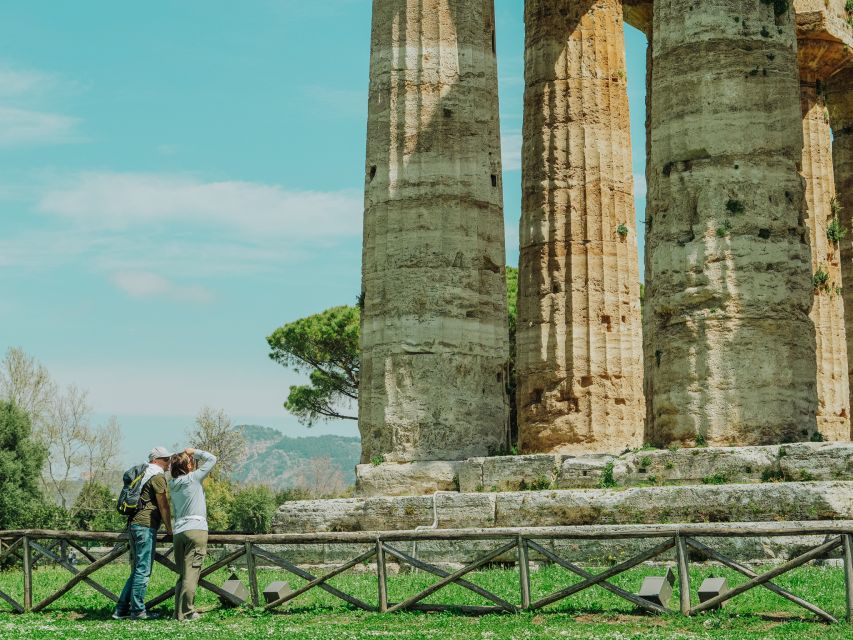
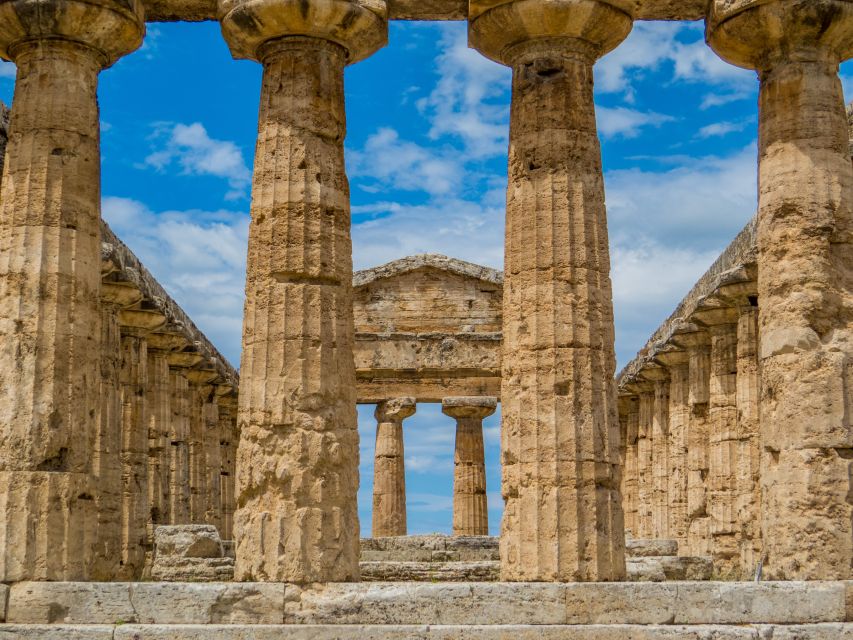
Paestum is one of Italy’s best answers to the question, What if the ruins still looked like they mattered to real people? The big reason is what you are staring at: three monumental Greek temples, still standing. They date back to the 6th century B.C., and they look tall and orderly in a way that makes the site feel less broken and more alive.
I love that the tour does not treat the temples like photo backdrops. You get the names and the architectural clues, and you also get help seeing why people would have gathered around these buildings. Even if Greek mythology is not your thing, the physical design does the storytelling for you, once someone points out what to notice.
The other thing that makes Paestum special is the way Greek and Roman layers sit side by side. You are not only seeing one era. You are reading changes across time, from early city planning to later additions like the amphitheater and civic spaces.
Introductions we still owe you around Naples


Meeting at Basilica Paleocristiana dell’Annunziata (Via Magna Graecia)
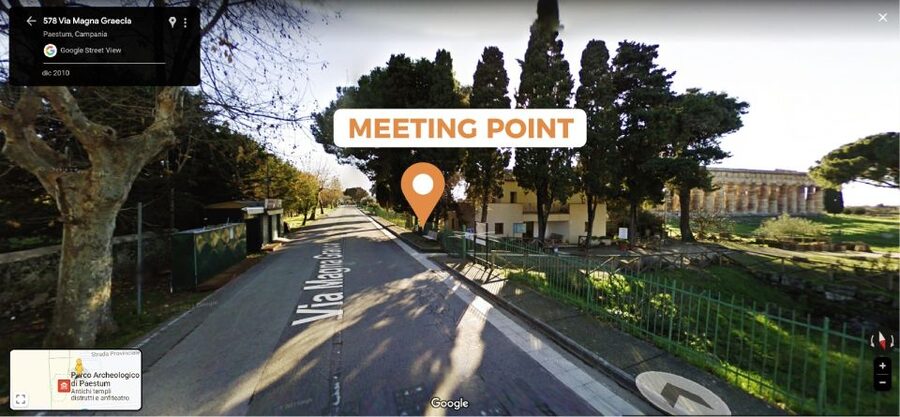
Most departures meet at Basilica Paleocristiana dell’Annunziata, Via Magna Graecia, 919. Your drop-off is listed as the same location, so you do not have to worry about ending up far from where you started.
One detail I think helps: your meeting point may vary depending on the option booked. So give yourself extra time to find the exact spot on the day. A simple trick is to take a screenshot of the meeting address and show it to a driver or someone at the basilica area if you need help.
If you are planning this tour as part of a day trip, keep it simple. Bring your water and plan to arrive ready for a walking-focused morning.
Inside the Archaeological Park: A Guided Walk Through Temples and City Walls
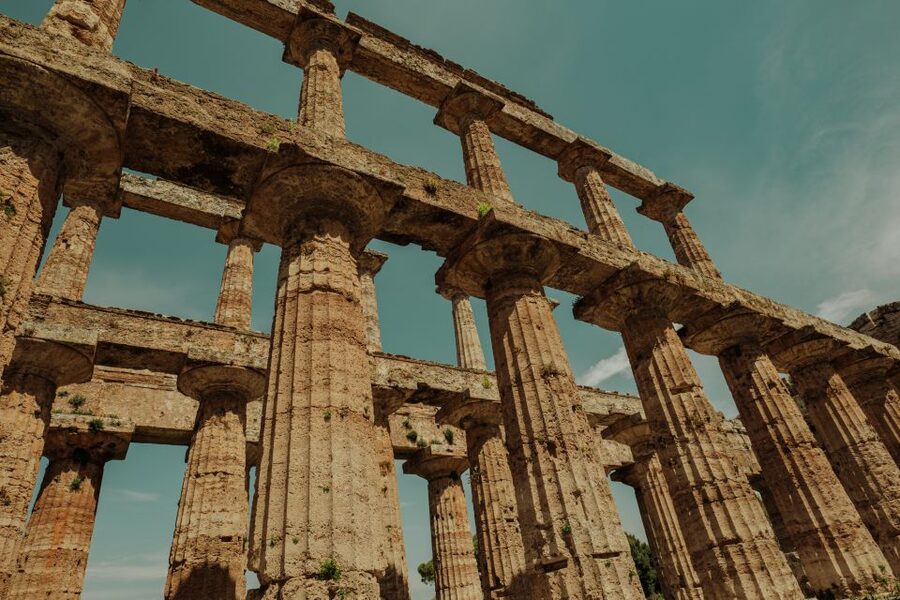
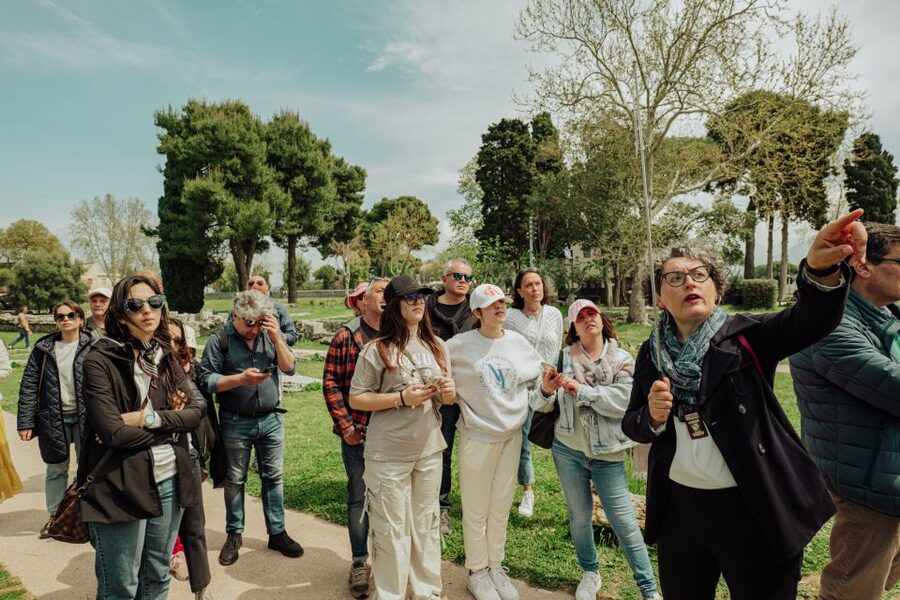
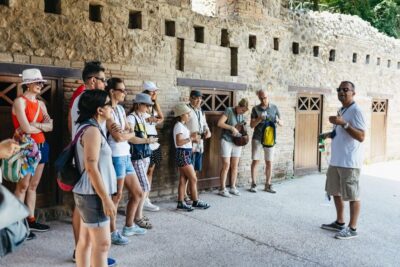
The walking portion runs about 1.5 hours in the Archaeological Park of Paestum. This is the core experience, and it is where the archaeologist guide really changes how you see the place.
Here is what the tour is built around:
- The three Greek temples, including the Temple of Neptune and the Temple of Ceres and basilica
- City walls and what they tell you about how the town defended itself and organized space
- Roman-era remains you can trace to daily life, not just big-ticket monuments
- The city’s layout elements, like the forum area and market spaces
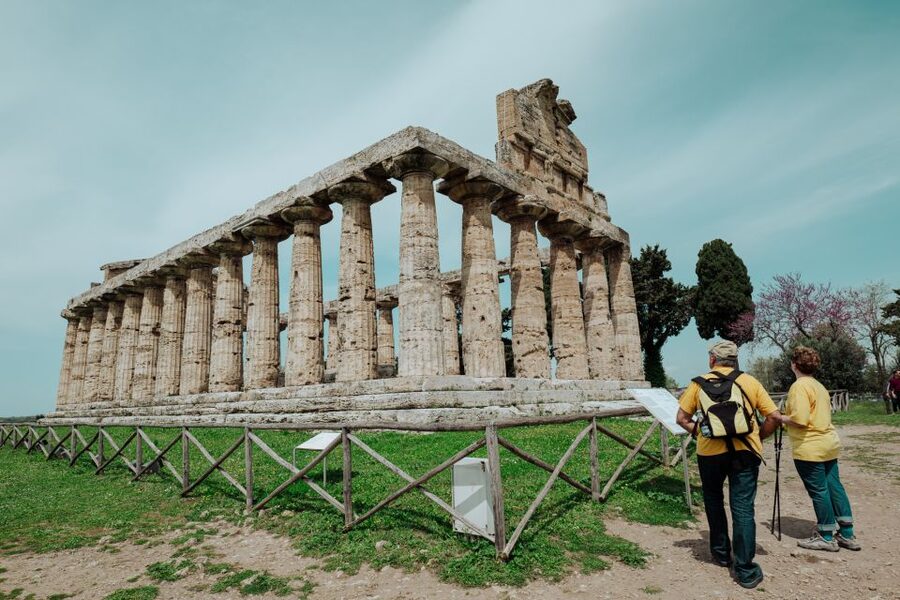
The three temples are the headline for a reason. They are some of the best-preserved Greek temples you can visit anywhere, and they create a rare “before you overthink it” moment. From a distance, they look like they belong in a museum diagram. Up close, you start noticing proportions and construction details, especially when the guide points out what makes one temple different from another.
One of my favorite parts of this format is that the guide does not only list facts. They help you read the site. You will likely spend more time looking at what you thought was random stone blocks, because someone explains how they fit into the original plan.
Temple of Neptune to the Temple of Ceres: What to Look For
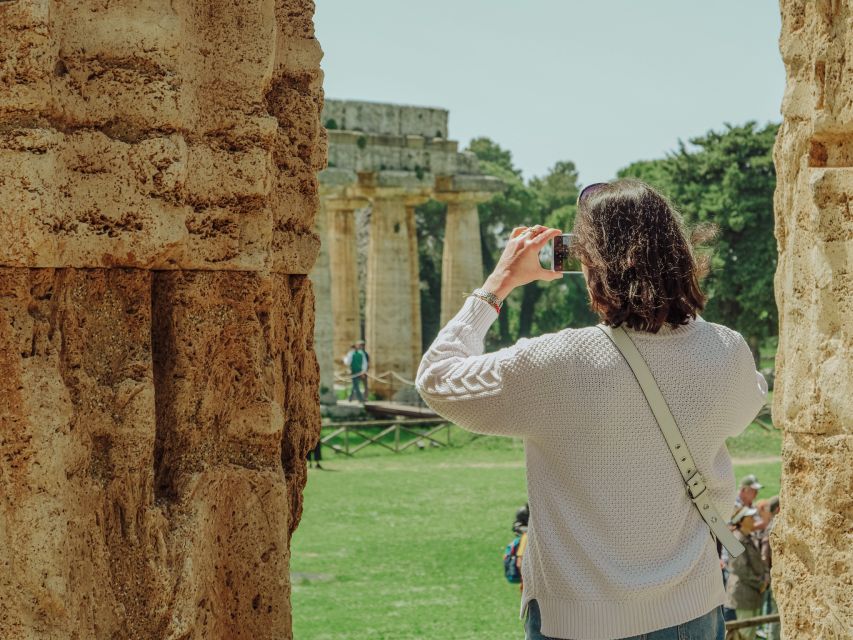
The tour highlights the three Greek temples dating back to the 6th century B.C., with the Temple of Neptune and the Temple of Ceres among the key stops. The Temple of Ceres and basilica is often compared to the Parthenon in Athens, and that comparison is useful. It helps you understand why people feel a real sense of grandeur here, not just curiosity.
If you want a practical way to enjoy this part more, do this:
- Pause for 20 to 30 seconds at each temple before moving on.
- Look for what your guide points out, then look again like you are examining a building, not a ruin.
The temples are tall, elegant, and still readable as architecture, which is what makes Paestum feel different from sites where you mostly see foundations. The tour uses that advantage well, because you get guided time at the moment the view is clearest.
Also on the Naples guest list:
- Pompeii: Small Group Tour with an Archaeologist
★ 4.8 · 12,264 reviews - From Naples: Pompeii Ruins & Mount Vesuvius Day Tour
★ 4.3 · 11,459 reviews - From Naples: Sorrento, Positano and Amalfi Full-Day Tour
★ 4.6 · 10,988 reviews - From Naples: Sorrento, Positano & Amalfi Coast – Small Group Tour
★ 5.0 · 8,643 reviews
The Roman Layer: Comitium, Amphitheater, and Civic Life
Paestum did not stop being a city after the Greek era. That is one of the best reasons to take a guided format here, because the Roman additions can feel less obvious if you are only scanning.
In the park, you will also see Roman remains such as:
- The comitium, a political assembly hall
- The amphitheater
- Other civic and urban features tied to the forum and surrounding areas
The amphitheater is especially helpful for orientation. Once you understand what that space was for, you can start placing the ruins in a human routine. It is no longer just “old stones.” It becomes a place where people gathered, argued, watched, and moved through a planned city.
And because the tour includes both the Greek temples and Roman civic elements, you can compare eras without needing extra transportation or another ticket. You leave with a more complete sense of how Paestum functioned over time.
National Archaeological Museum of Paestum: The Tomb of the Diver Moment
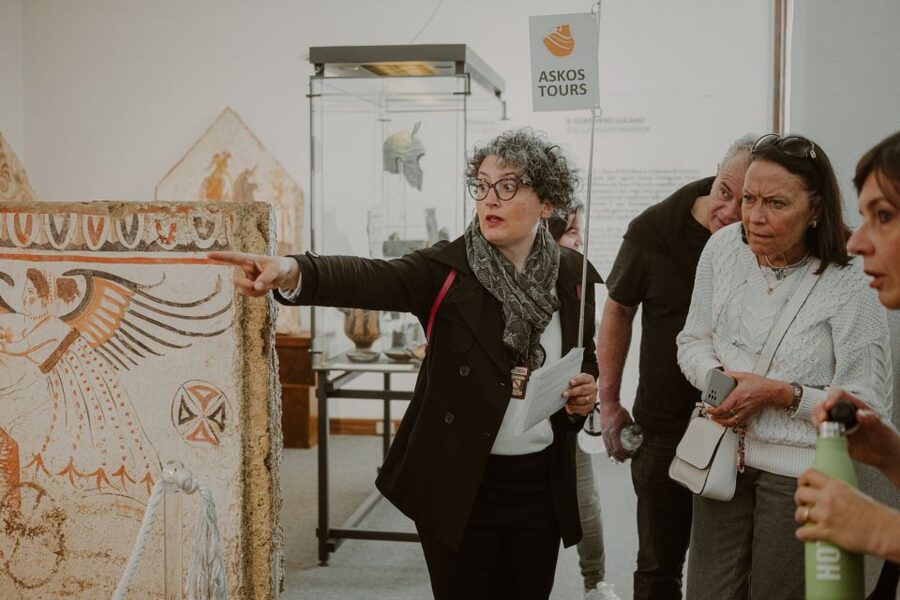
After the park, the tour moves to the National Archaeological Museum of Paestum for a guided visit of about 30 minutes. This portion is shorter by design, so I treat it like a highlight show, not a full museum marathon.
What you get here:
- A guided introduction to local Greek artworks, including pieces dating back to the 7th century B.C.
- The museum’s standout: the Tomb of the Diver
The Tomb of the Diver is the reason many people leave the museum talking. The attraction is that it is not just an artifact. It is an image you can connect to beliefs, burial practices, and the idea of story in the ancient world. With a guide, you also get help placing it in context, which makes the object feel less random.
One possible consideration: because the museum time is limited and the tour is structured around the guided portion, you may not get as much free roaming as you would on an unguided visit. If you love museums and want to linger, plan to treat this tour as a fast education first, then a second pass later if you have time.
Timing, Heat, and How to Keep Your Feet Happy
This tour lasts 2 hours total, with a split between the park and the museum. That timing works best if you accept that you are going to be on your feet and moving at a reasonable pace.
I would plan for hot weather conditions. One review experience mentioned time spent on feet in about 30°C heat, and that is exactly the kind of day where your comfort choices matter. Wear comfortable shoes you can walk in for real stretches. Bring water. And dress for sun, not for fashion.
If you have a flexible schedule, try to time Paestum earlier in your day when the light is kinder and the heat is lower. Even on a clear day, you will appreciate shade breaks where they exist and the ability to stop and listen without rushing every second.
Languages, Earphones, and the Small-Group Difference
The tour guide is listed as available in English, Italian, French, Spanish, and German. That means you can pick the language you are most comfortable with, which matters when a site is packed with names and architectural details.
A helpful detail: if the group is larger, the tour provides disposable earphones. That means you should not have to strain to hear the archaeologist, especially if the group stretches out across the ruins.
You also benefit from the small-group format. Smaller groups generally mean more back-and-forth, and you are more likely to get answers to specific questions. In Paestum, those questions often come from the same place: Why does this temple look different? What is this civic area for? What changed when the Romans arrived?
Guides You Might Meet, and Why Their Role Changes the Site
This is not a sightseeing-only tour. It is explicitly led by an archaeologist, and the names that show up in guide experiences include Mario, Maria, Ivan, Francesco or Francesca, Silvia, Angelo, and Nan, among others.
What I find valuable in archaeologist-led guiding is that the explanation style tends to be practical. Instead of only telling you dates, the guide helps you connect materials, design, and layout to human decisions. You start noticing how ruins “behave” in your field of view, and you stop treating the site like a checklist.
When you can hear the guide clearly and the group is small, those explanations stick. The temples stop being three shapes and become a system.
Value for $47: What You Get for the Money
At $47 per person, this tour is priced in a way that makes sense for a short, high-impact archaeological stop. The key value driver is that it includes the guided tour and skip-the-line Paestum entry ticket.
Without included tickets, you would likely pay entry anyway, and you would spend extra time navigating and waiting. With a guide, you also get a structured experience that compresses a lot of interpretation into a 2-hour window. That is the real bargain: expert context paired with efficient timing.
Also consider this: Paestum is not always the first Italian ruin people pick compared to better-known names. That can actually help you, because you can spend your limited energy on learning rather than coping with crowd chaos.
If you are traveling with limited time, this tour is a solid “use your hours wisely” choice.
Who This Tour Fits Best, and Who Should Choose Another Plan
This format fits best if you want:
- A guided introduction to Greek and Roman Paestum in one morning
- The chance to focus on the park highlights plus the museum’s best artifact
- A small-group pace where it is easier to hear questions and answers
It may not fit if you:
- Need wheelchair access or mobility accommodations, since it is not suitable for wheelchair users
- Prefer a slow, unguided museum experience where you can browse freely for an hour or more
If you are traveling with kids, the guided approach can work well because the guide’s job is to keep the site understandable and engaging. The key is that the format still involves standing and walking, so bring patience and snacks outside the tour if needed.
Should You Book This Paestum Tour?
I would book it if Paestum is on your itinerary and you want the most meaning from your time there. The combo of archaeologist-led guiding, included tickets, and a museum stop focused on the Tomb of the Diver makes this a high-value way to see a site that can feel confusing if you wander alone.
I would think twice if you want long museum free time or if your mobility limits make a 2-hour walking-and-standing plan tough. In that case, look for a more flexible pace or a different format.
For most people, this is a smart booking: you get the temples, the Roman story layers, and the museum’s biggest reason to care, all without turning your day into a queue-and-rush workout.
FAQ
How long is the Paestum small-group tour?
The tour lasts about 2 hours.
What is included in the tour price?
It includes a guided tour with an archaeologist and skip-the-line Paestum entry tickets.
Is transportation included?
No, transportation is not included.
What do you see at the Archaeological Park of Paestum?
You get a guided visit of about 1.5 hours that includes the three Greek temples, city walls, and Roman ruins such as the comitium and amphitheater.
How long is the museum visit, and what is the highlight?
The National Archaeological Museum of Paestum visit is guided for about 30 minutes. The highlight is the Tomb of the Diver.
What languages are available for the live guide?
The tour offers live guiding in English, Italian, French, Spanish, and German.
Where is the meeting point?
The meeting point may vary by option booked, but one listed option is Basilica Paleocristiana dell’Annunziata, Via Magna Graecia, 919. Drop-off is listed as the same location.
Is this tour suitable for wheelchair users or people with mobility impairments?
No. It is not suitable for people with mobility impairments or wheelchair users.
Do you provide anything to help with hearing the guide?
Disposable earphones are provided for larger groups to help you hear the guide better.
Just introduced: the newest Naples write-ups
- Capri Boat Tour from Naples – Small Group, Swim & Relax★ 5.0 · 341 reviews
- Pompeii Guided Tour from Naples with Skip-the-Line Entry★ 5.0 · 343 reviews
- Procida Island Tour by Boat 2h 15m with Swimming and Underwater Photos★ 5.0 · 344 reviews
- From Naples: Caserta Palace Ticket and Train with Audioguide★ 4.3 · 348 reviews
- Naples Shore Excursion: Private Tour to Sorrento, Positano, and Amalfi★ 4.5 · 352 reviews
- From Naples: Capri Boat Day Trip with Drinks★ 4.7 · 354 reviews
- From Naples: Sorrento, Positano and Amalfi Tour★ 4.6 · 361 reviews
Naples Tours, compared.

Naples Underground Entry Ticket and Guided Tour
Read our review →
Entry Ticket and Guided Tour with an Archaeologist
Read our review →

Sorrento, Positano and Amalfi Full-Day Tour
Read our review →
Sorrento, Positano & Amalfi Coast – Small Group Tour
Read our review →
Catacombs of San Gennaro Entry Ticket & Guided Tour
Read our review →Browse the lists this tour appears in