
Reviewed · MOUNT ETNA EXCURSIONS
2002 Crater Excursion – Northern Etna
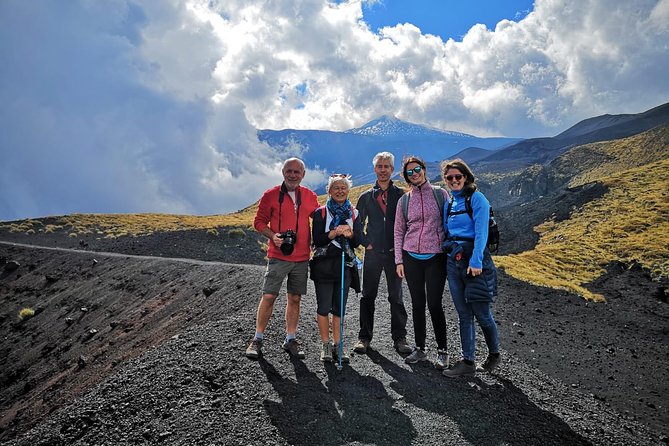
One good hike and you get the whole Etna story. This 3-hour northern Etna excursion takes you from Piano Provenzana to the 27 Oct 2002 lava path, crater edges, and eruptive fracture, with an authorized volcanological guide and plenty of teachable moments on the way. I really love how the route stays on the less-crowded north slope, and I love the way the guides like Giuseppe and Luca turn geology into a hike you can actually enjoy. The main thing to watch is vertigo and footing, because the path can get steep near crater edges, and you need solid trekking shoes for safety.
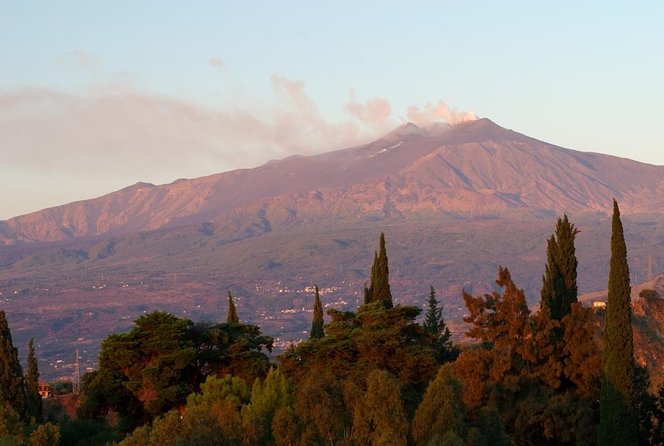
The setting helps. Piano Provenzana is quieter than many Etna starting points, sitting among pines with dramatic lava fields shaped by the October 2002 eruption. It is also practical: you have cafés for a coffee or quick breakfast, and places to refill water before you head out.
With the right gear, this becomes a very good value. At $43.55 per person for a guided volcano walk plus accident insurance, you are basically paying for expert guidance and time on the mountain, not for a bunch of extra frills. Just be ready for volcanic terrain that is sometimes coarse and uneven, and expect the route to shift if weather or volcanic conditions change.
In This Review
- Key highlights you will feel on Etna north
- Price and what your money actually buys on this Etna hike
- Piano Provenzana, the calm starting point on Etna’s north side
- Stop 1 and the rhythm of the pre-hike briefing
- The main hike across the 27 Oct 2002 lava flow (and why it feels real)
- 1911 craters, deep shafts, and the part that can trigger vertigo
- The descent through ash channels, beech forest, and ski slopes
- Who this northern Etna crater excursion is best for
- What to bring for comfort, safety, and accident insurance coverage
- Group size and guide style, why your hike feels easier
- How long it really takes, and what affects your pace
- Should you book the 2002 Crater Excursion on Northern Etna?
- FAQ
- How long is the Northern Etna 2002 Crater Excursion?
- What is the distance and elevation for the hike?
- Where is the meeting point?
- What time does the tour start?
- What is included in the price?
- What should I pay for that is not included?
- Do I need trekking shoes, and is there a rental?
- Is the tour offered in English?
- Is this hike okay for everyone?
Key highlights you will feel on Etna north
- North slope pacing: about 2.5 to 3 hours of hiking on a 5 km round trip with roughly 300 m of climb and descent
- 2002 eruption focus: walk across the 7.2 km lava flow from the 27 Oct 2002 eruption, including areas where old facilities are buried
- Crater-edge viewpoints: you get close to eruptive features, including a 1911 crater chain with deep shafts and the 2002 eruptive fracture
- Guide energy matters: the best moments come from guides who mix facts with humor and timed breaks
- Small group size: capped at 20 travelers, which keeps the hike easier to manage and more personal
- Gear can make or break it: trekking shoes are available to rent on site, but accident insurance depends on adequate footwear
Price and what your money actually buys on this Etna hike
At $43.55 per person for roughly 3 hours total, this tour is priced like a straightforward guided hike, and that is exactly what it is. You get an authorized volcanological guide and accident insurance. You do not pay extra for fancy transportation or a long ride loop, which keeps the focus on the mountain itself.
Where this becomes good value is the combination: a real north-side route that often feels calmer than Etna’s busier access points, plus a guide who explains what you are stepping on. In the reviews, that guide factor shows up again and again, with people praising both humor and clear, practical explanations.
Two small budget notes. Trekking shoes cost €5 to rent on site, and parking fees are separate (about €5 on weekdays, €8 on Sundays and public holidays). If you show up in flimsy shoes, the insurance coverage note matters, so your savings can evaporate fast.
Etna again, by a different flank:
Piano Provenzana, the calm starting point on Etna’s north side
Piano Provenzana is your base, and it sets the tone for the whole hike. This north-side area is reachable on fully paved public roads, and it is surrounded by pine forest with lava fields that were reshaped by the October 2002 eruption. After that eruption, older facilities were destroyed, leaving a dramatic, still-visible volcanic scene with historic interest.
You also get practical downtime before the walk. There are souvenir shops, cafés, and bars where you can grab breakfast or coffee, plus spots to refill water bottles. Parking areas are clearly marked (blue-lined), and meeting your volcanology guide on site is simple.
The big advantage is that this start point is often less crowded. When Etna feels busy, the hikes can start to feel like a line. Here, the pace can stay more human, which helps when you are scanning the ground for safe footing.
One thing to consider: the hike begins in the morning, with a start time of 9:15 am at the Ufficio Guide Vulcanologiche Etna Nord, Via Provenzana, 35, 95015 Linguaglossa CT. If you are coming from farther away, build in buffer time so you arrive rested, not rushing.
Stop 1 and the rhythm of the pre-hike briefing
Before you move, you get around 30 minutes at Piano Provenzana. This is not just waiting around. It is time to meet the guide, get your bearings, and understand how to treat volcanic soil, which can be incoherent and unstable.
That last point is not trivia. When the ground looks dry and solid from a distance, it can still crumble under a misstep. The briefing is where you learn how to handle that reality, so you spend your energy hiking, not worrying.
If you are coming in with the right footwear, this part feels easy. If you are under-shoed, it is the moment to fix it, because the notes on adequate shoes are tied to safety and accident insurance coverage. This is also when long pants can help, since the terrain can be rough and rocks can be irregular.
The main hike across the 27 Oct 2002 lava flow (and why it feels real)
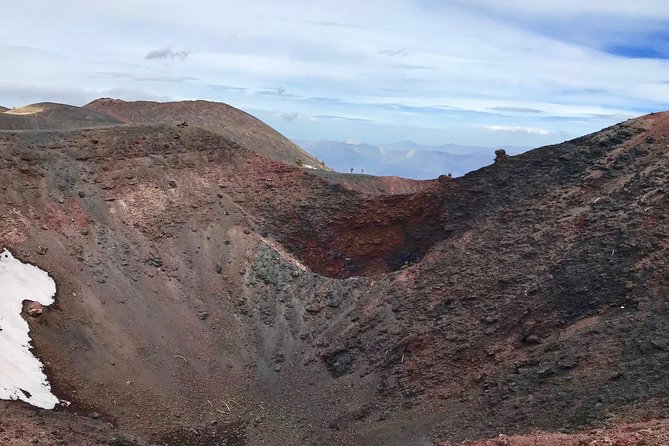
The heart of the excursion is the guided trek from Piano Provenzana into the north side volcanic terrain. The hike is about 5 km round trip, with roughly 300 m ascent and descent, and you can expect 2.5 to 3 hours of walking time. You are not just walking in a volcanic park. You are walking across specific eruptive ground.
The route crosses the vast 7.2 km lava flow from the 27 October 2002 eruption. You will pass through areas where modern structures were buried, and the scale gets serious fast. One striking detail from the route description is that hotels, shops, restaurants, and a large car park ended up under the lava, with only a roof of one hotel remaining visible. Seeing that in person is one of those reminders that volcanic events are not abstract.
You also hike through forested stretches, then into older flows. The itinerary includes the 1911 and 1923 lava flows, which helps you see Etna as a continuing story, not a single moment frozen in time.
This is where the guide becomes essential. The best Etna walks explain what you are seeing in plain language, and they connect the geology to your steps. If your guide like Giuseppe or Luca brings humor into the mix, it makes the slower moments fun too, especially when you stop for explanations or photos.
Introductions we still owe you around Sicily
- Palermo: NO Mafia Walking Tour
★ 4.8 · 2,431 reviews - Palermo: Hop-on Hop-off Bus Tour 24-hour Ticket
★ 3.9 · 2,410 reviews - From Trapani: Cruise to Favignana and Levanzo with lunch
★ 4.2 · 2,286 reviews - Palermo Original Street Food Walking Tour by Streaty
★ 5.0 · 2,105 reviews
1911 craters, deep shafts, and the part that can trigger vertigo
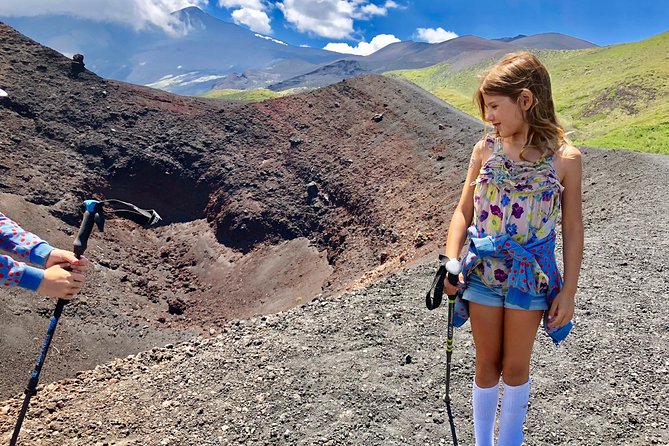
As you continue, you reach a chain of 1911 craters with shafts 7 to 40 m deep. This is one of the most dramatic sections of the hike, because you are near vertical features, not just on broad lava sheets.
Then you climb toward the crest of the huge 2002 eruptive fracture. Here, the canyon-like path is strewn with volcanic bombs, and the route description notes other large explosive mouths reaching up to about 2,100 m. It is an intense visual moment, and it is also physically manageable for most people, because the route is designed as an “easy” hike in terms of technical climbing. Still, it is not a stroll.
The main consideration is vertigo. The route foresees ascent and passage along crater edges, and the notes explicitly warn that sensitive subjects might have problems. If you know you struggle with heights, tell your guide early. They can guide pacing and help you focus on safe foot placement.
The descent through ash channels, beech forest, and ski slopes
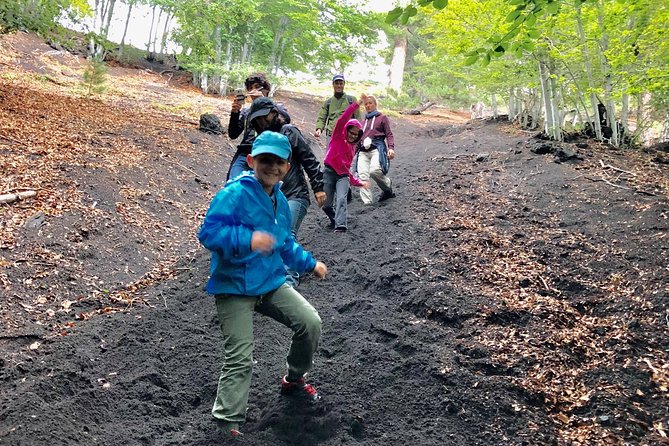
After the higher eruptive areas, the hike turns into a controlled descent. You go down via soft ash channels through beech forest and past ski slopes back toward the start point.
This part matters more than people think. Descents are where feet and knees get tested, especially on loose volcanic material. In the reviews, one person wished they had taller boots for downhill comfort, and another wanted hiking sticks for the lava rock crossings. You do not need to overbuy gear, but you should respect the terrain.
Also, keep an eye on irregular rocks. Even when the route is not technically difficult, volcanic ground can shift. Long pants help with minor scrapes, and trekking poles can add stability if you use them.
Weather can change how the descent feels. One review mentions the outing ending in hail. That is not a forecast promise, but it is a reminder that you should pack like conditions might get rough.
Who this northern Etna crater excursion is best for
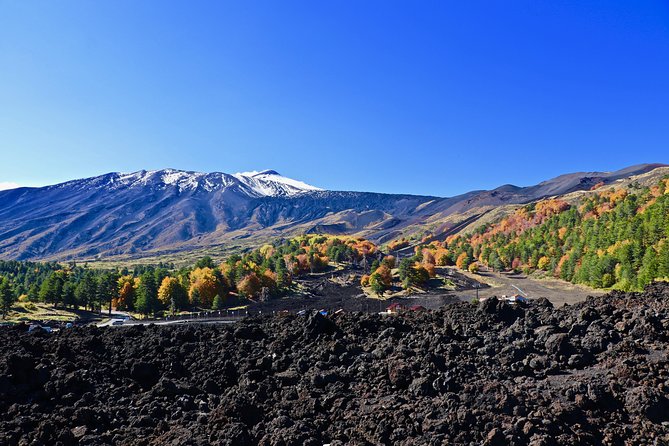
This tour is described as suitable for people in good physical health who do not have particular pathologies related to cardio vascular, respiratory, or hypertension issues. It also says trekking is not recommended if you usually do little motor activity.
So, who is it for in real life?
- If you want a volcano hike with a guide explaining the eruption and the landforms, this fits well.
- If you like shorter, focused hikes instead of all-day adventures, the 2.5 to 3 hour trekking block is a sweet spot.
- If you prefer quieter Etna access, the north slope is often the smarter choice.
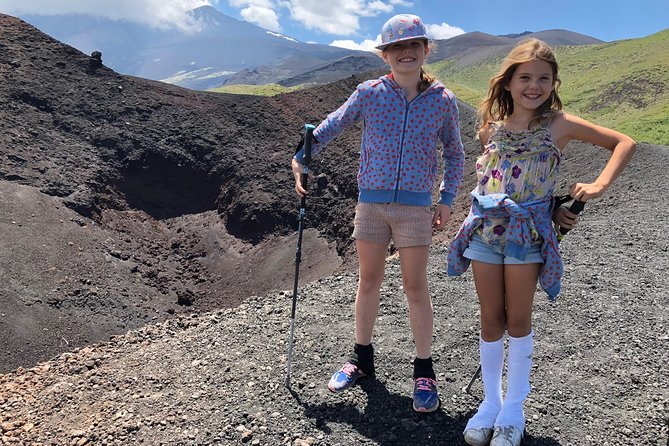
You can also make it work for families, with the caveat that kids still need good shoes and you need to watch pacing. One review said the tour was manageable with children. Another review highlighted a fun, playful finish that turned the hike into an experience everyone remembered.
Pets depend on the type of animal. The tour data says service animals are allowed. If you plan to bring a companion animal, follow that rule and be ready with whatever documentation your local provider might ask for.
What to bring for comfort, safety, and accident insurance coverage
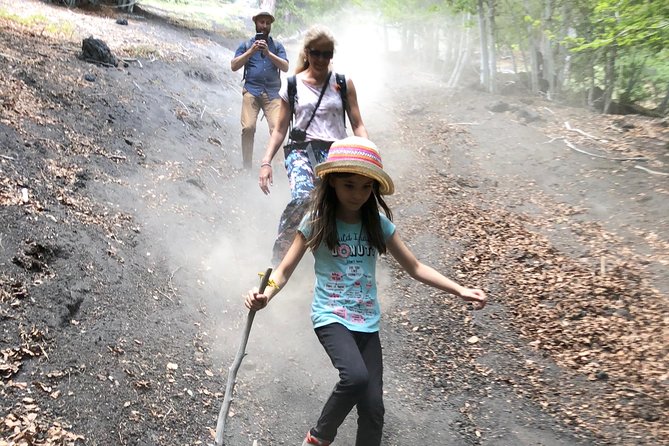
You do not need to show up with glacier gear, but you do need the basics right. The tour notes explicitly caution that without adequate shoes you are not covered by accident insurance. Even if you plan to rent, arrive prepared to choose the right rental size.
Bring or rent:
- Trekking shoes (rental available for €5 on site)
- A hat and gloves especially in winter, spring, and autumn
- Long pants, since rocks can be irregular and coarse
You might also consider trekking poles. They are not listed as included, but they can be useful on descents and on uneven crossings. One review specifically suggested sticks for lava rock crossing comfort.
Water is not included, so plan for it. Bottled water is not part of the tour, but Piano Provenzana has spots to refill bottles, which helps.
Finally, pay attention to vertigo risk near crater edges. That is not weakness. It is a safety reality. If you are sensitive to heights, plan to move slower and keep your eyes focused on safe ground and your guide’s cues.
Group size and guide style, why your hike feels easier
This experience caps at 20 travelers, which is a big deal for a crater-edge hike. Small groups mean you get more control and fewer bottlenecks at narrow sections, especially when the guide stops for explanations or photos.
The reviews consistently praise the guide style. People talk about humor mixed with facts, patience, and breaks at exactly the right times. That timing matters because volcanic terrain can feel repetitive if you never stop to learn what you are seeing.
One reviewer described the guide as a comedian plus tour guide, with facts, pictures, and frequent context about the 2002 eruption and the volcano’s current activity. Another reviewer praised how breaks made the hike doable, and even mentioned tips for steep areas on the way down.
Your takeaway: pick the tour date that matches your energy, wear your shoes, and lean into the guide. When the guide is strong, the volcano stops being a background and becomes the main character of your walk.
How long it really takes, and what affects your pace
The hike itself is about 2.5 to 3 hours, and the route is roughly 5 km round trip with around 300 m of ascent and descent. The tour also notes that the total duration depends on your gait.
So if you are a steady walker, you can treat the listed time as realistic. If you move slower, stop often for photos, or need extra care near crater edges, you might take longer within that range.
Weather also changes the day. The excursion may be changed at the discretion of the guides or interrupted if environmental, atmospheric, or volcanic conditions change to compromise group safety. This is not a flaw in the itinerary. It is responsible mountain management.
Should you book the 2002 Crater Excursion on Northern Etna?
Book it if you want a guided, real-world Mount Etna walk that focuses on the 27 October 2002 eruption and the north slope’s quieter feel. The best reason is value for money: for a little under 4 hours total, you get expert guidance, accident insurance, and time on eruptive terrain that you cannot really fake from a viewpoint.
Skip or reconsider if you have vertigo, if you usually do little walking, or if you cannot get adequate trekking shoes. Volcanic ground plus crater-edge sections is not where you want to improvise.
If you match the fitness level and gear needs, this is one of the more satisfying Etna options: you leave with both the views and the story, in a hike that stays human-sized and manageable.
FAQ
How long is the Northern Etna 2002 Crater Excursion?
The trek lasts about 2.5 to 3 hours, and the full experience duration is approximately 3 hours.
What is the distance and elevation for the hike?
The hike is about 5 km round trip, with around 300 m of ascent and descent.
Where is the meeting point?
Meet at Ufficio Guide Vulcanologiche Etna Nord, Via Provenzana, 35, 95015 Linguaglossa CT, Italy.
What time does the tour start?
The start time is 9:15 am.
What is included in the price?
Included are accident insurance and an authorized volcanological guide.
What should I pay for that is not included?
You should plan for bottled water, trekking shoes rental at €5 per pair, parking fees (about €5 on weekdays and €8 on Sundays and public holidays), and hat and gloves. Trekking poles and snowshoe rental in winter (15 € per person) are not included.
Do I need trekking shoes, and is there a rental?
Yes, adequate shoes matter. Trekking shoes can be rented on site for €5 per pair.
Is the tour offered in English?
Yes, the tour is offered in English.
Is this hike okay for everyone?
It is best for people in good physical health. Trekking is not recommended for those who usually do little motor activity, and it may not suit certain health conditions related to cardio vascular, respiratory, or hypertension issues. The route can be challenging for people with vertigo due to crater edges.
Just introduced: the newest Sicily write-ups
- Etna Tour – HalfDay Small Group & licensed Tour Guide★ 5.0 · 185 reviews
- Naxos: Taormina Boat Tour with Snorkeling and Prosecco★ 4.9 · 185 reviews
- Etna Special Dawn Excursion★ 5.0 · 185 reviews
- Sicilian Cooking Class in Taormina★ 5.0 · 186 reviews
- Guided tour of the salt pans of Trapani and the Salt Museum★ 5.0 · 188 reviews
- Private tour of Etna and Winery Visit with Food and Wine Tasting from Taormina★ 5.0 · 188 reviews
- five sense outdoor experience★ 5.0 · 189 reviews
Mount Etna Excursions, compared.

Mount Etna Morning or Sunset Day Trip with Tasting
Read our review →
Mount Etna: Guided Volcano Summit Hiking Tour with Cable Car
Read our review →
Sunset Jeep Tour of Mount Etna and Lava Flow Caves
Read our review →
Mount Etna: Trek to 3000m with cable car and jeep
Read our review →
Mount Etna: Summit Crater Trek with Cable Car
Read our review →
Etna and Alcantara Gorges Full-Day Tour with Lunch
Read our review →
Mount Etna: Roundtrip Cable Car and 4×4 Bus Ticket
Read our review →
Etna Volcano: South Side Guided Summit Hike
Read our review →Browse the lists this tour appears in