

Reviewed · POMPEII & VESUVIUS TOURS
Pompeii 3hours Villa of Mysteries tour with an Archaeologist
Pompeii hits differently with a pro guide. This small-group Pompeii Plus tour pairs an archaeologist with privileged time at the Villa of the Mysteries, so the ruins feel like lived-in places, not just photos. I especially love the way you start at Porta Marina Superiore and get into the city without getting swallowed by crowds. I also like how the guide links frescoes, domestic rooms, and public life into one clear story. One catch: even with a tight 3-hour loop, you will not see all of Pompeii, so plan for at least a bit of wandering time afterward if you can.
What makes the difference is the guide. You are not stuck with generic facts, you get the kind of interpretation that comes from years on the site, and you can hear it in names that have led past groups, like Alexandra (an archaeologist) and Julia (years of excavation work). The pacing also stays human, so you get to stop, look closely, and ask questions without the whole group turning into a moving train.
And yes, it costs $88 per person, but that price is not only about walking with a guide. It includes the Pompeii Plus entrance ticket (Archaeological Park plus the Villa of the Mysteries), plus skipping the ticket line. Transportation and food and drinks are on you, and you will want to plan for plenty of sun or rain, since the tour runs rain or shine.
In This Review
- Key highlights you will feel during the walk
- Porta Marina Superiore: the calm start that sets the tone
- How 3 hours works at Pompeii, and why the route feels purposeful
- House of the Vettii: what Roman domestic life really looked like
- Large Theatre, Forum Baths, Basilica, and the civic heartbeat
- Houses of the Faun, Menander, and the Tragic Poet: learning to read the art
- Lupanare: a blunt look at sexuality and social reality
- Temple of Apollo and the route through Pompeii’s belief system
- Villa of the Mysteries: the frescoes that finally make the mystery feel real
- Price and value: what $88 gets you that self-guided does not
- Tour comfort tips that will save your feet and your mood
- Who this Pompeii archaeologist tour is best for
- Should you book this Villa of the Mysteries Pompeii tour?
- FAQ
- Where does the tour meet?
- How long is the Pompeii tour with the Villa of the Mysteries?
- What is included in the price?
- What languages are offered?
- What should I bring and wear?
- Is the tour wheelchair accessible?
Key highlights you will feel during the walk
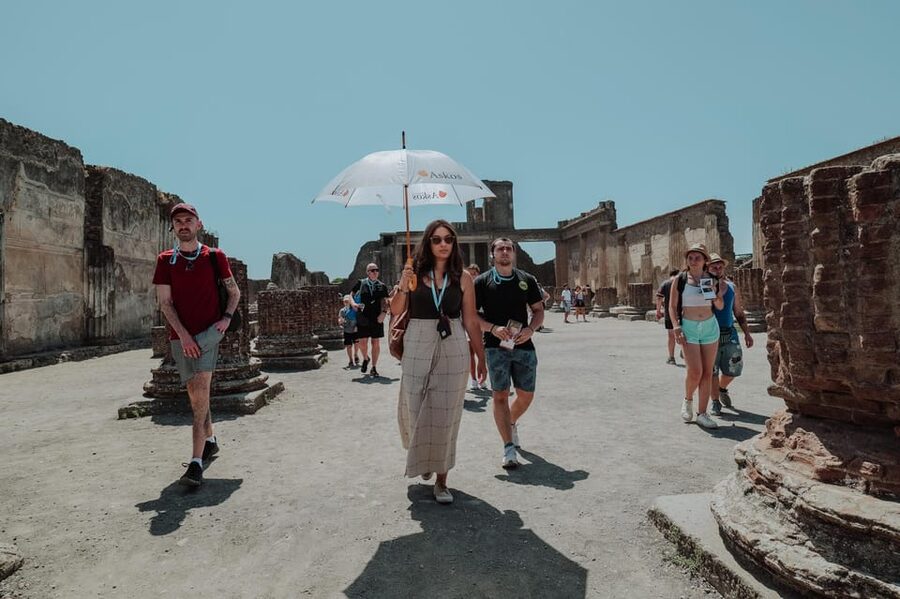
- Privileged Villa of the Mysteries time with expert interpretation of the famous fresco cycle
- Small-group pacing that helps you keep your eyes on details instead of chasing the crowd
- An archaeologist-led route through Pompeii’s houses and public spaces, designed for understanding
- Skip-the-line access plus an included Pompeii Plus ticket covering both park and Villa
- A stop-by-stop focus that includes major sites like the Large Theatre, Forum Baths, and Temple of Apollo
Porta Marina Superiore: the calm start that sets the tone

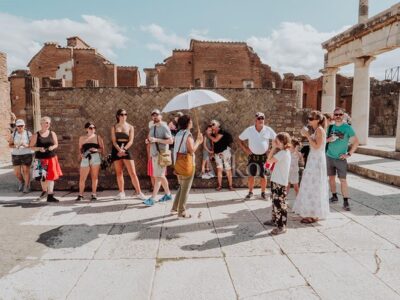
Your tour day begins at Pompeii’s Porta Marina Superiore area, where the guide meets you holding an ASKOS TOURS sign. This matters more than it sounds. Porta Marina Superiore is a real entry point into the city’s world, and starting here helps you get your bearings fast before you hit the big-name stops.
Once you’re inside, you head along cobbled streets where Pompeii feels like a neighborhood, not a theme park. I love that the tour is designed to move away from the worst crowd pressure when possible. That means you can actually look at stonework, doorways, and wall texture, the stuff that makes Pompeii feel preserved rather than ruined.
You also get an archaeologist’s framing early. Instead of treating buildings like blank museum props, the guide teaches you what to notice: room layouts, where daily life would have happened, and how public and private spaces were separated in Roman city life. That early context makes every later stop easier to read.
More of Pompeii and the volcano that buried it:


How 3 hours works at Pompeii, and why the route feels purposeful
Three hours is not enough to see Pompeii all at once. No magic exists for that. What this tour does well is give you a structured hit list and, more importantly, a reason to care about each place.
The itinerary flows through Pompeii in a way that balances domestic life with civic life. You start with major residential highlights, then you move into theatre, religious space, bath and forum areas, and end up at the Villa of the Mysteries, where the fresco story is the whole point. That rhythm keeps you from bouncing randomly between distant zones.
It also helps that the timing is planned to offer quieter moments at key sites. You are not guaranteed zero crowds, but you are going to spend less time standing still and more time learning what you’re actually looking at.
One small comfort detail, worth noting: at least one past group described using ear pieces so the guide was easy to hear. So if the sound system is used on your departure, take it seriously. Being able to hear every explanation is what turns a quick stop into an Aha moment.
House of the Vettii: what Roman domestic life really looked like

The House of the Vettii is a big early anchor, and it earns its reputation. Houses in Pompeii are not just rooms. They’re a map of social status, daily routines, and how people used art to signal identity.
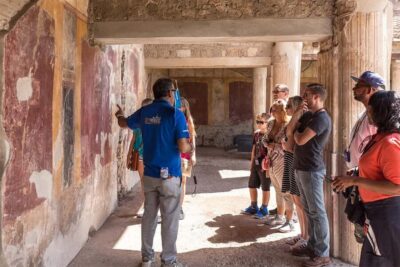
This stop is where the tour’s archaeologist approach becomes very practical. You’ll look at frescoes and wall decoration and learn what they likely meant in context. You’ll also get a sense of how the layout guided movement through the home, from more public areas near the entrance toward more private spaces.
I like this kind of stop because it flips your expectations. After you’ve seen a few rooms with the right explanation, you start noticing things you would otherwise miss, like how light and space would have worked and how decorative themes connect to Roman taste.
A realistic consideration: house interiors can feel tight and uneven underfoot, so comfortable closed-toe shoes are not a suggestion, they’re survival. Pompeii is stone, dust, and steps. Wear shoes you trust.
Large Theatre, Forum Baths, Basilica, and the civic heartbeat

Pompeii was a city built for public life. The tour makes that clear by moving from the drama of the Large Theatre to the hard-working energy of bath and forum structures.
At the Large Theatre, the big idea is visibility and performance. Even in ruins, you can understand how the space functioned. The guide’s job here is to connect what you see to how Roman public entertainment and gatherings shaped civic identity.
Then you get into the Forum Baths, which is where Pompeii stops feeling like a postcard. Baths were daily life plus politics plus social time. Roman people did not treat hygiene as a quick chore. The bath complex is one of the best places to learn about routine and community rhythms.
The Basilica and the Foro Civile di Pompei add another layer. These were not decorative backdrops. They supported commerce, civic decisions, and the public flow of Roman society. Seeing them with commentary turns the forum zones from a blur into a system.
If you are the type who usually skips over public buildings, this section is likely to change your mind. It’s one of the fastest ways to understand how Roman city life worked, day after day, long before the eruption ended it.
Introductions we still owe you around Naples
- Naples: Naples Underground Entry Ticket and Guided Tour
★ 4.4 · 21,781 reviews - From Naples: Pompeii Ruins & Mount Vesuvius Day Tour
★ 4.3 · 11,459 reviews - From Naples: Sorrento, Positano and Amalfi Full-Day Tour
★ 4.6 · 10,988 reviews - From Naples: Sorrento, Positano & Amalfi Coast – Small Group Tour
★ 5.0 · 8,643 reviews
Houses of the Faun, Menander, and the Tragic Poet: learning to read the art
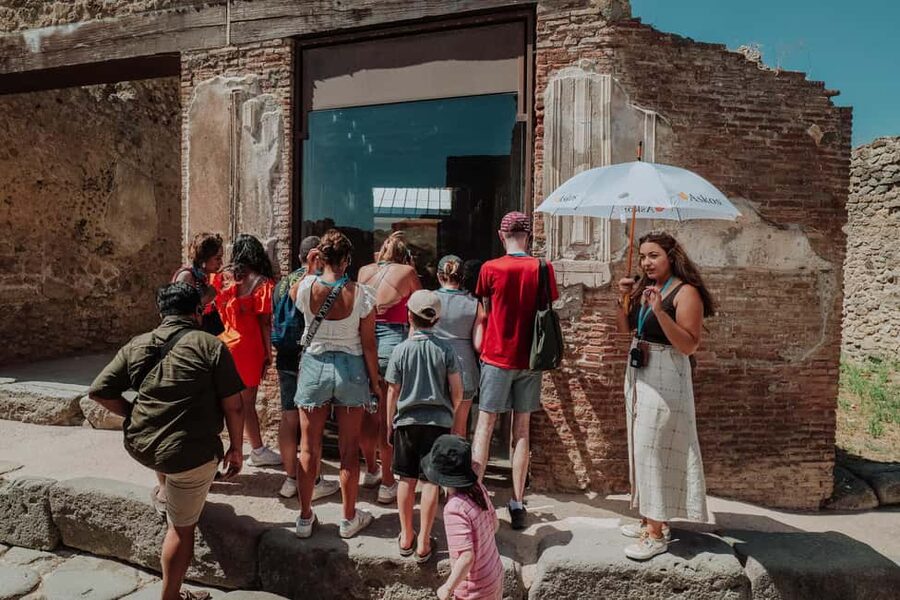
A major advantage of a guided Pompeii route is that you get help reading what you see. In a self-guided walk, it’s easy to treat each house as a nameplate and miss the meaning.
The House of the Faun is one of those places where room layout and decoration guide your interpretation. The guide helps you connect the home to Roman tastes, including the way art could decorate social space and signal cultural identity.
The House of Menander continues that story, with emphasis on how domestic spaces helped create a daily world. You start realizing that Roman houses were designed for observation, hosting, and status, not just sleeping and storage.
The House of the Tragic Poet adds a different flavor. Even if you do not remember every detail later, the explanation gives you a framework for what the imagery and space were doing in Roman life. The result is that Pompeii becomes more human, and less like scattered artifacts.
A practical note: with multiple house stops, you will walk. This is a walking tour inside an archaeological park. Hydrate when you can, take brief rests when the group pauses, and do not try to conquer Pompeii in high heels or fragile sandals.
Lupanare: a blunt look at sexuality and social reality
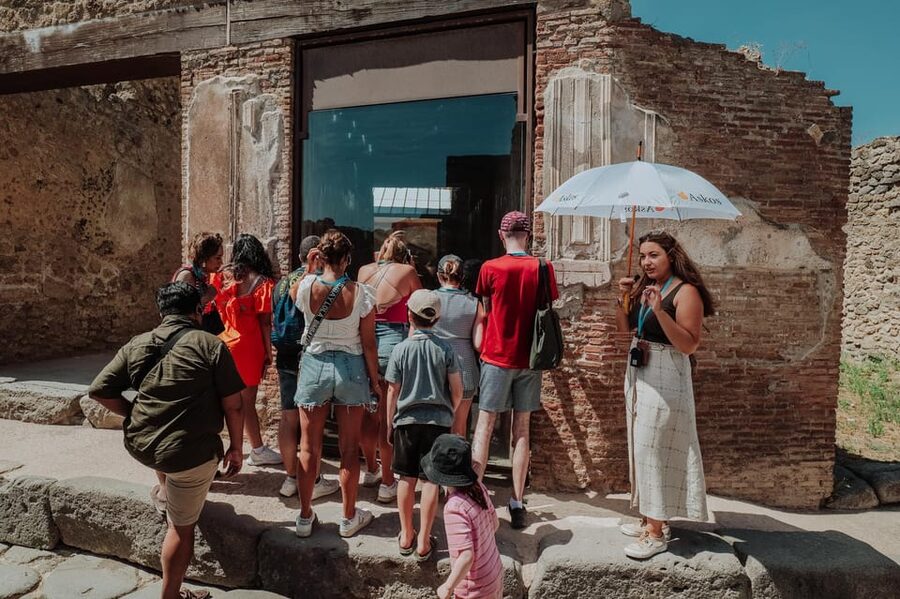
The Lupanare is often the stop people whisper about, but the tour handles it with the seriousness it deserves. In Pompeii, sexuality and commerce were not hidden in some separate category. They were woven into city life and economics.
What you’ll get from the guide here is interpretation, not shock value. The goal is to help you understand the site as a window into social habits, not a cheap thrill. You’ll connect its function to the wider urban setting and Roman attitudes around public life.
It’s not everyone’s favorite stop, and that is fine. But if you skip it, you miss one of Pompeii’s clearest reminders that the city was real people with messy, everyday choices.
If you’re visiting with kids or teens, I’d suggest deciding based on your family’s comfort level with adult themes. The tour itself is described as an archaeologist-led experience, so the presentation should be more contextual than sensational.
Temple of Apollo and the route through Pompeii’s belief system
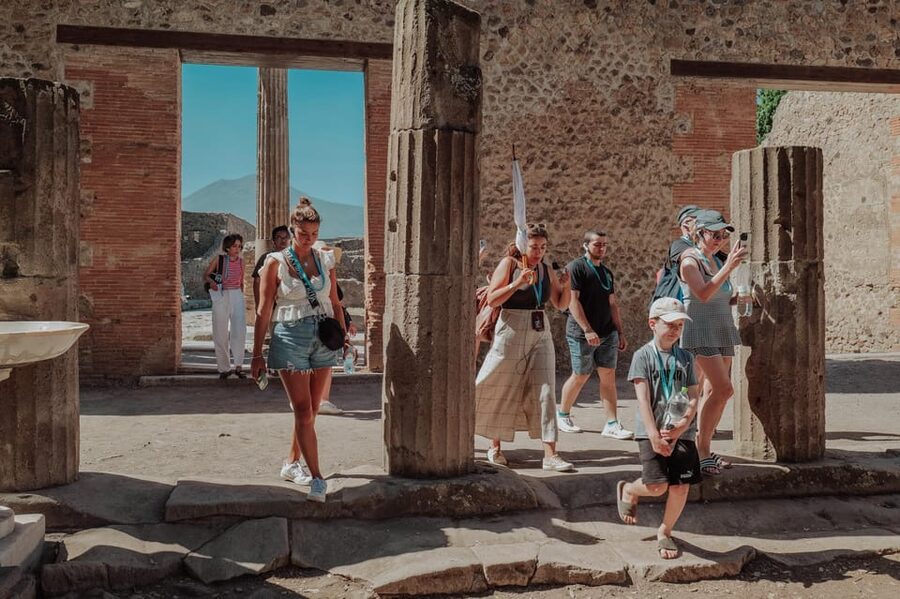
The tour includes the Temple of Apollo, one of the city’s spiritual anchors. Religious space in Pompeii is another “don’t just look, understand” moment.
The guide’s commentary helps you read the temple as part of a broader civic identity, where religion shaped public events and community meaning. Roman religion was not separate from the city’s daily pulse. It was connected to time, politics, and public life.
What I like about including a major religious site is balance. Houses show you how people lived day to day. Forums and baths show social structure. A temple stop shows what people believed, and how that belief was expressed in architecture.
Villa of the Mysteries: the frescoes that finally make the mystery feel real
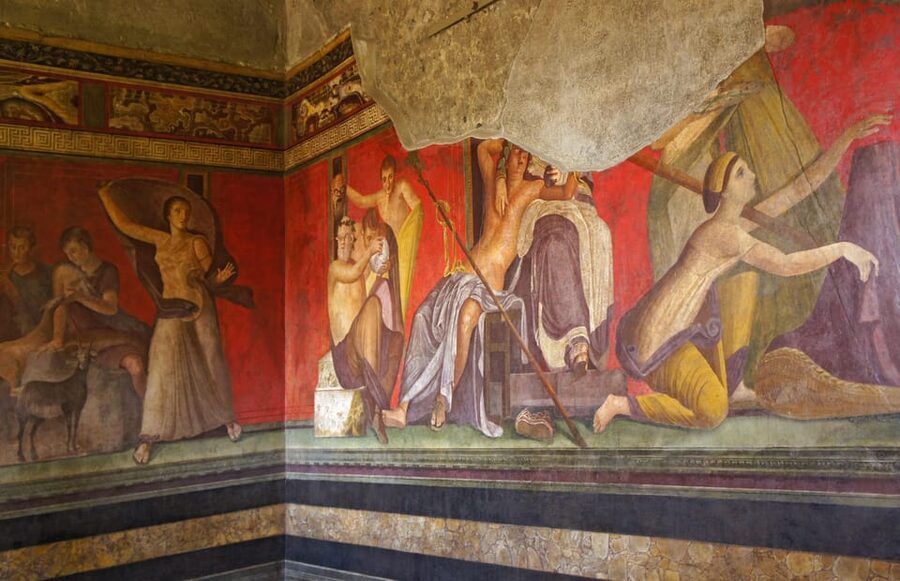
Then comes the star: the Villa of the Mysteries. This is the one place you came for, and the tour treats it that way.
The key benefit is interpretation. The guide helps you understand the famous frescoes as a narrative, not just impressive wall art. You’ll get the story explained in a way that makes the figures, scenes, and symbolic choices easier to follow.
I also like that the Villa is handled as a highlight with time to slow down. It is an active part of the tour, not a quick photo stop. The result is that you leave remembering the themes and images, not just the location name.
A good practical reminder: if you are heat sensitive, the Villa time is still outdoors and you will be walking to and from it. Bring what you need, and don’t underestimate sun time, even in shoulder seasons.
Price and value: what $88 gets you that self-guided does not
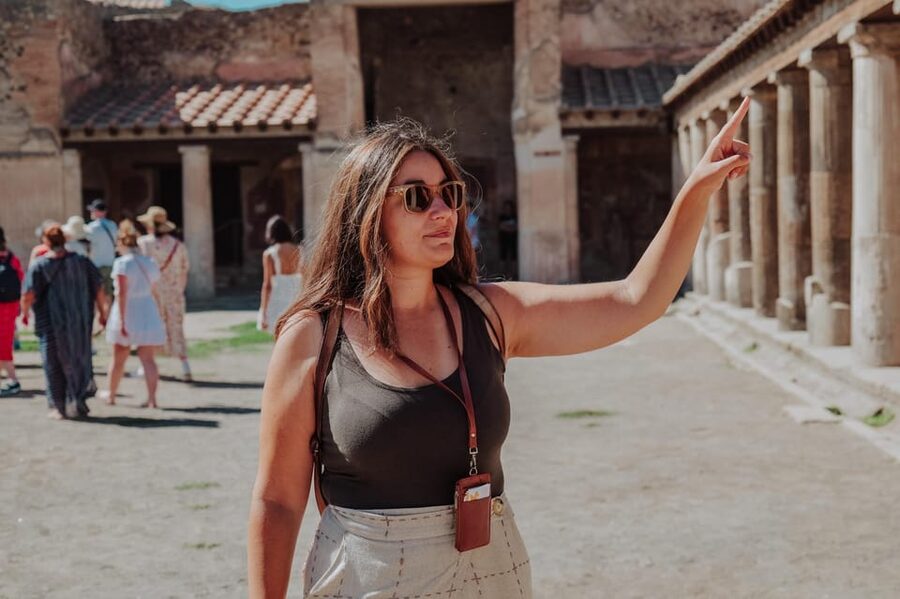
At $88 per person for a 3-hour tour, you are paying for three things: an archaeologist guide, a small-group format, and an included ticket that covers the Archaeological Park plus the Villa of the Mysteries. You also skip the ticket line.
This is where value becomes real. Self-guided Pompeii is fine if your interest is mostly visual. But if you want meaning, a trained guide turns each stop into a lesson you can actually use. That’s especially true at places like the Villa of the Mysteries, where the frescoes make more sense when someone gives you the interpretive keys.
Is it a bargain? It depends on how you travel. If you already know Pompeii well and you like to wander solo, you might choose self-guided and spend less. But if you want the quickest path to understanding, this tour is one of the more efficient ways to get it without spending half your day sorting out what matters.
Also, remember what is not included: transportation, food, and drinks. So budget for those separately and do not assume refueling is part of the guide plan.
Tour comfort tips that will save your feet and your mood
Pompeii can be hot, slippery, and busy. The tour runs rain or shine, so you should treat weather as part of the plan, not a surprise.
Wear comfortable, closed-toe shoes. Flip-flops are not suitable. In summer, bring a hat, because open-air ruins plus sun is a hard combo.
A useful tip from real-world experience on this kind of tour: water availability may not be immediate. One person suggested bringing a bottle early since a fountain could come later in the walk. I agree with that logic. Bring your own water, even if you think you’ll find refilling spots.
Bathroom reality check: once you’re inside, you may not have an easy out. If you need to go, do it before the tour starts.
If you travel with a small pet, the tour notes that pets within 10 kg are allowed inside the archaeological park, as long as they stay on a leash. That can matter if you’re trying to avoid leaving your companion behind.
And lastly, plan for group movement. This is a walking tour at an archaeological site, so you should be ready for steady pacing and frequent stop-and-start moments.
Who this Pompeii archaeologist tour is best for
This tour is a great fit if you want structure and interpretation in a short time. If you land in Pompeii and think, Pompeii is huge, what do I even focus on, this route solves that problem.
It’s also ideal for people who learn best by seeing details in context. The archaeologist-led approach, plus the small-group format, helps you go beyond names and dates.
It may be a poor fit if you have mobility issues. The tour is not suitable for wheelchair users or people with mobility impairments. If that applies to you, you’ll likely have a better experience with a different arrangement that matches your movement needs.
Should you book this Villa of the Mysteries Pompeii tour?
If you are doing Pompeii as a top priority and you want the best shot at understanding what you see, I think you should book. The biggest reasons are simple: you get Villa of the Mysteries access included in your ticket, you skip the ticket line, and you get archaeologist commentary across both homes and civic spaces.
But go in with the right expectations. Three hours is a smart overview, not an all-day conquest. If you can add extra time after the tour, you’ll stretch your experience into something more personal, like wandering back to places that stuck with you.
My bottom line: this is a strong value choice for travelers who care about meaning, not just ruins. If that’s you, this tour is an easy yes.
FAQ
Where does the tour meet?
The guide meets you at the entrance gate of Pompeii ruins called Porta Marina Superiore holding a sign with ASKOS TOURS written on it.
How long is the Pompeii tour with the Villa of the Mysteries?
The tour duration is 3 hours.
What is included in the price?
Included: a 3-hour small group tour, an archaeologist guide, and the Pompeii Plus entrance ticket including the Archaeological Park plus the Villa of the Mysteries. You also skip the ticket line.
What languages are offered?
The live tour guide is available in German, Italian, French, English, Spanish, and Portuguese.
What should I bring and wear?
Bring a passport or ID card. Wear comfortable, closed-toe shoes. In summer, bring a hat, and avoid flip-flops.
Is the tour wheelchair accessible?
No. This tour is not suitable for wheelchair users or people with mobility impairments.
Just introduced: the newest Naples write-ups
- Capri Boat Tour from Naples – Small Group, Swim & Relax★ 5.0 · 341 reviews
- Pompeii Guided Tour from Naples with Skip-the-Line Entry★ 5.0 · 343 reviews
- Procida Island Tour by Boat 2h 15m with Swimming and Underwater Photos★ 5.0 · 344 reviews
- From Naples: Caserta Palace Ticket and Train with Audioguide★ 4.3 · 348 reviews
- Naples Shore Excursion: Private Tour to Sorrento, Positano, and Amalfi★ 4.5 · 352 reviews
- From Naples: Capri Boat Day Trip with Drinks★ 4.7 · 354 reviews
- From Naples: Sorrento, Positano and Amalfi Tour★ 4.6 · 361 reviews
Pompeii & Vesuvius Tours, compared.

Entry Ticket and Guided Tour with an Archaeologist
Read our review →


Pompeii Small Group Tour with an Archaeologist
Read our review →
Pompeii, Amalfi Coast and Positano Day Trip from Rome
Read our review →Browse the lists this tour appears in