
Reviewed · POMPEII & VESUVIUS TOURS
Pompeii: Tour with Archaeologist Guide & Skip-the-Line Entry
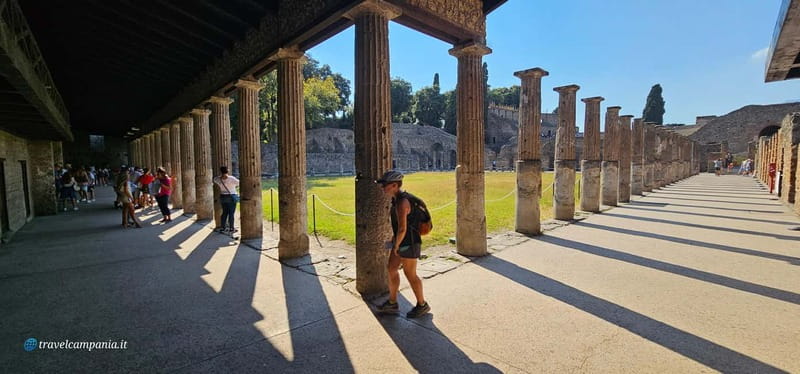
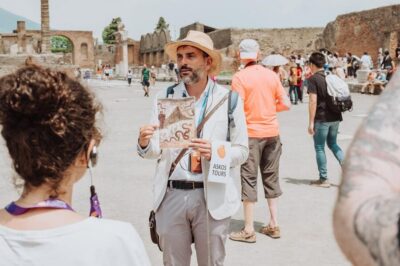
Pompeii feels frozen in time. I like that this tour pairs skip-the-line entry with a true archaeologist guide, so you spend more time looking at the city and less time stuck at the entrance. In two hours, you get a structured walk through the places that make Pompeii click.
The second thing I love is the way you get official context, not just dates and labels. You move through major stops like Porta Marina and the Foro Civile, and the guide ties buildings to daily life, crafts, and art, including how plaster casts can help you picture what was lost.
One consideration: this isn’t a laid-back, wheelchair-friendly route. It’s not suitable for wheelchair users or people with mobility impairments, so plan accordingly.
In This Review
- Key Highlights You’ll Actually Notice
- Pompeii Turns Real When You Have Archaeology Context
- The Value of Skip-the-Line Entry in a 2-Hour Tour
- Meeting Point, Timing, and the Simple Stuff That Can Trip You Up
- Your Archaeology Guide Format, Earpieces, and Language Options
- Porta Marina: Getting Oriented at the City’s Edge
- Teatro Piccolo: How Romans Used Space for Social Life
- House of Menander: Art, Everyday Taste, and the Meaning in the Details
- Thermopolium: A Quick Lesson in What People Actually Ate
- Terme Stabiane: Public Bathing as a Social Engine
- Lupanare: A Candid Look at Work, Space, and City Life
- Foro Civile di Pompei: Where Power and People Met
- How to Continue After the Tour Ends
- What I’d Tell Friends Before They Book
- Price Versus Value at About $57
- Should You Book This Pompeii Tour?
- FAQ
- How long is the Pompeii tour?
- What is the price per person?
- Does this tour include skip-the-line entry?
- Where do I meet the guide?
- Which languages are offered for the live guide?
- What is included in the ticket?
- What is not included?
- What should I bring for check-in?
- What items are not allowed during the tour?
- What is the cancellation policy?
Key Highlights You’ll Actually Notice
- Skip-the-line Pompeii entry so you lose less time at the gates
- Official expert guide focused on archaeology and everyday Roman life
- A tight, smart 2-hour route through the most meaningful Pompeii stops
- Stop-by-stop explanations that make buildings easier to understand
- Radioguide setup when the group is large, with earpieces that can be loud
Pompeii Turns Real When You Have Archaeology Context

Pompeii is one of those places that can feel unreal even before you learn why. The big idea here is simple: a Roman city, founded in the 7th century BC, was buried and preserved after the Vesuvius eruption in 79 AD. That preservation is why UNESCO protects it, and why so much is still visible where it was, not reassembled in a museum.
What I like about touring with an archaeologist guide is that you stop treating the ruins like random “cool rocks.” You start seeing how the city worked: where people went to gather, where they ate, how public life flowed, and how even the smallest details were part of daily routine. You’ll still be staring at old stone and faded plaster, but it feels purposeful, not chaotic.
More of Pompeii and the volcano that buried it:


The Value of Skip-the-Line Entry in a 2-Hour Tour
Pompeii is popular. On a standalone visit, you can lose a chunk of your day just figuring out entry lines, directions, and meeting points. Here, the main value is that priority access helps you get moving sooner, which matters because the tour itself is only about 2 hours inside the excavations.
Think about it this way: with a short tour window, every minute you’re waiting is a minute you’re not looking. With this format, you get a compact route that covers key sights, and you’ll still have time after the guided portion to keep exploring if you want.
At $57 per person, you’re paying for two things you can’t easily replace on your own: an authorized archaeology guide and official entrance access that reduces time spent queuing. If you’re the type who learns faster with a narrative, this price starts to look like a bargain.
Meeting Point, Timing, and the Simple Stuff That Can Trip You Up
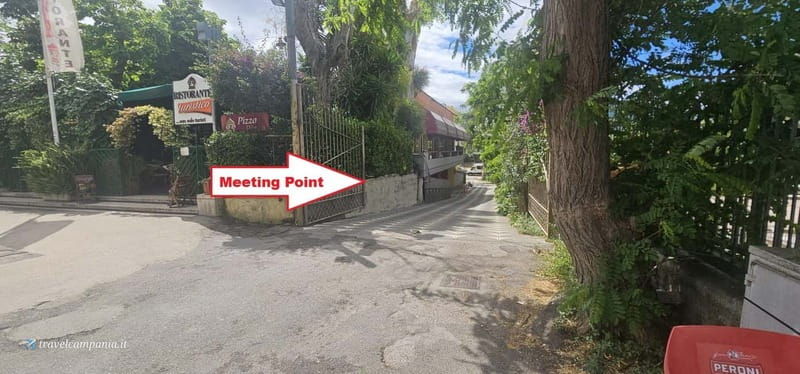
The experience starts at the Welcome box, and it ends back at the meeting point. That sounds basic, but in Pompeii, basic can save you stress. The best practical advice is to arrive a few minutes early, not right at the start time, and to double-check your guide’s exact location inside the complex.
A small planning note: you’ll need to provide names and ages of tour participants. Do that so the check-in part goes smoothly.
Also, keep an eye on what you bring. The tour info clearly states no bags, and it also lists no bikes and no alcohol or drugs. The good news is that Pompeii typically provides ways to store items near entrances, but since this tour specifically says no bags, plan on traveling light.
Your Archaeology Guide Format, Earpieces, and Language Options
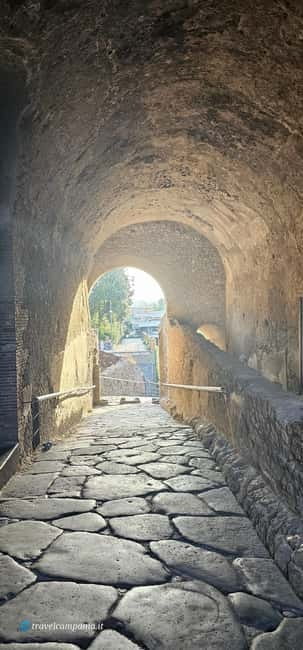
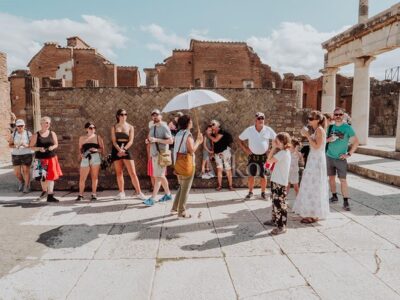
This is a live guided tour with language choices including Italian, Spanish, French, English, and German. If you’re with a group large enough, you may get support via a radioguide system when passing 8 participants, which helps you hear the guide clearly during quieter moments.
One real-world detail I recommend you plan for: the earpieces can be pretty loud in a crowded site. If you’re sensitive to sound, consider bringing earplugs just in case. It’s one of those small fixes that can make the whole experience feel calmer.
Language matching is also worth noting. If the group in the same language doesn’t exceed 4 participants, the tour can switch to an audio guide plus a tour guide in English. If you care deeply about language, check the available times and confirm language options when you book.
Introductions we still owe you around Naples
- Naples: Naples Underground Entry Ticket and Guided Tour
★ 4.4 · 21,781 reviews - From Naples: Pompeii Ruins & Mount Vesuvius Day Tour
★ 4.3 · 11,459 reviews - From Naples: Sorrento, Positano and Amalfi Full-Day Tour
★ 4.6 · 10,988 reviews - From Naples: Sorrento, Positano & Amalfi Coast – Small Group Tour
★ 5.0 · 8,643 reviews
Porta Marina: Getting Oriented at the City’s Edge
Your guided walk begins at Porta Marina, and the stop is brief, around 10 minutes. This is a smart first move because it helps you anchor the rest of what you see. Porta Marina is where you start thinking like a visitor in ancient Pompeii, entering and moving into a place that had rhythms and rules.
A drawback of short early stops is that you might want more time to linger for photos, but that’s the tradeoff of a packed 2-hour structure. If you want extra photos, do them quickly here, then let the guide’s story do the heavy lifting for the rest of the route.
Teatro Piccolo: How Romans Used Space for Social Life

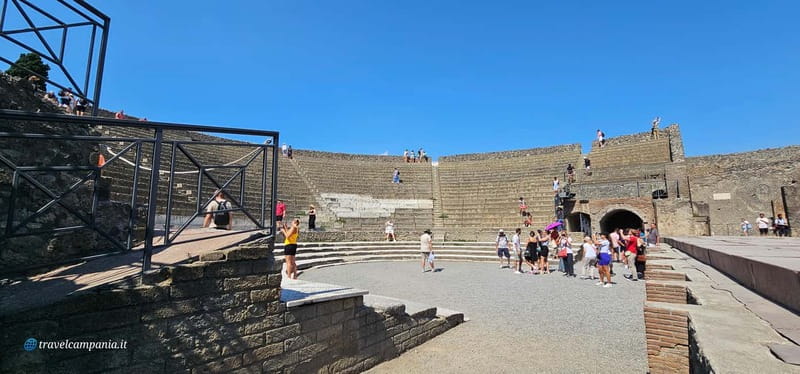
Next is the Teatro Piccolo for about 10 minutes. Even if you’ve never visited a Roman theater before, you can feel why it matters. Pompeii wasn’t just private homes and markets. Public buildings made community life happen.
This is where a specialist guide pays off. You’re not just looking at old seating or stone steps. You’re learning how performance and gathering fit into the city’s culture. If you enjoy architecture that supports human behavior, you’ll get more out of this stop than you would by wandering without context.
House of Menander: Art, Everyday Taste, and the Meaning in the Details
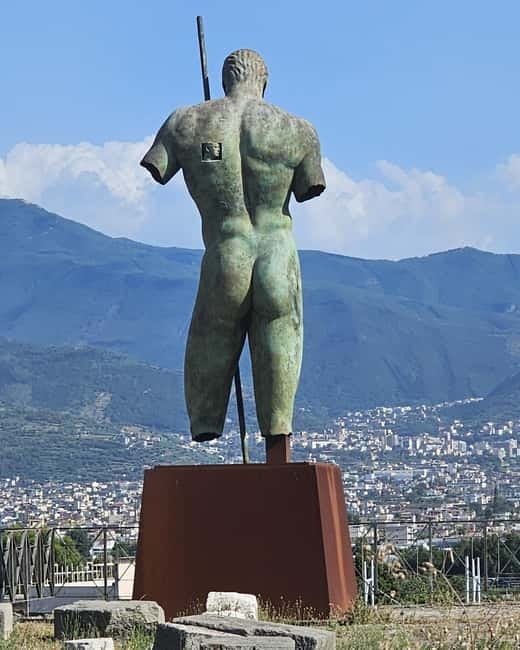
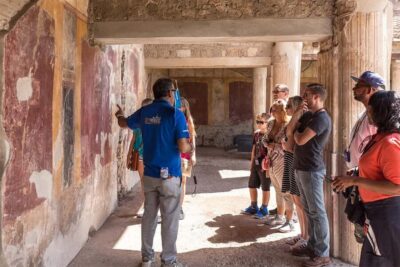
You’ll spend around 15 minutes at the House of Menander. This is often one of the emotional stops for people because Pompeii can feel intimate. A home shows what mattered to the people inside it, and the art and layout hint at status and personality.
What I’d watch for here is the difference between simply seeing decorations and understanding why they were there. This tour approach helps connect the dots between craftsmanship and daily life, not just the fact that something survived.
If you’re the type who loves learning what small features mean, you’ll enjoy how the guide explains buildings and their function instead of treating everything as a generic “attraction.”
Thermopolium: A Quick Lesson in What People Actually Ate
You’ll stop at a thermopolium for about 15 minutes. This is one of those Pompeii terms that’s easy to miss on your own, but with the guide’s framing it becomes vivid. A thermopolium was basically a quick-service food place, and it shows that everyday life in Pompeii had the same mix of routines and treats that we have today.
This is also where you’ll probably start making mental comparisons, not because the Romans were identical to modern people, but because human habits rhyme. The guide helps you see food, work, and social interaction as a connected system inside the city.
Terme Stabiane: Public Bathing as a Social Engine
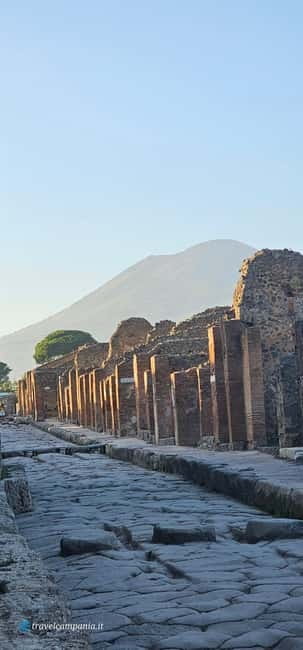
Next comes the Terme Stabiane, another 15-minute stop. Roman baths were never just about hygiene. They were a social hub and a place to spend time, talk, and move through a sequence of rooms and temperature stages.
Even if you don’t remember all the Roman bath terms, you’ll understand the layout better with a guide. The best tours don’t overwhelm you with facts. They point out the obvious clues, then give you enough structure to interpret what you’re seeing.
A practical note: like many major historic sites, the ground can be uneven and busy. Even though this isn’t a long stop, keep your pace steady.
Lupanare: A Candid Look at Work, Space, and City Life
The Lupanare stop runs about 20 minutes, making it one of the longer segments. This is where Pompeii can feel surprisingly direct. The Lupanare is a reminder that cities include every kind of life, not just the glamorous parts people like to Instagram.
With an archaeology-focused guide, you’re less likely to get stuck in sensational details and more likely to understand how the building fit into city systems. You’ll also get context that helps you interpret what you’re seeing without turning the site into a gimmick.
Foro Civile di Pompei: Where Power and People Met
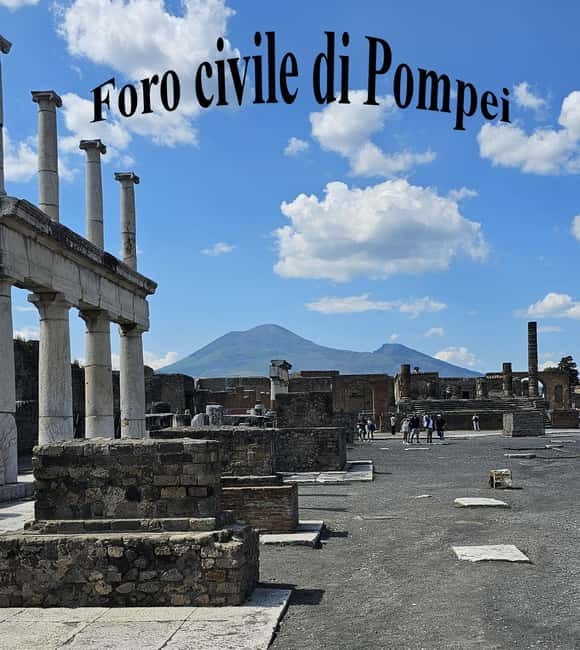
You’ll visit the Foro Civile di Pompei for about 15 minutes, then you get 10 minutes of free time in the same area. This is a useful combo because the guide gives you the framework, then you can walk around and try using that framework yourself.
If you want to get the most out of the free time, do it with purpose: look for where paths channel movement, where crowds likely formed, and how surrounding buildings shape the feeling of the space. This is the part of Pompeii where your brain starts building the city in layers, not just observing separate landmarks.
How to Continue After the Tour Ends
The guided portion is about two hours, and the tour returns you to the meeting point. That means you should treat this as the start of your Pompeii day, not your entire experience.
If you have extra time, I recommend using the guide’s map sense. You’ll now recognize why certain streets lead where they lead, and why certain buildings mattered. You can then explore nearby areas at a slower pace, focusing on whatever moved you most during the tour.
What I’d Tell Friends Before They Book
This tour is best if you want Pompeii to make sense fast. You get skip-the-line entry, an expert archaeology guide, and a route that hits the key “why this matters” stops: Porta Marina, Teatro Piccolo, House of Menander, a thermopolium, Terme Stabiane, Lupanare, and the Foro Civile.
It might not be the right fit if you:
- Need full wheelchair access or have mobility limits, because the tour is not suitable for wheelchair users
- Want a long, free-roaming session, since the guided time is short and structured
- Plan to carry bulky items, since bags are not allowed
Price Versus Value at About $57
For $57 per person, you’re paying for a mix that can be hard to replicate cheaply: priority entry plus an authorized guide. If you’re visiting Pompeii for the first time and you want to learn rather than just look, this is one of the more value-driven ways to do it.
Also, the tour format matters. Two hours sounds short, but Pompeii is big. This is not trying to replace a full day visit. It’s trying to give you the foundation so your extra time after the tour actually feels rewarding.
Should You Book This Pompeii Tour?
Yes, if your goal is to understand Pompeii, not just check it off. The archaeologist guide format, skip-the-line entry, and focused stops create a strong first pass that makes the ruins readable.
If you can only visit once, or you’re time-limited, I’d book this. If you’re very sensitive to noise from headsets, arrive early and consider earplugs. And if accessibility is an issue for you, choose a different plan that matches your needs, because this one is clearly not built for wheelchair use.
FAQ
How long is the Pompeii tour?
The tour lasts about 2 hours. Starting times depend on availability.
What is the price per person?
The price is listed as $57 per person.
Does this tour include skip-the-line entry?
Yes. It includes priority access to skip the long ticket lines.
Where do I meet the guide?
The start meeting point is the Welcome box, and the activity ends back at the meeting point.
Which languages are offered for the live guide?
The tour offers live guiding in Italian, Spanish, French, English, and German.
What is included in the ticket?
It includes a Pompeii Express entrance ticket and an authorized expert archaeology guide.
What is not included?
Transport and lunch are not included, and tips are not included.
What should I bring for check-in?
Bring a passport or ID card. Copies are accepted, and the tour also requests that you provide names and ages of participants.
What items are not allowed during the tour?
Bikes, alcohol and drugs, and bags are not allowed.
What is the cancellation policy?
You can cancel up to 24 hours in advance for a full refund.
Just introduced: the newest Naples write-ups
- Capri Boat Tour from Naples – Small Group, Swim & Relax★ 5.0 · 341 reviews
- Pompeii Guided Tour from Naples with Skip-the-Line Entry★ 5.0 · 343 reviews
- Procida Island Tour by Boat 2h 15m with Swimming and Underwater Photos★ 5.0 · 344 reviews
- From Naples: Caserta Palace Ticket and Train with Audioguide★ 4.3 · 348 reviews
- Naples Shore Excursion: Private Tour to Sorrento, Positano, and Amalfi★ 4.5 · 352 reviews
- From Naples: Capri Boat Day Trip with Drinks★ 4.7 · 354 reviews
- From Naples: Sorrento, Positano and Amalfi Tour★ 4.6 · 361 reviews
Pompeii & Vesuvius Tours, compared.
Entry Ticket and Guided Tour with an Archaeologist
Read our review →


Pompeii Small Group Tour with an Archaeologist
Read our review →
Pompeii, Amalfi Coast and Positano Day Trip from Rome
Read our review →Browse the lists this tour appears in