
Reviewed · POMPEII & VESUVIUS TOURS
Pompeii Private Tour with an Archaeologist and Skip The Line
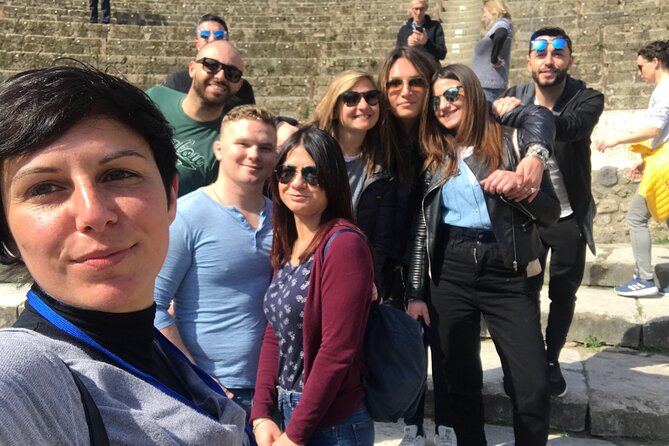
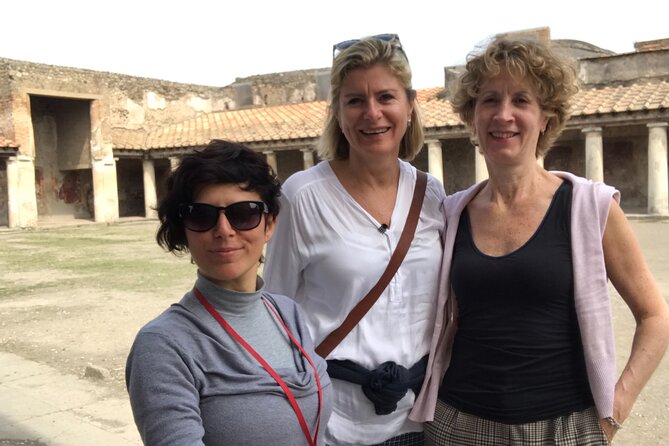
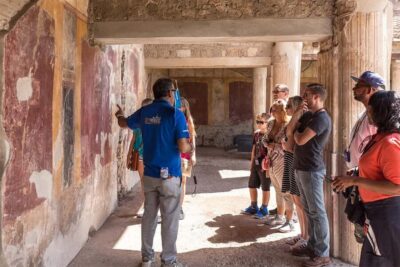
Pompeii gets a VIP speed run. This private 2-hour tour with an archaeologist turns the site into a story you can follow, with skip-the-line entry support so you spend less time stuck at ticket counters. The tour is led by Eliana Sandretti, and guests have singled out guides such as Luisa and Eliana Sandretti for making the ruins feel clear and organized.
I especially like the way the route hits Pompeii’s biggest “life moments” in a short time. You’re not just looking at stone. You see entertainment (theaters), daily routine (baths, shops, fast food), power (forum, basilica), and the human side (casts from 79 AD).
One drawback to plan for: the Pompeii entrance ticket is not included, and that is where some confusion shows up. If you want the smooth skip-the-line experience, make sure your Pompeii ticket is sorted ahead of time.
In This Review
- Key highlights that make this Pompeii tour a smart pick
- Why a 2-hour Pompeii private tour feels different from DIY
- Tickets and skip-the-line reality, the part you must get right
- The big start at Pompeii Archaeological Park, where daily life shows up fast
- Theaters, temples, and the city’s public face
- A look inside wealth: the rich house
- Stabian Baths, the Roman SPA stop
- Shops, fast food, and the city that ran on commerce
- The Lupanar area and the reality of adult life
- Forum, gladiator area, and the eruption’s human impact
- Odeion acoustics and Teatro Grande, hearing Rome at Pompeii
- Small Theater (Odeion): perfect acoustics, Roman-style
- Teatro Grande: the main stage
- Via dell’Abbondanza, the shopping street you walk like a local
- Granai del Foro casts and amphora deposit, the forum’s practical side
- Stabian Baths and the civic core: Foro, Basilica, and Jupiter
- Foro di Pompei, the main square
- Pompei La Basilica, justice in action
- Temple of Jupiter in the main square
- Gladiator barracks, the Lupanar district, and Temple of Venus
- Quadriporticus of the theatres, gladiator life behind the scenes
- Vicolo del Lupanare, the brothel street
- Temple of Venus, the city’s divinity
- Casa del Fauno, when Pompeii turns personal and luxurious
- Who should book this Pompeii private archaeologist tour, and who might skip it
- Should you book this Pompeii Private Tour with an Archaeologist?
- FAQ
- Is the Pompeii entrance ticket included in the tour price?
- How long is the private Pompeii tour?
- What is the maximum group size?
- Where do we meet for the tour?
- Is food and drinks included?
- What language is the tour conducted in?
- How do you handle the skip-the-line access?
- What happens if the weather is bad?
- Can I cancel for a full refund?
Key highlights that make this Pompeii tour a smart pick
- Skip-the-line entry support once you purchase Pompeii tickets online in advance
- Archaeologist-led, private pacing for up to 10 people, not a cattle-car group
- Teatro Grande and Odeion (acoustics) to understand Roman performance in a hands-on way
- 79 AD casts in multiple areas that make the eruption feel painfully real
- Stabian Baths time at Terme Stabiane, described as Pompeii’s best Roman SPA
- Adult-life and daily-life stops including the Lupanar area and luxury at Casa del Fauno
Why a 2-hour Pompeii private tour feels different from DIY
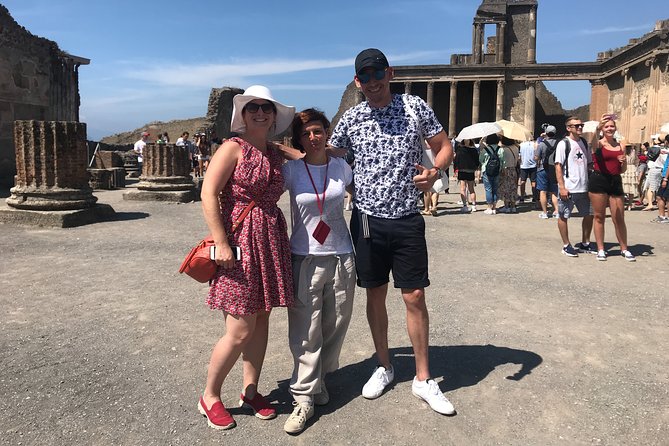
Pompeii can swallow a day fast, especially when you are trying to pick your own route. This tour is built for focus. In about 2 hours, you follow a planned path that covers the places that explain the city best: how people watched shows, shopped, met friends, handled justice, worshipped, and lived with risk hanging in the background.
I also like the private structure. Up to 10 people means you can actually move together, ask questions, and adjust as you go. That matters in Pompeii, because you are surrounded by details, and it is easy to lose the thread when you are alone. This tour is designed to keep that thread tight.
Finally, you get a tailor made experience. That doesn’t mean random. It means your guide can steer the emphasis toward what you care about, which is a big deal for families. One family-focused tour story praised the guide for keeping kids engaged the whole time, including finding shade when it was hot and adjusting the pace for older relatives.
More Private Tours in Naples

Tickets and skip-the-line reality, the part you must get right
Let’s clear up the one point that can cause stress: Pompeii entrance tickets are not included in the tour price.
- Price: $375.05 per group (up to 10 people)
- Pompeii ticket: 19 euros per person
- Under 18: free, but they need an ID or passport because birth date checks can happen
- Food: not included
So what does the “skip the line” mean here? The tour includes skip-the-line support, plus a link one day before your tour so you can buy your Pompeii tickets online and avoid waiting at the ticket office line. In other words, you still need the entry ticket. The skip is for the line after you have your ticket sorted.
Why I think this approach can still be good value: the tour price covers the archaeologist guide and structured route for your group, so your per-person cost drops quickly if you have enough people to share the group fee. At the full group size of 10, the tour portion averages about $37.50 per person, then you add the site entry fee. If your group is smaller, the guide fee per person rises, so you’ll want to be sure you truly want a guided highlight route in the time you have.
The big start at Pompeii Archaeological Park, where daily life shows up fast
Your tour kicks off at Piazza Esedra, 10, 80045 Pompei NA, Italy. From there, you enter Pompeii Archaeological Park and start with a “best of” sweep that builds a foundation quickly.
Theaters, temples, and the city’s public face
You begin with the Theaters and Temples. The point here is not just to admire size. It is to understand how Roman culture ran in public spaces. Theaters are entertainment and status. Temples show civic religion, not private belief. This is a good pairing early on, because it anchors Pompeii’s biggest themes before you get into residential and everyday details.
More of Pompeii and the volcano that buried it:
- Pompeii Small Group Tour with an Archaeologist
★ 5.0 · 6,593 reviews - Discover the Ancient Ruins of Pompeii: Day Trip from Rome
★ 3.5 · 2,247 reviews - Pompeii and Herculaneum Small Group Tour with an Archaeologist
★ 5.0 · 1,350 reviews - Skip the Line Guided Tour of Pompeii led by an Archaeologist
★ 5.0 · 703 reviews
A look inside wealth: the rich house
Next comes a rich house, a shortcut into how the wealthy lived. When you only see a few rooms, it can feel random. With a guide, it becomes a snapshot of lifestyle, space, and priorities.
Stabian Baths, the Roman SPA stop
Then you hit Stabian Baths (Terme Stabiane). The tour description calls it the best SPA of the Roman Empire in Pompeii. Even if you do not care about bathing culture, this stop is useful because it changes the pace. It shifts from “what people believed and watched” to “how they kept social life and routine moving.”
Shops, fast food, and the city that ran on commerce
You also pass by shops and fast food areas. This is the part people often miss when they plan a Pompeii visit only around monuments. Commerce is the oxygen of a city. Seeing where that happened helps the forum and civic buildings make more sense later.
The Lupanar area and the reality of adult life
You then move through the Lupanar Area, Pompeii’s brothel district. This is not window dressing. It is part of how the city functioned, including the darker side of social life. If adult content makes you uncomfortable, I would treat this as an explicit heads-up and decide how you want to handle it.
Forum, gladiator area, and the eruption’s human impact
You also visit the Forum (main square) and the Area of the Gladiators. The forum ties together politics, business, and daily gathering. Gladiator zones connect entertainment to training and discipline.
Finally, you see casts. These are the bodies of people who died during the eruption. The effect is heavy even when you know what happened. This is one of those “information + emotion” stops where a guide can help you process what you are looking at instead of just moving past it.
Odeion acoustics and Teatro Grande, hearing Rome at Pompeii
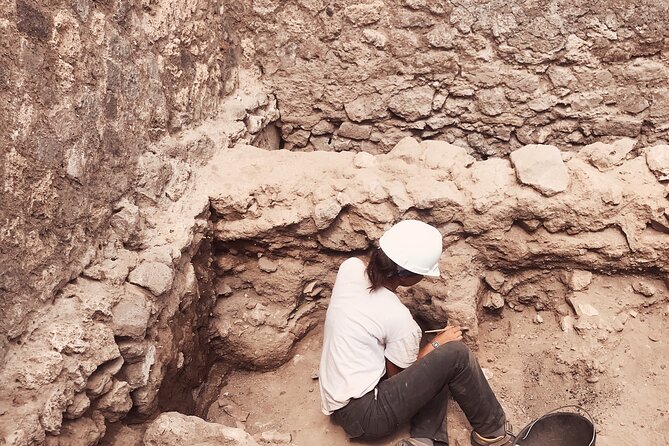
After the early park sweep, the tour adds a focused theater moment.
Small Theater (Odeion): perfect acoustics, Roman-style
You visit the Small Theater (Odeion) specifically to hear how Romans recreated perfect acoustics. This is a clever stop because it stops the tour from being only visual. You learn why the architecture mattered, not just that it existed.
Teatro Grande: the main stage
Then you move to Teatro Grande, the Great Theater of Pompeii, described as the most important theater in the archaeological site. You get about 15 minutes here, which is short enough to avoid museum fatigue, but long enough to catch the big idea.
This theater block is worth it because it gives you two angles:
1) how a theater was engineered to work (Odeion acoustics)
2) how massive Roman entertainment could get (Teatro Grande)
Then you transition into the main circulation artery.
Via dell’Abbondanza, the shopping street you walk like a local
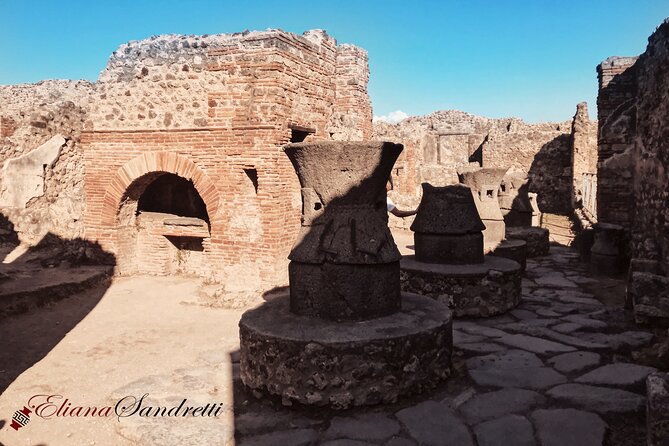
You cross via dell’Abbondanza, described as Pompeii’s main street. This is one of those simple moves that makes a huge difference. A city is not a collection of separate ruins. It is a network of routes.
Seeing the main street in between major public sites helps you imagine movement through the city, not just snapshots of buildings. It also sets up the forum area because you are following the same logic residents would have used.
Granai del Foro casts and amphora deposit, the forum’s practical side
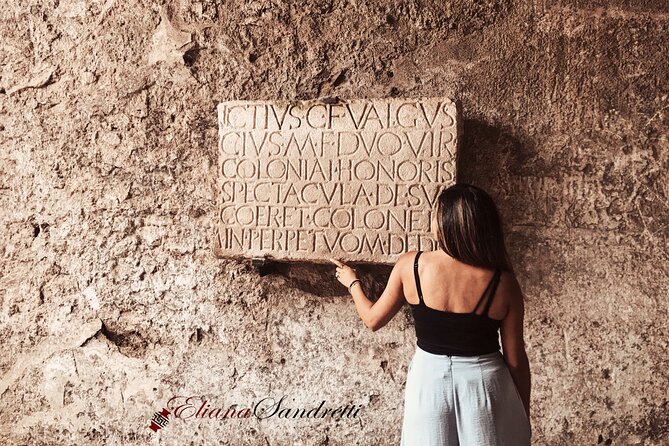
Next is Granai del Foro (Granaries of the Forum). This stop mixes two things: tragedy and logistics.
- You see casts connected to people who died during the eruption of 79 AD.
- You can admire the archaeological deposit full of amphorae and work tools.
That combination is powerful. The casts give the human scale. The amphorae and tools give you the city’s real economy, storage, and everyday work. It is one of the reasons Pompeii feels more believable with a guide. You are not only learning what happened. You’re also learning what kept the city alive right up to disaster.
Stabian Baths and the civic core: Foro, Basilica, and Jupiter
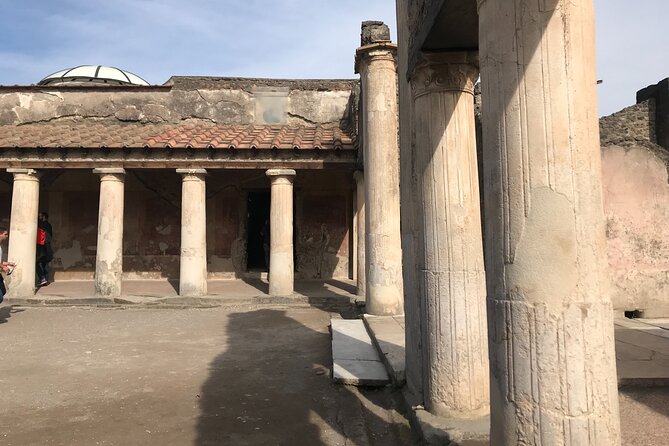
Then the tour returns to Stabian Baths (Terme Stabiane) for a focused visit time of about 15 minutes. If you like a quick rhythm change, this is it. Baths act like a mental reset after dense civic and commercial areas.
Foro di Pompei, the main square
You also visit Foro di Pompei, the ancient forum with markets and temples. This is where the city’s “public life” would have played out daily.
Pompei La Basilica, justice in action
Next comes Pompei La Basilica, where justice was administered. A guide’s explanation helps you see the basilica as more than architecture. It is a system for rules, disputes, and authority.
Temple of Jupiter in the main square
You also stop at the Temple of Jupiter, located in the main square. That matters because it ties political and civic space to religious authority.
This whole civic block is ideal for first-timers. It answers the question: what did Romans do here besides trade and watch people?
Gladiator barracks, the Lupanar district, and Temple of Venus
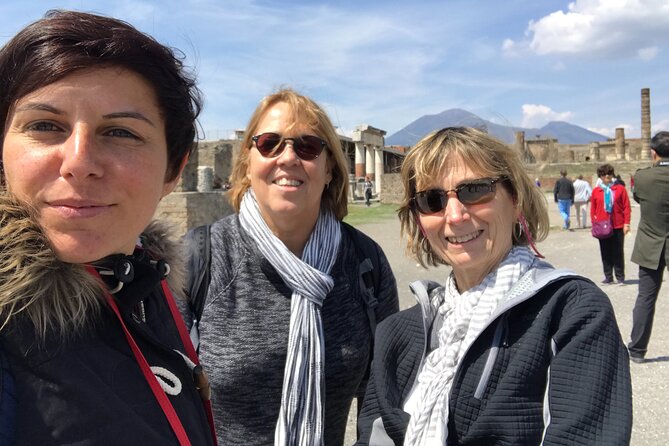
The tour keeps moving through different “social worlds.”
Quadriporticus of the theatres, gladiator life behind the scenes
You visit the Quadriporticus of the theatres, including the Gladiator Barracks. You see where gladiators trained and the apartments connected to their living arrangements. This is a useful switch from performance to preparation.
Vicolo del Lupanare, the brothel street
Then you walk through Vicolo del Lupanare, the ancient red district light area (brothel). This stop is timeboxed to about 15 minutes. It is also labeled as an admission ticket free stop in the tour details. Practically, it means you are still getting the full narrative context without stretching the ticket cost logic further.
Temple of Venus, the city’s divinity
To balance the darker stop, you also visit the Temple of Venus, where Pompeii’s divinity was venerated. This shift back to religion is not random. It helps you see Pompeii as a city with contradictions, pleasures, faith, and discipline all in the same footprint.
Casa del Fauno, when Pompeii turns personal and luxurious
The final major residential stop is Casa del Fauno (house of the faun), one of the richest and most luxurious residences in Pompeii. You get about 15 minutes here.
Why end here? Because after you’ve seen civic power, entertainment, commerce, and adult life, a wealthy home gives you the “inside view” of class and lifestyle. It turns the story from public systems into private space.
If you only have a short visit window, ending on luxury is a smart way to leave with a memorable image. It also helps you compare what you saw earlier: public worship and justice versus personal comfort and status.
Who should book this Pompeii private archaeologist tour, and who might skip it
You’ll likely love this tour if:
- you want a high-yield Pompeii route in about 2 hours
- you prefer a private experience for up to 10 people, with a guide who can tailor the focus
- you want an archaeologist-led narrative that connects entertainment, baths, commerce, politics, religion, and the 79 AD casts
- you are traveling with teens or kids and want a guide who can keep attention moving, with stops planned to avoid wasted time
You might want to think twice if:
- you have a strict budget, because the Pompeii ticket (19 euros per person) is extra
- you expect the tour price to include admission, based on common confusion
- adult-life stops like the Lupanar area are a deal-breaker for your group
Also, this tour requires good weather. Pompeii is an outdoor archaeological park experience, so plan for the fact that conditions can affect timing.
Should you book this Pompeii Private Tour with an Archaeologist?
If you want the fastest path to understanding Pompeii, this is a strong choice. The value is in the structure: a private archaeologist guide, an efficient route, and stops chosen to explain how the city worked, not just what it looked like.
Just do one thing before you go: buy the Pompeii entrance ticket in advance using the link you receive. That’s the key to getting the smooth skip-the-line experience.
If you can do that, and you’re okay with a curated, highlights-style route in 2 hours, this is the kind of guided Pompeii visit that leaves you feeling like the city made sense.
FAQ
Is the Pompeii entrance ticket included in the tour price?
No. Admission to Pompeii is not included. The entrance ticket costs 19 euros per person, and free tickets are available for under 18 with ID or passport.
How long is the private Pompeii tour?
The tour lasts about 2 hours.
What is the maximum group size?
This is a private tour for your group, with up to 10 people per group.
Where do we meet for the tour?
The meeting point is Piazza Esedra, 10, 80045 Pompei NA, Italy.
Is food and drinks included?
No. Food and drinks are not included.
What language is the tour conducted in?
The tour is offered in English. Multiple languages may be possible on request.
How do you handle the skip-the-line access?
The tour includes skip-the-line help. You are sent a link one day before the tour to buy Pompeii tickets online in advance so you can also skip the ticket office line.
What happens if the weather is bad?
This experience requires good weather. If it is canceled due to poor weather, you will be offered another date or a full refund.
Can I cancel for a full refund?
Yes. You can cancel up to 24 hours in advance for a full refund. If you cancel less than 24 hours before the start time, the amount paid is not refunded.
Just introduced: the newest Pompeii write-ups
- PompeiI Exclusive Tour with your Archaeologist in a Small Group★ 4.5 · 363 reviews
- Complete Pompeii Skip the Line Tour with Archaeologist Guide★ 4.5 · 379 reviews
- Pompeii 2h Small-Group Tour with Expert Archaeologist★ 5.0 · 385 reviews
- Pompeii Guided Tour & Horse Riding on Vesuvius with Lunch★ 5.0 · 419 reviews
- Visit in Pompeii – Pompeii Private Tour with Ada★ 5.0 · 436 reviews
- Sharing Tour of Pompeii★ 5.0 · 487 reviews
- Explore Pompeii with an Archaeologist★ 5.0 · 511 reviews
Pompeii & Vesuvius Tours, compared.
Entry Ticket and Guided Tour with an Archaeologist
Read our review →


Pompeii Small Group Tour with an Archaeologist
Read our review →
Pompeii, Amalfi Coast and Positano Day Trip from Rome
Read our review →Browse the lists this tour appears in