
Reviewed · POMPEII & VESUVIUS TOURS
Ercolano: Herculaneum Entry Ticket with Optional Audio Guide
A buried city you can actually walk. Herculaneum stays shockingly preserved, and this entry ticket lets you move through houses, shops, and baths at your own pace. An optional audio guide (digital or a physical device) adds context as you go, which helps turn stone walls into real daily life.
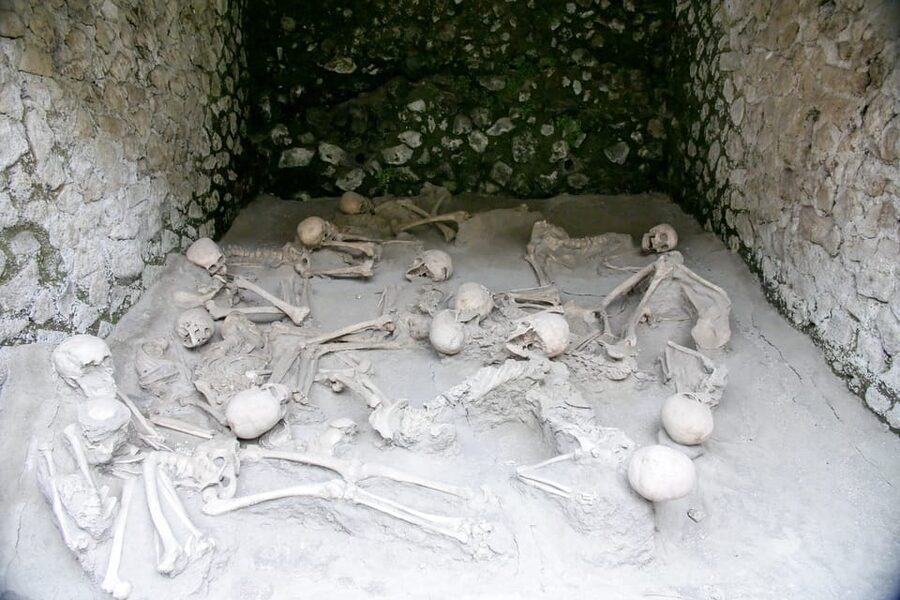
I love how compact the site feels compared with Pompeii, so you can actually slow down and notice details like frescoes and intact doorways without racing. I also like that the ruins show everyday life in 79 AD, including beds, food, and even the human remains found after the eruption.
One possible drawback is that the audio experience can be hit or miss depending on your setup. If the app audio is hard to navigate, you may end up relying more on your own observation and any site signage.
In This Review
- Key points to know before you go
- Ercolano in 79 AD, and why it feels different than Pompeii
- Tickets, timing, and the easiest way to enter
- Walking the preserved streets: houses, frescoes, and doorways you can picture
- Shops, baths, and the public spaces that show how Romans lived together
- Audio guide reality check: how to make it work without getting frustrated
- Price and value: what $21 buys you, and when the audio add-on pays off
- How long to plan: 3 hours can be enough, but leave flexibility
- Comfort tips for shade, heat, and a smoother day on stone
- On-site facilities: keep expectations realistic
- Should you book this Ercolano entry ticket with optional audio?
Key points to know before you go
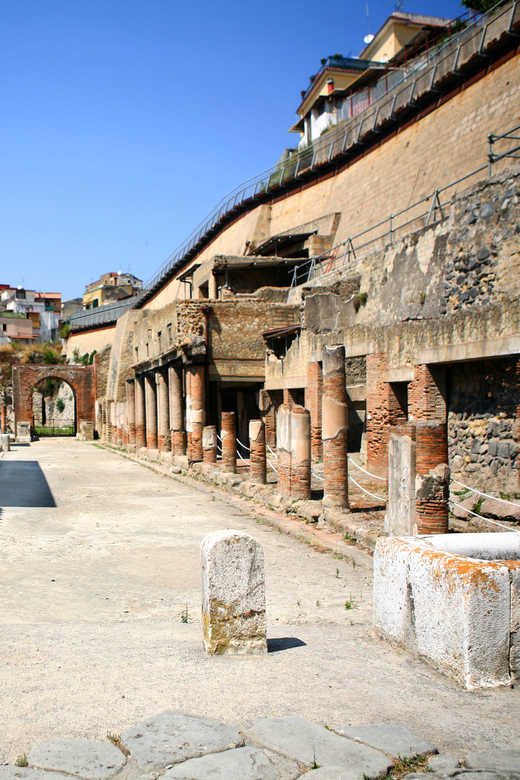
- Preservation you can feel, from roofs and beds to everyday items
- Less frantic pacing than Pompeii, so your visit can be more reflective
- Audio guide options (digital app or physical device), in multiple languages
- Heat and shade planning matters, especially in summer when you’ll want roof cover and breaks
- App data can be hungry, so download before you arrive if you use the phone option
- On-site signage and maps aren’t perfect, which is why you should plan a simple route
Ercolano in 79 AD, and why it feels different than Pompeii

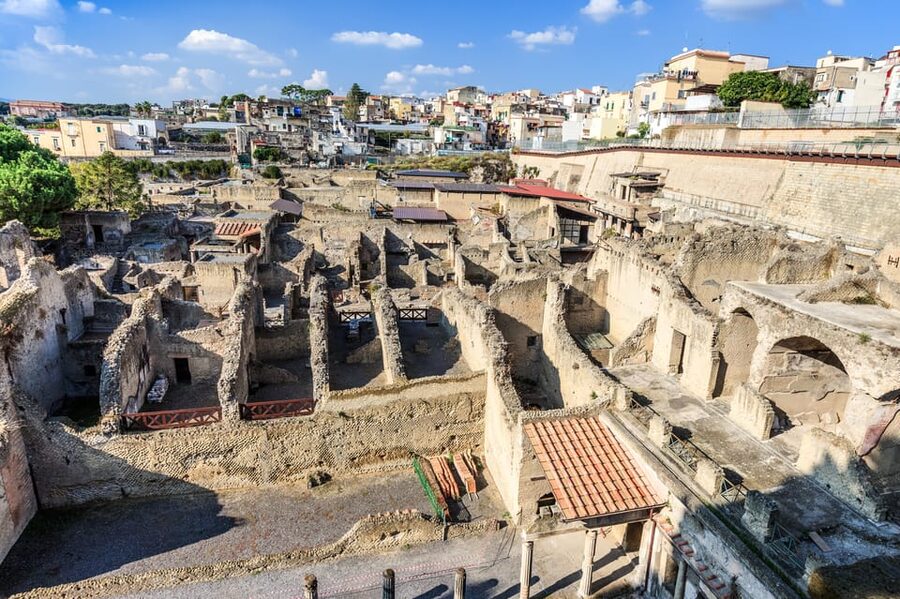
Herculaneum (Ercolano) is built on a blunt fact: in 79 AD, Mount Vesuvius buried the town under ash. The part that makes this place feel so haunting is not just the disaster, it is what survived.
You’re looking at a Roman town that was preserved in a way Pompeii often was not. Here, you can still see remnants of everyday spaces, including roofs, beds, doors, and even food. You also get that somber reminder of what happened to people during the eruption, including 300 skeletons found in the area. When you walk a cobbled street and then step toward a room that looks like it could have been lived in yesterday, the past turns from a story into a setting.
To me, that is the main difference: Herculaneum is smaller, more intimate, and more physical. You’re not just viewing monuments. You’re moving through the kind of spaces where people cooked, slept, shopped, bathed, and trained.
This is also why an audio guide helps. Even when you do not love audio, it can give you the “what am I looking at?” answers so your brain connects architecture to habits.
More of Pompeii and the volcano that buried it:


Tickets, timing, and the easiest way to enter
This is a self-guided entry ticket experience. You redeem your ticket by showing your mobile voucher at the online ticket desk on site. Once you’re in, you’re free to roam the archaeological area at your own pace.
Plan your timing carefully because you have to leave by closing. Opening hours split by season:
- March 16 to October 14: 9:30 AM to 7:30 PM (last admission 6:00 PM, archaeological area must be left by 7:00 PM)
- October 15 to March 15: 8:30 AM to 5:00 PM (last admission 3:30 PM, archaeological area must be left by 4:40 PM)
That matters because Herculaneum does not feel “big,” but it can still soak up your time. There’s a lot to register: different house layouts, frescoed interiors, public spaces, and lots of small architectural clues.
If you’re coming in high season, you may find it less crowded than Pompeii, which can be a relief. Out of season, it can be very quiet, which makes the place feel even more serious and personal.
Practical tip: arrive early enough to get inside without rushing later. You’ll get better pacing for photo stops and for reading the nearby explanations at your own speed.
Walking the preserved streets: houses, frescoes, and doorways you can picture

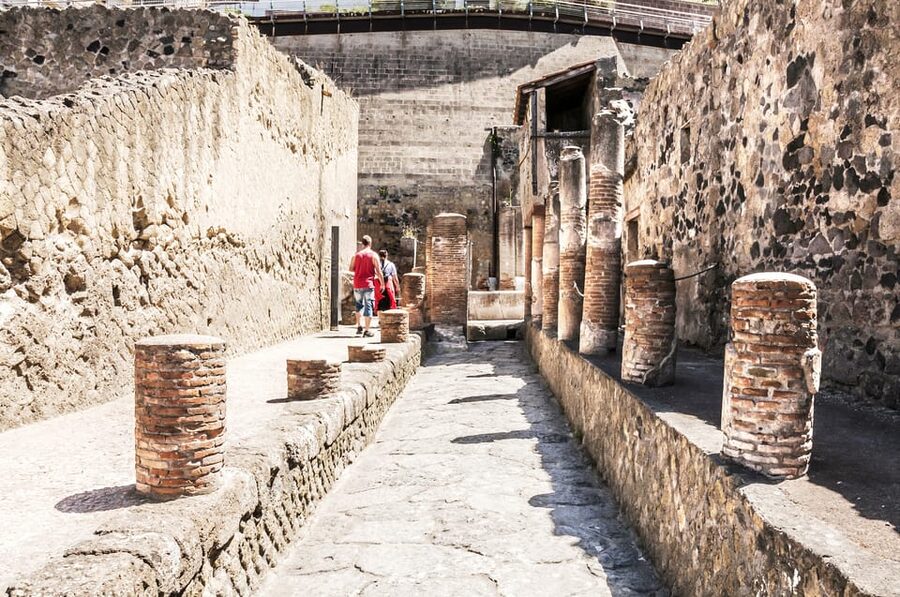
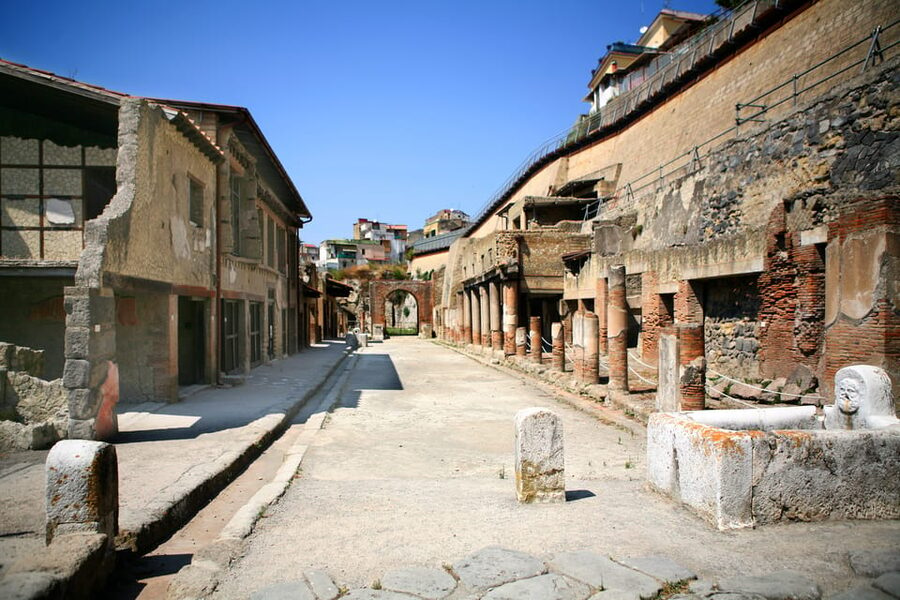
The heart of the visit is the walk itself. You’ll move along cobbled streets and into zones that make ancient Ercolano feel like a real town grid, not a collection of isolated exhibits.
What you should pay attention to:
- House fronts and thresholds: You’re seeing the boundary between public street life and private home life.
- Frescoes: They help you “hear” the household atmosphere, even if you do not know every scene detail.
- Rooflines and building edges: Preservation here makes those shapes unusually clear.
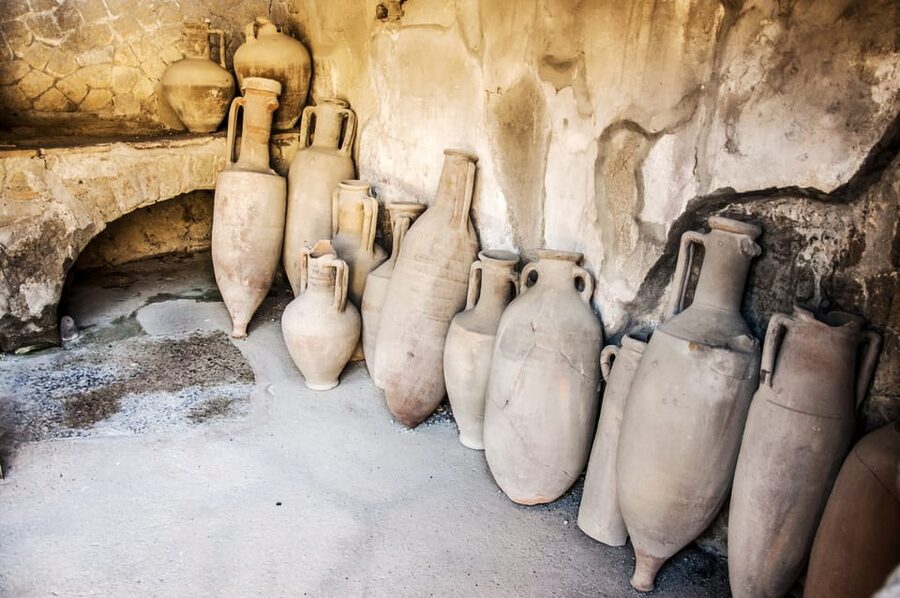
One reason people love Herculaneum is that the ruins can feel more complete. Instead of imagining what used to be there, you often get to observe what did survive. Think beds and doors. Think food remnants. Think the kind of storage and daily routines you usually only read about in textbooks.
A smart way to walk is to slow down at decision points. Each crossroads between streets and buildings is your chance to reset your focus. I like treating it like a loop, so you do not end up doubling back because you missed a small entrance into a particularly intact home.
Also, wear shoes that can handle uneven stone. The paths are not dramatic like a mountain trail, but the footing can be rough enough to make you tired if you’re in the wrong footwear.
Shops, baths, and the public spaces that show how Romans lived together
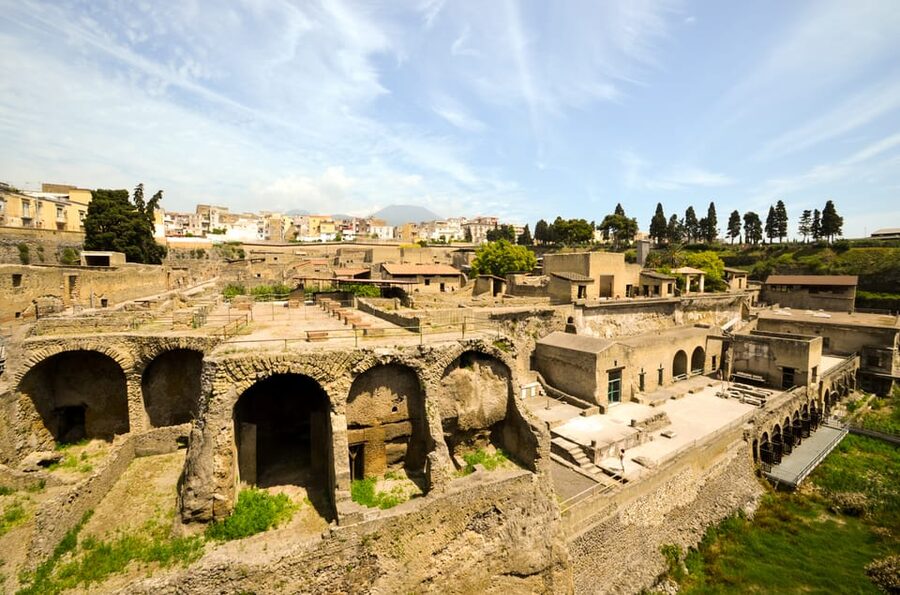
Herculaneum is not just private homes. Some of the most interesting parts are the public zones that show how people moved, trained, and relaxed as a community.
In the preserved layout, you can still see:
- Shops where daily commerce happened
- A public gymnasium space
- Public swimming baths
These areas are valuable because they connect the architecture to social rhythm. You’re not only seeing what people owned. You’re seeing where they gathered.
The gymnasium and bath spaces especially help you picture routine. Romans went out, practiced, met friends, and handled leisure in shared environments. Even if you only spend a few minutes in a public area, the change from domestic spaces to civic spaces helps your understanding click into place.
If you like “everyday history,” this is a strong match. You get a rare chance to compare private and public life in the same town, within an easy walking radius.
Introductions we still owe you around Naples
- Pompeii: Skip-the-Line Entrance Ticket with Audio Guide
★ 4.0 · 2,509 reviews - Pompeii: Skip-the-Line Entry Ticket with Audio Guide or Tour
★ 4.1 · 1,364 reviews - Herculaneum: Skip-the-Line Entry Ticket with Audio Guide
★ 4.3 · 870 reviews - Naples: National Archaeological Museum Ticket & Audio App
★ 4.4 · 617 reviews
Audio guide reality check: how to make it work without getting frustrated
The optional audio guide is one of the big selling points. There are two ticket options:
- A digital audio guide app you download to your smartphone
- A physical audio guide device
Language coverage is listed as English, French, German, Italian, and Spanish for the audio option overall. The digital app is specifically offered in English, French, Italian, and Spanish.
Here’s the main practical issue: the audio app can be hard to use if you are not set up well. Some visitors report the app can be confusing to navigate, and that it may need data. So if you choose the phone option, do this:
- Download the audio content before you arrive
- Bring wired headphones or reliable Bluetooth audio
- Keep your brightness reasonable so you do not drain your battery mid-visit
Also, do not assume the audio will guide you like a GPS. The audio should help you understand places you’re standing near, but you may still need to look around for the site feature being discussed.
My suggestion, based on what the audio experience can feel like on location: use the audio as a supplement, not your only compass. If you can’t match the narration to where you are standing, pause the audio and switch back to observation. Walk to the next clearly defined room or courtyard, then restart audio when you’ve found your bearings.
If audio frustration is your worst-case scenario, the physical device can be a calmer option because it removes phone battery and app navigation problems.
Price and value: what $21 buys you, and when the audio add-on pays off
The base price is listed at $21 per person, with entry access included. The audio guide is optional, and you pick the format through your booking option.
Here’s how to think about value:
- If you want maximum freedom and you can handle reading your way through a site, the entry ticket alone can be the best deal.
- If you want context while you walk, the audio guide can turn “beautiful ruins” into “real explanations about buildings and people.”
One thing to watch is total cost. If you pay extra for an audio option, you want that audio to activate smoothly at the redemption point. If your audio purchase is not recognized right away, you can end up stuck with plain entry and no working guide.
So my value advice is simple: if you choose the audio add-on, check that you get the audio access at the ticket desk right then, before you walk far into the site.
In exchange, a good audio track helps you notice things you would otherwise miss, especially small architectural cues and how different spaces fit together in daily life.
How long to plan: 3 hours can be enough, but leave flexibility
The experience is valid for 1 day, and the opening hours give you a broad window. In practice, Herculaneum can take less time than Pompeii because it is more compact.
A common pacing target is about 3 hours. That’s enough for a solid overview loop, including multiple buildings and a meaningful break for heat and photos. If you like to linger with frescoes, read each explanation panel, and sit in the shade, you’ll want more time.
If you are trying to fit both Pompeii and Herculaneum into one Naples area trip, Herculaneum can be the calmer second stop. Pompeii can be mentally loud because it is so large. Herculaneum lets you slow down, step inside preserved rooms, and take in how daily spaces functioned.
My practical recommendation: choose a visit window where you are not rushing the last admission. You’ll get better results, and you won’t feel like you’re sprinting to see “the main things.”
Comfort tips for shade, heat, and a smoother day on stone

Herculaneum is outdoors, so comfort is not optional. In summer it can be very hot. The good news is that you do get shade in places, including under rooflines in the town streets and within preserved building areas.
What I’d bring:
- Comfortable shoes for cobbled and uneven surfaces
- Water, because you will walk more than you expect
- An umbrella for shade if you tend to burn easily
- A charged phone if you use the app audio option
The site is easier on your body than some ruin walks, but it still stacks up walking time. If you plan to use audio, your stop-and-start pacing can increase total time. That’s another reason to arrive early.
Also, bring your patience for small navigation issues. People report it can be a bit hard to find the right dialogue for where you are standing, and maps and signage are not always perfectly clear. That does not spoil the experience, but it’s worth expecting you might have to re-orient once.
On-site facilities: keep expectations realistic
On-site food and breaks are not the main event here. One review described café facilities as basic. So I treat food planning as a “bring your own backup” situation.
If you need a sit-down meal, you may prefer to eat outside the site before or after your visit. Inside the archaeological area, a snack or drink can help you stay comfortable, but do not count on a full dining experience to reset your energy.
Think of your time like this: you’re there to walk, look, and process. Short breaks are part of the job.
Should you book this Ercolano entry ticket with optional audio?
Yes, book it if you want a self-guided walk through one of the most preserved Roman cities from 79 AD. This is a great fit for people who like archaeology but also want daily-life details, not just big ruins.
Choose the audio option if you:
- Prefer explanations while you walk
- Want help connecting rooms, baths, gym spaces, and everyday habits
- Like to understand what each preserved feature likely meant
Skip the audio add-on if you:
- Have a strong interest in visual details and can enjoy reading whatever you find on site
- Know you dislike app-based experiences and prefer quiet viewing
- Plan to pair this with a separate live guide later
Bottom line: Herculaneum is memorable because it is human-scale and preserved in a way that makes you slow down. If you plan your timing, download audio content ahead, and give yourself a comfortable pace, this entry ticket can be one of the most satisfying stops in the Naples region.
More Self-Guided Tours in Naples
- Pompeii: Skip-the-Line Entry Ticket with Digital Guide App
★ 4.1 · 770 reviews - Rome: Colosseum & Forum with Audio Guide App -Optional Arena
★ 4.2 · 24,770 reviews - Rome: Pantheon Fast-Track Ticket and Official Audio Guide
★ 4.3 · 21,008 reviews - Venice: Grand Canal Gondola Ride with App Commentary
★ 4.1 · 18,908 reviews
Just introduced: the newest Naples write-ups
- Capri Boat Tour from Naples – Small Group, Swim & Relax★ 5.0 · 341 reviews
- Pompeii Guided Tour from Naples with Skip-the-Line Entry★ 5.0 · 343 reviews
- Procida Island Tour by Boat 2h 15m with Swimming and Underwater Photos★ 5.0 · 344 reviews
- From Naples: Caserta Palace Ticket and Train with Audioguide★ 4.3 · 348 reviews
- Naples Shore Excursion: Private Tour to Sorrento, Positano, and Amalfi★ 4.5 · 352 reviews
- From Naples: Capri Boat Day Trip with Drinks★ 4.7 · 354 reviews
- From Naples: Sorrento, Positano and Amalfi Tour★ 4.6 · 361 reviews
Pompeii & Vesuvius Tours, compared.

Entry Ticket and Guided Tour with an Archaeologist
Read our review →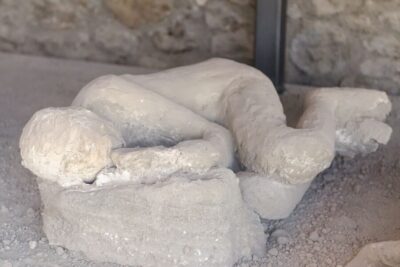


Pompeii Small Group Tour with an Archaeologist
Read our review →
Pompeii, Amalfi Coast and Positano Day Trip from Rome
Read our review →Browse the lists this tour appears in