
Reviewed · POMPEII & VESUVIUS TOURS
Naples: Pompeii Self Guided Audio Tour
Pompeii gets easier when stories hit your phone. This self-guided Pompeii audio tour turns the ruins into a set of 60+ geolocated points with audio, photo, and text so you can choose where to stop and what to hear. You also get a guide you can reuse later, which matters when you want a second pass at your own pace.
I like that the narration is built to keep you moving through Pompeii, not stuck reading in the hot sun. The main catch is tech and connections: you should download the guide before you enter, because the site’s internet can be weak, and the app experience can be glitchy if you jump in and out.
In This Review
- Key takeaways before you go
- Why Pompeii works so well with a smartphone audio guide
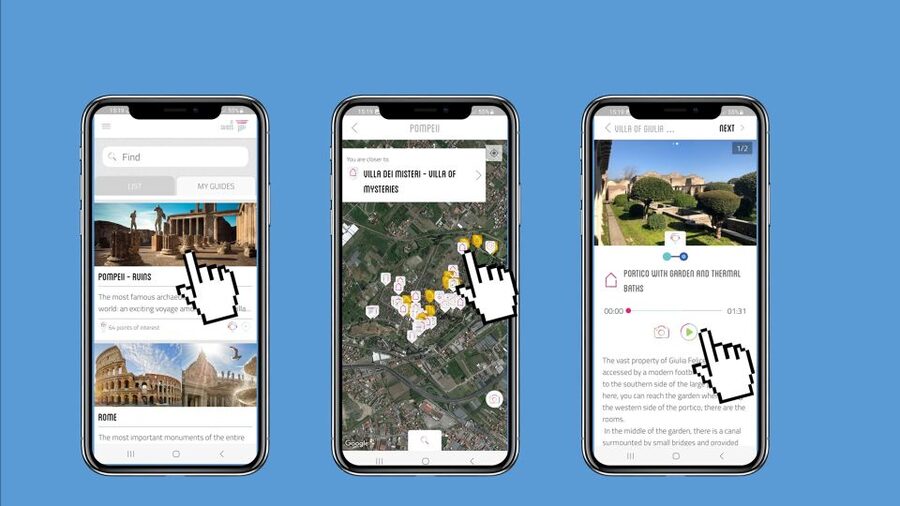
- Getting your ITGUIDES guide onto your phone (and why prep matters)
- Pompeii at your pace: how the geolocated map guides your route
- Amphitheater stories: where the guide turns ruins into an event
- The House of the Vettii: reading status in doorways and walls
- Lupanare and Roman leisure: uncomfortable, but explained
- Roman baths, taverns, and the food-and-wash details you actually remember
- Frescoes, mosaics, and finding the good stuff without losing your day
- Value for money: price, duration, and what you actually get
- Who should choose this self-guided Pompeii audio tour
- Should you book this Pompeii self-guided audio tour?
Key takeaways before you go
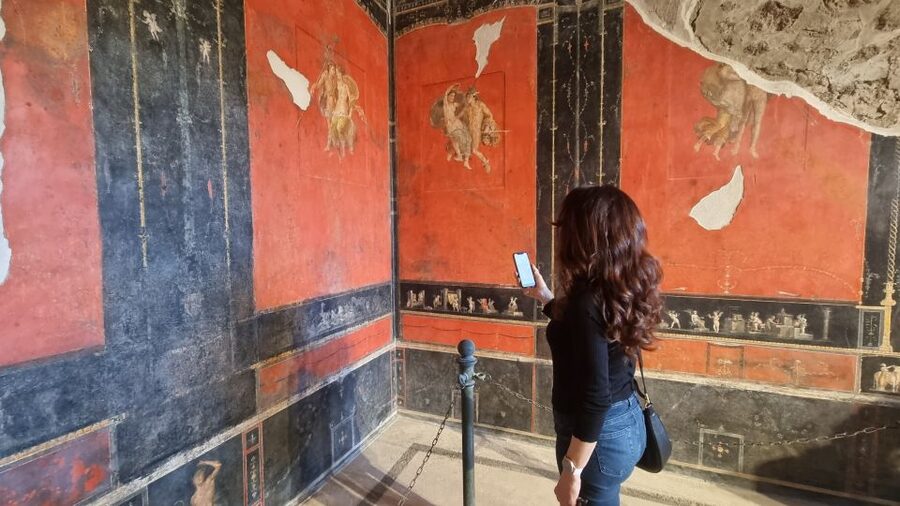
- 60+ geolocated points with audio, photo, and text, so you know what you are looking at
- Your guide lasts forever, letting you revisit Pompeii without buying again
- Hypertext extras that expand names of gods, heroes, and technical terms on your phone
- Interactive map with checkmarks that helps you track what you listened to
- Self-guided by smartphone, with no meeting point and start times tied to opening hours
Why Pompeii works so well with a smartphone audio guide
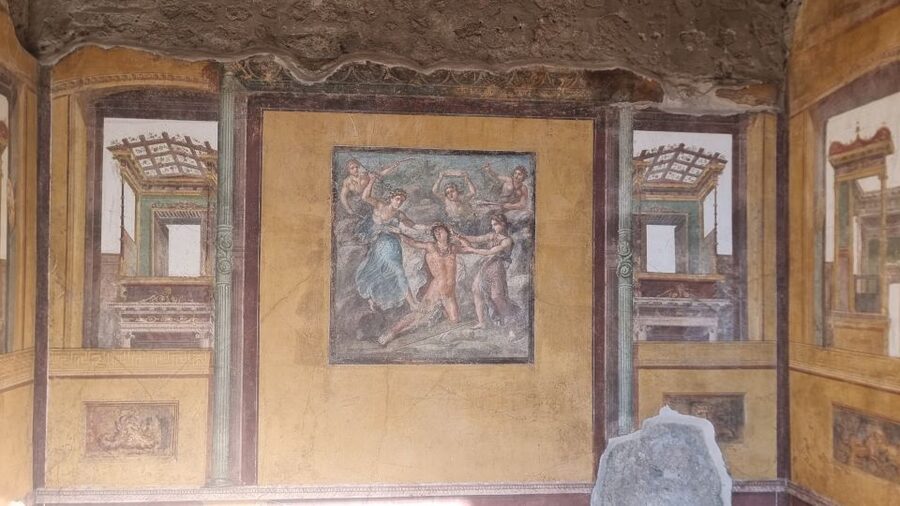
Pompeii can feel like sensory overload at first. Streets, doorways, stair steps, frescoed walls, and a theater in the middle of the city, all asking for your attention at once. A smartphone audio tour helps because it gives you a sequence, then gets out of your way.
This ITGUIDES experience is built around geolocated audio points. That means you walk up to something specific and the guide is designed to match what you see. The tour also offers descriptions in hypertext on your phone, so when the guide mentions a god, hero, or technical term, you can tap for extra context. It is a nice way to learn without dragging a printed book around.
The value angle is strong too. The price is listed at $4.70 per person, and the tour highlights savings of more than 50% versus an audioguide sold at the ticket office. You also get the audio guide to keep for future visits, which can make the math even better if you love history enough to return.
The only real limitation is that Pompeii is not a place where you can rely on perfect phone behavior. Between spotty connections and normal smartphone quirks, you need a small amount of prep to make the day smooth.
More of Pompeii and the volcano that buried it:



Getting your ITGUIDES guide onto your phone (and why prep matters)
You do the heavy lifting before you start walking the ruins.
After purchasing, you download the ITGUIDES app from your phone’s app store. Then you unlock the Pompeii guide inside the app. The process is straightforward: you go to the menu, find the contact page, and send your app user ID along with your GetYourGuide order number. After that, the Pompeii guide becomes available to use.
Here is the key practical tip: the activity strongly advises you to download the contents locally before you go, because internet connection at the archaeological site can be unreliable. So even if you plan to use your phone’s GPS and interactive map, you still want the audio files and map data ready ahead of time.
Also, keep the plan simple. Start with the app ready, then arrive at Pompeii, then activate your 4-hour window when you want to begin. If you wait until you are in the middle of the ruins to try downloading, you can burn time just fighting your phone instead of enjoying the stones.
Pompeii at your pace: how the geolocated map guides your route
You can think of this tour as a playlist tied to spots in Pompeii. The guide includes more than 60 points of interest. Each point is described with audio plus photo and text, and the map is designed to connect you to those points as you walk around.
I like this style for Pompeii because it supports different energy levels. Want to linger near mosaics and frescoes? You can. Want to sprint between major stops before the midday heat? You can. This is also useful if some areas are closed during your visit, since you can focus on the points you can actually access.
The map also adds helpful structure. One of the most praised features is the interactive map that indicates what you have visited, using checkmarks. That can save you from the classic problem of an audio guide, where you finish a recording and then forget which stop comes next.
A few small app frustrations showed up in the feedback you provided. Some users noted that if more than one audio clip exists at a point, the checkmark might not appear even though the clips play. Others said the app can bounce you back to the map after you listen, zooming out so you need to zoom back in to re-find your location. And one mention said there is no obvious dot marking the exact spot. None of that ruins the idea, but it is worth knowing so you do not blame yourself if your phone behaves oddly.
My suggestion is to treat the map as your navigation tool, not your perfect GPS. Stay patient, and if the map zoom feels off, do the quick manual zoom-in and keep going.
Amphitheater stories: where the guide turns ruins into an event
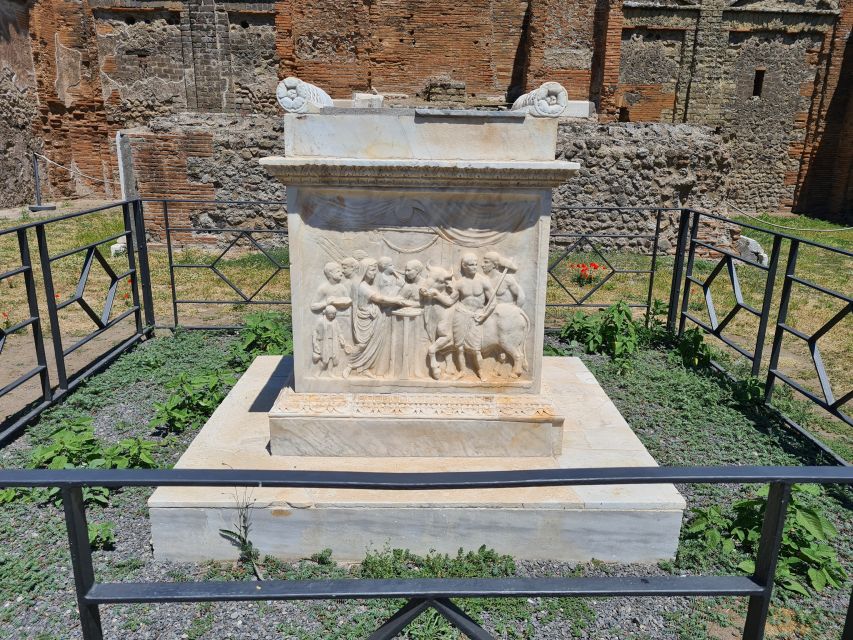
One of the named highlights in this guide is Pompeii’s amphitheater. This is a smart place to start listening, because it sets the tone for the city. The amphitheater was built for public spectacle, and the recordings are designed to help you connect the architecture to what people did there.
Since the tour is geolocated, you get the audio tied to the exact spot you are standing in, which makes it easier to visualize the space. Even if you have visited theaters before, Pompeii’s amphitheater feels different because it sits inside a city that also had homes, workshops, and daily life just steps away.
A self-guided format also helps here because you can adjust how much you care about the spectacle vs the building. Some people want the high-level story first, then details like layout and design. Others prefer to focus on how the space looked and what it implies about Roman entertainment. Either way, the audio points are meant to give you a guided path without locking you into one exact order.
If you are the type who likes to understand what you are looking at before you move on, this stop is a great anchor.
Introductions we still owe you around Naples
- Pompeii: Skip-the-Line Entrance Ticket with Audio Guide
★ 4.0 · 2,509 reviews - Pompeii: Skip-the-Line Entry Ticket with Audio Guide or Tour
★ 4.1 · 1,364 reviews - Herculaneum: Skip-the-Line Entry Ticket with Audio Guide
★ 4.3 · 870 reviews - Naples: National Archaeological Museum Ticket & Audio App
★ 4.4 · 617 reviews
The House of the Vettii: reading status in doorways and walls
The guide calls out the House of the Vettii, and that makes sense. Houses in Pompeii are like time capsules, but they are also performance spaces. Wealth, taste, and even occupation can show up in the way rooms are organized, decorated, and connected.
With this audio tour, you can move room to room and pull up the relevant point of interest as you go. That is important because a house is not just one object. You need context to notice what is decorative, what is functional, and what signals social standing.
One of the big benefits of this smartphone format is that the guide does not ask you to read everything yourself. It gives you audio while you look at frescoes and mosaics, plus maps that help you find the “best preserved” visual bits. So you are not stuck choosing between walking away to rest your eyes or staying put and squinting at details.
Also, the tour includes hypertext extras when terms come up. If you see symbolism or references and want more explanation, you can tap through instead of guessing.
If you want a Pompeii experience that feels like a guided walk but still stays personal, this is one of the stops that can do that best.
Lupanare and Roman leisure: uncomfortable, but explained

The lupanare, described in the guide as Pompeii’s brothel, is another highlight. This is not a casual stop. It is a subject that can make people blush, and it can also be misunderstood if you just stare at the site without context.
What I like about using an audio guide for places like this is pacing and framing. You can listen when you are ready, pause when you need a minute, and move on. The recordings are meant to explain curiosities and daily realities rather than just pointing at buildings.
Because the guide is built around points of interest, you can connect details to the room you are standing in. That helps you avoid the common problem of reading a brochure version of Pompeii that skips the messier parts.
If you would rather keep your tour strictly PG, you can still do it. The guide is self-guided, so you decide whether you want every topic in the map, or only the ones that suit your comfort level.
Roman baths, taverns, and the food-and-wash details you actually remember

One reason people love Pompeii is how it shows the real mechanics of life, not just monuments. This guide includes audio about how Roman baths worked, plus the food world, including what people ate in Roman taverns and how bread was made.
It is the kind of information that sticks because it turns stones into daily routines. Baths are a perfect example. You can’t fully understand what you are seeing until you know how the system functioned, what people did in sequence, and why the design mattered.
Bread is the same. Flour to dough to baking is not glamorous, but it connects directly to where people lived, how they worked, and what their days looked like. When the guide explains it in short audio points, you start noticing clues around you. You may also find yourself thinking about scale, labor, and materials, which is exactly what makes Pompeii feel alive.
One detail mentioned in the guide description is how urine was used for wool processing. That is the sort of fact that sounds shocking until you learn the logic behind it in an ancient context. It is also a good reminder that Roman life included practical solutions, even if they make modern visitors uncomfortable.
These are the stops that help you go beyond postcard Pompeii.
Frescoes, mosaics, and finding the good stuff without losing your day
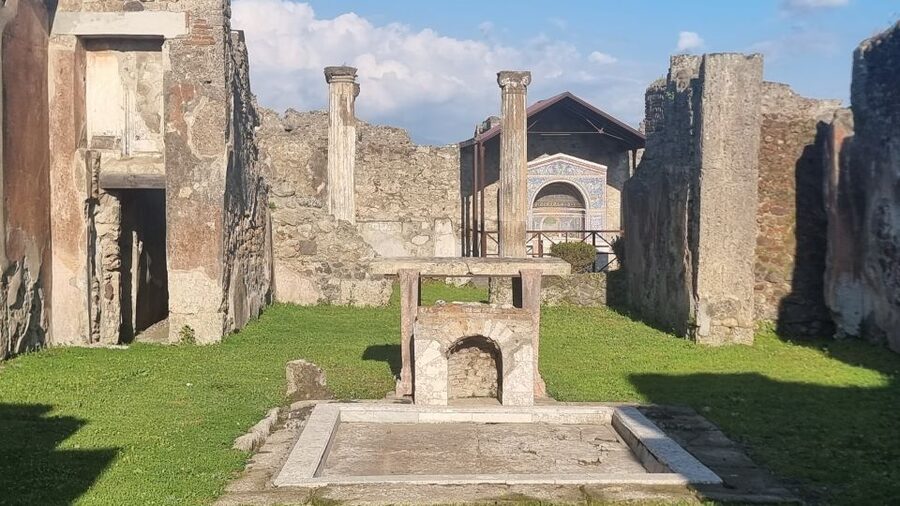
Pompeii is full of decorations, but the condition varies. This guide focuses attention on the most beautiful and best preserved frescoes and mosaics by mapping them as specific points of interest.
That is a big deal because Pompeii can be time-consuming. You might walk past a decorated wall and miss why it matters. Here, the audio is designed to steer you toward the visuals that are worth time, then explain what you are seeing while you are looking at it.
The map helps with flow. You can plan a route based on the points you care about, rather than drifting randomly. And because the tour is designed for your smartphone, you can keep a single device as your “guidebook,” navigator, and recorder at the same time.
If you like photos, you also get photos tied to points, which can help you understand what you are seeing when the lighting angle is bad or the wall is partially obscured.
In the feedback you shared, multiple people praised the interactive map for helping them move around and not miss major domus features. The most practical warning is about map behavior after audio playback, like zooming out. So keep your expectation realistic: you will likely do small manual adjustments on the map as you go.
Value for money: price, duration, and what you actually get
Let’s talk value, because at $4.70 per person, you should know what you are paying for.
You are not buying an entry ticket. The Pompei site entrance ticket is not included. That said, this guide aims to give you a full interpretive layer for far less than an audioguide you might buy on site. The highlight claims over 50% savings compared to the ticket office audioguide, and based on the overall positive feedback, many people feel the content justifies the price.
You are also buying convenience. The tour is self-guided, with no meeting point. That means you are not stuck waiting for a group. You can start when the ruins are open and when your energy matches your walking pace.
Duration matters too. The guide is listed as valid for 4 hours from first activation. That is a sweet spot for Pompeii for many people. Long enough to cover a meaningful circuit with amphitheater, major houses, and a few thematic stops. Short enough to avoid turning the day into a phone battery drama.
You also get the audio guide on your phone, and the highlights claim it is yours forever for reuse later. For visitors who think they might return to Pompeii, that one detail can shift the whole value equation in your favor.
Lastly, you get multiple languages: Italian, English, French, German, Spanish. So you are not stuck if your group has mixed language needs.
Who should choose this self-guided Pompeii audio tour
This is a strong match if you want a flexible day. I think it suits three kinds of visitors:
If you like self-paced travel, you will appreciate being able to choose the order and linger where you care. If you are a budget-minded traveler, the price plus the claimed savings are hard to ignore. And if you want more than “look at that wall,” the geolocated prompts and hypertext explanations are built to teach.
It is also good for groups, since each person can keep their own pace. And if you are curious about Roman daily life, the included themes like baths, taverns, bread, and wool processing can make Pompeii feel less like a museum and more like a functioning city.
It might be less ideal if you rely on perfect phone behavior. If you hate downloads, hate tapping menus, or want a guide who corrects you in real time, you may prefer a live guide. But if you are comfortable doing a little prep, this works.
Should you book this Pompeii self-guided audio tour?
If you want a day in Pompeii that feels guided without locking you into a schedule, I would book it. The big selling points for most people are the 60+ geolocated points, the interactive map, and the sense that you can learn while you walk instead of after you sit down.
Book it especially if you can do the key prep step: download the guide contents ahead of time. That one move protects you from the site’s connectivity issues and turns the experience into a smooth, self-directed route.
Skip it only if you expect a totally hands-off experience with zero tech effort. You will be using a map, tapping points, and managing app behavior. For a smartphone-first format, that is normal, but it is still worth saying out loud.
If that sounds like your style, this is a smart, low-cost way to make Pompeii click.
More Self-Guided Tours in Naples
- Pompeii: Skip-the-Line Entry Ticket with Digital Guide App
★ 4.1 · 770 reviews - Ercolano: Herculaneum Entry Ticket with Optional Audio Guide
★ 4.1 · 581 reviews - Ercolano: Herculaneum Skip-the-Line Ticket & Audio Guide
★ 4.0 · 275 reviews - Rome: Colosseum & Forum with Audio Guide App -Optional Arena
★ 4.2 · 24,770 reviews
Just introduced: the newest Naples write-ups
- Pompeii Private Tour with an Archaeologist Guide★ 5.0 · 184 reviews
- Mount Vesuvius Tour from Pompeii Led by an Expert Guide★ 5.0 · 185 reviews
- Form Naples, Premium Tour of Sorrento, Positano, Amalfi★ 5.0 · 186 reviews
- Culinary Secrets of Backstreet Naples with Culinary Backstreets★ 5.0 · 186 reviews
- Pompeii and Mount Vesuvius excursion from Naples★ 4.6 · 188 reviews
- Naples: Pompeii Archaeology Park Tour & Skip-the-Line Entry★ 4.8 · 190 reviews
- Stories of Pompeii: Small Group tour with archeology expert guide★ 5.0 · 191 reviews
Pompeii & Vesuvius Tours, compared.

Entry Ticket and Guided Tour with an Archaeologist
Read our review →



Pompeii Small Group Tour with an Archaeologist
Read our review →
Pompeii, Amalfi Coast and Positano Day Trip from Rome
Read our review →Browse the lists this tour appears in