

Reviewed · POMPEII & VESUVIUS TOURS
Pompeii: Skip-the-Line Entry Ticket with Audio Guide or Tour
Pompeii hits you in the gut, fast. This skip-the-line entry with an audio guide and digital map is one of the easiest ways to make sense of the UNESCO ruins without losing an hour to crowds. I especially like the fast track entry setup and the chance to explore at your own pace with location-triggered commentary.
Two things I really appreciate here: first, you’re routed through the process quickly, starting at the Vox City info point in Piazza Esedra (right in front of Hotel Vittoria). Second, the audio guide is designed to help you find what you’re looking at, with multilingual commentary and a map you can use once you download it.
One thing to consider: the audio experience depends on your phone and planning. You’ll want to bring headphones and a charged smartphone, and some people report the autoplay or GPS can be a bit inconsistent once you’re inside.
In This Review
- Key Pompeii Highlights Worth Your Time
- Why This Pompeii Ticket Works With Real Travel Time
- Getting In Quickly at Piazza Esedra (Vox City Meeting Point)
- The Self-Guided Audio Plan: How You’ll Actually Use It
- What You’ll See in Pompeii (And Why These Stops Matter)
- The streets, plazas, and the feeling of a real city
- Temples and religion, including Venus, Apollo, and Jupiter
- The House of the Faun and the idea of wealthy domestic life
- Mosaics and the public baths
- The Forum area, theaters, and the civic backbone
- Vesuvius views, plus the eruption story you cannot ignore
- Small details that make Pompeii feel human
- The Optional Art Historian Tour: When It’s Worth Adding
- How Long Is Enough? A Realistic 2-Hour Plan
- Price and Value: What $37 Gets You
- Small Logistics That Make a Big Difference
- Should You Book This Pompeii Skip-the-Line Ticket?
- FAQ
- Where do I exchange my voucher and get the entry tickets?
- Is the entry ticket really skip-the-line?
- What’s included in the audio guide?
- Do I need headphones?
- Can I bring my smartphone?
- Does this ticket include Pompeii’s suburban villas?
- What languages are available for the guided tour?
- How long is the experience?
- Can I cancel?
Key Pompeii Highlights Worth Your Time
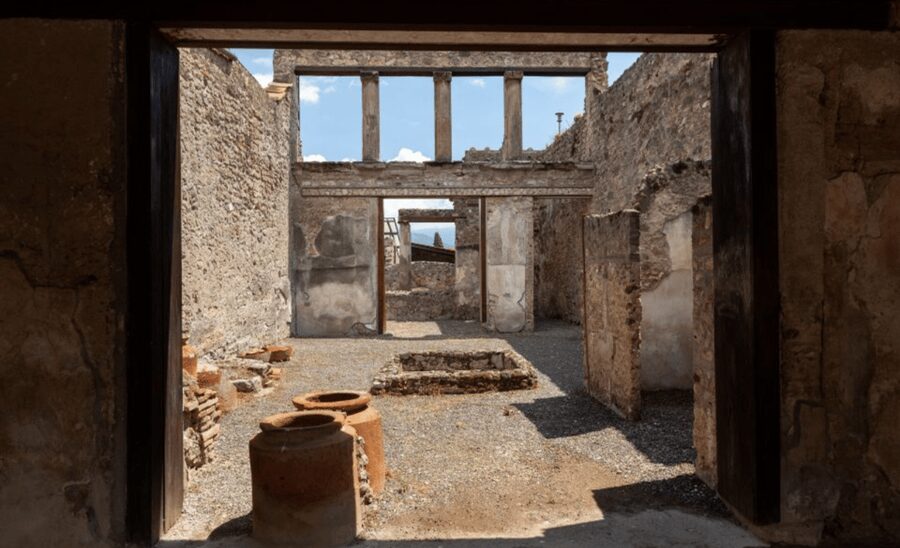
- Skip-the-line entry via Vox City at Piazza Esedra, so you get moving sooner
- Audio guide with a digital map in multiple languages, including location-based playback
- Top sights in a tight window like the Forum area, temples dedicated to Venus, Apollo, and Jupiter, and the theater zone
- Roman daily-life details such as mosaics in the public baths and household touches like wine jars labeled Vesuvinum
- Volcanic disaster history tied to the 79 C.E. eruption and the haunting plaster casts of victims
- Optional guided tour with an art historian if you want someone to steer the story
Why This Pompeii Ticket Works With Real Travel Time
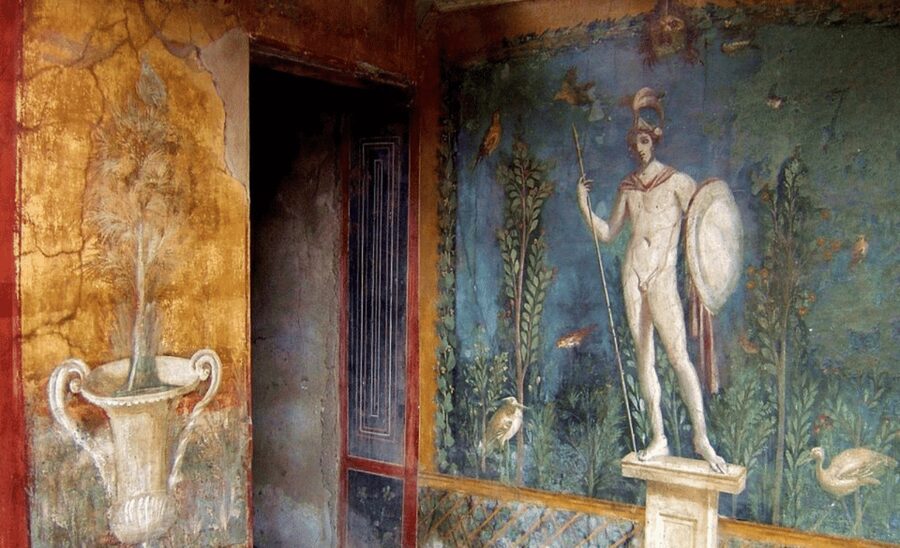
Pompeii is huge. Even when you think you can handle “just a couple hours,” the ruins have a way of turning your feet into your main form of decision making. This ticket is built for that reality, with skip-the-line entry plus an audio guide that helps you go from place to place without needing a human conductor.
I like the practical design: pre-book, exchange the voucher at the Vox City info point in Piazza Esedra (in front of Hotel Vittoria), then get into the site and start seeing. No waiting around with your phone out trying to figure out ticket machines while other people steamroll toward the entrance.
Another value point is choice. You can go self-guided with the audio map, or you can add the optional guided tour with an art historian if you want the big-picture story. That matters because Pompeii is not just “old rocks.” It’s a whole city snapshot, including public spaces, private homes, and everyday objects.
More of Pompeii and the volcano that buried it:



Getting In Quickly at Piazza Esedra (Vox City Meeting Point)
Your starting point is simple and central: Piazza Esedra, at the Vox City info point in front of the Hotel Vittoria. You exchange your voucher there for the official entry tickets, then meet your guide at the same place if you selected the guided option.
A few practical tips that save stress:
- Arrive about 5 minutes early if you booked a guided departure.
- Keep an eye on the Vox City desk, since that’s where the voucher exchange happens.
- Don’t assume you can grab everything on the spot, because the audio guide requires downloading ahead of time using the QR code on your voucher.
If you’re doing Pompeii as part of a bigger Naples or Amalfi week, this location is a win. It’s not tucked away at the edge of nowhere. You can line it up with other plans the same day.
The Self-Guided Audio Plan: How You’ll Actually Use It

This is a “listen and walk” experience, not a strict step-by-step itinerary. The audio guide is offered with multilingual commentary (English, French, Spanish, German, and Italian), plus a digital map.
Two ways you’ll likely use it:
- You pre-download the audio guide using the QR code on your voucher, then follow the map and choose what you want to hear.
- On-site you rely on playback cues to trigger audio based on where you are, if the app and GPS cooperate.
In the best version of this system, you reach an area of interest and the narration kicks in automatically. That’s when the ruins start to feel like a living city instead of a random scattering of walls.
In the version you should prepare for, you may have to work a little more manually. Some visitors reported that autoplay or GPS locating can be inconsistent, and a few struggled with finding the correct place in the app. So your best strategy is not to panic. Bring patience, and consider a quick stop at a map moment so you can get your bearings.
What You’ll See in Pompeii (And Why These Stops Matter)
Pompeii is covering roughly 44 to 50 hectares (it’s a large site, and the numbers vary depending on how the area is described). With a 2-hour slot, you’re not going to see everything. You’re going to see enough to understand the city’s rhythm.
Here are the types of places this experience guides you toward, and what makes them click:
Introductions we still owe you around Naples
- Pompeii: Skip-the-Line Entrance Ticket with Audio Guide
★ 4.0 · 2,509 reviews - Herculaneum: Skip-the-Line Entry Ticket with Audio Guide
★ 4.3 · 870 reviews - Naples: National Archaeological Museum Ticket & Audio App
★ 4.4 · 617 reviews - Ercolano: Herculaneum Entry Ticket with Optional Audio Guide
★ 4.1 · 581 reviews
The streets, plazas, and the feeling of a real city
Pompeii’s streets run under your feet like time capsules. You’ll pass through public areas that once held daily life: marketplaces, civic spaces, and building clusters that show how people moved and socialized.
What’s special here is how quickly the ruins give you scale. It stops being “a site with buildings” and starts being “a city that had neighbors.”
Temples and religion, including Venus, Apollo, and Jupiter
You’ll encounter temples dedicated to major gods, including Venus, Apollo, and Jupiter. Even if you don’t know Roman theology, the layout helps you see how religion shaped public life.
Look for the way sanctuaries sit in relation to roads and gathering areas. That’s where the city’s logic becomes clear.
The House of the Faun and the idea of wealthy domestic life
At some point, you’ll hit the residential side of Pompeii, including the House of the Faun. These homes show wealth through layout, decoration, and the sheer confidence of architecture.
It’s one thing to see a wall. It’s another to stand where people ate, relaxed, and displayed status.
Mosaics and the public baths
If you like visual details, you’ll likely enjoy the mosaics in the public baths area. The point is not just beauty. It’s how Romans turned hygiene, leisure, and social time into a daily routine.
When your audio guide connects a mosaic to the larger culture of public life, it feels less like decoration and more like storytelling.
The Forum area, theaters, and the civic backbone
The Forum is a major anchor, and you’ll also pass the theater zone. With Pompeii, these are the places where social life, politics, and performance show up in physical form.
If you want a “movie set” feeling, focus your eyes on entrances, walkways, and audience-shaped spaces.
Vesuvius views, plus the eruption story you cannot ignore
You’ll get views of Mount Vesuvius as you move through the site. That visual connection helps the 79 C.E. eruption history land.
Pompeii is preserved because of disaster, and that double truth is haunting. The plaster casts of victims are especially memorable because they freeze a moment of catastrophe into human form.
Small details that make Pompeii feel human
This is where Pompeii surprises you, and the audio guide helps if you use it like a detective. Keep your eyes open for:
- Inscription examples in homes, like Sirico’s house reading Salve lucru (Welcome, profit)
- Wine references tied to the volcano, like jars labeled Vesuvinum
- Everyday objects and the way people labeled and sold things
These details are quick. But they add up fast, because they turn “history” into “people.”
The Optional Art Historian Tour: When It’s Worth Adding

The guided option brings a professional art historian into the mix, in English, Spanish, or Italian. This can be a great choice if:
- You want a clearer storyline from the start
- You struggle with self-guided navigation in big sites
- You care more about “why it matters” than “what it looks like”
In fact, several guides have been praised for clear English, friendly attitude, and good sense of humor. The tour experience also tends to work well with headsets when live guidance is paired with a radio system, since you’re less likely to lose the explanation in crowds.
The drawback is simple: you’re tied to a schedule. In a place this big, being slightly “pulled along” can be either perfect or annoying, depending on your travel style.
If you have limited energy, a live guide can also prevent the classic Pompeii problem: walking for a while, then realizing you didn’t connect what you saw to the larger story.
How Long Is Enough? A Realistic 2-Hour Plan
This ticket is built around a 2-hour duration and it’s designed for efficient entry and a smart selection of highlights. Officially, many visitors spend 2 to 4 hours inside Pompeii, so you’re choosing a pace.
My practical advice: treat the 2 hours as a “starter pack,” not a completion certificate. If you feel great at the end, you can often keep exploring. Some visitors reported staying longer after a guided portion finished.
If you only have two hours, focus on:
- One big civic thread (Forum and theater zone)
- One domestic thread (a highlight home like the House of the Faun)
- One art or craft thread (mosaics in the public baths)
- One emotional thread (eruption story and victim casts)
That combination gives you Pompeii’s range without turning your day into a marathon.
Price and Value: What $37 Gets You
At about $37 per person, the value comes from three things working together:
- Skip-the-line entry, which can be the difference between “wow” and “ugh, another wait”
- An audio guide plus digital map, which can make a huge site feel navigable
- The option to upgrade to a guided art historian tour if you want context
That said, you should read the fine print in your head. This ticket does not include access to the suburban villas, specifically including the Villa of the Mysteries, Villa of Diomedes, and Villa Regina. If those villas are on your must-see list, this option is not the right match.
One more value check: some people noticed the base entrance ticket cost is lower when purchased directly at official pricing, and that the audio combo can feel pricey compared to the bare entry ticket. In other words, the audio guide is where you’re paying for convenience.
If you love independence and you’ll actually use the map and narration, $37 can feel fair. If you hate apps and prefer paper guides, you might want to consider whether you’d get your money’s worth.
Small Logistics That Make a Big Difference
These are the details that quietly shape your experience:
- Bring headphones. The listing says headphones are not included.
- Bring a charged smartphone. The audio guide requires downloading and using your device.
- Download using the QR code on your voucher prior to arrival.
- Watch for reliability issues. Some visitors had trouble with app autoplay or locating themselves via GPS, and a few said they had to work harder to find the right point in the guide.
- Plan for weather. Pompeii can be hard in rain, and some people left after only 2 hours because conditions turned rough.
Also note: you need your own phone to get the most out of the audio guide, so if your group includes non-smartphone users, you’ll likely want to rely more on the live guide option or adjust expectations.
Should You Book This Pompeii Skip-the-Line Ticket?

Book it if you want the easiest path into Pompeii and you plan to use the audio guide seriously. This is a strong choice for first-timers, time-crunched visitors, and anyone who doesn’t want to spend their vacation standing in line.
Skip it or reconsider if:
- The suburban villas are non-negotiable for your itinerary, since they are not included.
- You know your phone battery and connectivity are likely to be a problem.
- You prefer a fully guided, stop-by-stop experience with someone physically in front of you for the entire time.
If you’re on the fence, here’s the decision rule I’d use: if you can handle listening while walking and you can keep your phone charged, this ticket is good value for a tight schedule. If you want maximum hand-holding, choose the guided option or plan a different structure.
FAQ
Where do I exchange my voucher and get the entry tickets?
You exchange the voucher at the Vox City info point located in Piazza Esedra, in front of the Hotel Vittoria.
Is the entry ticket really skip-the-line?
Yes. This includes a skip-the-line entry ticket, designed to help you avoid long queues at entry.
What’s included in the audio guide?
You get an audio guide with a digital map, with multilingual commentary available in multiple languages. You download it using the QR code on your voucher prior to arrival.
Do I need headphones?
Yes. Headphones are not included, so you’ll want to bring your own.
Can I bring my smartphone?
Yes, and you should. The audio guide requires a charged smartphone for download and use.
Does this ticket include Pompeii’s suburban villas?
No. It does not include access to the suburban villas, including the Villa of the Mysteries, Villa of Diomedes, and Villa Regina.
What languages are available for the guided tour?
The guided tour option (if selected) is available in English, Spanish, or Italian.
How long is the experience?
The duration listed is 2 hours, and visitors typically spend 2 to 4 hours inside Pompeii depending on pace.
Can I cancel?
Yes, free cancellation is available up to 24 hours in advance for a full refund.
More Self-Guided Tours in Naples
- Pompeii: Skip-the-Line Entry Ticket with Digital Guide App
★ 4.1 · 770 reviews - Rome: Colosseum & Forum with Audio Guide App -Optional Arena
★ 4.2 · 24,770 reviews - Rome: Pantheon Fast-Track Ticket and Official Audio Guide
★ 4.3 · 21,008 reviews - Venice: Grand Canal Gondola Ride with App Commentary
★ 4.1 · 18,908 reviews
Just introduced: the newest Naples write-ups
- Capri Boat Tour from Naples – Small Group, Swim & Relax★ 5.0 · 341 reviews
- Pompeii Guided Tour from Naples with Skip-the-Line Entry★ 5.0 · 343 reviews
- Procida Island Tour by Boat 2h 15m with Swimming and Underwater Photos★ 5.0 · 344 reviews
- From Naples: Caserta Palace Ticket and Train with Audioguide★ 4.3 · 348 reviews
- Naples Shore Excursion: Private Tour to Sorrento, Positano, and Amalfi★ 4.5 · 352 reviews
- From Naples: Capri Boat Day Trip with Drinks★ 4.7 · 354 reviews
- From Naples: Sorrento, Positano and Amalfi Tour★ 4.6 · 361 reviews
Pompeii & Vesuvius Tours, compared.

Entry Ticket and Guided Tour with an Archaeologist
Read our review →




Pompeii Small Group Tour with an Archaeologist
Read our review →
Pompeii, Amalfi Coast and Positano Day Trip from Rome
Read our review →Browse the lists this tour appears in